

Here is a number to hold onto: one hundred thousand.
That is roughly how many clay bricks it took to build a family house in Golflinks, New Delhi, finished in 2020. Every one of those bricks was made by hand, in a kiln, by a person. Every one of them was then carried to a building site and set into a wall by another person — a mason, working from a drawing, one course at a time.
And here is the part that turns a big number into something stranger and lovelier: the bricks aren’t all facing the same way. Each one is placed at its own small angle, so that as the sun crosses the sky the shadows on the wall shift and re-draw themselves. The house looks one way at nine in the morning and another way at four in the afternoon, and different again in March than in October. It is a building that has been tuned, brick by brick, to the movement of the sun. 🌞
The house is called, with admirable plainness, the 100K Brick House. It was designed by L.A.B. — the initials stand for Language Architecture Body — a studio led by founder and principal architect Shonan Purie Trehan, for her own family. The studio describes it as “a palimpsest of seven decades of gathered experiences and memories.” A palimpsest is a surface that’s been written on, scraped back, and written on again, so the older marks still show through. Which is a very fancy way of saying: this house has a lot of people’s lives in it, and it doesn’t hide them.
One hundred thousand, one at a time
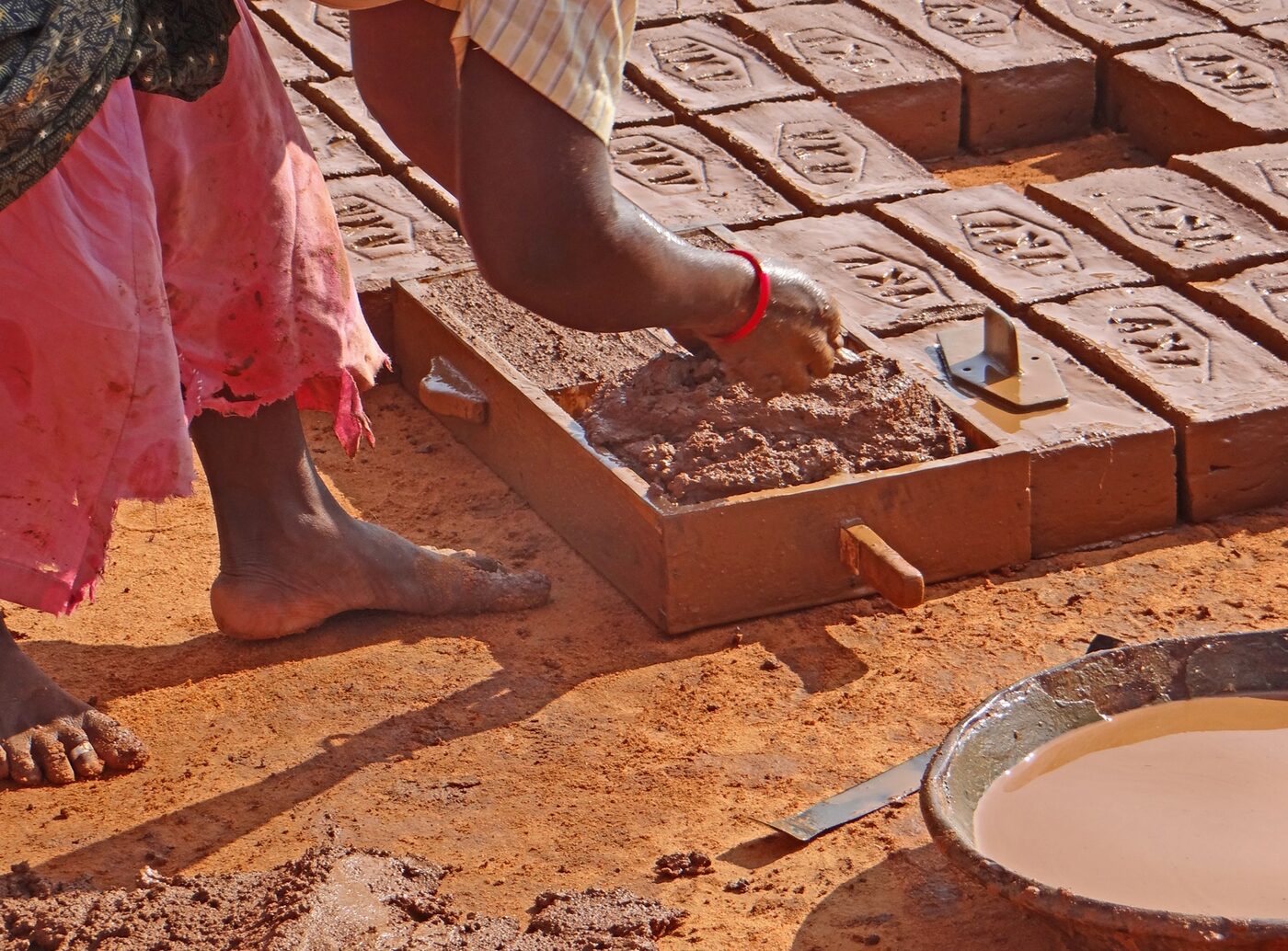
The bricks come from local kilns in Ludhiana, in Punjab, and they’re handmade. That word does a lot of quiet work. It means someone dug the clay, someone pressed it into a mould, someone knocked it out and set it in a row to dry in the sun, and someone stacked the dried bricks into a great open-air kiln and lit a fire under them. It is hot, slow, unglamorous work, and it has barely changed in centuries.
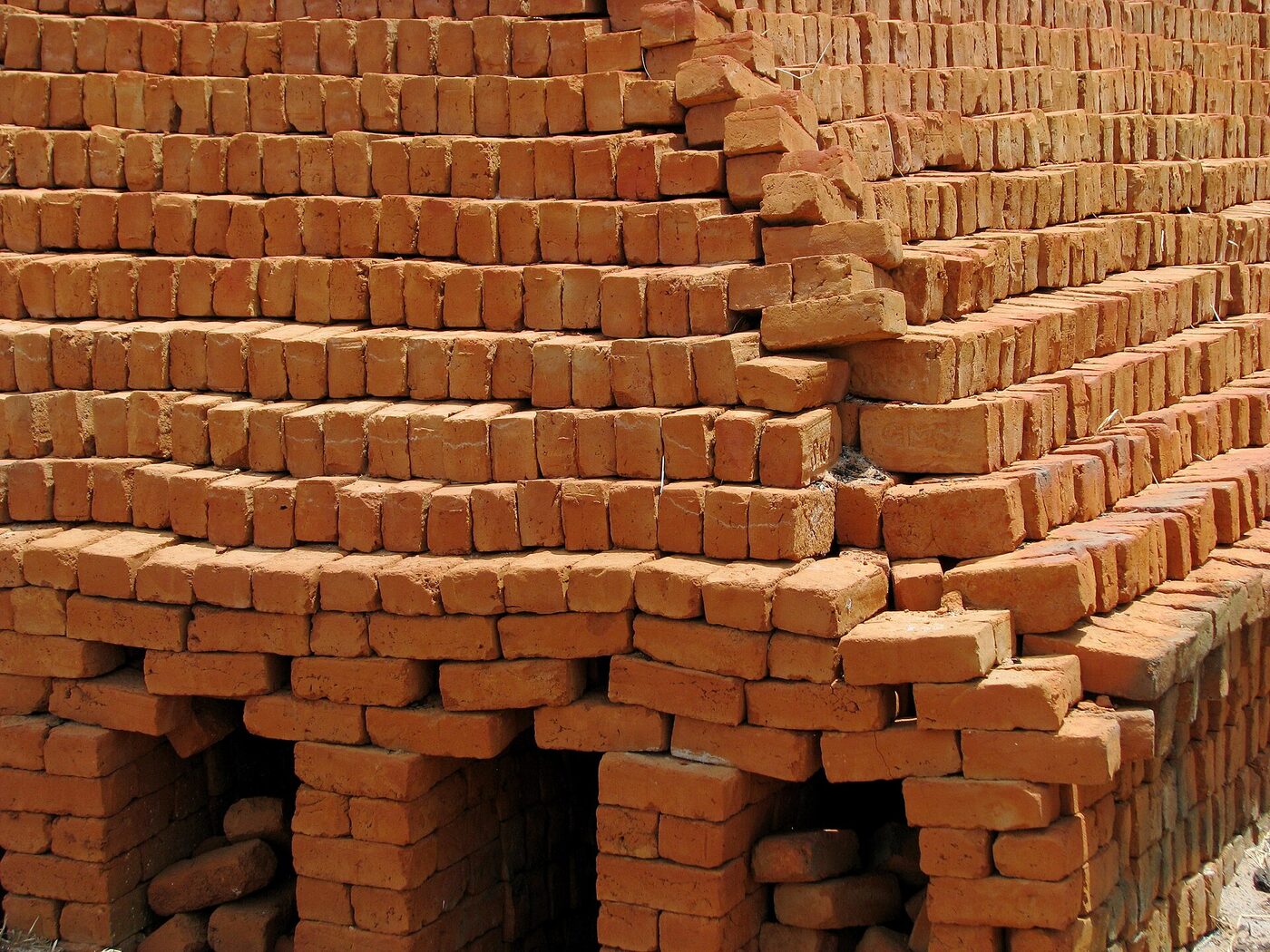
Then the bricks had to be laid. The masonry team’s average age was over fifty — these were people who had been setting brick into mortar for thirty years and more, and it shows in what they were asked to do. The facade isn’t a flat wall with a pattern on it. It curves. It bulges and folds and softens at the edges, and the radius of the curve keeps changing, which means the mason has to keep re-solving the puzzle of where the next brick goes. The studio drew it course by course — every single row, all the way up.
They sculpted it by hand, then asked a computer how to build it
You would assume a shape like that starts in software. It didn’t. The architects sculpted the movement of the bricks by hand, on a physical model — pushing and pulling an actual object until the wall did what they wanted it to do. Only then did they translate it into parametric software, which is the fancy term for a computer program that works out the consequences of a rule: you tell it “the wall bends like this,” and it tells you where all hundred thousand bricks have to sit.
So the machine never designed anything. It did the arithmetic. The shape came out of somebody’s hands, and then it went back into somebody else’s hands to be built. L.A.B.’s own site puts it better than we can: “In each brick lies the touch of a hand, the patience of craft, the permanence of spirit.”
The sinuous skin isn’t just for looks, either. Because it bends, it makes pockets — room for plants to grow, for water to trickle, for windows to sit in shade instead of glare, for hard corners to go soft. Delhi gets extremely hot. A wall that shades its own windows is not decoration; it’s a good idea wearing a beautiful coat.
Seven crafts, one house
Here is what we find genuinely moving about this project. Building it required seven different craft communities, spread across the country, most of whom never met each other. Somebody had to convince all of them to work on the same building.
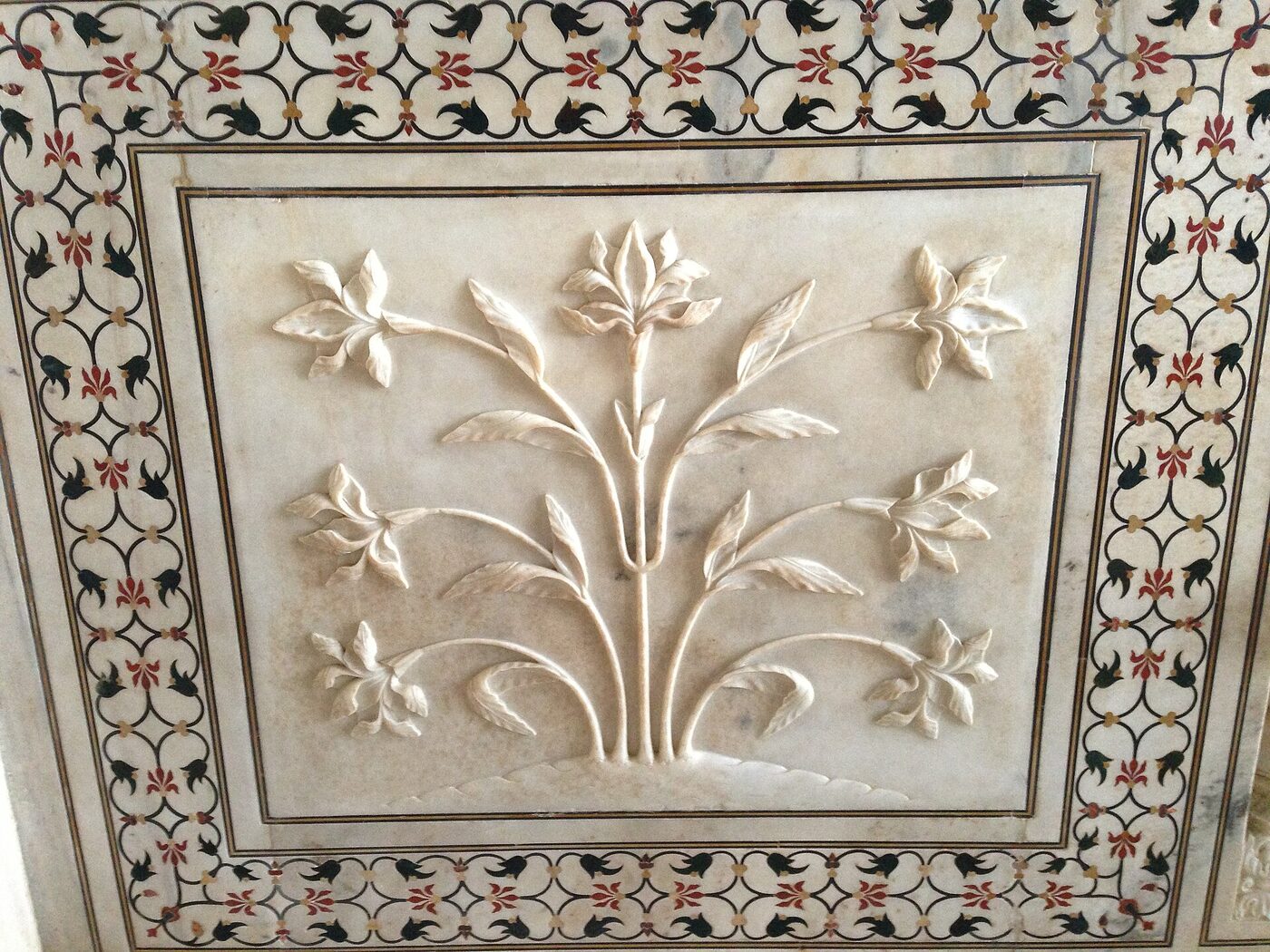
In Agra, stone inlayers cut and set the motifs for the floors. Agra is the town for this craft — the technique of cutting semi-precious stones into precise shapes and setting them flush into marble is called pietra dura (Italian for “hard stone”), and the most famous example on Earth is the Taj Mahal, standing in that same city. That lineage is still working. It has never stopped.
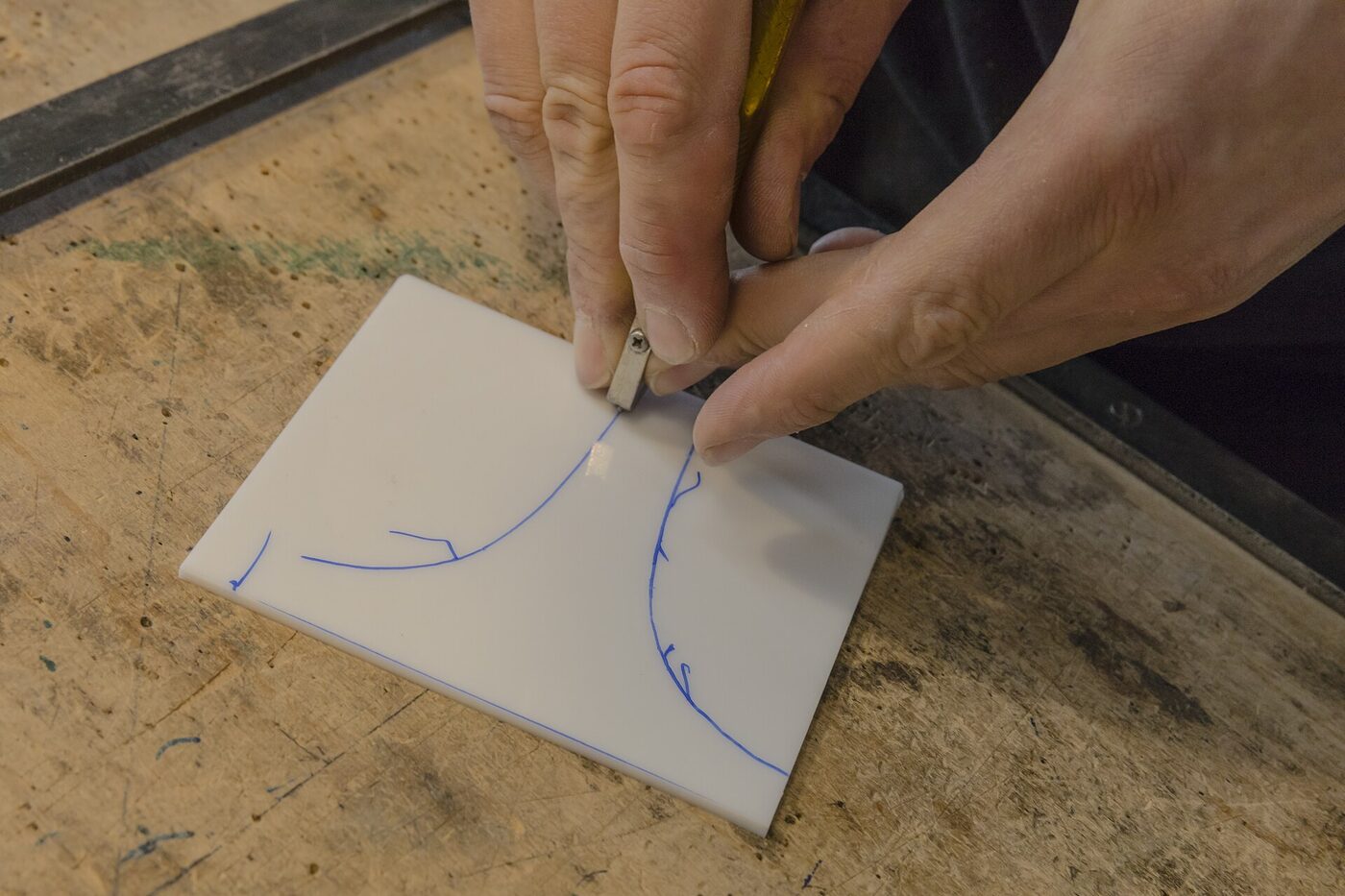
In Mumbai, a stained-glass studio spent two years hand-cutting and soldering the panels, using reclaimed fragments of glass — bits of other, older windows, given a second life. Two years. For the windows of one house.
In Bikaner, in the Rajasthan desert, the cement tiles were poured by hand, one at a time, using custom metal moulds and carefully measured pigment mixtures. That’s why the floor isn’t uniform — poured tiles come out slightly different from one another in tone and density, and a floor made of them has a faint, pleasant unevenness that a machine-made floor simply doesn’t have.
And there’s wood, framing the doorways and thresholds with joinery and carved geometry, with inscriptions cut into it.
A house you are meant to get lost in
Inside, it gets odder in the best way. The rooms are arranged like a labyrinth, deliberately — not efficiently. There are multiple staircases and a lift, which is more vertical circulation than an 8,000-square-foot house strictly needs, and that is entirely the point. The studio wanted the feeling of the beyond: turn a corner and there’s another way up you’d forgotten about; a route home you haven’t taken yet.
Most houses are designed so you always know where you are. This one was designed so that years in, you might still be finding things. 🌀
And then, the poems
We saved this one.
Set into the brickwork of the outside wall, there are poems — stone-inlaid, letter by letter, into the brick.
Sit with the chain of decisions that requires. Someone had to decide a house should have poetry on it. Someone had to choose the poems. Someone had to work out how you set text into a curving wall of a hundred thousand individually angled bricks without wrecking either the text or the wall. And then someone with a chisel and a great deal of patience had to actually cut the letters and set them, one stone at a time, into a surface that was never going to be flat.
Nobody needed this. The house would have stood up fine without it. It’s there because a house that has been made — rather than merely assembled — can afford to say something.
Why this lives on a good-news blog
Because almost nothing gets built this way any more, and it turns out it still can.
A hundred thousand bricks is a genuinely absurd way to make a wall in 2020. Panels would have been faster. A printed facade would have been cheaper. Instead, a studio hand-sculpted a shape, a computer worked out the consequences, kilns in Punjab fired the clay, masons in their fifties and sixties set every course, a Mumbai workshop cut coloured glass for two years, Agra inlaid the floors, Bikaner poured the tiles, and somebody put poems in the wall.
The result is a house where the shadows are different every month of the year, and where — if you’re standing in the right place, at the right hour, in the right season — the sun will show you a line of verse someone set into brick by hand. 🧱☀️


