

Picture a two-lane road cut through the Amazon. Trees on both sides, tall ones, their crowns knitted together into one continuous green ceiling — except right here, where the road goes through, and the ceiling stops.
Now picture yourself as an animal who has never voluntarily touched the ground. Not once. Everything you have ever eaten, slept on, or fallen in love with has been up in that ceiling. And in front of you is a gap twelve metres wide with lorries going through it.
That’s not a road. That’s a canyon. 🌳
In 2024, somebody strung eight ropes across one. Over the next fifteen months, cameras recorded roughly 15,000 animals walking, swinging and shuffling across them — and not one of them was hit by a car.
The town at the end of the road
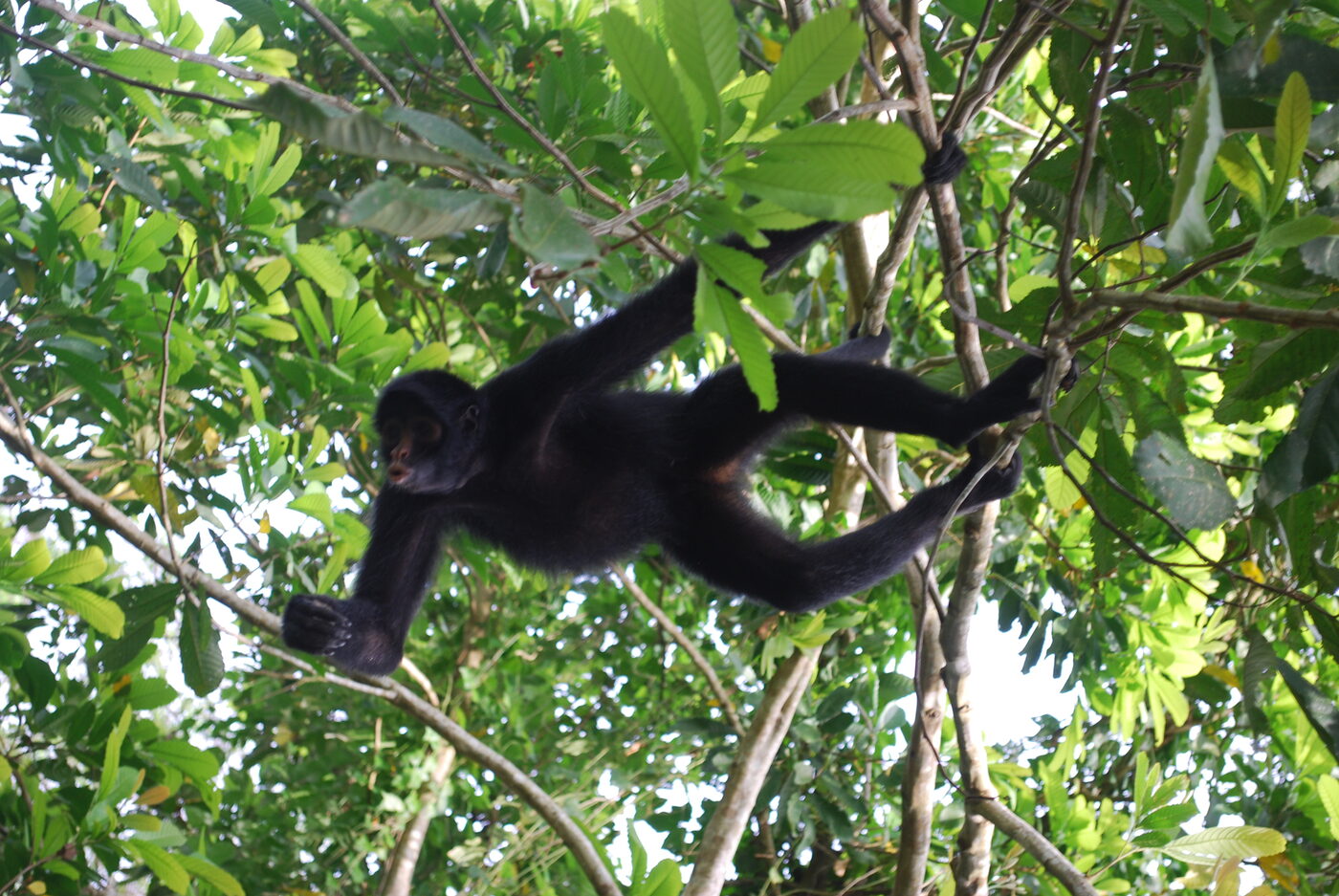
Alta Floresta is a small town in the far north of Mato Grosso, in the Brazilian Amazon. It has a road going into it, and the road has forest on either side, and the forest has monkeys in it — eight primate species, five of them threatened.
Roads do two bad things to animals like these. The obvious one is that they get hit. Around nine million mammals a year die on Brazil’s roads, by one 2022 estimate, and Brazil has both the world’s fourth-largest road network and the world’s greatest diversity of primates, which is a rough combination.
The less obvious one is the barrier effect, and it’s arguably worse. An animal that won’t cross a road simply stays on its side of it forever. Its family stays on that side. Its grandchildren stay on that side. The population gets smaller and more closely related and less able to cope with anything going wrong, and one day it’s gone — not because anything dramatic happened, but because a line was drawn through the middle of it and nobody could get across.
Locals in Alta Floresta had noticed the first problem the way you notice it: by finding animals on the tarmac. Business owners and community groups there — under the wonderfully blunt banner “Alta Floresta Não Atropela”, Alta Floresta Doesn’t Run Them Over — wanted it to stop. So did the town council. What they needed was somebody with a design.
The design is: rope
Enter Fernanda Abra, a Brazilian biologist who studies what roads do to wildlife, and who at some point got tired of only studying it. “I swore to myself that I wouldn’t just study the impacts caused by roads and traffic anymore,” she has said. “I wanted to save as many animals as I could.”
Her project is called Reconecta — reconnect — and its whole idea is that the fix does not have to be expensive to work.
The alternative fixes are real engineering: wildlife overpasses with soil and trees on top, or underpasses tunnelled beneath the carriageway. They work, and they cost what large concrete objects cost.
A canopy bridge is steel cable, rope, nylon netting and a couple of concrete posts to anchor it, hung between trees at roughly the height the animals were already travelling. On an earlier set of these bridges, the materials came to about £1,500 each. It needs no electricity, no staff, and no one to open it. Once it’s up, it’s just… there, being a branch.
Each bridge does get two small camera traps, which is the part that turns a nice gesture into science. One camera faces the crossing and records who uses it. The other faces the forest and records who arrives, has a look, and decides against it. That second camera is the clever one: it’s how you find out which designs animals don’t like.
An accessibility retrofit, for monkeys
Here’s the detail that made this post happen, because it is quietly lovely.
Early bridges tended to be one kind of thing — a rope, or a ladder, or a net. But treetop animals don’t all move the same way, any more than people all get around the same way. So the current Reconecta bridge is multilayer: several different surfaces in one structure, so that whoever turns up can use it.
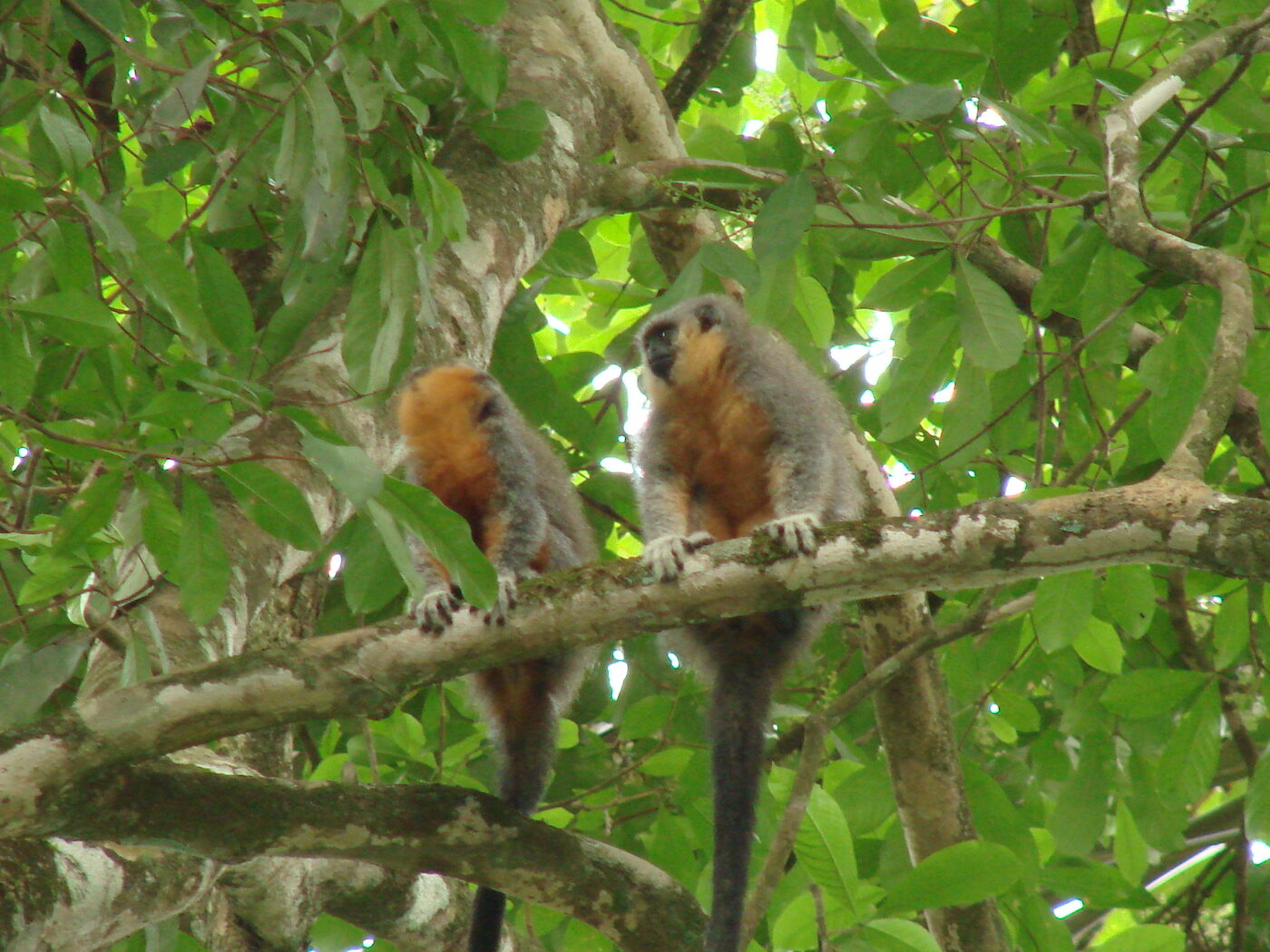
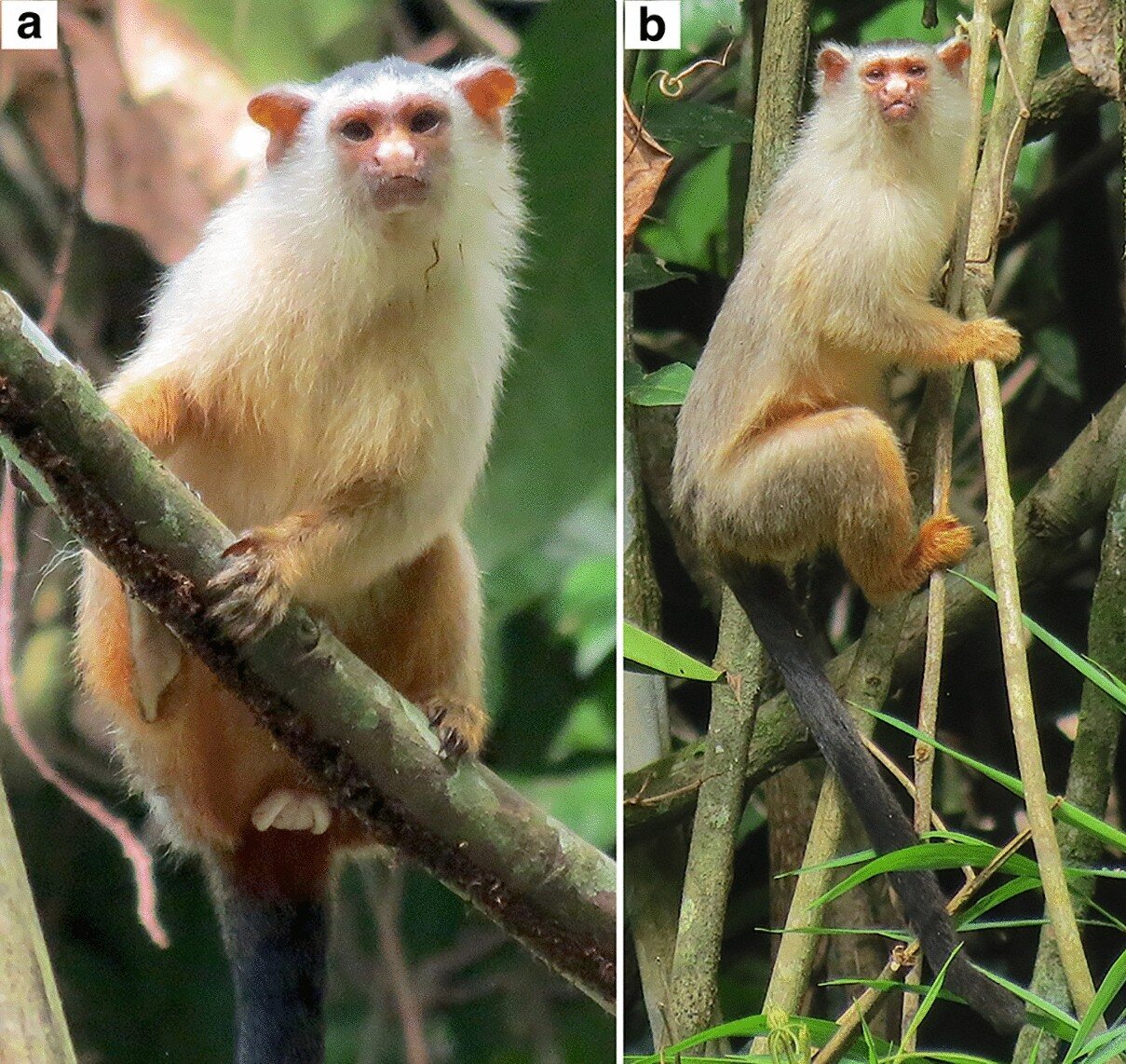
It is, straightforwardly, an accessibility retrofit. Somebody looked at a structure, noticed it only suited one kind of body, and built the version that suits all of them. The animals recorded on the Alta Floresta bridges include black-faced black spider monkeys, Purus red howler monkeys, northern night monkeys, tufted capuchins, Schneider’s marmosets, and the critically endangered Alta Floresta titi monkey — plus a supporting cast of sloths and opossums who are not monkeys at all and were presumably not consulted about the design.
The bit about patience
Fifteen thousand crossings sounds like the animals took to it instantly. Some did. Others took their time.
Tufted capuchins waited seven months before one of them tried a bridge in Alta Floresta. On Reconecta’s earlier project — around thirty bridges over the BR-174 highway, built with the Waimiri-Atroari people, whose territory the highway cuts through and who had been asking for canopy bridges for decades — the golden-handed tamarin became the most enthusiastic customer, while other species needed years. Use goes up over time, as word gets round.
Abra puts it better than we could: “Very often, our sense of urgency in conservation doesn’t take into account the timing of the impact.” The BR-174 was built in the 1970s. Some of these animals have been treating that gap as a hard edge of the world for fifty years. Seven months to reconsider is, in context, quite quick.
Meanwhile, in Peru
The idea is spreading, and not always from the same direction.
In Madre de Dios, in southeastern Peru, a separate WWF pilot programme has installed 24 canopy bridges over roads used for logging and Brazil-nut harvesting. They’re deliberately testing several designs — single rope, simple ladder, ladder mesh — to see which ones local species prefer. So far the cameras have caught Weddell’s saddle-back tamarins, tufted capuchins, Colombian red howler monkeys, and a kinkajou, which is a golden, enormous-eyed, faintly teddy-bearish relative of the raccoon that spends its entire life in the canopy.
And then there’s the one nobody built on purpose.
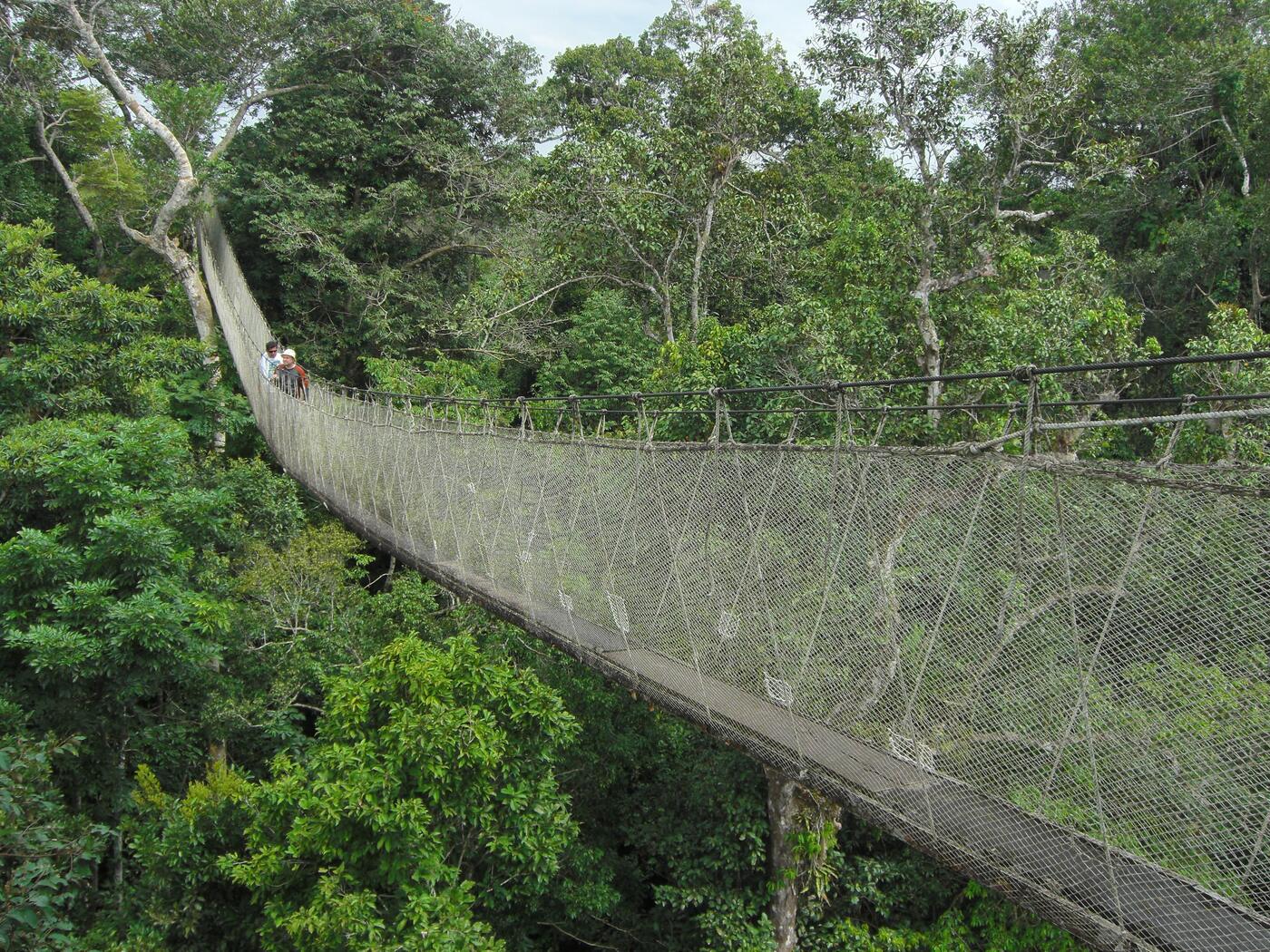
Near Iquitos, in northern Peru, there’s a canopy walkway — a chain of platforms and netted rope bridges strung between 6 and 36 metres up, built so that scientists and visitors can walk about in the treetops. In 2025, two biologists from Binghamton University hung camera traps along it for three weeks just to see what happened.
Seven mammal species were using it. Linnaeus’s two-toed sloths and long-tailed porcupines were the regulars, including several sightings of a porcupine species so reclusive that science lists it as data-deficient. They ignored the wooden planks entirely and travelled on the ropes. Peak traffic was between 7 and 9 p.m. — the humans had it by day, the mammals took over after dark, and neither party appears to have discussed the arrangement.
And this was in unbroken forest, where the animals had perfectly good branches available and did not need the walkway at all. They used it anyway, because it was a good route. Which is, if you think about it, the most encouraging possible result: build a decent path through the canopy and the residents will find it, whether or not you built it for them.
Land on the zero
Back in Alta Floresta, the tally after fifteen months of watching:
Eight more bridges were planned for the town’s urban area, with one extra step first: the electricity company has to lower and insulate the power lines, so that an animal that jumps off a bridge onto a wire doesn’t get a shock for its trouble. Somebody thought of that. Somebody always has to think of that, and in this case somebody did.
Brazil’s national transport department has now made the design its recommended standard for highways. Reconecta is expanding — to another Mato Grosso town, to the Pantanal, to the Atlantic Forest, and across the border into Suriname. A bill making wildlife crossings part of national road planning has passed Brazil’s lower house and is waiting on the Senate.
But the number that gets us is still the small one. Not fifteen thousand. Zero.
Somebody hung rope over a road, and then a monkey, and a sloth, and a marmoset, and an opossum, and fourteen thousand nine hundred and ninety-six other animals went over the top instead of under the wheels. That’s it. That’s the whole thing. The world is out there doing this, quietly, with rope. 🐒💚
Know about something wonderful happening in your own corner of the world? Sign the guestbook and tell us about it.
Go deeper (real links, no pop-ups, promise)
- 🐒 Mongabay: Zero roadkill as Amazon canopy bridges secure 15,000 crossings
- 🌳 Mongabay: Indigenous people in the Amazon are helping to build bridges & save primates
- 🏆 Whitley Fund for Nature: Fernanda Abra’s 2024 Whitley Award
- 🌎 PBS Nature: how WWF’s treetop crossings are helping Peru’s wildlife
- 🦥 The walkway study: Santiago & Swierk (2025), Neotropical Biology and Conservation


