

Here is the quietly amazing thing about the return to the Moon: it already has a guest list. The next humans who will fly toward the Moon aren’t a hypothetical, a someday, a “if the funding holds.” They have names. They have a commander. They’ve been to the pool, the simulator, and the fitting room. And their rocket is being bolted together in Florida right now. 🚀
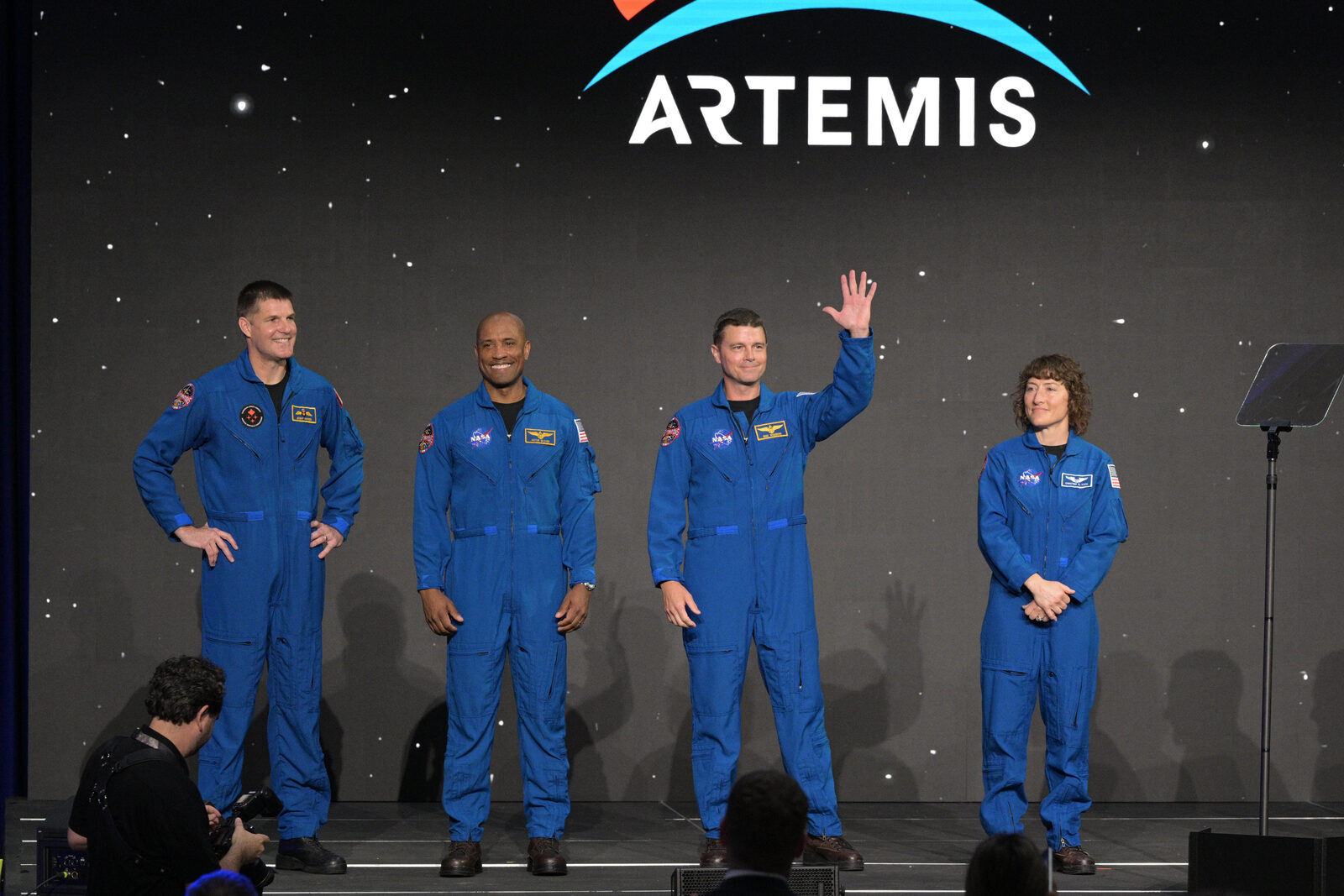
We didn’t stop for a victory lap. While everyone was busy remembering Apollo as a black-and-white thing that happened to our grandparents, the pipeline for the next trip kept humming along — engines, boosters, capsules, suits — all of it real hardware, all of it being welded, torqued, and tested this summer.
The crew is not a rumor. It’s a roster.
The next mission to carry people toward the Moon has a named crew: Reid Wiseman (commander), Victor Glover (pilot), Christina Koch, and Jeremy Hansen of the Canadian Space Agency. Four real people, assigned, training, on the manifest.
And the roster quietly rewrites a few record books on the way up:
Christina Koch is set to become the first woman ever to travel to the Moon. Victor Glover will be the first person of color to make the trip. Jeremy Hansen will be the first Canadian to fly beyond low Earth orbit. The last time any human left for the Moon was Apollo 17 in 1972 — a gap so long that most people alive today have never once seen it happen. These four are about to fix that.
This is not a landing mission — it’s the shakedown cruise: fly the crew, prove the spacecraft, loop around the Moon, and come home. You have to get people safely there and back before you set anyone down. That’s the whole point of going first.
Meanwhile, downstairs, the rocket is being stacked
The best part isn’t the plan on paper — it’s the noise in the building. At Kennedy Space Center the Space Launch System is coming together for real:
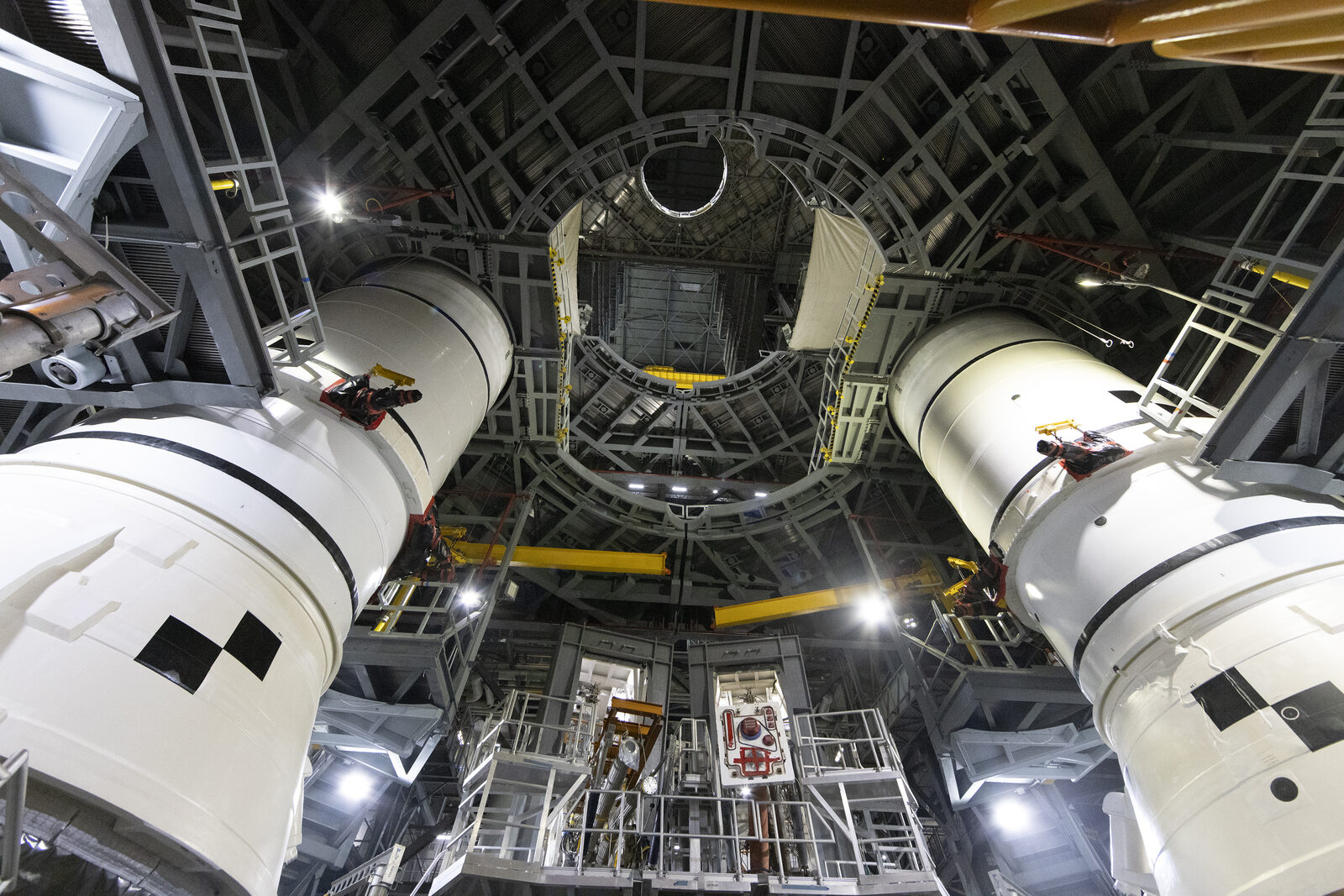
- The twin five-segment solid rocket boosters are stacked — the pair that does most of the heavy lifting in the first roaring two minutes off the pad.
- The core stage is getting its cluster of four RS-25 engines, the same reliable workhorses that used to fly the Space Shuttle, now bolted on for a one-way ride uphill.
- Orion’s crew module and service module are being mated together — the actual capsule that carries the actual people, not a museum mockup.
And the wardrobe department is busy too: the new Axiom moonwalk suits are being tested in NASA’s Neutral Buoyancy Lab, a 6.2-million-gallon indoor pool deep enough to sink a rocket stage, where astronauts practice moving in a pressure suit by “spacewalking” underwater. 🏊
The roadmap points back to the surface
Here’s where it gets genuinely thrilling. The named crew and the stacking rocket are just the first domino. The plan doesn’t end at a lap around the Moon — it points straight back down at the lunar South Pole, the shadowed, ice-rich territory Apollo never touched. That’s the direction all this hardware is aimed: not a flags-and-footprints repeat, but the front end of a program built to stay. A base. Supplies. Return trips. The boring, beautiful infrastructure of actually living out there.
Why this is on a good-news blog
Because it’s the difference between nostalgia and momentum. It would be easy to file the Moon under “amazing thing humans did once, a long time ago.” But that’s not where it lives anymore. It lives in a stacking bay in Florida, in a 6.2-million-gallon pool in Houston, in a suit being fitted to a real person’s arms, in four names on a flight manifest.
A whole generation grew up seeing Apollo only behind museum glass — the capsules roped off, the footage grainy, the astronauts already grey. And now that same generation gets to watch the next one being welded together in daylight, with a crew they can name and a launch they can wait up for. The Moon isn’t a memory we’re protecting. It’s a place we’re going back to — and the people who’ll go already know who they are. 🚀💛


