

Here is a plan that should not have worked.
Your town’s coal mines have closed. The local economy is in free fall. Your beach has mud flats — great for migrating birds, deeply unappealing to tourists, who would like a beach that is not, primarily, mud. So you look at the mud. And instead of hiding it, you truck it up onto the sand, build slides and pools and a prison out of it, and invite the entire world to come roll around in it.
Two million people a year say yes. 🟤
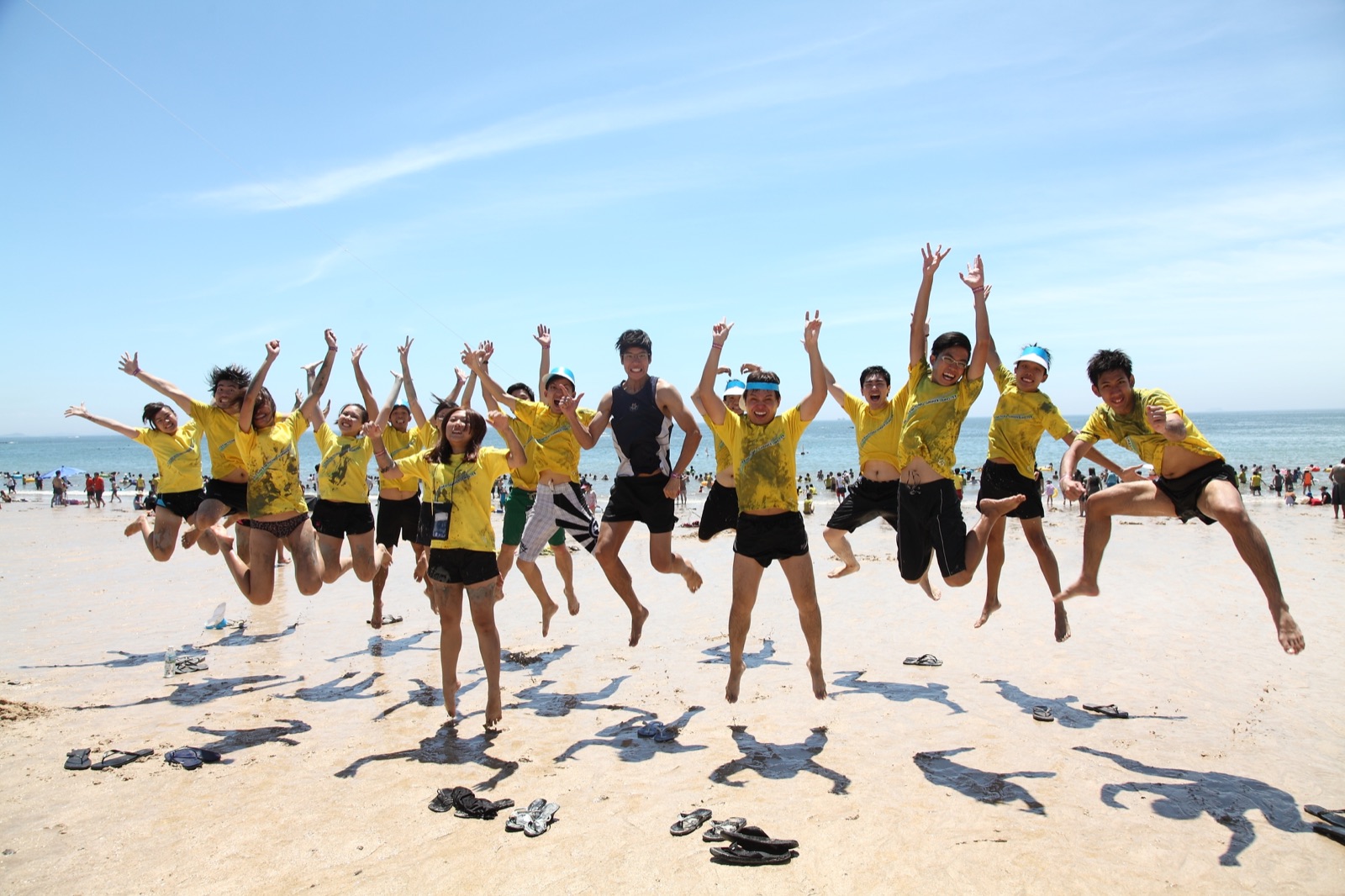
It began as an advertisement
This is my favourite part, so let’s do it properly.
Around the start of the 1990s, Boryeong’s coal mines shut down, and the region’s economy went with them. In 1994 the mayor of Daecheon, Park Sang-don, watched a movie scene of a couple enjoying a mud bath and had a thought. He also came across a study by Jae-Bek Kim, a pharmacy professor at Wonkwang University, which found that the mud on Boryeong’s flats was especially rich in bentonite and germanium — both beneficial for skin. 💡
So the town started making mud cosmetics. Eight varieties of them, by 1997. And nobody bought any, because nobody had ever heard of Boryeong mud.
Then in 1998, Jeong Kang-hwan, a professor at Pai Chai University, suggested something bolder: don’t advertise the mud. Let people play in it. Throw a festival.
The first Boryeong Mud Festival was held on Daecheon Beach from 16 to 19 July 1998. Its success, in the diplomatic phrasing of the record, exceeded all expectations. 📈
What actually happens there
Mud is hauled from the tidal flats and delivered to the seafront, where it becomes the raw material for Mud Experience Land. There is a mud pool. There are mud slides. There is mud skiing. There is, I am delighted to report, a mud prison — a real attraction that you can be put in. Coloured mud gets made specially for body painting, so you can be filthy and coordinated. A big stage goes up on the sand for live music. In 2023 somebody looked at all this and said what it really needed was a mud barbecue, and they were right.
Recent years have added a water park, shaded forest rest areas, family zones, and — this is a genuinely lovely detail — a zone for people who brought their dogs. 🐕
“You can make friends with many nationalities.” — Carl Odfalk, 34, an American visitor, who laughed with strangers he bumped into and then simply became friends with them.
The festival runs for roughly two weeks, though it’s most famous for its final weekend. Nights bring DJs and K-hip hop. And at the 2025 edition, the Republic of Korea Air Force’s aerobatic team, the Black Eagles, flew formations over Daecheon Beach and drew heart shapes in the sky. 🎇
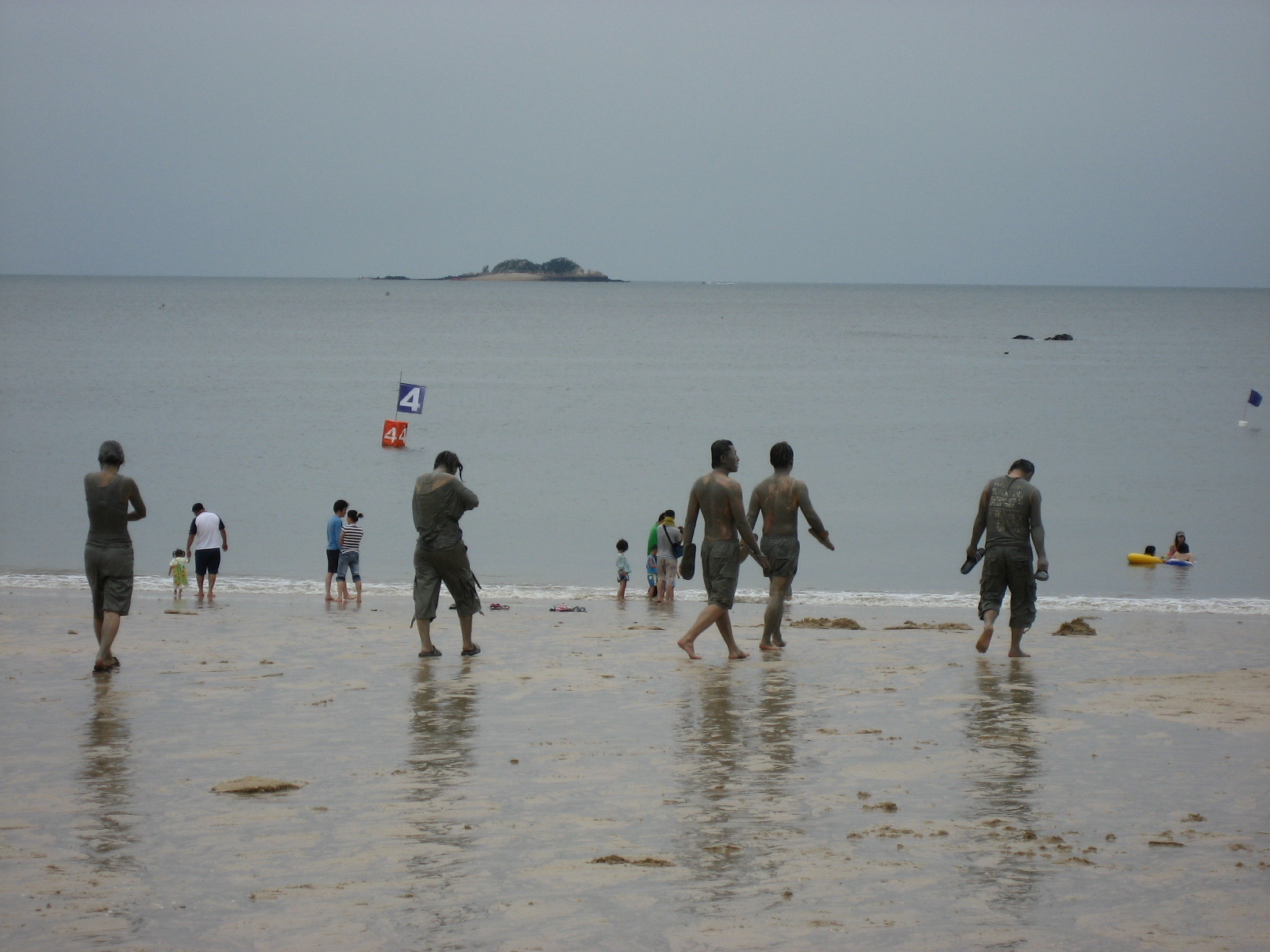
The mud does not care who you are
Something happens when a few thousand people are coated head-to-toe in the same grey silt: you can’t tell anybody apart. Participants get so thoroughly covered that recognising them becomes difficult — and that, it turns out, is the point. No labels, no outfits, no signalling. Just people, uniformly filthy, laughing at each other.
Rosa Borak, 30, who came from Turkey after seeing it on social media, said the atmosphere was one she’d found nowhere else in the world.
And when the sun goes down, everyone rinses off in the sea and gathers on the sand around bonfires, and the whole thing ends — every single year — with an enormous firework display. 🎆
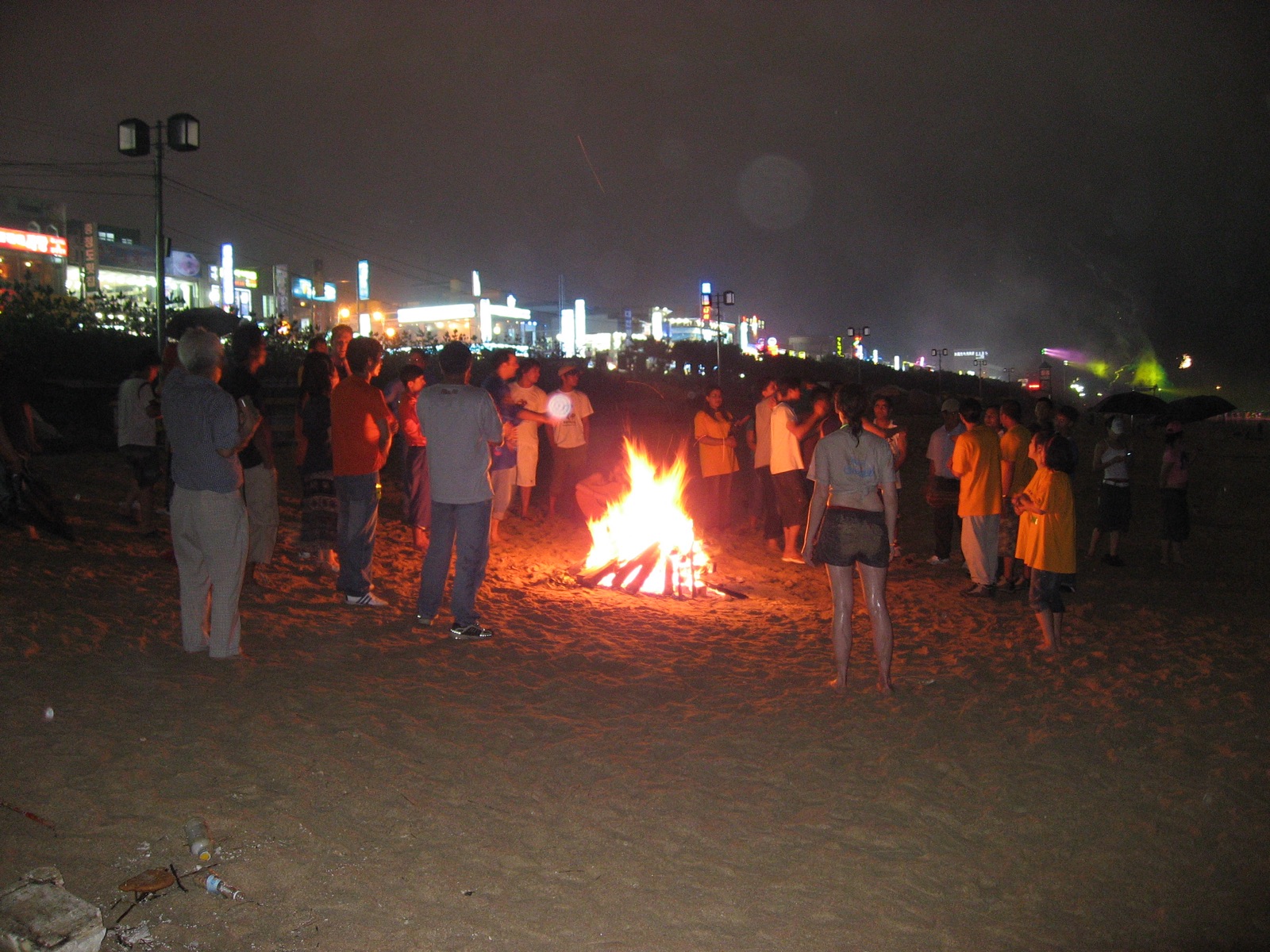
Why this lives on a good-news blog
Because a town that lost its mines looked at the one thing it had left — the stuff under its feet, the stuff that made the beach ugly — and decided it wasn’t a problem. It was the whole attraction.
They didn’t clean up the mud. They didn’t pave it. They didn’t rebrand the coastline into something it wasn’t. They took the exact material everyone considered a liability and built a two-million-person party on top of it, and now people fly across the planet to sit in it.
Somewhere on Daecheon Beach tonight, a stranger from one country is helping a stranger from another country down a mud slide, and neither of them can tell what the other one looks like, and the fireworks are about to start. 🟤💛


