

Somewhere in Australia — a lawn in Devonport, a verge in Broome, a schoolyard in Hobart — a person crouched down, held their phone very close to a leaf, and took a photo of a beetle. Then they stood up, brushed the grass off their knees, and got on with their day.
That’s the whole thing. That’s the entire activity. 🐞
And in about ten months, Australians have done it one million times.
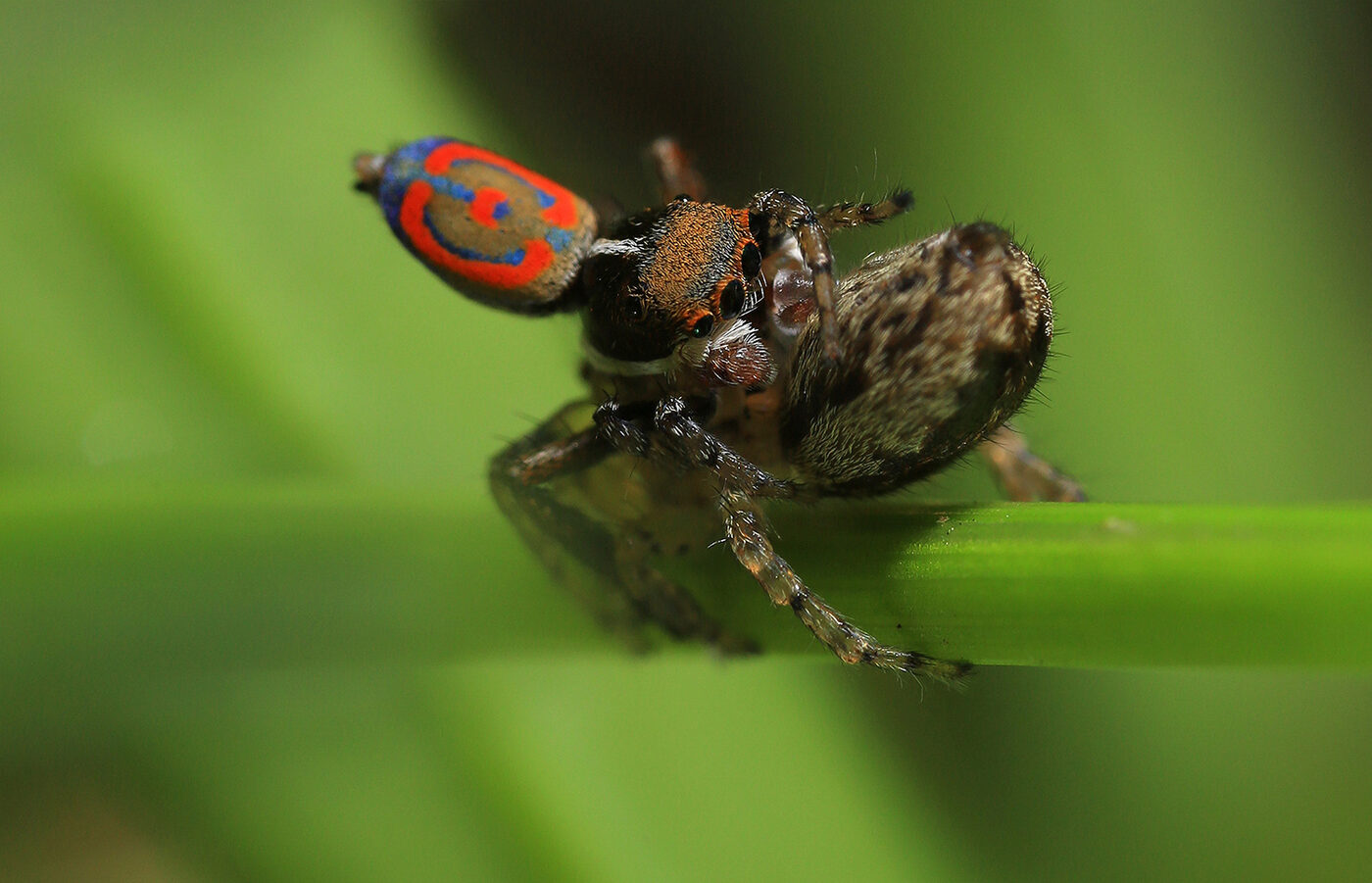
One million, from a standing start
Bug Hunt Australia launched in October 2025. It’s run by the Invasive Species Council and Invertebrates Australia, and the pitch is refreshingly free of homework: look at a bug, snap a bug, upload the bug. No expertise, no equipment beyond the phone already in your pocket.
In August 2026 the two organisations announced that more than one million observations of insects, spiders, snails and other invertebrates had been uploaded across Australia since the launch. By the time this post went up, the counter had already rolled past 1,050,000.
Jess Ward-Jones, a conservation officer at the Invasive Species Council, put the number in context: since Bug Hunt launched, Australian bug records have increased by almost 50% over a comparable stretch of time. Half again as much knowledge about an entire continent’s small animals — because people started looking.
How a phone snap turns into actual science
This is the part I find genuinely lovely, because it is not magic and it is not hand-waving. There is a real, boring, rigorous pipeline, and it runs on strangers being helpful.
Everything goes through iNaturalist, the free app and website where people around the world post what they’ve seen. When you upload your photo, it needs four unglamorous things to count as verifiable: an accurate date, accurate coordinates, an actual photo or sound, and a genuinely wild organism — not the pet stick insect, not the pot plant.
Your observation then sits in a pile marked “Needs ID.” And here’s the good bit: other people — hobbyists, retirees, entomologists, teenagers who are alarmingly good at beetles — come along and put names to it. A computer-vision model offers suggestions too, but it doesn’t get the final say. People do.
When more than two-thirds of the identifiers agree on a species, the observation is promoted to Research Grade. 🎉
And that is the moment your beetle stops being a nice photo and becomes data. Research Grade records flow into the Atlas of Living Australia — the country’s most comprehensive biodiversity dataset — and onward into the Global Biodiversity Information Facility, where scientists anywhere on Earth can use them. Of Bug Hunt’s million-plus records, more than 430,000 have already cleared that bar.
The week the whole country looked down
To see what this looks like when everyone does it at once, consider Bugs In My Backyard Week, held from 17–23 November 2025 — a single springtime snapshot of a continent.
In seven days, more than 4,800 people submitted over 40,000 observations. Sixty-two extremely committed bug hunters logged 100 or more each. Dianne Clark recorded 270 different species in one week and won a prize for it. Records came in from Broome to Hobart to Norfolk Island, and the most geographically remote sighting of the lot was made out in the Tanami, in Western Australia.
The most-photographed animal in the country that week was not a rare jewel or a giant spider. It was the lesser grass blue butterfly — a small, common, blue-grey scrap of a thing that lives in lawns. Nearly 300 people stopped and took its picture. 🦋
There were over 9,000 records of moths and butterflies, covering more than 1,400 species. Over 6,000 beetle records, from 800-plus species — four of the fifteen most-photographed species were ladybirds. Nearly 300 Christmas beetles, across 14 species. Somebody in Victoria found an endangered Eltham copper butterfly.
And the organisers noted, with visible relief, something they didn’t see: not one single spongy moth, a foreign defoliator that could strip Australian bushland if it ever established. A week of nationwide looking, and no sign of it. That absence is a result too.
The bit where a backyard photo does something serious
Here’s the payoff that turns a nice hobby into a genuine early-warning system.
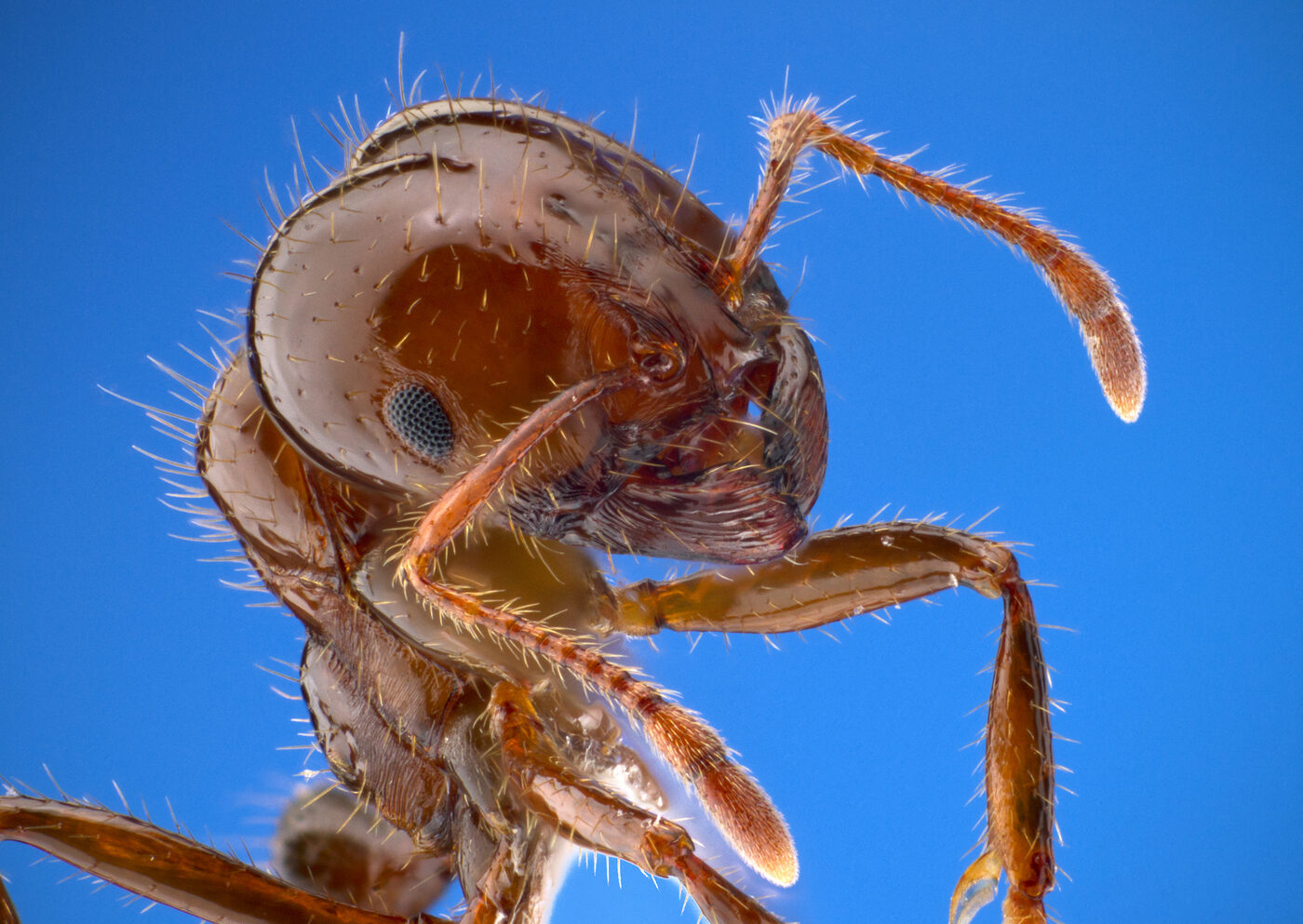
Red imported fire ants are small, reddish-brown, aggressive, and very bad news — they sting people, pets, livestock and wildlife, and they form enormous colonies. They were first detected in Brisbane in 2001, and they’ve established across parts of southeast Queensland and northern New South Wales. Experts warn they could eventually occupy 95% of Australia if they aren’t stopped.
Australia’s eradication program depends on knowing where they are now, at the edges, before a new outbreak digs in. And the number Bug Hunt quotes is remarkable:
Smile Fact 🐜 — 70% of Australia’s fire ant detections are made by members of the public. Not by surveyors. Not by drones. By people who looked at the ground, thought hang on, that’s not right, and reported it. A member of the public was also the first to spot the polyphagous shot-hole borer — a tiny tree-killing beetle — in Perth.
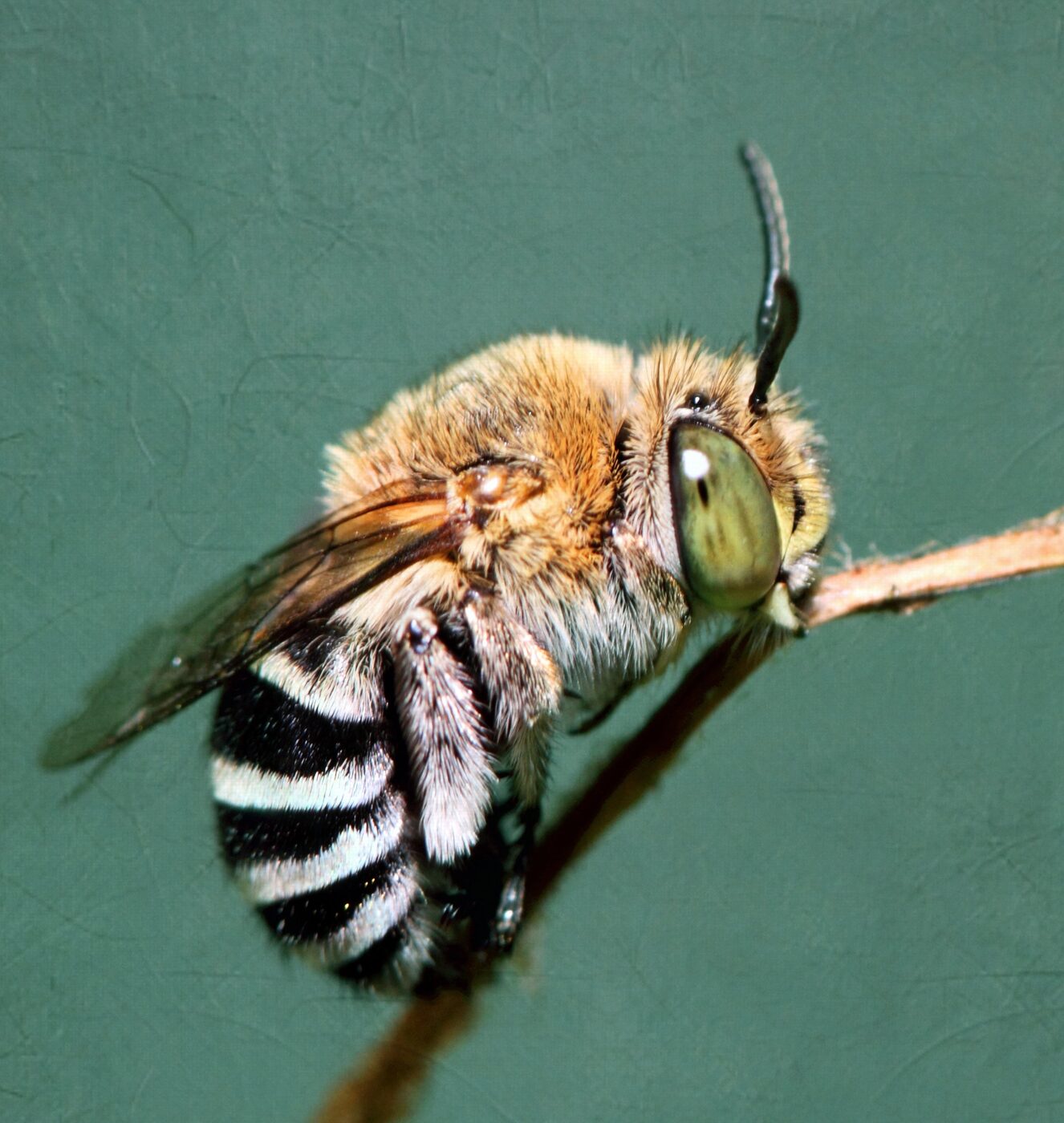
The Invasive Species Council keeps a public Insect Watch list of the species it most wants Australians to notice, and it’s a genuinely useful thing to have skimmed once. Fire ants are on it. So are yellow crazy ants, electric ants, the brown marmorated stink bug — and the Asian honey bee, which is already established around Cairns in far north Queensland and is turned up at Australian ports with some regularity. Bees carrying the dreaded varroa mite were caught at Townsville in 2016 and destroyed.
Asian honey bees look a lot like the European honey bees everybody knows, only smaller, with neater and more regular pale bands on the abdomen. If they spread, they’d compete with native pollinators for nectar and nesting holes. Which means the useful thing an ordinary person can do about them is exactly the thing Bug Hunt already asks for: photograph the bee. A phone photo is genuinely good enough to rule out a misidentification. (If you’re in Australia and think you’ve found one outside north Queensland, the Exotic Plant Pest Hotline is 1800 084 881.)
That’s the whole trick of this project. The picture you take because a bee looked nice is the same picture a biosecurity officer needs.
Now the fact that gets me
Australia has around 100,000 named invertebrate species. That sounds like a lot.
It is roughly 30% of them.
Invertebrates Australia estimate that about 70% of Australian invertebrates — some 200,000 species — remain unknown to Western science. Never described. Never named. No entry anywhere. And of the 100,000 species that do have names, we have distribution data for only about half; the rest exist as pins and handwritten labels in museum drawers, waiting for somebody to type them up.
Sit with that for a second, because of what it means for a person standing in a garden with a phone.
Somewhere in that pile of a million photographs, there are almost certainly animals that nobody has ever formally described. Not in a rainforest canopy, not down a cave, not at the bottom of the sea — on a leaf, in a stranger’s backyard, in the ordinary suburbs of an ordinary Tuesday. An unnamed species, sitting still, being photographed by someone who was mostly just curious. 🌿
The case for photographing the boring brown one
If you need proof that the unremarkable bugs are the ones that matter, meet the Bogong moth.
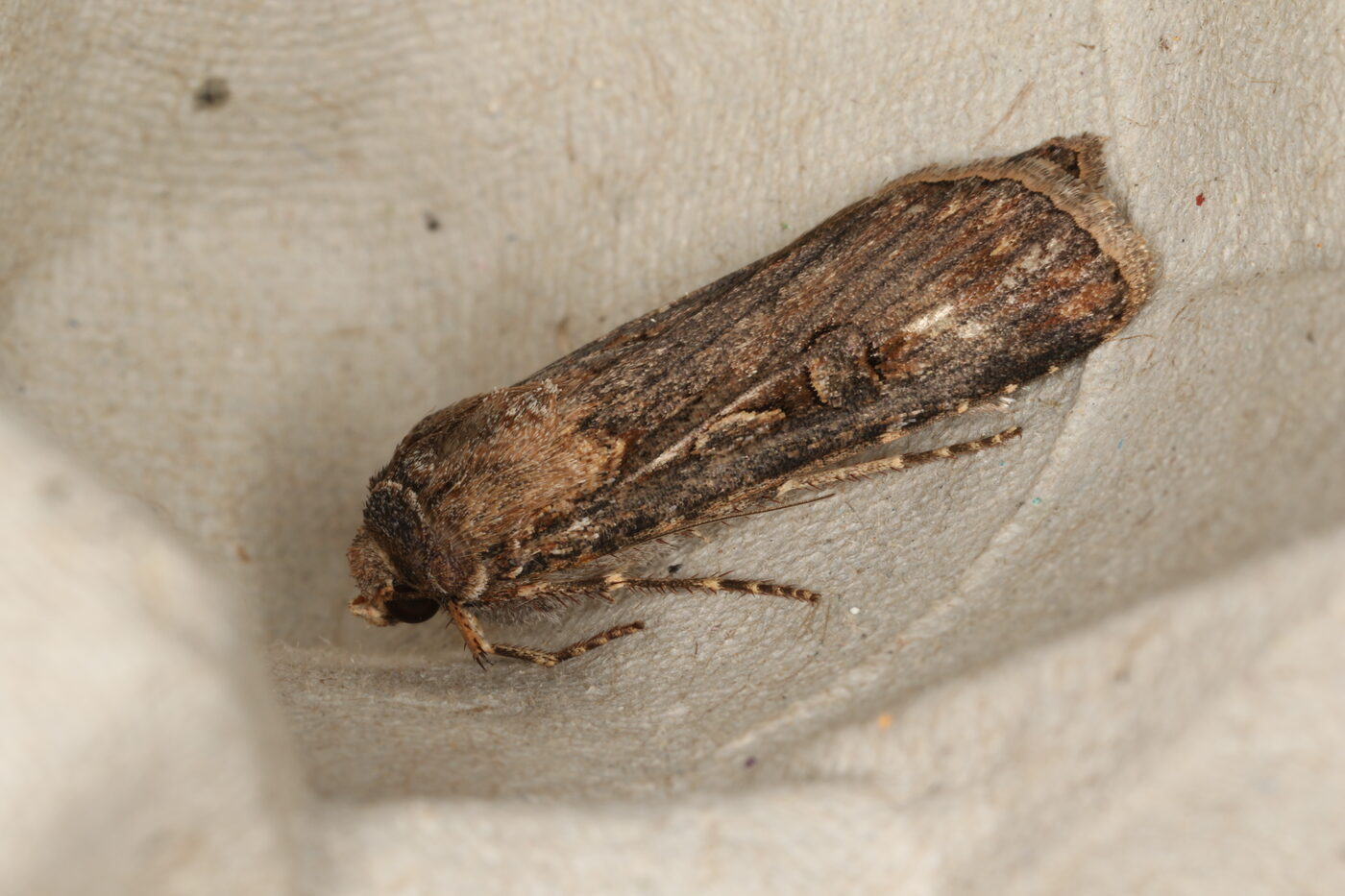
It is brown. It is about three centimetres long. It looks like every other brown moth that has ever bonked into a porch light. It is also endangered, it carries deep cultural, ecological and economic significance in Australia, and every year it makes an epic migration to the caves of the Australian Alps — a journey so famous it has its own name.
And here’s the thing: its flyways are unknown. Researchers do not have a good map of where the moths actually go on the way. That gap is exactly what stops conservation work from happening, and it’s the reason Invertebrates Australia runs a project called Bogong Watch asking people to photograph moths — including moths they think might be Bogongs and turn out not to be. As they put it, all moth observations are important. They need records of every Australian moth.
Which brings us back around to the beetle on the leaf. An entomologist named Matt Holden spent a year cataloguing what lived on one suburban block in Brisbane — a house and a yard. He expected around 200 species. He found 1,150. Most of them were moths.
You are, statistically speaking, standing on top of a great deal of undocumented biology right now.
Why this lives on a good-news blog
Because a million is a strange and wonderful number when you break it back down.
It isn’t an institution’s output. It’s a million separate moments in which a person was walking somewhere, going about their life, and stopped — because a beetle was iridescent, or a spider was doing something odd, or a bee had improbable blue stripes. A million small acts of paying attention, from more than 35,000 people who mostly do not know each other and will never meet.
None of them individually accomplished very much. One photo of one grass blue butterfly is not science. But stacked up, sorted, argued over by volunteers until two-thirds of them agree, and poured into a national database, they become something no single person could have built: a picture of what actually lives on a continent, updated daily, by everyone.
And the picture has a use. It maps species that were never mapped. It catches fire ants at the edge of a suburb while there is still time to do something about them. It notices, in a given week, that the spongy moth is not here.
The lovely part is the ratio. The effort is: crouch, snap, upload, carry on. Thirty seconds. The result is a continent’s worth of knowledge and an early-warning net that a government could not have built on its own.
The world, it turns out, is also doing this: a few hundred thousand people quietly kneeling on lawns all over Australia, photographing something small and brown and getting on with their day — and, between them, finding animals that nobody has ever named. 🐞💚
You don’t need to be in Australia to join in. iNaturalist works everywhere. There is a bug outside your door right now that nobody has photographed today.
Go deeper (real links, no pop-ups, promise)
- 🐛 Bug Hunt Australia — the project itself
- 📣 The milestone announcement: One million bug records
- 🏆 What Bugs In My Backyard Week turned up
- 🔬 Invertebrates Australia: who the invertebrates are, and how many are unnamed
- 🐜 Invasive Species Council: the Insect Watch list
- 🌙 Bogong Watch — help map a moth’s migration
- 📱 iNaturalist — start anywhere on Earth


