

There is a certain kind of animal photo that keeps going viral, and it is always the same shape: a large, damp, barrel-bodied rodent sitting perfectly still in some water, wearing an expression of profound calm — while a bird stands on its head. Or a marmoset naps against its side. Or a tiny duckling has decided the rodent is now furniture.
The rodent, in every single one of these photos, does not care. That is the whole appeal. Meet the capybara: the world’s largest rodent, and quite possibly its most relaxed. 🌾
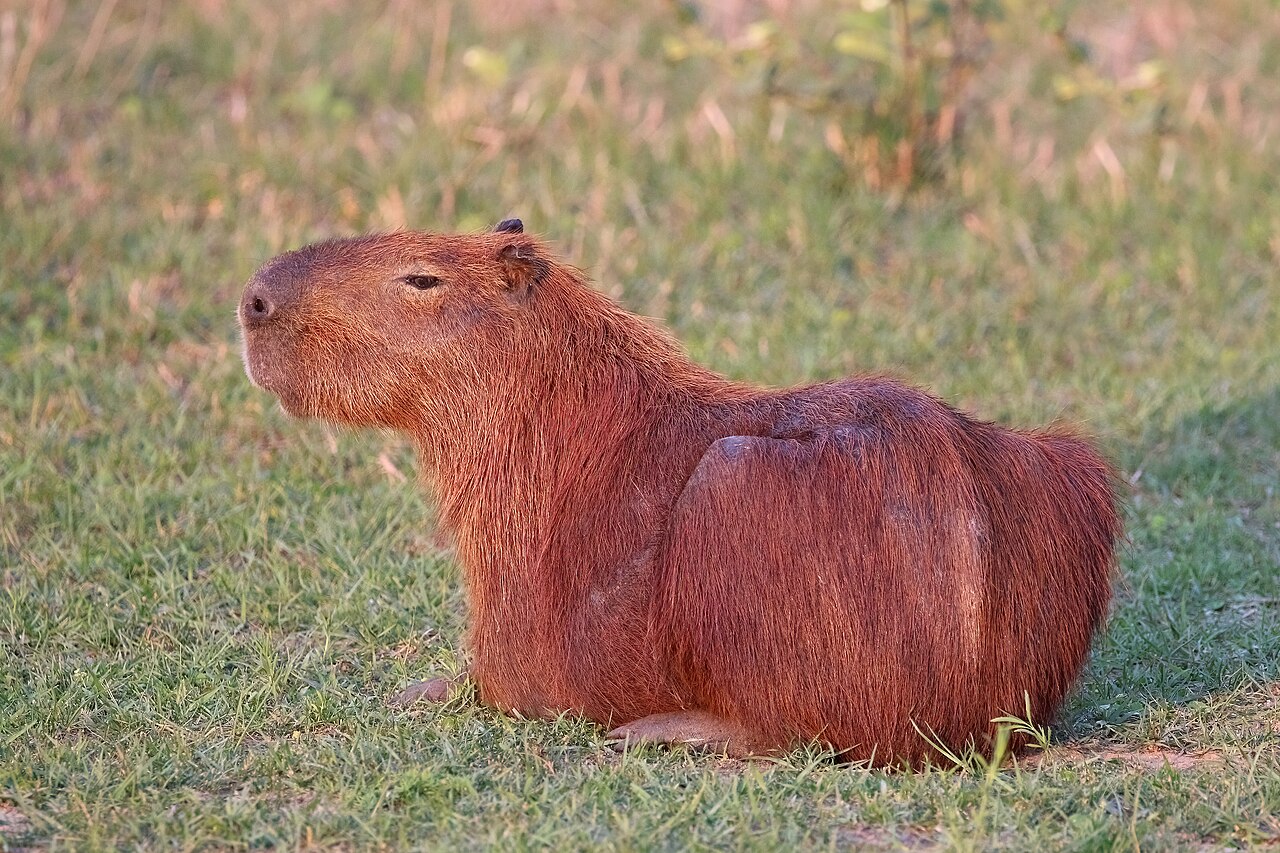
First, the size, because it’s a lot
Let’s get the scale right, because it changes the whole picture. A capybara is not a guinea pig. It’s a guinea pig’s enormous, serene cousin — an adult can weigh 35 to 66 kilograms (77 to 146 pounds) and stand knee-high to an adult human. That’s roughly the mass of a large Labrador, in the shape of a very calm loaf.
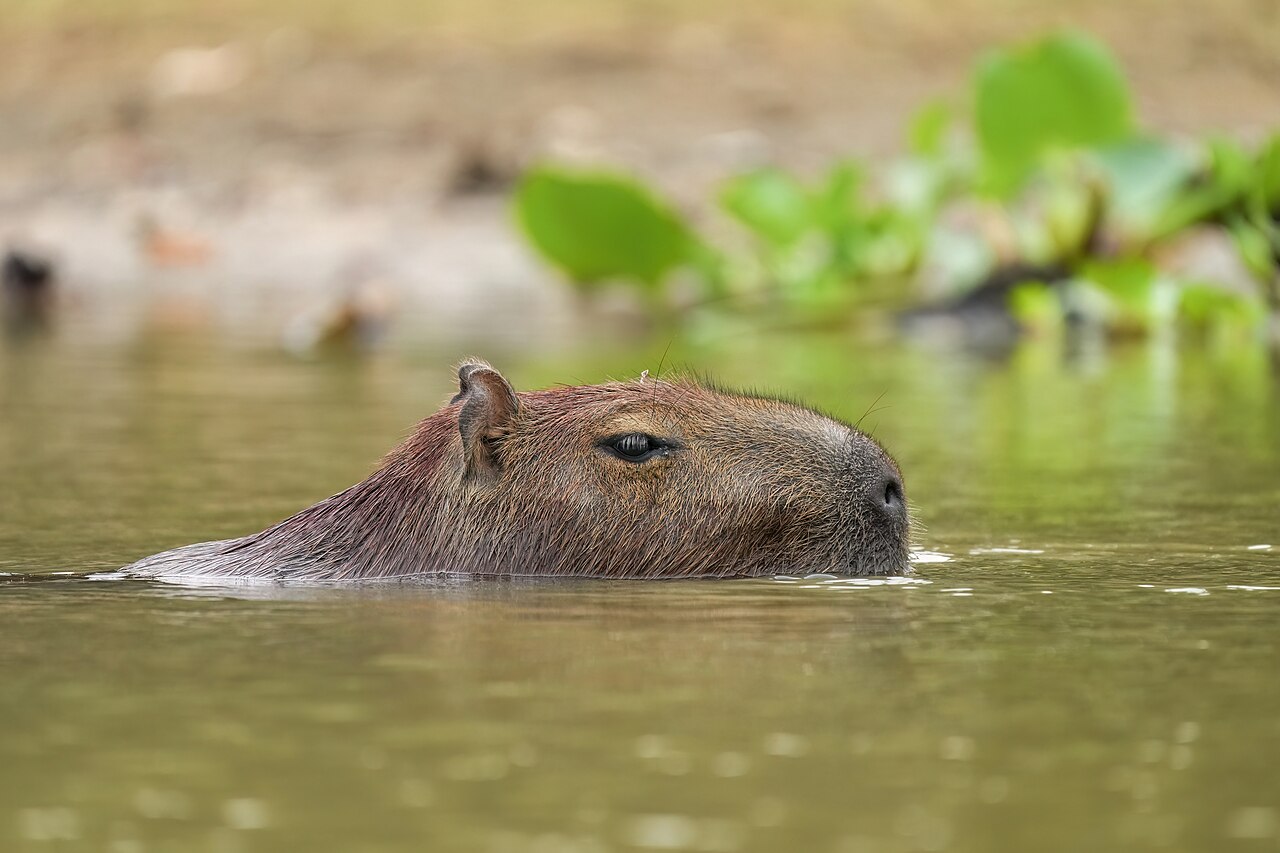
They live across much of South America, always near water — rivers, marshes, flooded grasslands — because capybaras are semi-aquatic. Their feet are partially webbed, their eyes and nostrils sit high on the head so they can float almost entirely submerged, and if something worrying shows up, they can dive and stay under for up to five minutes. Nature designed them as an amphibious lawnmower, and then made them extremely chill about it.
The chill is not an act — it’s biology
Here’s the part that makes the memes better rather than worse: the capybara’s legendary calm isn’t a personality quirk. It comes straight from how the animal lives.
Capybaras are non-territorial herbivores. They eat grass. They don’t hunt anything, so they’ve no reason to be aggressive, and they don’t defend a patch of turf, so they’ve no reason to squabble over borders. Instead they live in relaxed herds of about 10 to 40, grazing together, wallowing together, and keeping a lot of eyes on the horizon for predators. In a group like that, staying mellow and tolerant is the survival strategy.
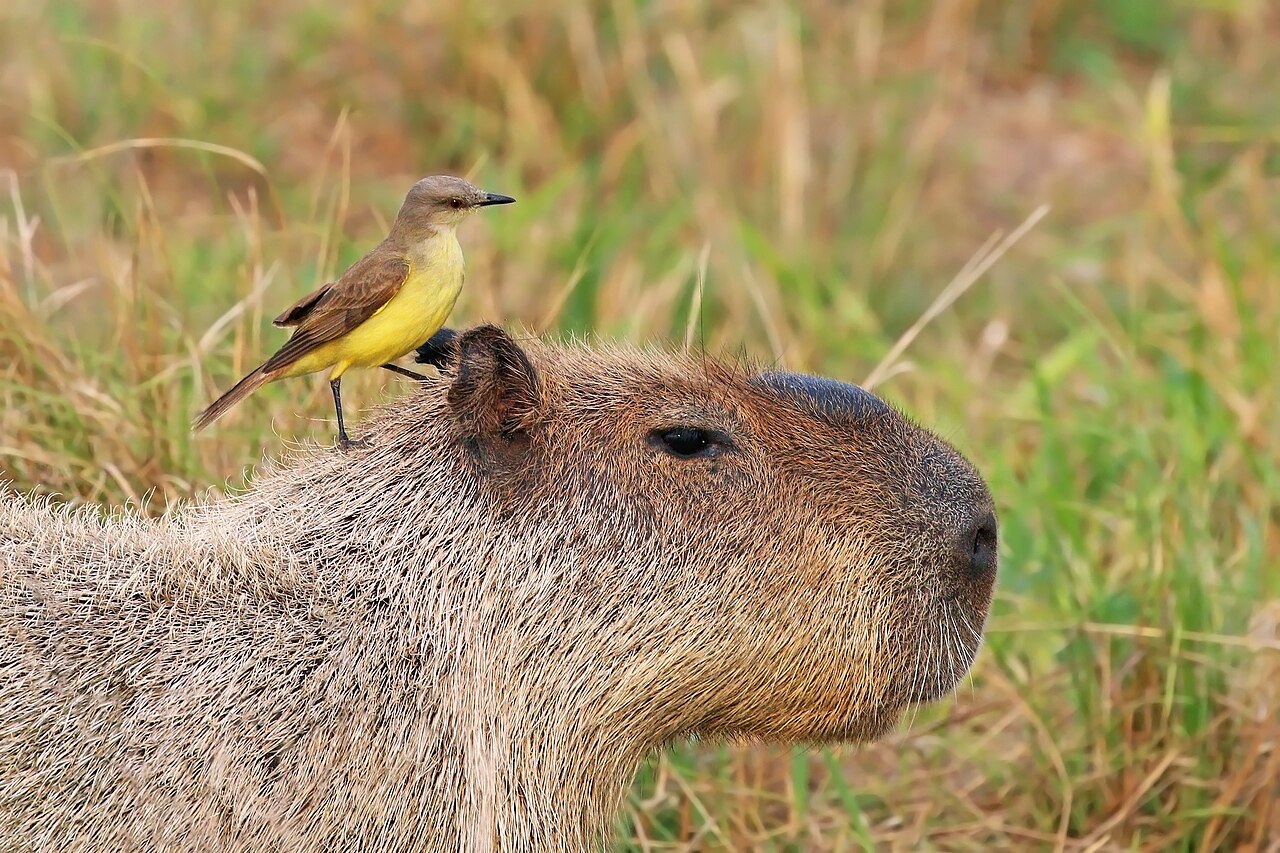
So when a bird lands on a capybara, the capybara does the maths and concludes: this is fine. Often it’s better than fine. Birds like the cattle tyrant perch on capybaras specifically to snap up the insects buzzing around them — the capybara gets a mobile pest-control service, and the bird gets a moving buffet with a great view. It’s not tolerance so much as a genuine partnership.
Why so many other animals end up hanging out on them
Once you know the capybara is a big, warm, stationary, harmless herbivore that hangs around the exact watering holes everyone else needs, the famous “capybara with a hundred friends” photos start to make sense.
It helps that capybaras gather near water, which in the dry season is where every animal has to be. Put a giant, placid, non-threatening creature in the one spot everybody visits, and you get a natural meeting point. The capybara isn’t collecting friends on purpose. It’s just the most agreeable seat in the house. 😌
An honest word, because the internet oversells it
The capybara has become a kind of patron saint of “getting along with everyone,” and that’s lovely — but it deserves the honest version, which is still charming.
Capybaras are calm, not literally saintly. Individuals vary, and a capybara that’s startled, cornered, or crowded can bite and will absolutely let you know it’s unhappy. They’re wild animals, with big front teeth, doing wild-animal things. The magic isn’t that they love everyone — it’s that a life with no need to fight produced an animal this easy to be around. 🤍
That, honestly, is the nicer story anyway. The capybara isn’t peaceful because it’s trying to be. It’s peaceful because it eats grass, minds its own business, and has no reason in the world to pick a fight. Calm as a consequence of a gentle life.
Why this lives on a good-news blog
Because in a very noisy world, there is something quietly reassuring about an animal whose entire deal is: eat some grass, sit in the water, let the bird stay. No drama. No territory. No fight to be had.
The capybara isn’t solving anything or teaching a grand lesson. It’s just a big, damp, gentle rodent floating through a peaceful little life — and letting whoever wants to come along for the ride. And the whole internet took one look at that and went aww. Fair. 🌾🤍


