

Here is a cactus that does not want to be eaten. 🌵
The cholla is a shrubby, wildly-branching desert cactus that looks like a coat rack designed by someone who was angry. Its stems are sheathed in long pale spines — so many spines that the fuzziest species has earned the sarcastic nickname teddy-bear cholla, on the understanding that you should absolutely never hug it. And tucked in among the spines it also carries glochids: tiny, nearly invisible barbed hairs that get into your skin like fibreglass and are astonishingly reluctant to leave.
And every spring, this plant produces one of the loveliest foods in North America.
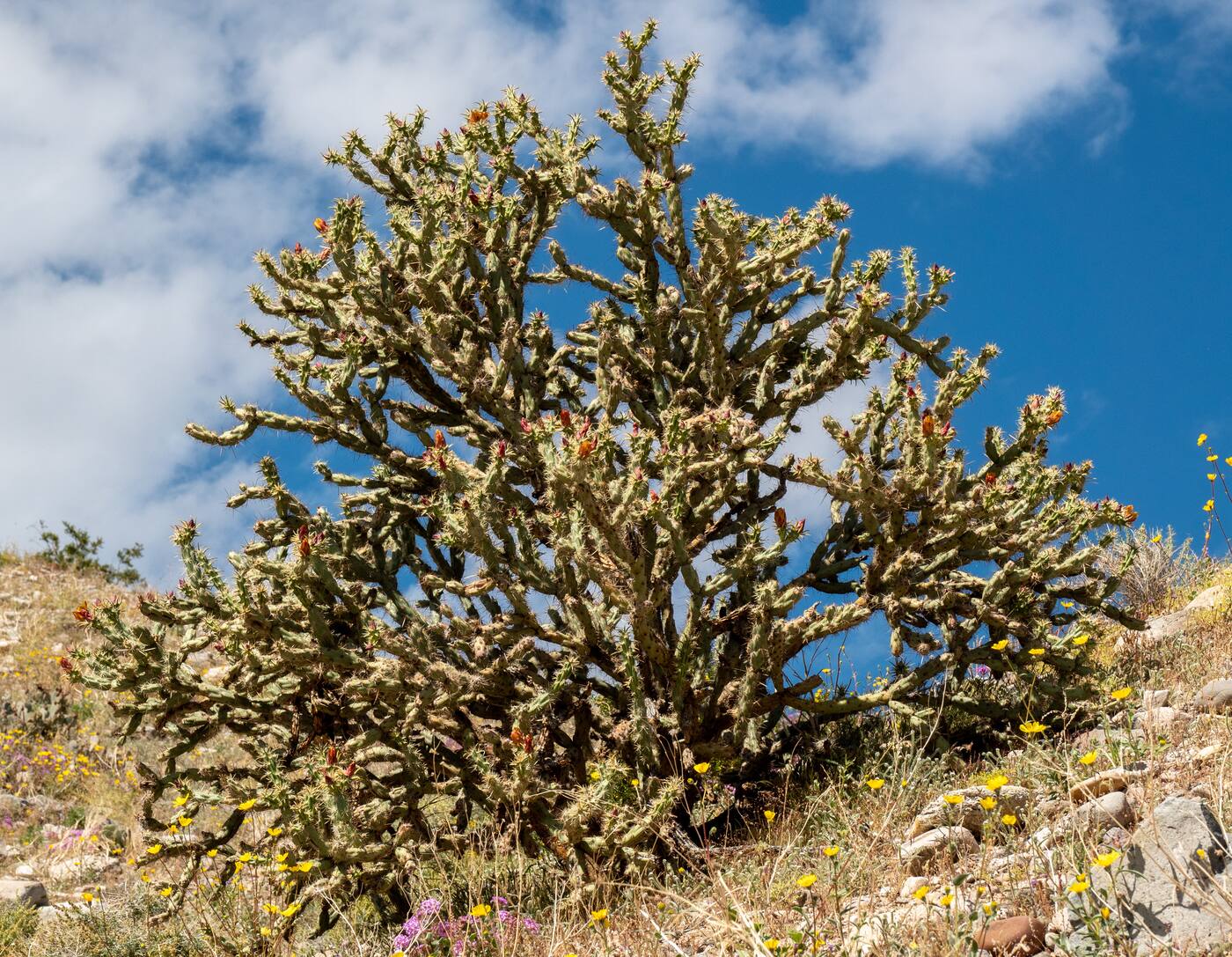
Ciolim
In the Sonoran Desert — southern Arizona and northern Sonora, Mexico — the O’odham have been harvesting cholla flower buds for a very long time. In O’odham they’re called ciolim, and they are picked in spring, in the narrow window before the buds open into flowers.
The harvest is done by hand, with a slim wooden tool a bit like a long chopstick, twisting each bud off its stem without ever touching the plant. Then comes the part that gets skipped in every romantic description of foraging: every single bud has to be de-spined. Traditionally that means rolling and rubbing them — in a basket, in sand, on a screen — until the spines break off, and then going over the survivors by hand. Modern foragers add tricks (a torch, a quick blanch, a pair of tweezers and a lot of resolve), but the principle hasn’t changed. Nobody eats a cholla bud by accident.
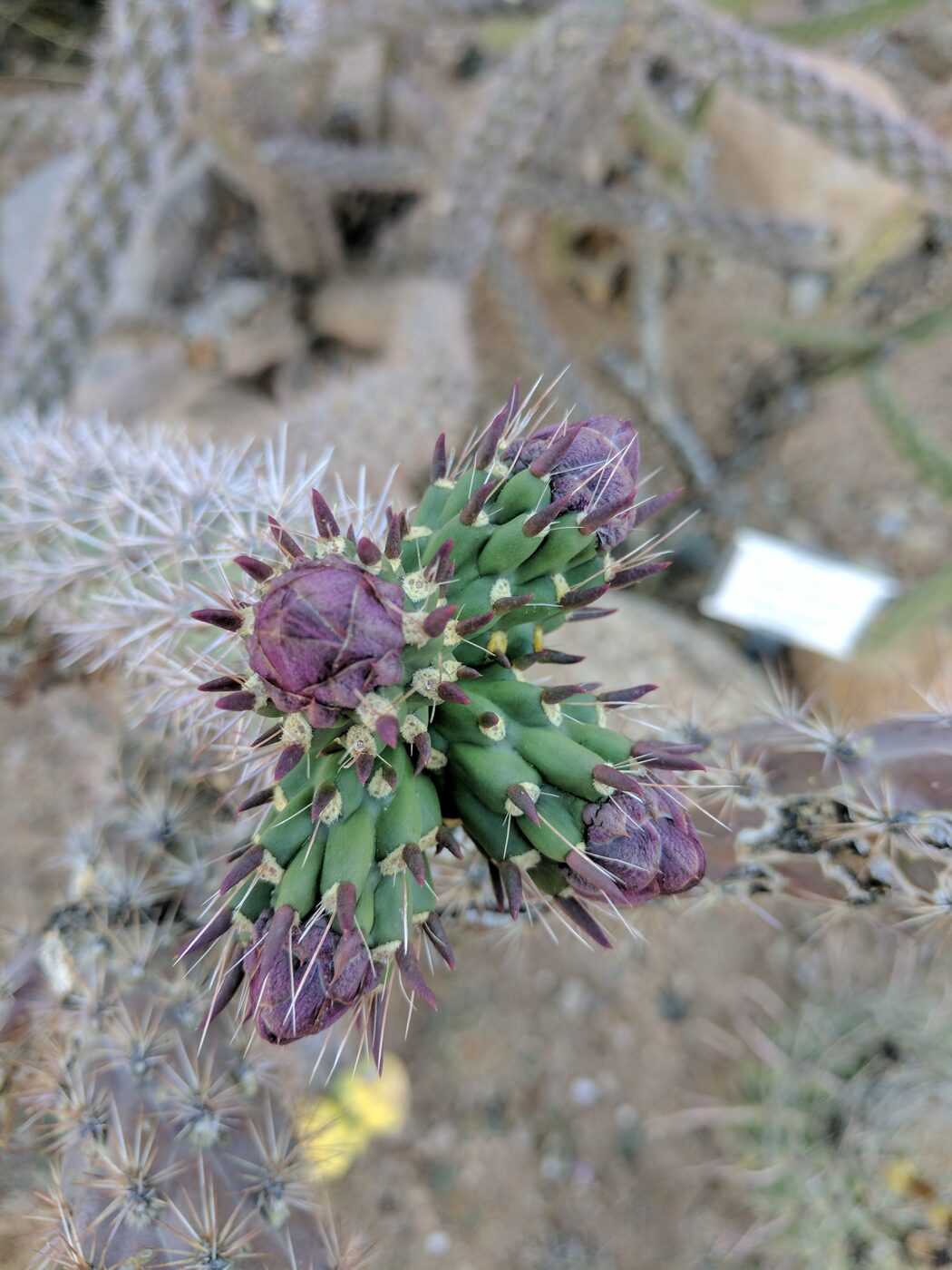
What you get at the end is worth it. Cooked cholla buds are tender and a little chewy, somewhere between an artichoke heart and asparagus tips, with a bright lemony tang at the edge. They’re excellent with tepary beans — another Sonoran desert crop — and they turn up in stews, salads and salsas. The traditional method is a pit oven: a fire dug into the ground, the buds laid over it between layers of foliage, the whole thing sealed under earth and left to do its slow work. Boiling works too, and takes a good while — these are not a five-minute vegetable.
The month the desert turns yellow
Cholla bud season is short. Depending on the species and the elevation, it runs somewhere from March into early May, with the sweet spot around April — the time of year the desert briefly goes gold, as brittlebush and palo verde and the cacti all bloom at once.
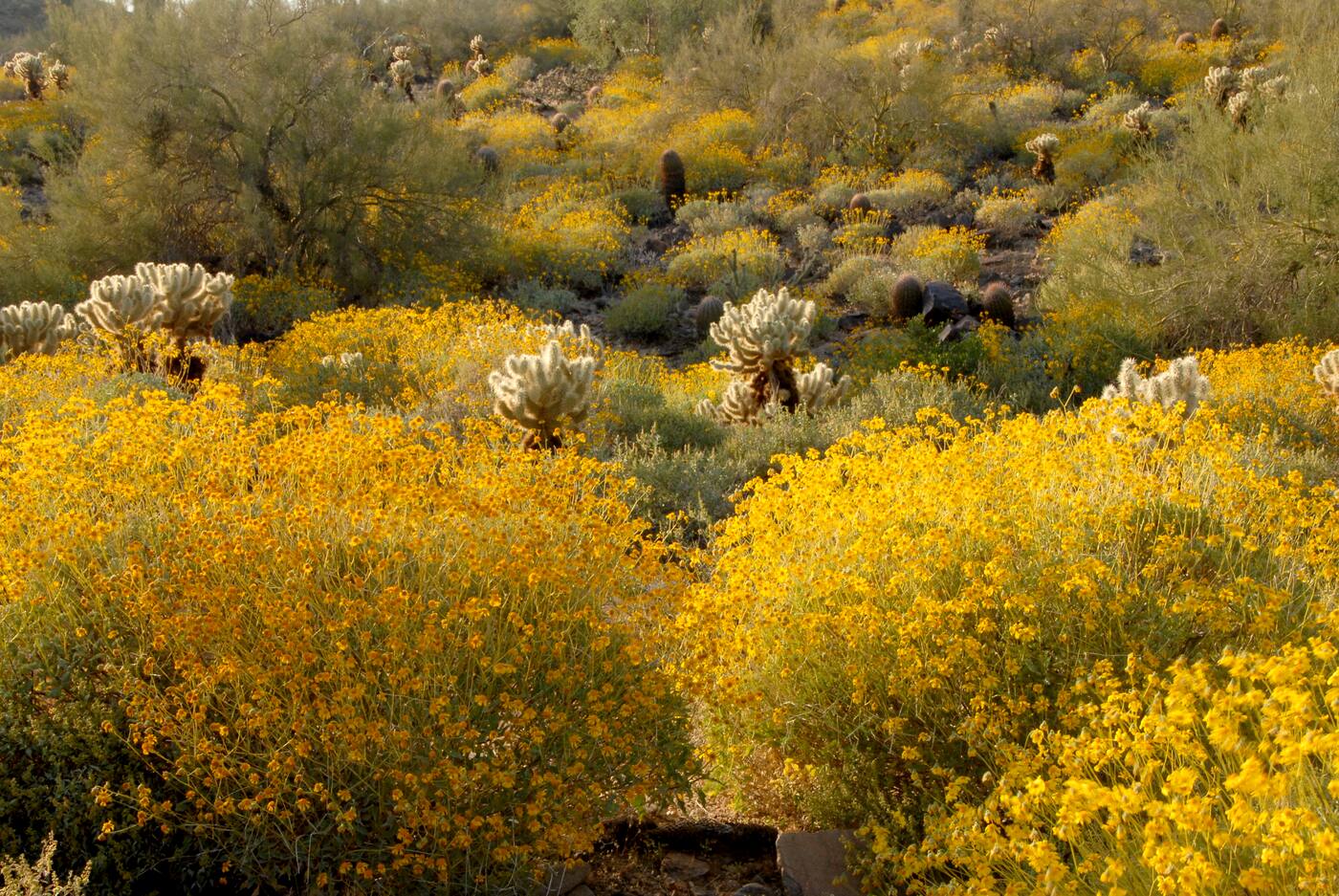
That timing is not an accident of the calendar — it’s the whole point. Early spring was historically the lean season in the desert: last year’s stores running low, this year’s crops nowhere near ready. The Tohono O’odham name for that stretch translates as the painful moon — the hungry one. And right in the middle of it, reliably, the cholla puts out thousands of dense, mineral-rich buds, and the desert hands over a meal at precisely the moment there isn’t one.
That’s the part that gets me. Not that the food exists, but that it arrives on time, every year, exactly when it’s needed, and that generations of people noticed and built a whole season’s work around it.
A very small package of calcium
Cholla buds are genuinely, unusually nutritious. The number that circulates — and it’s the one the O’odham food organisations lead with — is that about two tablespoons of cholla buds carry roughly as much calcium as a glass of milk. In a desert without dairy herds, that made them a quiet cornerstone: a food particularly valued for elders and for nursing mothers, in a form that keeps.
Because they do keep. Dried in the sun, cholla buds shrink to hard little nuggets that store for years in a sealed jar. Soak them overnight and they plump back up, ready to be simmered. A spring afternoon’s picking becomes a pantry that gets a family through to the next spring — which is the actual reason the harvest matters, far more than the novelty of eating a cactus.
Leave some for the cactus
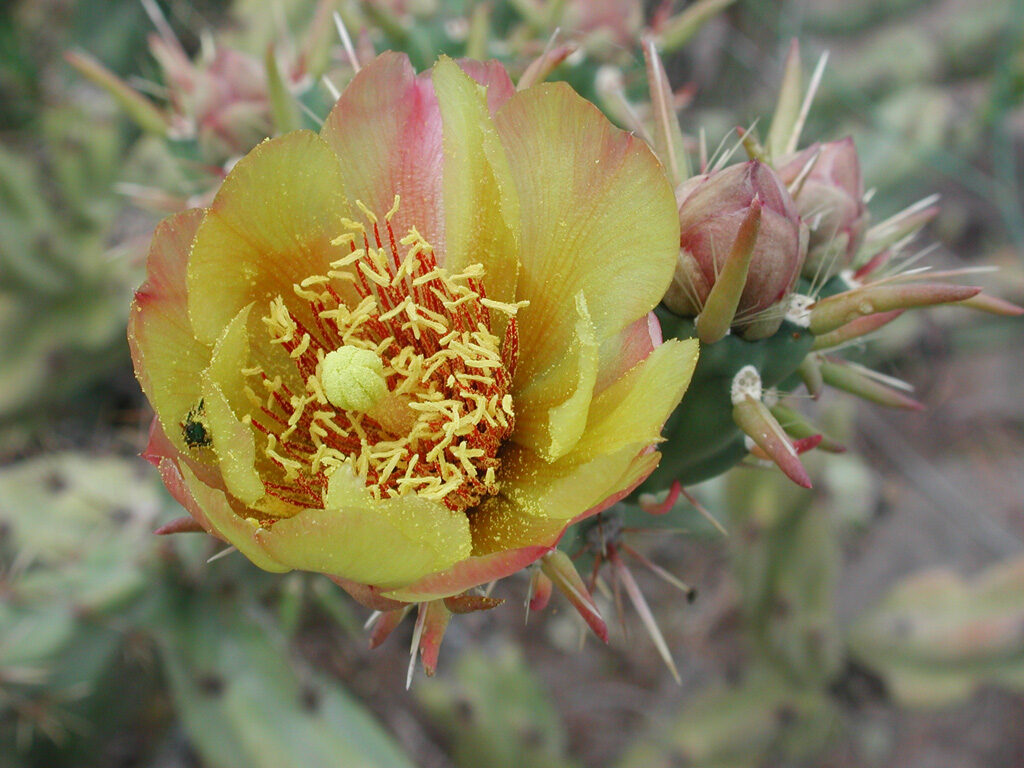
There’s an unwritten rule that everyone who harvests ciolim follows, and it’s a nice one: never strip a single plant. Take a few buds from this cholla, a few from the next, and move on. Partly it’s for the cactus, which would like to make fruit and seeds this year, thank you. Partly it’s for the bees and the birds and everyone else on the flowering schedule.
And partly it’s just for you, because a hillside of cholla in full bloom — magenta, coral, lemon-yellow, all of it perched on top of those ridiculous spiny arms — is one of the desert’s great sights, and you’d be trading it for a slightly bigger bag.
Still happening, right now
This is where it’s important to be clear: ciolim is not a historical footnote. O’odham families still go out every spring. Buds are still pit-roasted and boiled and dried. The knowledge of when to go, which plants, which stage, how to get the spines off without shredding your hands — that’s still being handed down, in person, one season at a time.
It’s also being actively rebuilt. In 1996, Tohono O’odham artist Terrol Dew Johnson (1973–2024) and Tristan Reader founded Tohono O’odham Community Action — TOCA — to bring traditional desert foods back into everyday life on the Nation: tepary beans, mesquite, saguaro fruit and syrup, chia, acorns, and cholla buds. The motivation was as practical as it gets. The Tohono O’odham have faced one of the highest rates of adult-onset diabetes of any population in the world, and the foods their great-grandparents ate — slow, fibrous, mineral-dense desert crops — turn out to be exactly the foods a body does well on. Johnson was recognised at the White House in 2011 as a “Champion of Change” for that work.
So the cholla bud is doing two jobs at once. It’s a genuinely delicious thing that tastes like artichoke and grows on the meanest-looking plant in the desert. And it’s a piece of living culture that somebody fought to keep, and won.
Why this is on a good-news blog
Because it’s a story about paying attention. 🌵💛
Somebody, a very long time ago, looked at the single most hostile plant on the horizon — the one covered in barbed hairs, the one you steer your whole body around — and thought: there’s something good in there. And then figured out when to pick it, how to get the spines off, how to cook it, how to dry it so it lasts a year, and how much to leave behind so there’d be more next spring. That’s not a recipe. That’s a few centuries of careful, generous science, done by people who then taught it to their kids.
And this coming April, when the Sonoran Desert goes gold and the cholla studs itself with buds all over again, somebody will head out with a wooden stick and a bucket, exactly like their grandmother did. The desert will hand over dinner. It always has.
Got a food from your corner of the world that takes real skill to get at? Sign the guestbook and tell us about it. 🌵


