

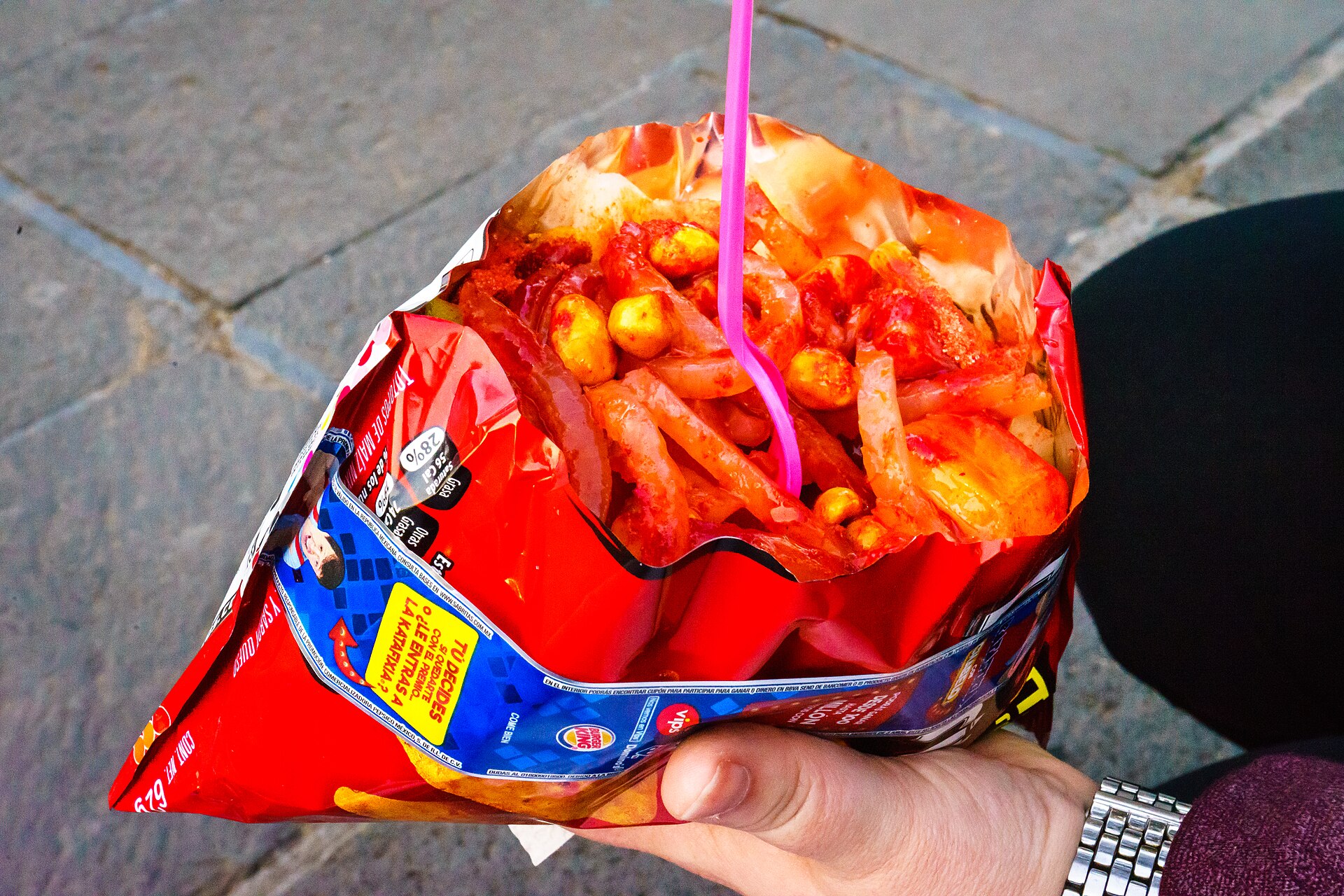
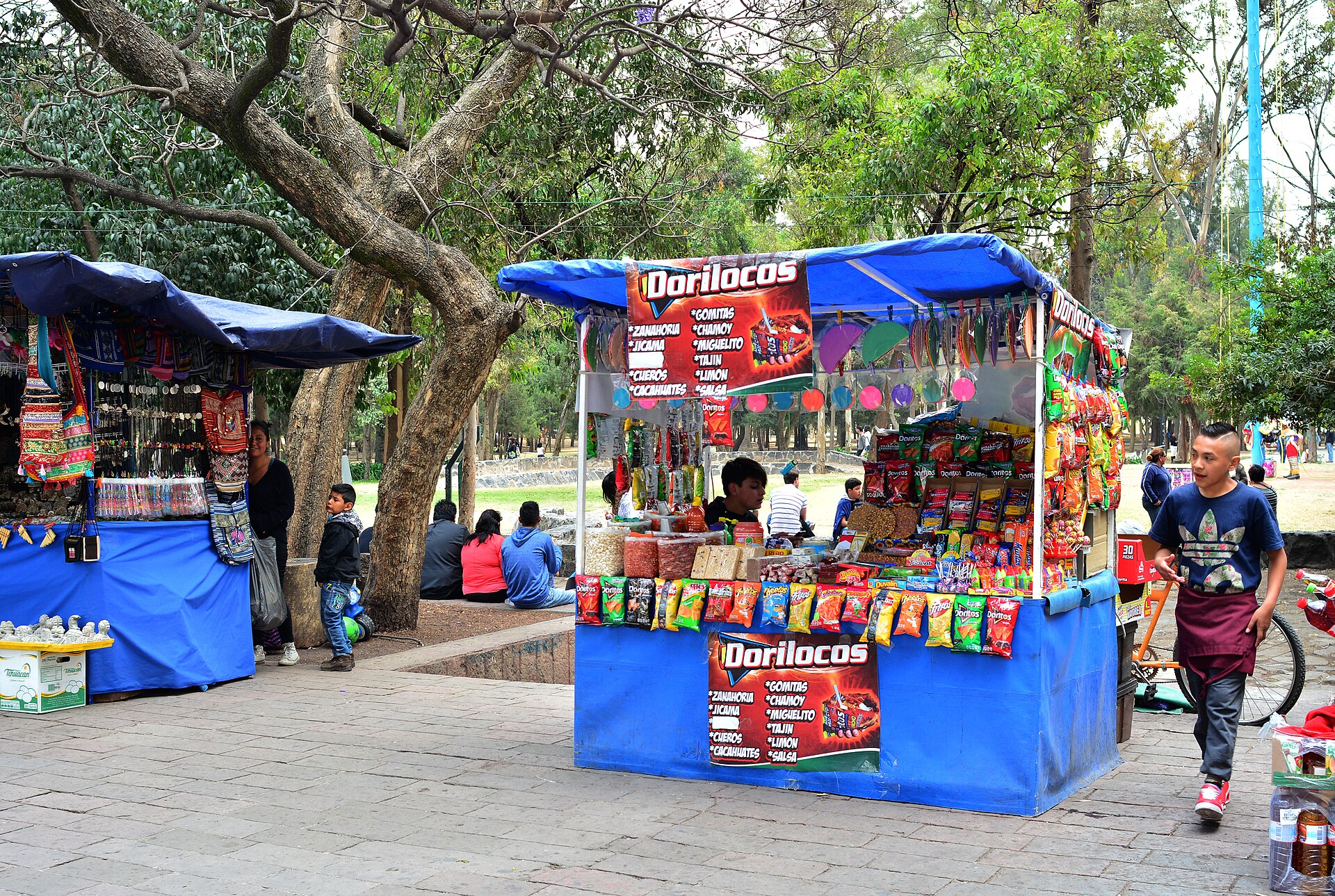
Picture a cart on a busy street corner in Mexico City. Somebody orders. The vendor picks up an ordinary bag of Doritos — the exact bag you’d buy at any petrol station on the planet — and, instead of opening it at the top, slices it open lengthwise, down the side. The bag flops open like a canoe. 🛶
Then the loading begins.
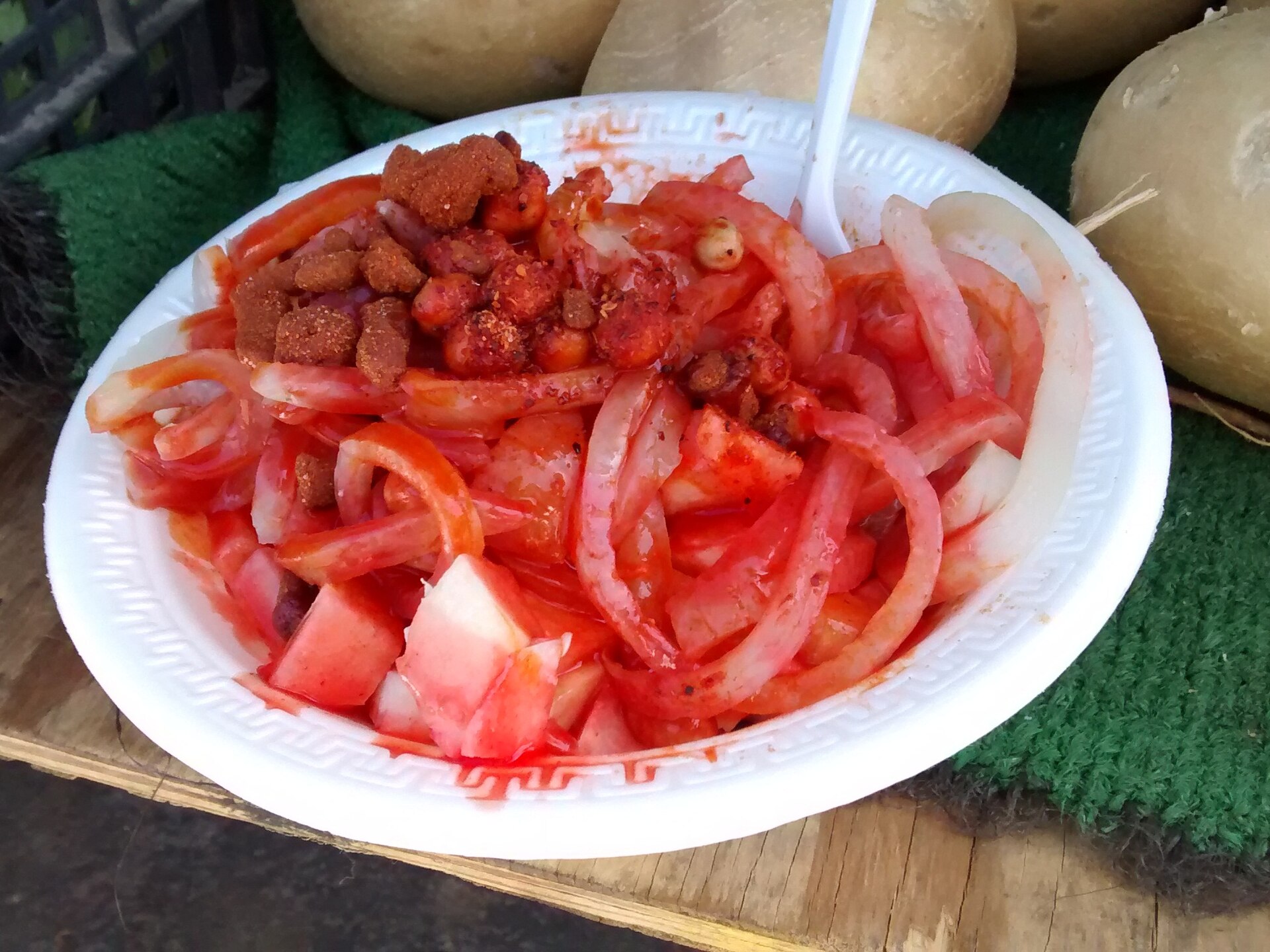
Cucumber, cut into batons. Jícama, that crisp white root that tastes like an apple and a potato agreed on something. A generous rain of cacahuates japoneses — crunchy shell-coated peanuts. A squeeze of lime over everything. Chamoy, the glossy red-brown sauce that is sweet and salty and sour and spicy all at once, poured on with real commitment. Hot sauce. Chilli powder. Pickled cueritos if you want them. And then — this is the part that makes newcomers laugh out loud — a handful of tamarind gummy candies dropped on top. 🍬
A fork goes in the side. That’s the whole presentation. The bag is the bowl. You eat it standing up, walking, on a bench in the park, and when you’re done there’s no plate to wash because there was never a plate.
Wait — gummy bears? On the chips?
Yes. And here’s the thing: it works.
Mexican snack culture has a deep, well-established love for what you might call the full chord — sweet, salty, sour, and spicy all sounding at once instead of taking turns. A mango with chilli powder on it. A cup of watermelon with lime and salt. Tamarind candy that is somehow simultaneously a sweet and a hot sauce. Dorilocos is that instinct taken to its logical, glorious, maximalist conclusion: every single flavour axis, all at the same time, in one hand.
So the gummies aren’t a joke topping. They’re the sweet note holding down the bottom of the chord while the chamoy does sour, the Doritos do salty, and the Valentina does the rest. The cucumber and jícama are there for texture and cool — they keep the whole thing from becoming a single overwhelming crunch, and they’re genuinely refreshing when it’s twenty-eight degrees out and you’re on your feet.
Where it came from
The family name for all of this is tostilocos — from Tostitos plus loco, “crazy.” Swap the base chip for Doritos and it becomes dorilocos. Use Fritos, or hot Cheetos, and vendors will happily coin you a new name on the spot.
The original is generally credited to street vendors in Tijuana, in Baja California, in the late 1990s. That first version was chips, cueritos, cucumber, jícama, little wheel-shaped fried snacks called rueditas, Japanese peanuts, lime, chamoy and hot sauce. From there it did what good street food does: it travelled. Up through northern Mexico, into Mexico City, across the border into California, Texas and Arizona, and onto the menus of juice bars, stadium concourses and thousands of independent carts.
There is no company behind it. No test kitchen, no launch campaign. It spread the way a good joke spreads — one person saw it, understood it immediately, and started doing it too. ✨
The two ingredients with the best backstories
Two of the toppings turn out to have quietly wonderful histories, and they’re both stories about people arriving somewhere new and making something delicious out of it.
The Japanese peanuts. Those crunchy, shell-coated peanuts are called cacahuates japoneses in Spanish and “cracker nuts” in English — and despite the name, they were invented in Mexico. In the 1940s a Japanese immigrant named Yoshihei Nakatani lost his job when the button factory he worked at was shut down. He took a stall at La Merced market in Mexico City, and adapted a snack from home — mamekashi, seeds jacketed in seasoned flour — to Mexican tastes. His daughter Elvia drew the design on the packets. He and his wife Emma sold them on the streets themselves. The family business became the brand Nipón. Nakatani never patented the recipe, which is exactly why the peanuts are now everywhere in Mexico, made by everybody, sitting on top of your dorilocos. 🥜
The chamoy. That red-brown sauce descends from Chinese salted-plum snacks (huà méi), which reached Mexico across the Pacific — most likely by way of Filipino travellers on the Manila galleons, the trade ships that ran between Manila and Acapulco from 1565 to 1815. The Filipino version is called champoy; say it a few times and you can hear chamoy arriving. The method survives intact: pickle fruit in brine, dry it out, then season the leftover brine with chilli. The dried fruit is sold as saladitos. The brine becomes the sauce. Nothing wasted, in a recipe that’s been travelling for four hundred years. 🌏
No rules, on purpose
The best documented fact about dorilocos might be that there is no correct recipe. It is, by design, a “no rules” dish. Vendors add nacho cheese, shredded cheese, pickled jalapeños, chopped mango, corn, Clamato, mayonnaise — whatever their corner likes. Regulars order by preference: more chamoy, no cueritos, extra peanuts, heavy on the lime.
Which means every cart is running a slightly different version, tuned over years to the specific people who walk past it. That’s not sloppiness. That’s a recipe that belongs to a neighbourhood instead of a company. 💛
Why this is on a good-news blog
Because dorilocos is what happens when nobody is in charge and everybody is paying attention.
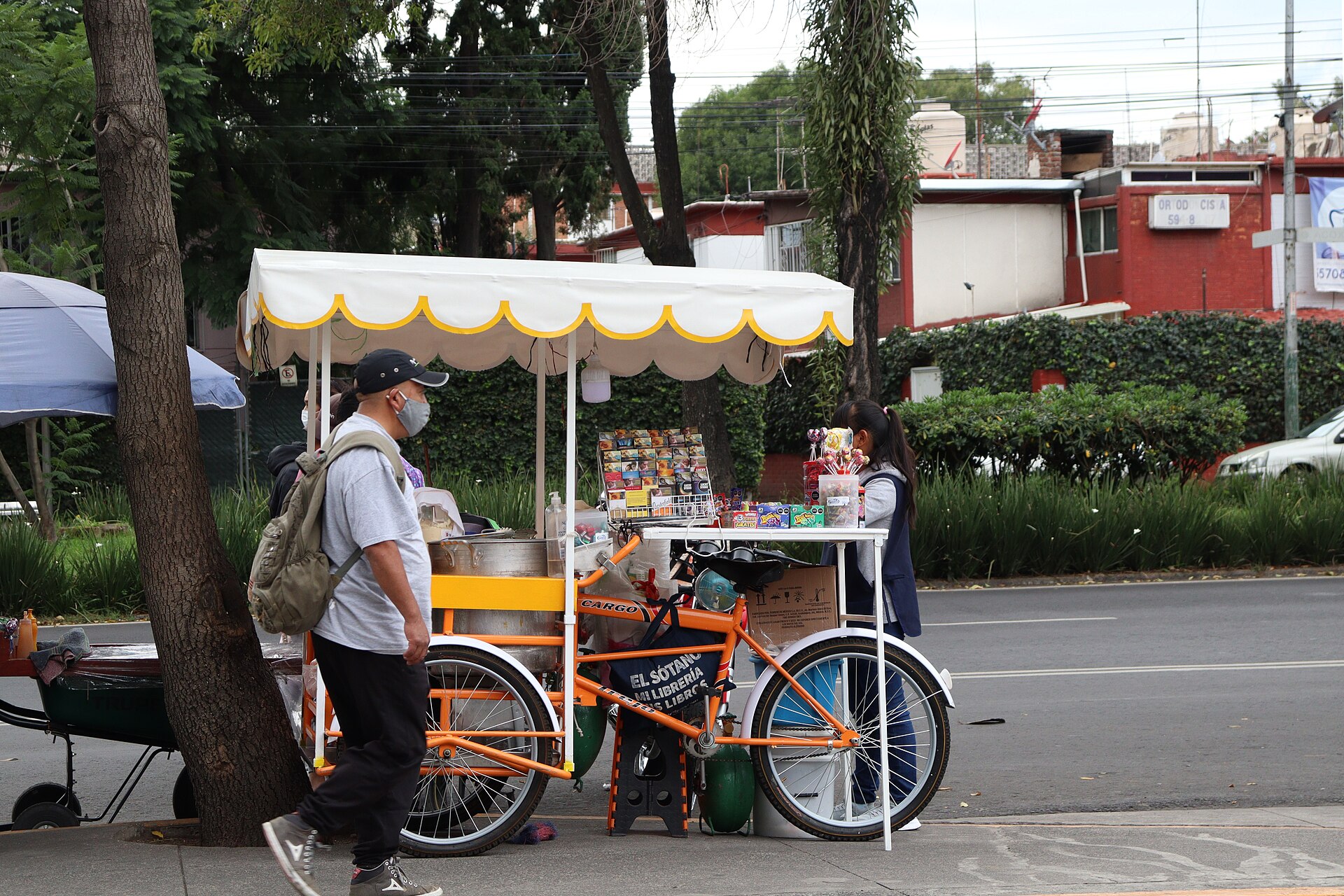
It’s an industrially produced chip bag rescued into something handmade. It’s a snack whose two most interesting components arrived from Japan and from China-via-the-Philippines and got adopted so thoroughly that they’re now unmistakably Mexican. It’s a whole cheerful meal that costs very little, needs no kitchen, generates no washing-up, and gets assembled in front of you by a person who has made ten thousand of them and still asks whether you want extra lime.
Somebody in Tijuana about thirty years ago looked at a bag of chips and thought this could hold more. Right now, on some corner, a bag is being sliced open and loaded up, and the person waiting for it is already smiling. The world does that kind of thing more often than you’d think. 🌶️🍟
Got a gloriously improbable snack from your corner of the world? Sign the guestbook and tell us. 🍬


