

Here is a village where, if you want to visit your neighbour, get to school, deliver the groceries, or bring home a new sofa, you do the same thing: you get in a boat. 🛶
Giethoorn, in the northern Dutch province of Overijssel, is a real place where about 2,600 people live — and the historic heart of it has no roads and no cars at all. Instead there are canals: still, glassy little waterways threading between hundreds of thatched-roof cottages, each on its own tiny island, each reached by a hump-backed wooden bridge. It looks exactly like the inside of a snow globe, except nobody built it to be charming. It just turned out that way.
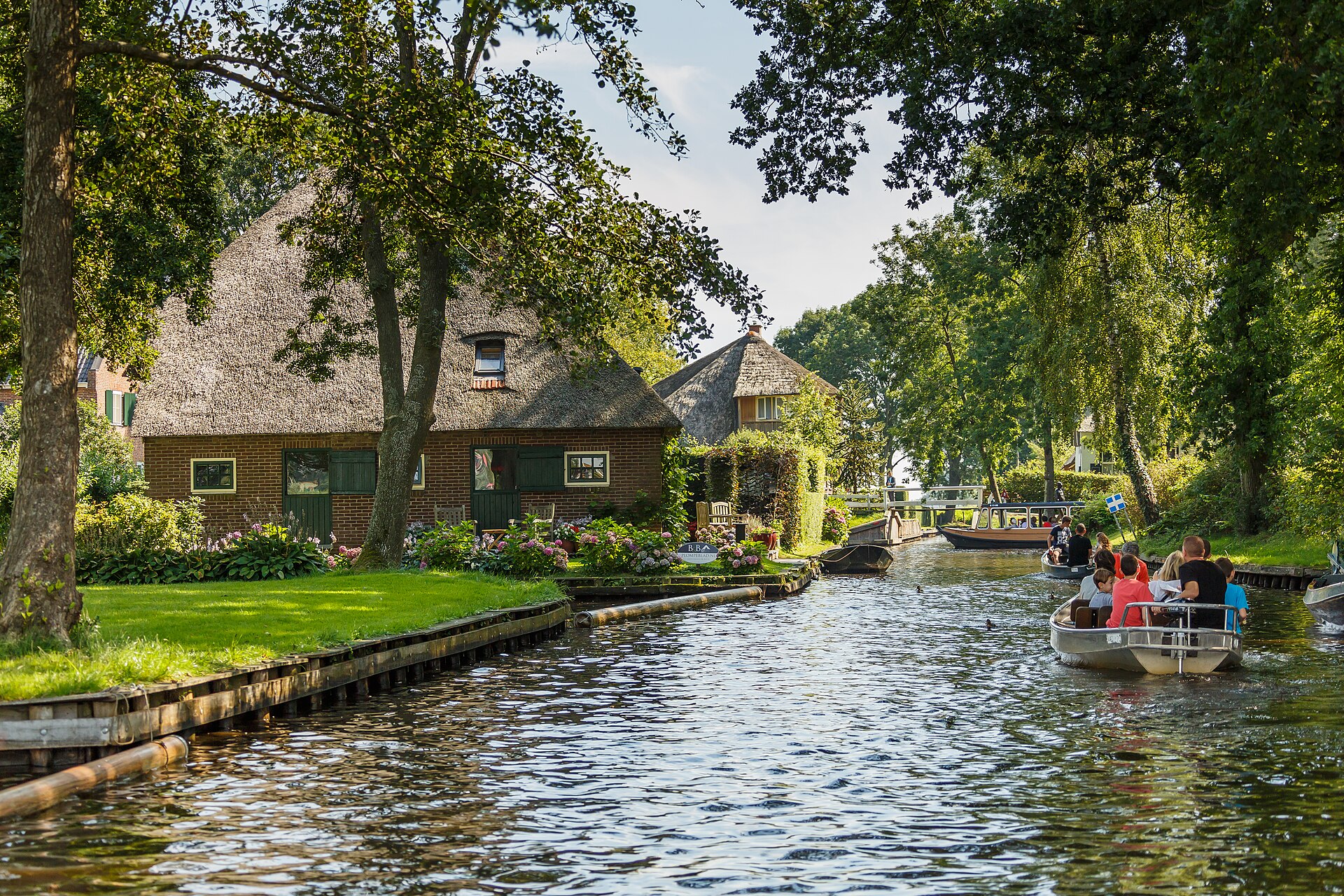
The streets are water
Walk into the old village — the part called Giethoorn-Zuid — and the first thing your brain does is look for a car. There isn’t one. The canals do the job a street would: the wide ones carry boats, and a slim towpath, the Binnenpad, runs alongside for pedestrians and bicycles. To cross from the path to a house, you go up and over one of the village’s 170-plus little bridges.
They’re privately owned, most of them — a bridge per garden, arching up steeply enough that a boat can slide underneath. Locals will tell you the record house has to be reached by crossing several bridges in a row. Furniture arrives by punt. So does the post. So, once upon a time, did the cows.
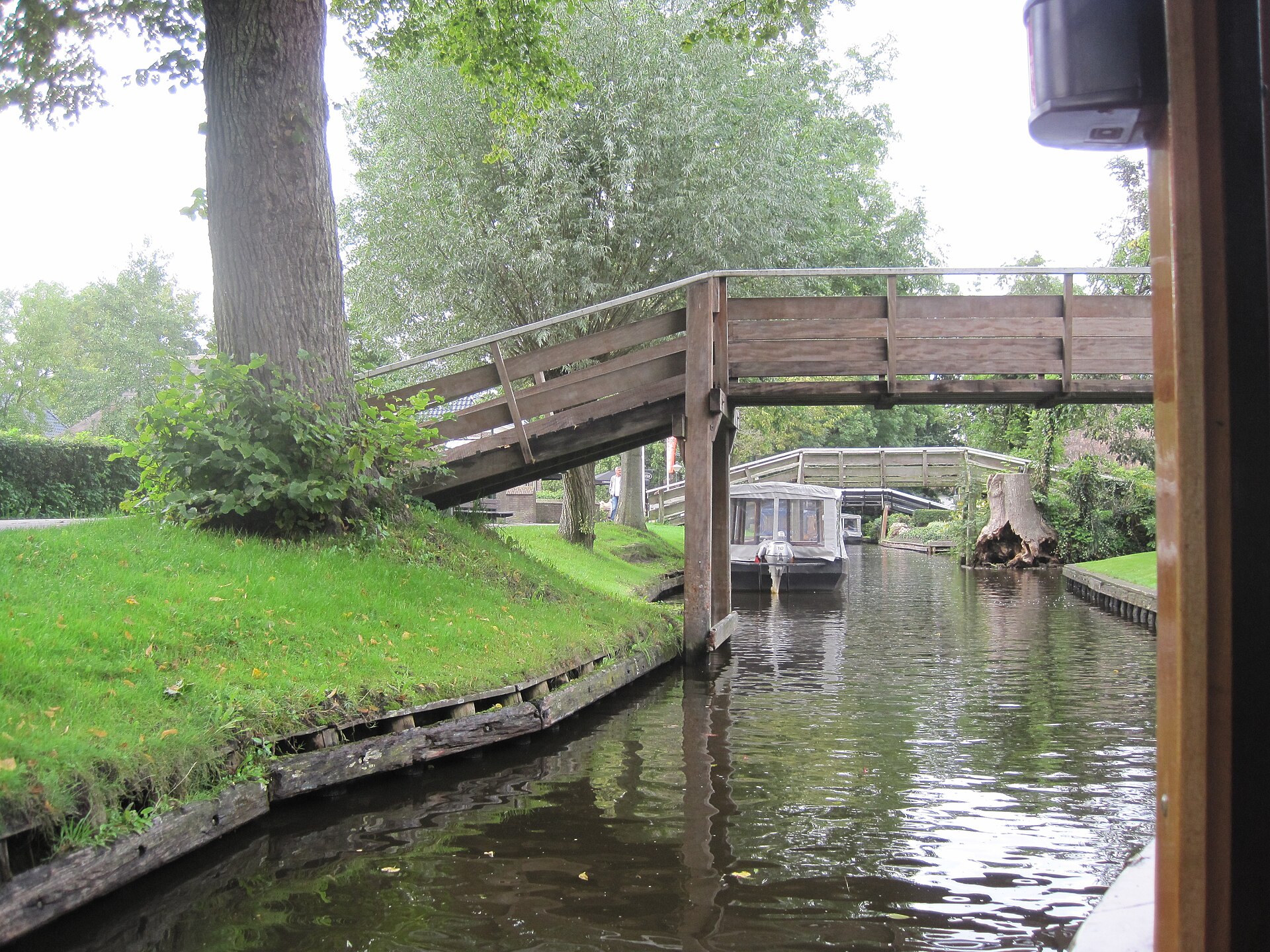
Because there’s no through-road, there’s no through-traffic, and because there’s no through-traffic, the place is astonishingly quiet. The soundtrack of Giethoorn is water lapping, birdsong, the occasional duck registering a complaint, and — if a boat goes by — a faint electric hum and the ripple of the wake. That’s it. That’s the noise floor of the whole village.
Whisper boats, and why they’re called that
The boats deserve their own paragraph, because the Dutch gave them the best possible name. The little open launches you rent by the hour are fluisterboten — “whisper boats.” They run on quiet electric motors specifically so they don’t break the hush. You can putter the length of the village at a walking pace, and the loudest thing you’ll hear is your own conversation.
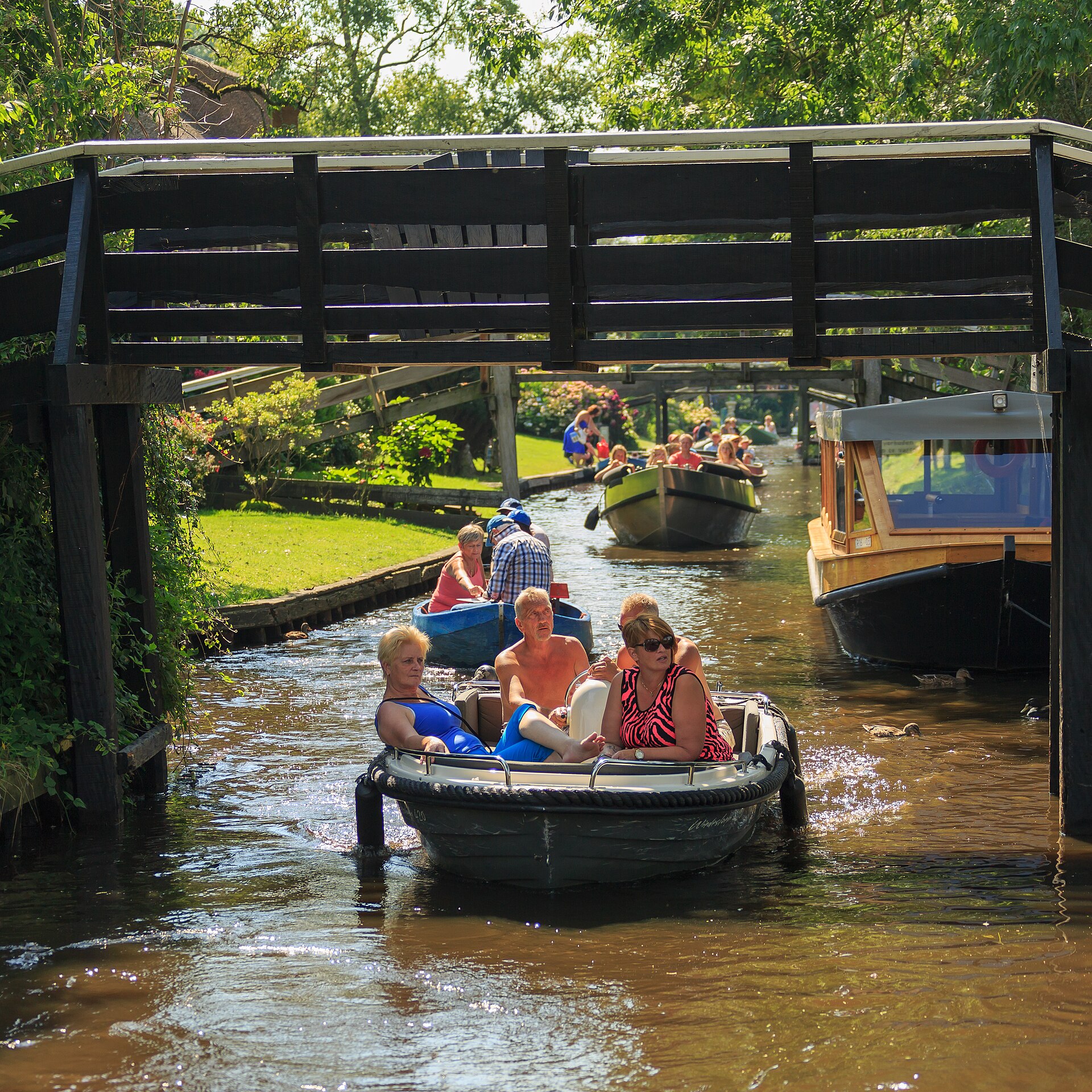
It’s a small, lovely piece of collective good manners, encoded into the machinery: the village decided that its best feature was the calm, and then quietly engineered the boats to protect it.
The cottages, and the goat horns
The houses are the other half of the magic. Most are old Dutch farmhouses with steep thatched roofs, sitting low on their little green islands, hydrangeas leaning over the water. Thatch was never a luxury here — reed grew everywhere in the surrounding marshes, so people roofed with what the landscape handed them. The result, a few centuries on, is a village that looks hand-knitted.
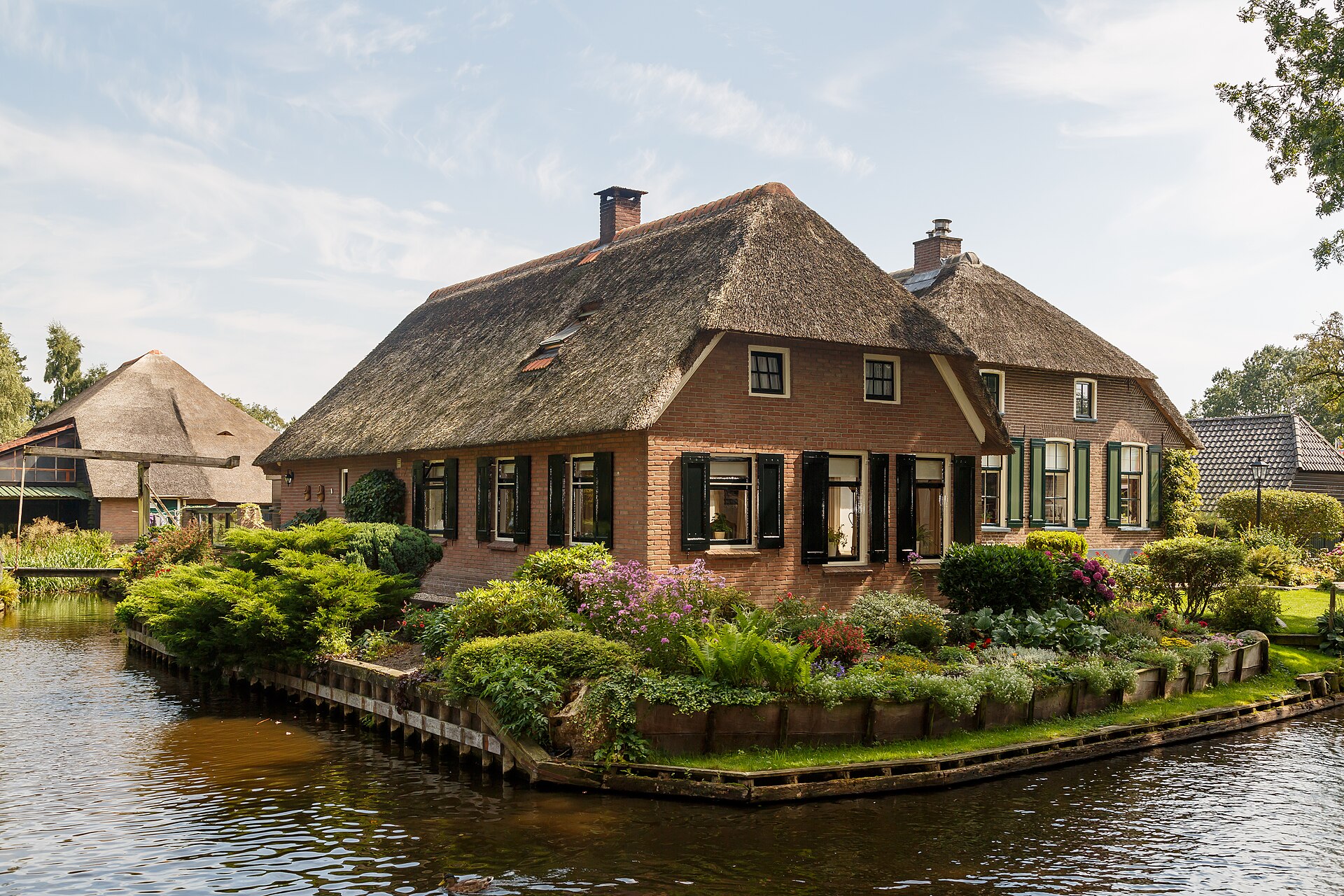
And the name? Giethoorn is thought to come from geytenhorn — “goat horns.” The story goes that the settlers who arrived around the 13th century, digging into the boggy ground, kept turning up piles of horns from wild goats — probably a herd wiped out in a long-ago medieval flood. They named the whole place after the strange harvest. It is a very Dutch thing, to found a fairytale village and then name it after some bones you found in a ditch.
The canals were an accident
Here’s the part that turns the whole thing from “pretty” to “quietly wonderful”: nobody set out to build Venice. The canals of Giethoorn are industrial leftovers.
For centuries this was peat country. People dug up the waterlogged soil, dried it, and burned it for fuel — a huge, slow, generations-long harvest of the marsh. Wherever they scooped the peat out, water filled in behind them. Over time all those dug-out trenches, ponds, and channels joined up into the network of canals you see today. The islands the houses sit on are simply the strips of ground the diggers left standing between cuts.
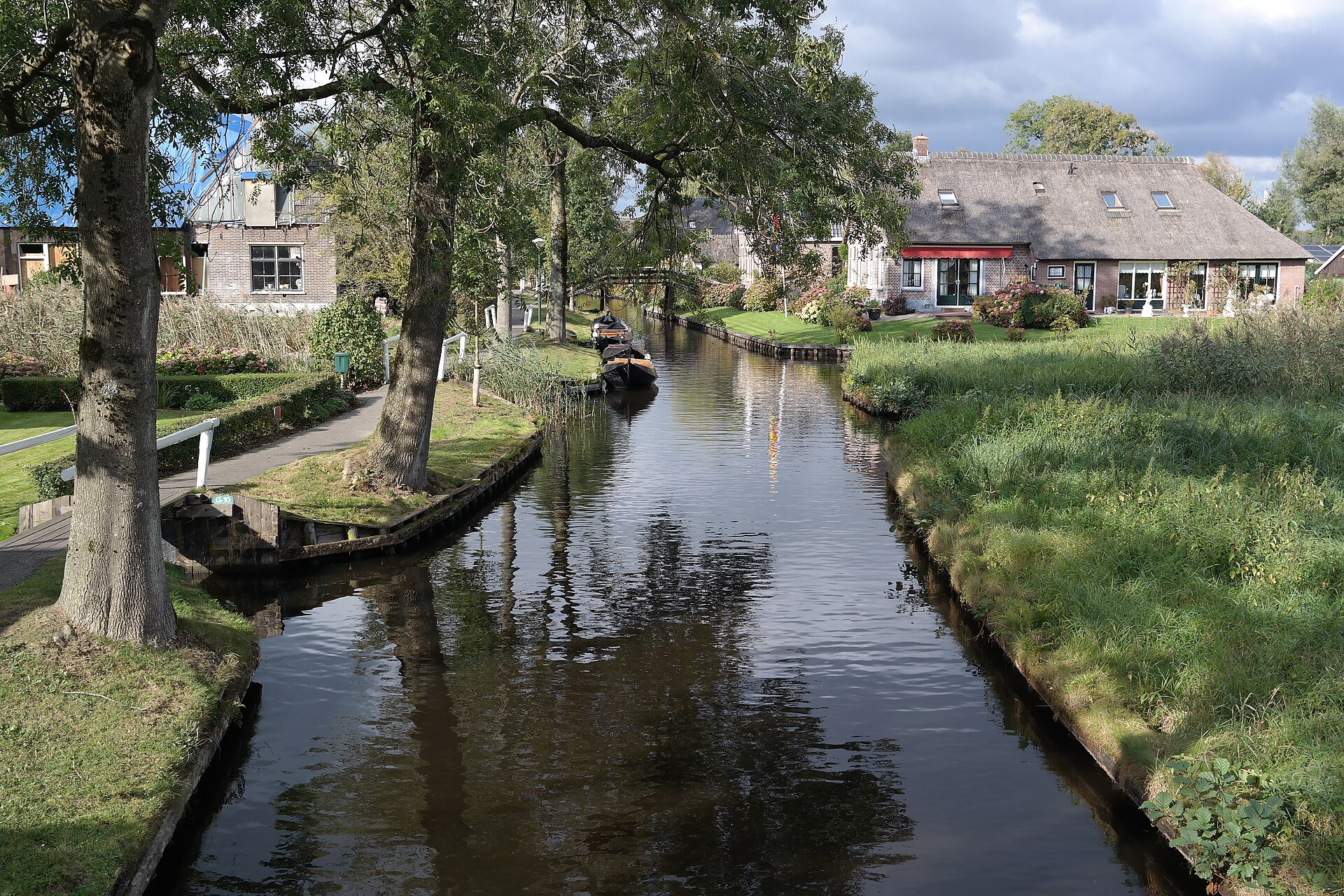
So the most photographed, most serene village-scape in the Netherlands is, underneath, the scar tissue of an old fuel industry — softened by time into something people now travel across the world to sit quietly inside. The work is done; the calm is what’s left.
😊 Smile Fact: Because Giethoorn's boats are electric "whisper boats" and there are no cars, the village is one of the few tourist destinations on Earth whose defining feature is how little noise it makes. People come from all over the world, on purpose, to be somewhere quiet — and the village keeps the quiet on purpose right back.
Why this lives on a good-news blog
Because Giethoorn is proof that a place can just decide to stay gentle. It could have paved the towpath, let the cars in, swapped the punts for pickups. Instead the village kept its bridges, wired its boats to whisper, and let the canals stay canals. The busiest thing that happens on a summer afternoon is a family of ducks reorganising itself.
The world, it turns out, is also doing this: leaving one small corner where the fastest anyone travels is the speed of a rowboat, where the loudest sound is a bird, and where getting home means stepping into a little boat and pushing off across your own front garden. You don’t have to fix the whole world to make one square kilometre of it calm. Somebody dug up some peat, left the water behind, planted hydrangeas, and now there’s a village you have to paddle through. 🛶🌿💛


