

Somewhere on a beach tonight, a hermit crab is wearing a bottle cap.
Not as a hat. As a house. It has backed its soft, curled abdomen into a plastic screw-top, or a lug-nut cover, or a length of PVC pipe elbow, and it is carrying that thing around as the only armour it has, because on that particular stretch of coast there was nothing better left to move into. 🐚
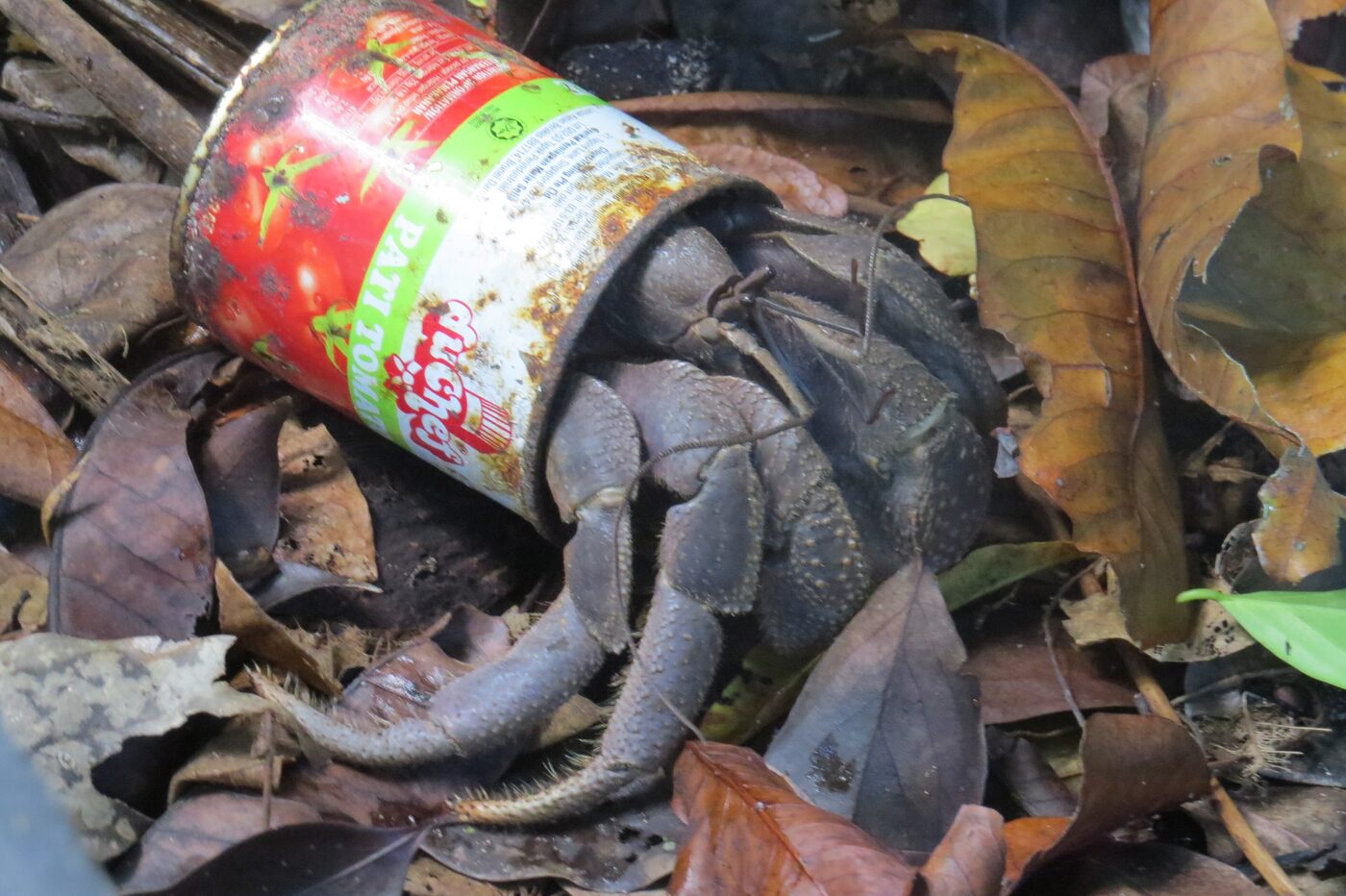
That photograph is funny for about a second. Little guy in a soup can! And then your brain finishes reading it and the joke quietly falls over, because the crab did not choose the can for a laugh. It chose the can because it had outgrown its old shell and there was no shell.
Here’s the good news, and it is genuinely lovely: the fix is one of the most direct things in all of conservation. Put better houses on the beach and let the crabs go shopping. People are doing exactly that, right now, in Florida and Okinawa and Taiwan, and it works.
Nobody grows their own
Start with the strange fact at the bottom of all this. A hermit crab does not make its shell. It can’t. Unlike a snail or a true crab, a hermit crab’s front end is armoured but its back end is soft, pink and spiralled — a bare, vulnerable curl of abdomen with a muscular tail that hooks around the inside of a borrowed snail shell and holds on tight.
So every hermit crab you have ever seen is living in second-hand property. Usually the shell of a dead sea snail; sometimes a land snail’s, sometimes something else entirely. This arrangement is around 150 million years old — the earliest hermit crabs are thought to have moved into ammonite shells, which is a wonderful thing to picture and also a reminder of how long this has been the deal.
And here’s the catch: crabs grow, and shells don’t. A shell that fitted perfectly last season becomes a size too small, then painfully small, then a cage. So a hermit crab spends its life doing something no other animal really has to do — house-hunting. Forever. It sniffs out empty shells (the smell of a dead snail is, to a hermit crab, a listing going live), tries them on, and sometimes tries one, dislikes it, and climbs back into the old one. Buyer’s remorse, on a beach, with claws.
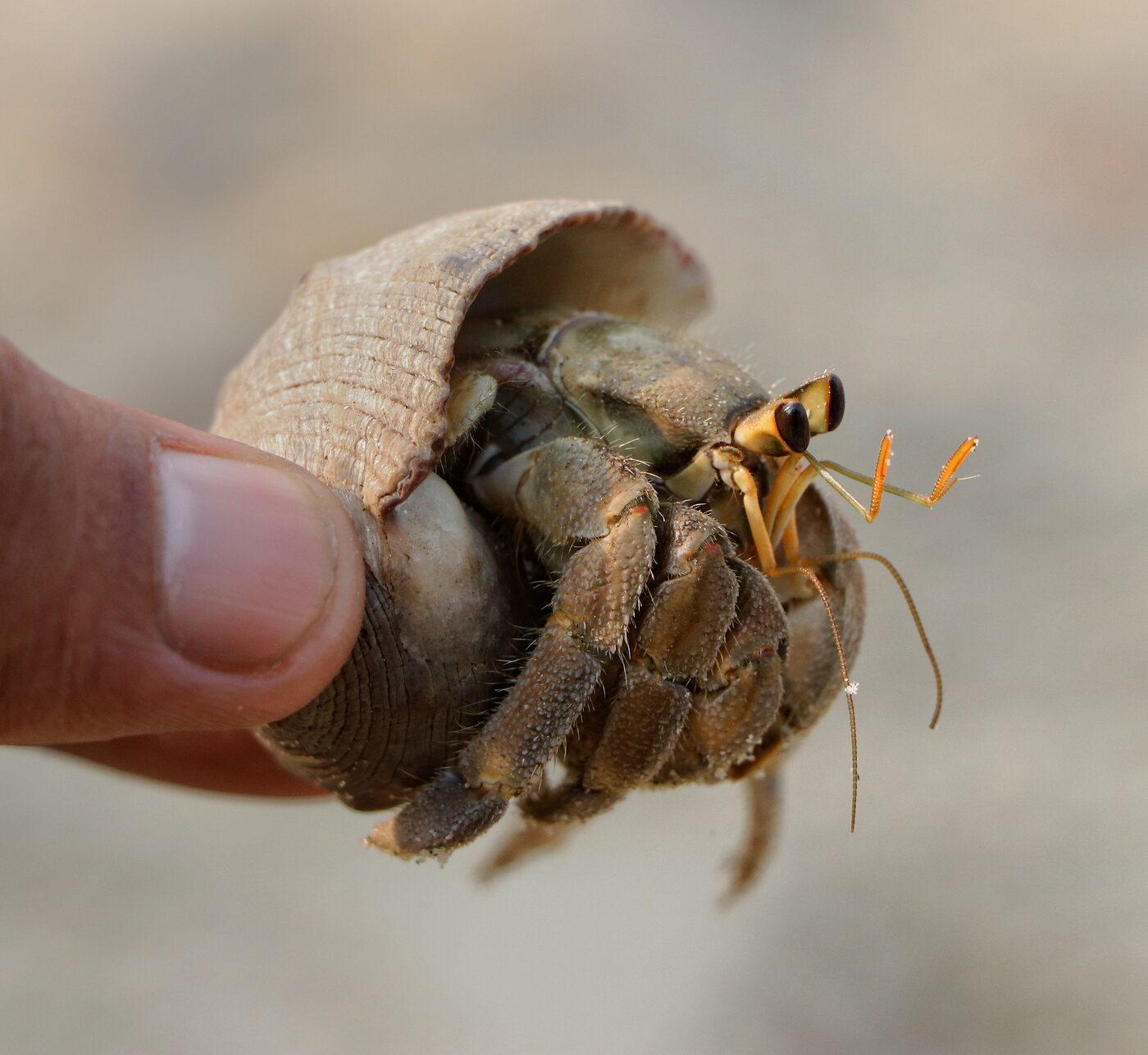
Which is fine, as long as there are shells. The trouble is that the supply is finite and we have been quietly removing it. Every empty shell that goes home in a pocket, a bucket or a gift-shop bag is a house taken out of circulation on a coast where houses are already scarce. And when the shelves are bare, crabs do what anyone would do: they take what’s there. Bottle caps. Cups. Broken glass. Lightbulb bases. It happens often enough that people who keep hermit crabs have a name for it — trash shells.
“Hermit crabs do not prefer plastic,” as one of the people we’re about to meet puts it. “They are just adapting to what is available.”
The shell exchange
In 2020, a wildlife photographer in Okinawa named Shawn Miller was given an idea by a hermit crab specialist in Taiwan, Tony Choi, who had watched the same shortage play out on his own coastline: stop photographing the problem, and start leaving shells. Choi mailed over the first donation. Miller has been at it ever since.
His method is so simple it’s almost a magic trick. He walks the beach with a bucket of assorted native shells. When he finds a crab wearing rubbish, he doesn’t pull it out of anything — you cannot make a hermit crab do anything. He puts the crab in the bucket with the options and waits. The crab inspects the shells with its legs and antennae, decides for itself, and moves. Then it goes back into the wild in a proper house, and Miller keeps the plastic.
He calls the project Make The Switch 4 Nature, and he has now placed over seven hundred marked shells in the coastal forest for crabs in need.
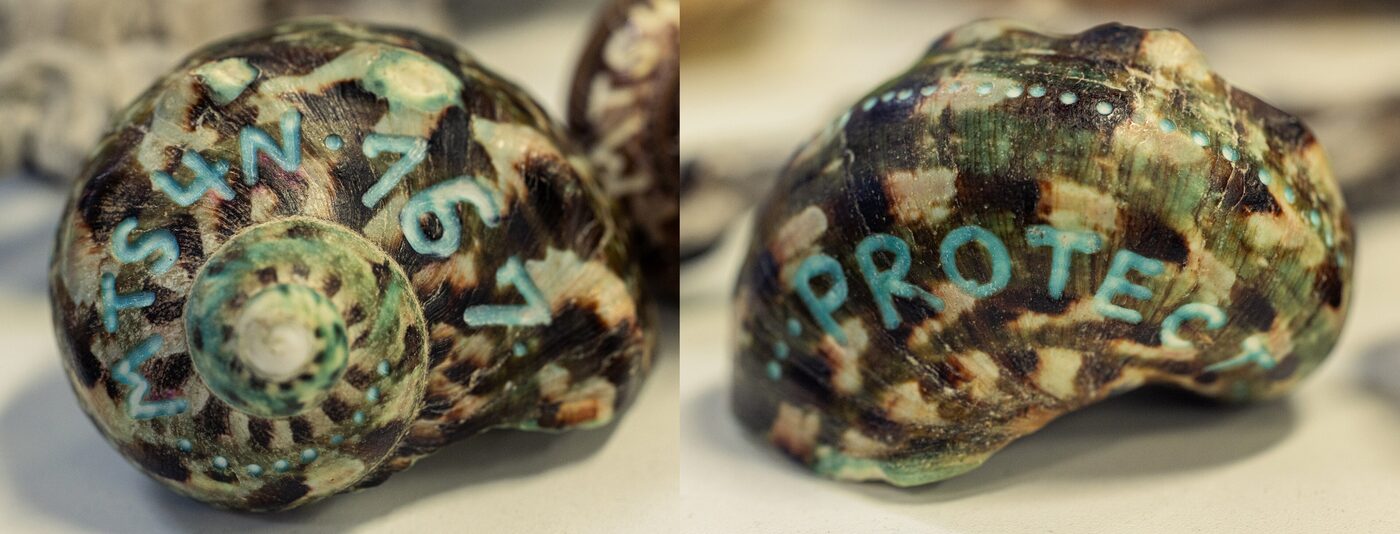
That numbering is the quiet cleverness of the whole scheme. A plain shell on the sand is a free souvenir. A shell with MTS4N 767 carved into it is obviously somebody’s, and people leave it alone. Donors sometimes get to inscribe one: a large blueberry hermit crab called Green Tea swapped a single-use plastic cap for shell number 383, which is carved with the words “No More Plastic Caps.”
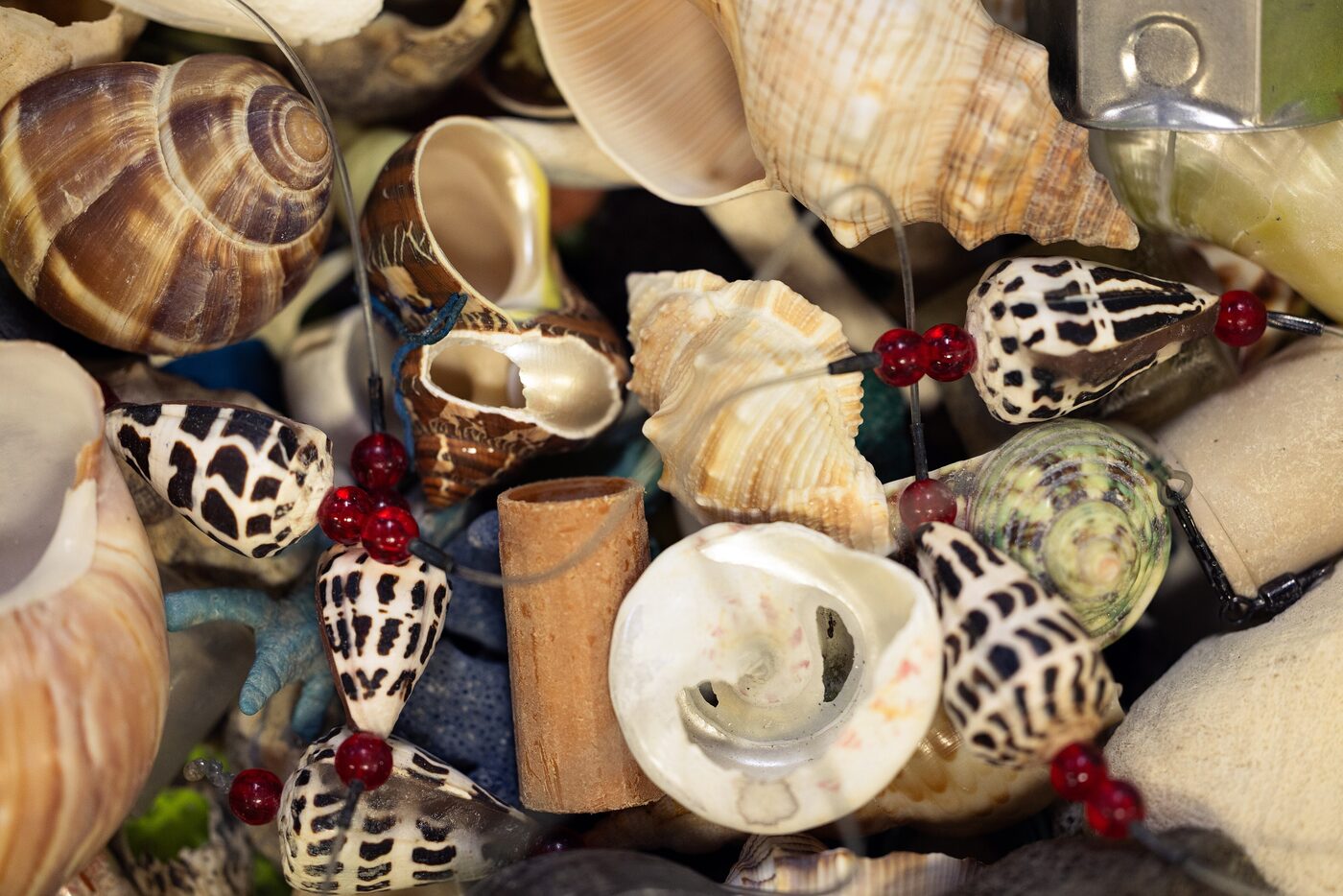
Across the world in the Florida Keys, Angela and Brian Sayre hit the same problem from the other end. They moved to Tavernier in 2019 and discovered their new garden was a “hermie highway” — a thoroughfare for wild purple pincher land hermit crabs, animals that can live forty years or more. So they founded a non-profit, Crustacean Plantation, and set up transfer stations: piles of clean, correctly sized shells, laid out on their own property, that crabs can browse at their leisure. There is a live camera pointed at Transfer Station #1, because of course there is.
People post them shells — outgrown ones from pet crabs, holiday jars, boxes from an aunt’s shelf. In one spring campaign alone, hermit crab keepers mailed in over 2,000. As of CrabCon 2026, Crustacean Plantation has put more than 27,000 shells back into the wild.
The best part: the queue
Now for the fact that makes this whole story sing.
In 2009, two biologists from Tufts — Sara Lewis and Randi Rotjan — were working on a speck of an island called Carrie Bow Cay, off the coast of Belize. It is 0.77 acres; you can walk right round it in under ten minutes. About a thousand Caribbean hermit crabs live there, and a lot of them were in shells that were too tight or full of holes.
So the researchers ran the kindest possible experiment. They put out twenty beautiful, intact, slightly-too-big shells at spots around the island, and watched.
A crab would find one, inspect it, try it on — and if it fitted, brilliant, done. But if the new shell was too big, the crab didn’t wander off disappointed. It stood there and waited. Fifteen minutes. An hour. In some cases eight hours, guarding a house it couldn’t use.
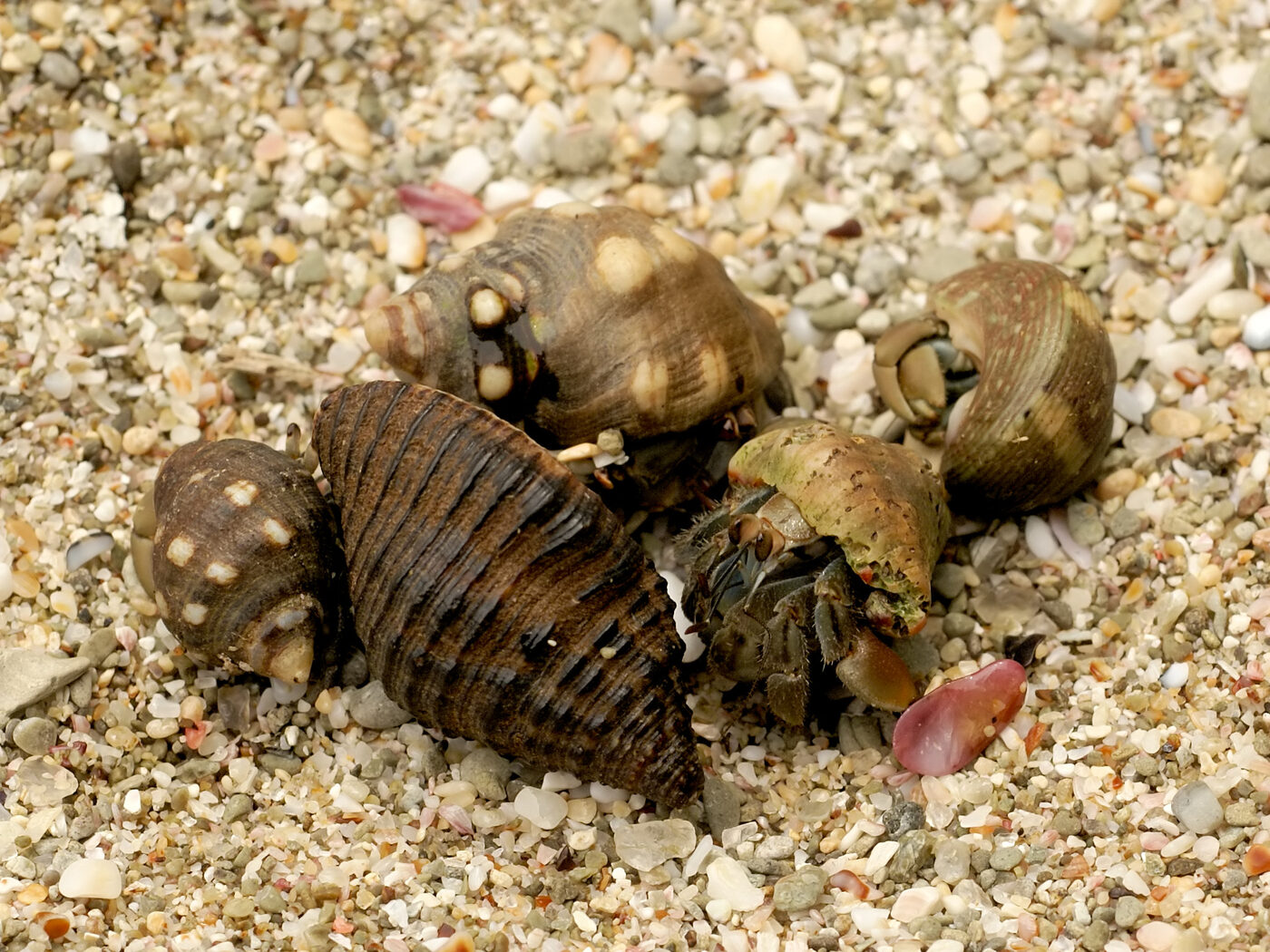
Because other crabs turn up. They always do. Each newcomer tries the shell, finds it’s too big for them too, and joins the wait — until there’s a cluster of up to twenty crabs standing around one vacant property. And they don’t mill about at random. They line up and grip onto one another in order of size, largest at the front, smallest at the back. The biologists named it piggybacking. It looks, honestly, exactly like a queue.
What breaks the queue is the arrival of the crab the shell actually fits — the Goldilocks crab. It moves in. And the instant its old shell is empty, the whole line goes off like dominoes: the biggest crab in the queue takes the Goldilocks crab’s vacated shell, the next one takes that crab’s shell, and on down the line in seconds, until every single crab in the queue has moved up one house.
Sociologists have a name for this, because humans do it too: a vacancy chain. One new flat comes onto the market, one family moves in, and their old place frees up for someone else, and so on down. Ivan Chase at Stony Brook first spotted hermit crabs doing it back in 1986, and Lewis and Rotjan documented the full orderly conga line in a 2010 paper.
It’s not charity — every crab in that line is queuing for its own benefit. But the shape of it is beautiful anyway. One good shell, arriving on one beach, upgrades a dozen animals at once. Which is why a bucket of donated shells goes so much further than it has any right to: you are not housing one crab. You are starting a chain.
Leave the shell, take the memory
That last line isn’t ours — it’s Crustacean Plantation’s mantra, printed on their outreach and repeated to schoolchildren and state-park visitors all over the Keys. It is also the only ask in this entire post: next time you’re on a beach, leave the empty shells where they are.
That’s it. That’s the whole lecture. 🐚
And if you already have a jar of them on a shelf at home, they’ll happily take those back — as will the projects in Okinawa and Taiwan. Somewhere out there is a crab in a bottle cap, standing patiently beside a house it can’t quite fit into, waiting for the rest of the queue to show up.


