

Here is a very simple, very lovely idea. Take a wisteria vine — the kind that drips long lavender flower-clusters every spring — and train it up and over a curved metal frame, like a trellis bent into a hoop. Do that for a hundred metres in a row. Wait a few decades. And then, for a couple of weeks each April, open a little gate and let people walk down the middle of it, under a ceiling made entirely of falling flowers. 💜
That’s Kawachi Fujien (河内藤園), a private garden tucked into the green hills of Kitakyushu, on Japan’s southern island of Kyushu. It’s not a theme park or a national monument. It’s a family garden that a man named Higuchi Masao first opened back in 1977 — and it has quietly become one of the most photographed springtimes on Earth.
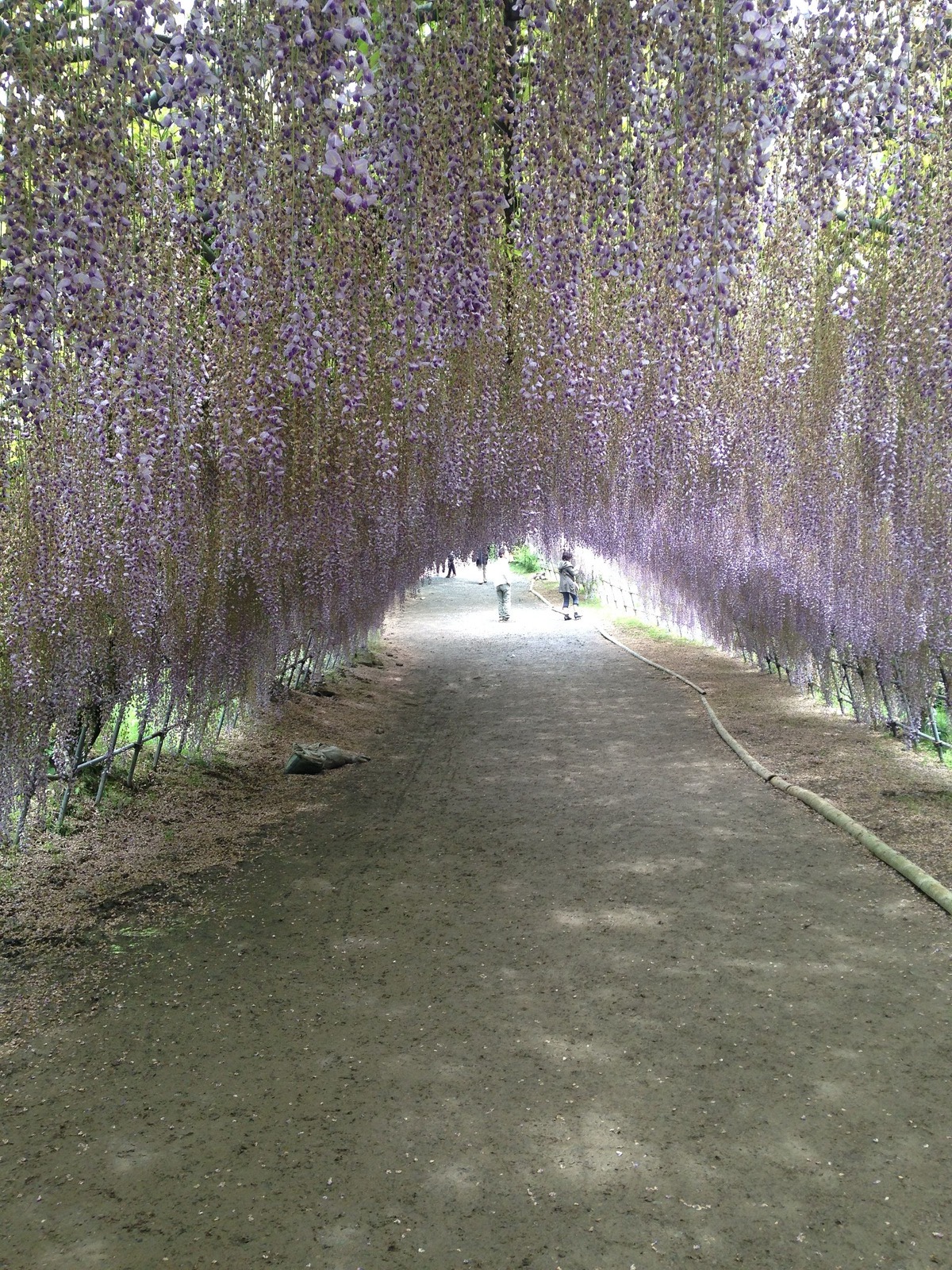
Two tunnels, a hundred kinds of purple
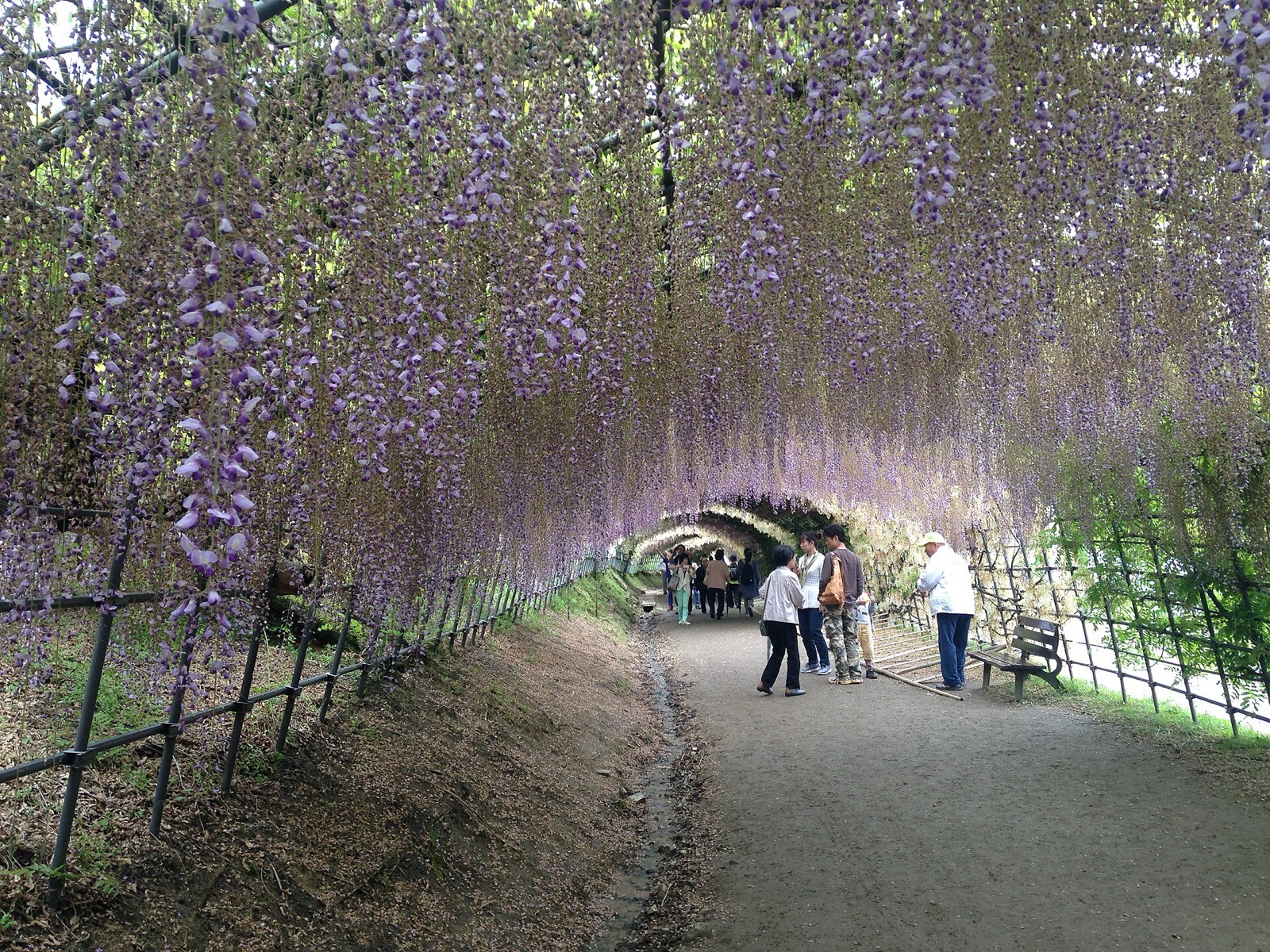
The two wisteria tunnels are the stars: one about 80 metres long, the other about 110 metres. They’re built from arched frames, and the vines are trained up and over so the whole flowering canopy hangs down on the inside. When you step in, the world goes soft and violet, and thousands of blossom-clusters sway just over your head.
Here’s the part that makes people gasp: the garden grows around 22 different varieties of wisteria — everything from crisp white through pink and red-violet to a deep, saturated blue-purple. They’re planted in runs, so a single tunnel can shift colour as you walk it, fading from pale at one end to the richest indigo at the other. It’s less like looking at a flower and more like walking through a slow sunset that someone grew on purpose.
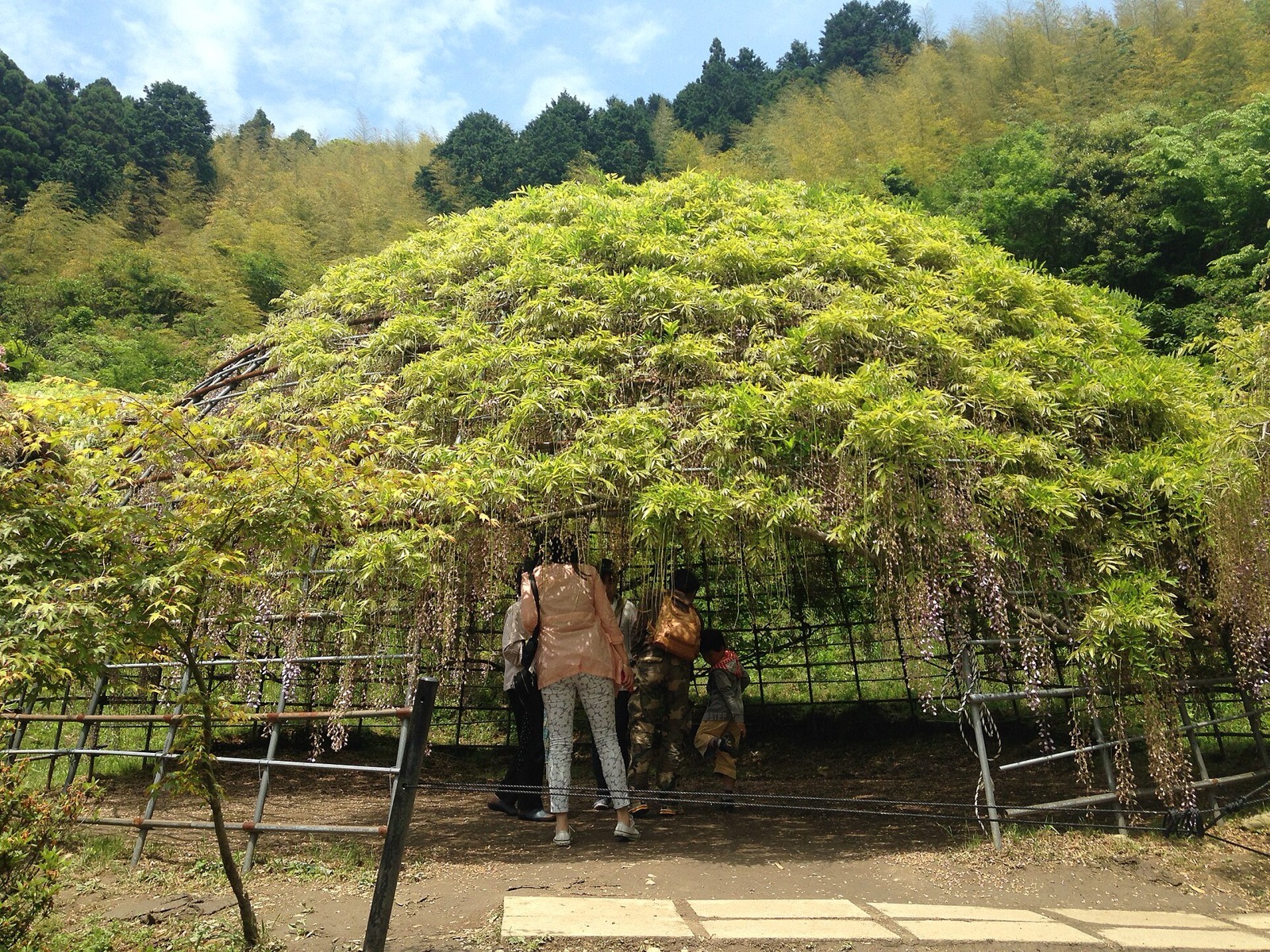
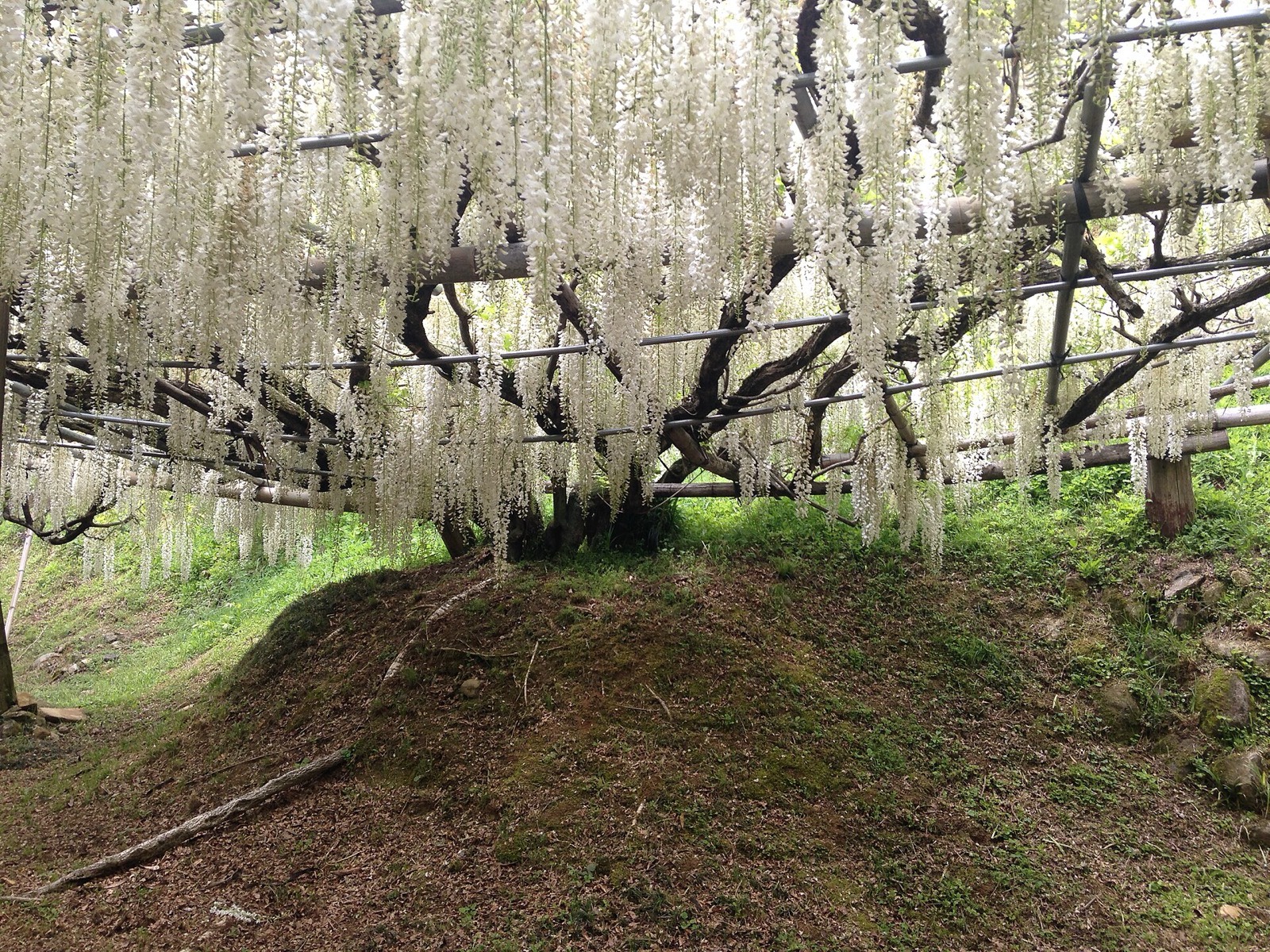
Beyond the tunnels there’s a wisteria dome and a great trellis you can stand beneath and look straight up into — a whole sky of dangling blossom. One of the vines on that big trellis is said to be over a hundred years old, which is a wonderful thing to stand under: a single plant, patiently climbing the same frame for a century, throwing down its flowers each spring for whoever happens to be there.
Catch it in the right two weeks
Wisteria doesn’t wait around. The spring show at Kawachi Fujien runs only from about late April into mid-May, and the exact dates move every year depending on how the weather has treated the vines. Miss the window and you’ll find a perfectly nice green garden with no flowers at all — the whole spectacle lives in a few short weeks, then it’s gone until next spring.
Because it’s so short and so beloved, the garden does something rather sweet and sensible about crowds: during peak bloom it doesn’t sell tickets at the gate at all. Instead you buy a timed-entry ticket in advance — through a convenience-store machine in Japan, or online — so the garden fills up gently rather than all at once. Admission slides between about ¥500 and ¥1,500 depending on how full the flowers are on the day; the more it’s blooming, the more it costs, which is a charmingly honest way to price a thing made of flowers. 🎟️
The garden that refused to advertise
My favourite fact about this place is how the wider world found it. For years, Kawachi Fujien deliberately did no advertising. It turned down television crews and magazine features — the owners worried that big crowds would trample and stress the vines they’d spent decades growing. So for a long time the only way you heard about it was word of mouth.
Then, around 2012, photos of the tunnels started turning up on overseas websites — on lists of “the most beautiful places in the world” — and spread across Twitter and Facebook, and suddenly a quiet family garden in Kyushu was famous on every continent. It’s a lovely little irony: the garden that most refused to sell itself became one of the most-shared spring sights on the planet, purely because people who saw it couldn’t help telling everyone else.
And it keeps giving. Come autumn — mid-November into early December — the roughly 700 maple trees ringing the garden turn red and gold, and it opens for a whole second season, a fiery one, for a fraction of the spring price. Same patient garden, two completely different shows a year. 🍁
Why this lives on a good-news blog
Because Kawachi Fujien is what happens when somebody plants a thing that won’t pay off for decades and tends it anyway. Higuchi Masao didn’t graft a hundred-metre tunnel of wisteria into the ground in 1977 for a quick win — vines like these take years to climb, years more to fill out a frame, a lifetime to become a ceiling. He did it because the idea of walking through falling flowers was worth waiting for.
And the world, it turns out, is also doing this — training patient vines over careful frames on a hillside in Kyushu, refusing to shout about it, letting the flowers do the talking, and then trusting the rest of us to show up in the right two weeks, buy a gentle ticket, and just walk slowly through the purple. If you’re ever in Kyushu in late April, go stand in the tunnel. Look up. 💜🌸


