

Here is a snack that does not need a long introduction, because the moment you see one you will have a strong opinion. 🥒
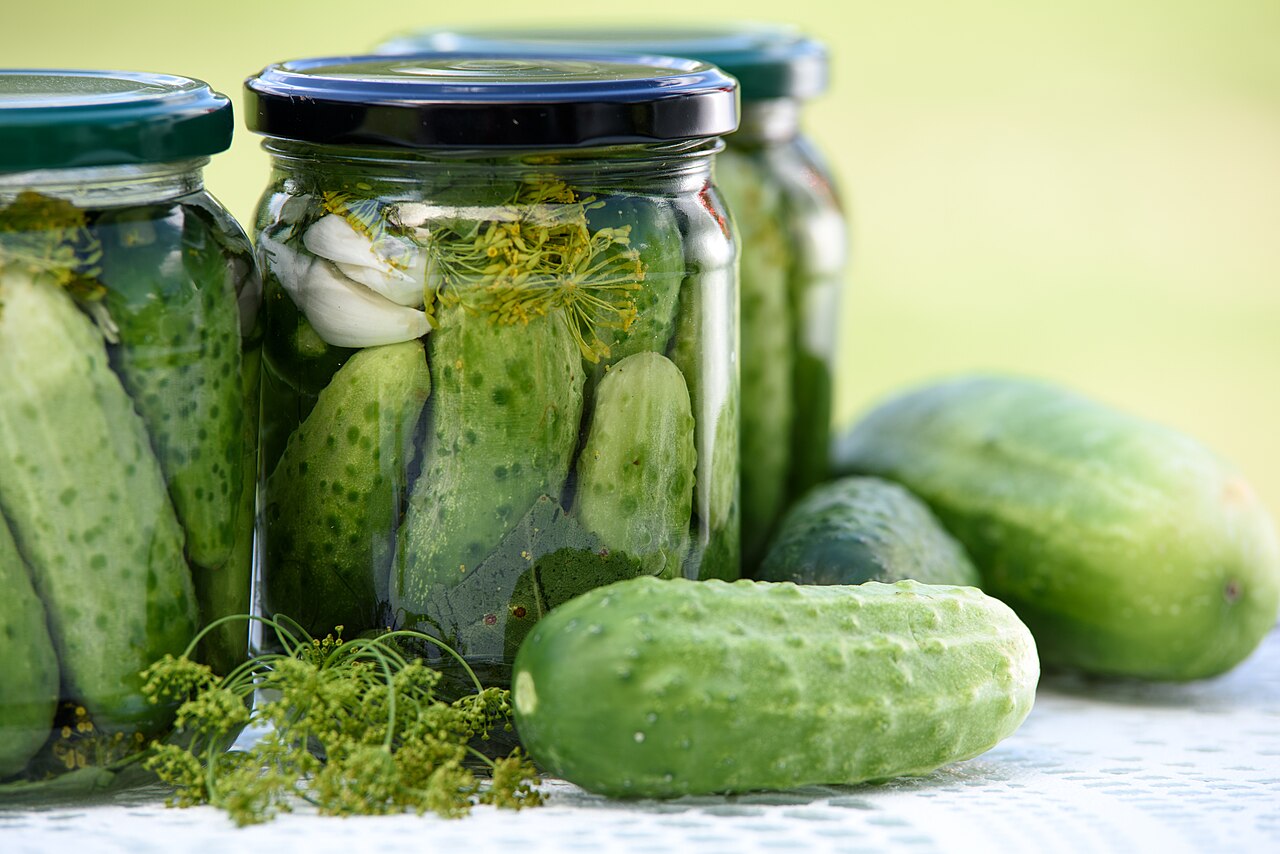
Take a jar of perfectly ordinary dill pickles — the green, briny, thoroughly sensible kind. Pour the brine off into a bowl. Stir in a packet of unsweetened powdered Kool-Aid and a cup of sugar. Pour it all back over the pickles, put the lid on, and leave the jar in the fridge for a week, giving it a turn every day.
What you take out is not a dill pickle any more. It is shocking red, faintly translucent, and it tastes sweet and sour and salty in the same bite. In the Mississippi Delta, where this happens in gallon jars behind the counter of small neighbourhood stores, they are called koolickles. 🍒
What’s actually happening in the jar
Very little, honestly, which is part of the charm. There is no cooking, no canning equipment, no special skill. A jar of pickles is already a jar of vinegar, salt and cucumber. All you’re doing is adding sugar and a fruit-flavoured, food-coloured acid powder to the liquid that’s already in there, and then letting time do the rest.
The pickle behaves the way any pickle does: given long enough in a strong solution, it slowly trades what’s inside it for what’s outside it. Over roughly seven days the sugar and the dye work their way in from the skin, the green goes red, and the flavour lands somewhere genuinely new — the vinegar bite is still there, but now it’s got cherry riding on top of it.
The trick everyone in the Delta already knows is about surface area. Leave the pickles whole and the colour mostly stops at the skin, so you get a vivid red ring and a green heart. Split them lengthwise first and the Kool-Aid gets in everywhere, and the whole spear comes out jewel-bright the whole way through. That version is the one that makes people take a photograph before they take a bite.
Nobody invented it, which is the best part
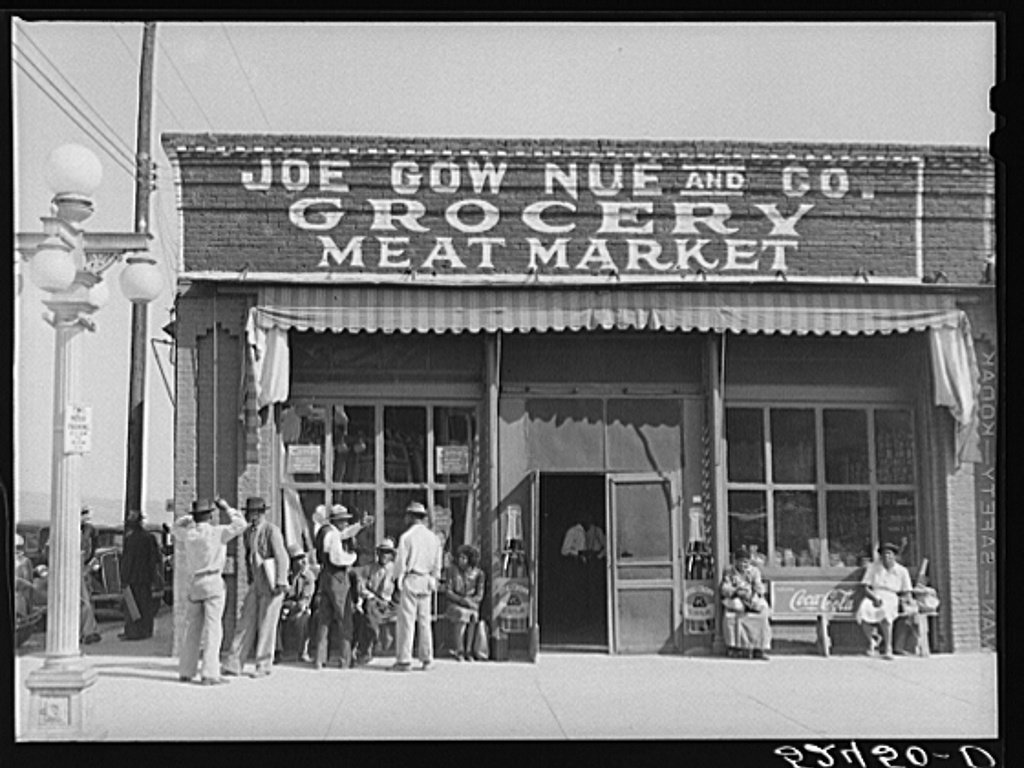
This is where a food story normally introduces you to the clever person who thought of it. Not this time. No one claims the koolickle. There is no origin restaurant, no founding family, no patent, no dated first batch. The best anyone can say is that it turned up in the Mississippi Delta somewhere in the second half of the twentieth century and got passed around until it was simply a thing that existed.
That is not a gap in the record so much as a description of how the snack works. Koolickles were never a product; they were something the person behind the counter made in a big empty mayonnaise jar because the kids who came in after school liked them. They sold for about a dollar, straight out of the jar, and the recipe travelled the way playground knowledge travels — sideways, cheerfully, and without paperwork.
They fit neatly into a much older Southern habit, too. The Delta was already pickling everything it could reach: okra, watermelon rind, peaches, eggs. A koolickle is that same instinct handed to somebody with a corner-store shelf full of drink powder and no particular respect for the rules.
Word did eventually get out. The New York Times ran a piece on Kool-Aid dills back in May 2007, headlined “A Sweet So Sour,” and the internet has been rediscovering them roughly once a year ever since. Their most recent descendant is the Kool-Aid pineapple — same idea, different fruit, currently doing laps around social media. The Delta got there decades earlier and never needed the hashtag.
A short and slightly wonderful detour about Kool-Aid
The other half of this snack has its own excellent story. Kool-Aid was invented in 1927 by Edwin Perkins, working out of his mother’s kitchen in Hastings, Nebraska. He had been selling a liquid fruit concentrate called Fruit Smack, which had the twin problems of being heavy to ship and prone to arriving in pieces. So he worked out how to dry it down to a powder, put the powder in an envelope, and posted the water problem back to the customer. 📮
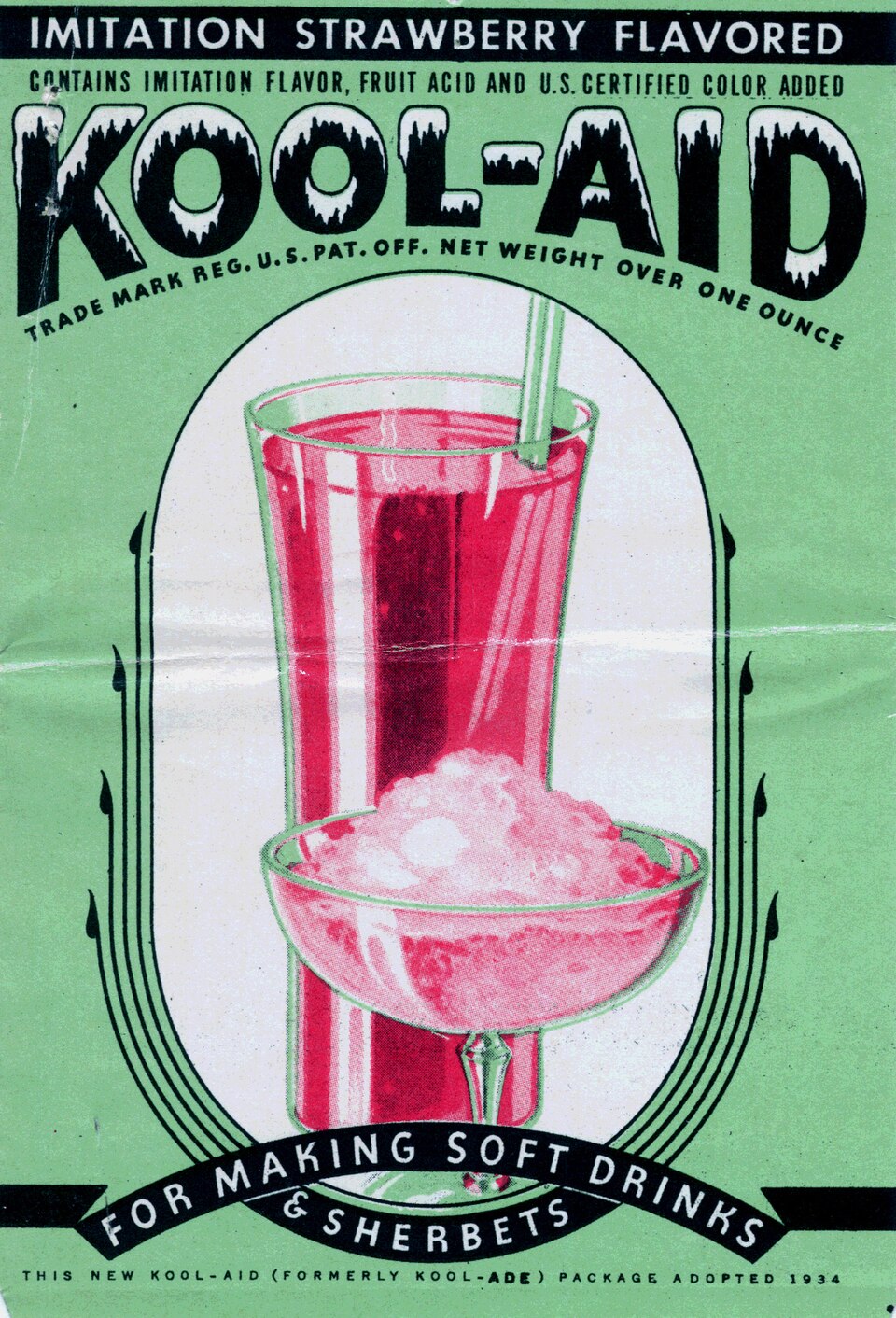
He moved production to Chicago in 1931 — which is exactly where the mint-green package below came from, three years later. Look at the fine print along the bottom and you’ll find a small piece of brand history hiding in plain sight: “THIS NEW KOOL-AID (FORMERLY KOOL-ADE) PACKAGE ADOPTED 1934.”
Hastings, Nebraska still throws a festival called Kool-Aid Days every August, and Kool-Aid is the official soft drink of the state — which means a powder invented to solve a freight-cost problem in 1927 ended up, ninety-odd years later, dyeing pickles red seven hundred miles south. Nobody planned any of that. 🎉
Why this is on a good-news blog
Because the koolickle is a small, cheerful demonstration that people do not wait for permission.
There was no test kitchen. No brand told anyone to do this, and one of the two ingredients is a mass-produced powder from Nebraska while the other is a mass-produced pickle in a jar — and somebody in the Delta looked at those two entirely ordinary things and produced something that exists nowhere else. It cost a dollar. It was mostly made for children. It never got a trademark or a founder, and it spread anyway, because it was fun and it was good.
Somewhere right now there is a jar in a fridge going quietly from green to red, and in about six days somebody is going to open it, hand one over, and watch a face do something wonderful. 🥒🍒
Got a gloriously improbable snack from your corner of the world? Sign the guestbook and tell us. 🍬


