

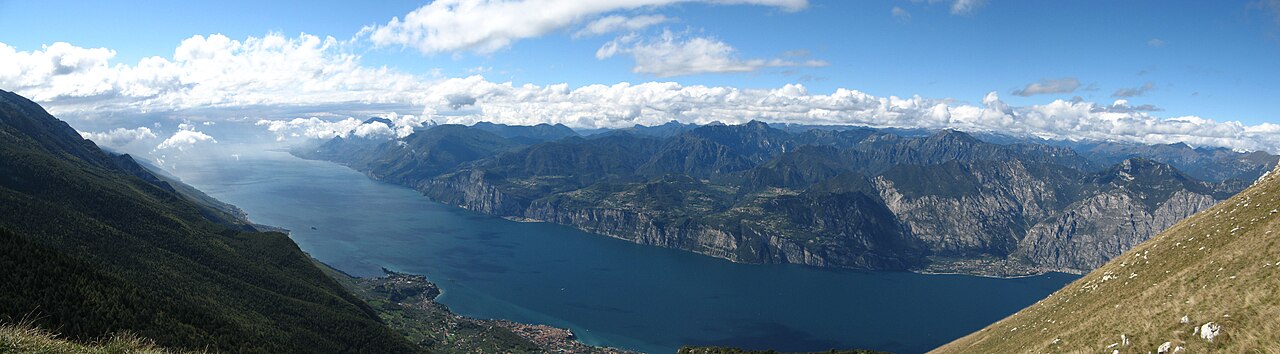
Here is a thing that should not be possible. Stand on the western shore of Lake Garda, look one way, and you’ll see snow-capped Alpine peaks. Look the other way, and you’ll see a lemon grove — actual lemon trees, fruiting, in the open air, at a latitude roughly level with Montréal. 🍋🏔️
That contradiction is the whole personality of the place. Garda is Italy’s largest lake, a 370-square-kilometre sliver of blue wedged between the Alps and the warm Po Valley, and it is big enough to run its own weather system. Three different Italian regions touch its shores — Lombardy, Veneto, and Trentino-Alto Adige — and, in the grand Italian tradition, none of them entirely agrees on whose lake it is.
The lemon paradox
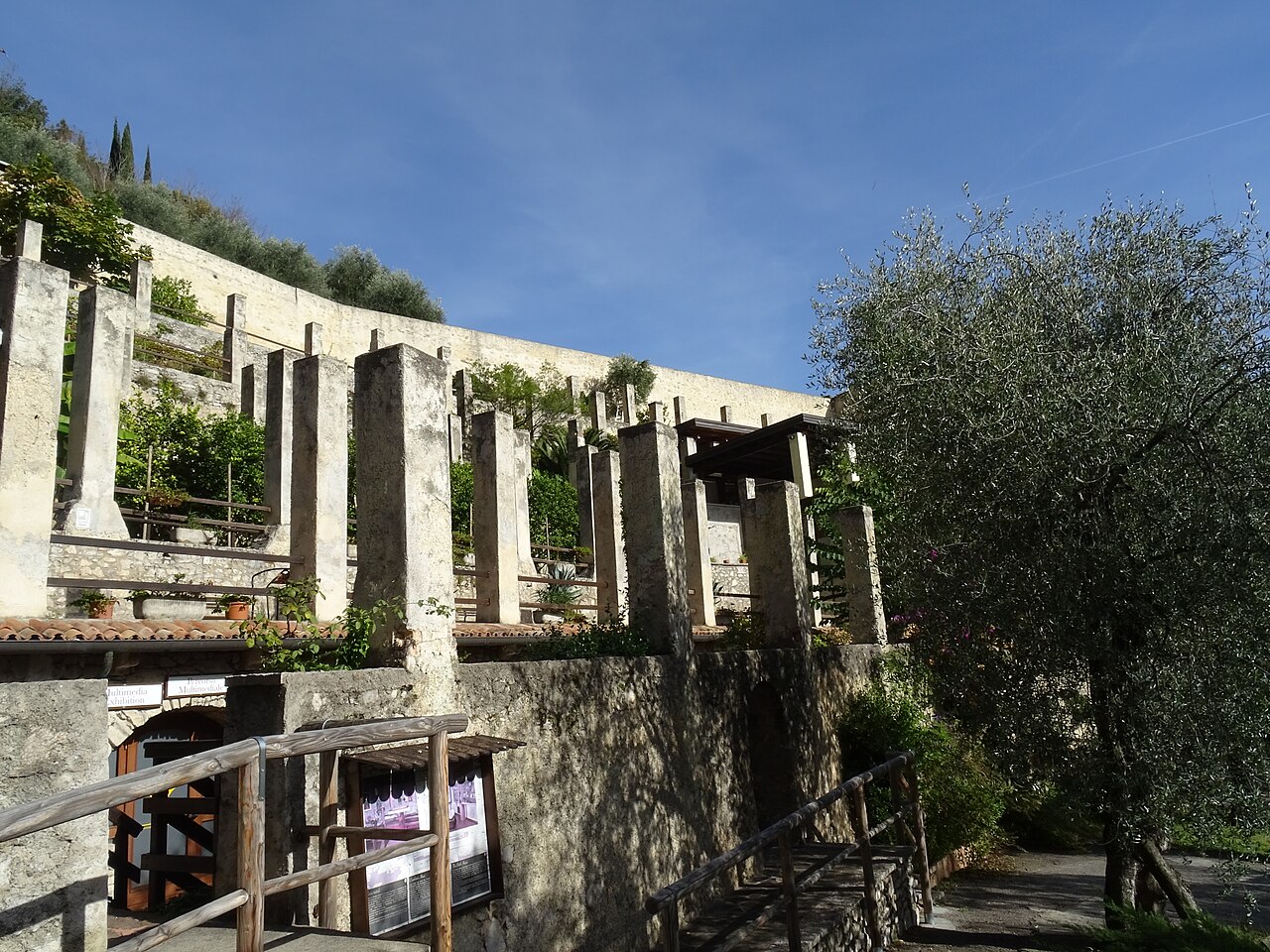
Let’s start with the lemons, because they are the most improbable part. In the village of Limone sul Garda, on the steep western shore, people have been growing lemons since the 13th century. Not in greenhouses — in beautiful open-air stone terraces called limonaie (“lemon houses”), tall masonry frames stepped up the hillside, where the trees are coddled through the cold months and let loose in the warmth.
This is citrus farming at a latitude where, by every rule of geography, you should be looking at pine forests and waiting for snow.
The lemons made Limone faintly famous twice. First for the fruit itself — and the village’s name is a happy coincidence, from the Latin limen (border), not the lemon. Then, in the 20th century, scientists noticed the locals had unusually healthy hearts and very low rates of cardiovascular disease. The trail led not to the citrus but to a rare protective protein variant — ApoA-1 Milano — carried by a handful of families descended from a 18th-century couple. A genuine medical curiosity, hiding in a tiny lemon-growing town on a lake. 🫀
Sirmione: a castle on a toothpick
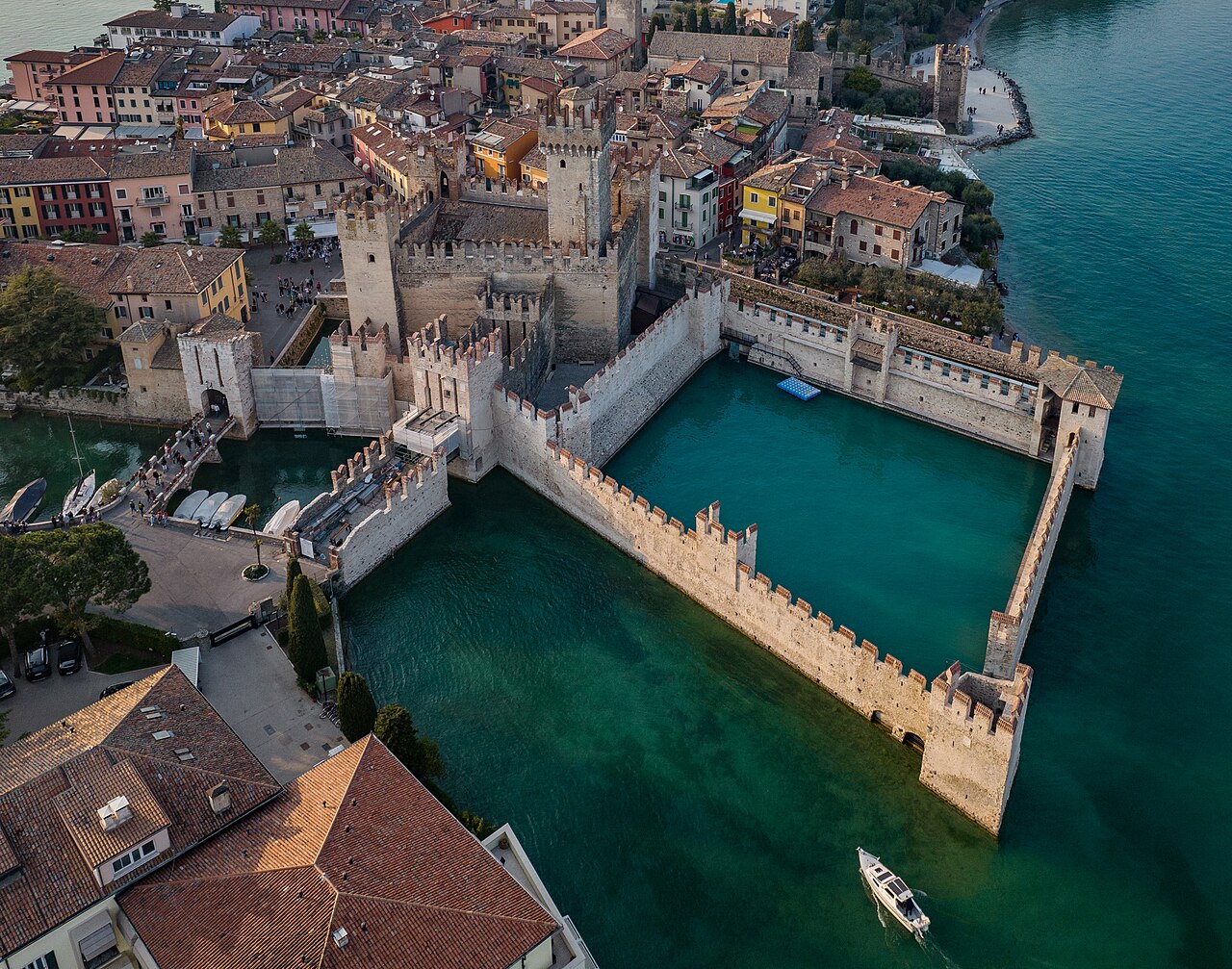
Now sail south. At the lake’s lower end, a slender peninsula reaches four kilometres out into the water like a finger pointing back at the Alps, and perched at its base is the Scaligero Castle — built from 1277 by the Scaliger lords of Verona, and one of the very few castles anywhere with its own fortified harbour. Boats sailed in under the walls then; pleasure boats still drift past the portcullis now.
Walk to the very tip of the peninsula and the timeline jumps back another thousand years. There you’ll find the Grotte di Catullo — not actually grottoes, but the sprawling ruins of a 1st-century BC Roman villa, the largest surviving private Roman dwelling in all of northern Italy. Tradition links it to the poet Catullus, who wrote lovingly of Sirmione as the jewel of all peninsulas. Historians argue about whether it was really his, but standing among olive trees and old stone with the lake on three sides, you can see why someone wanted the legend to be true.
Riva del Garda: sail, or go home
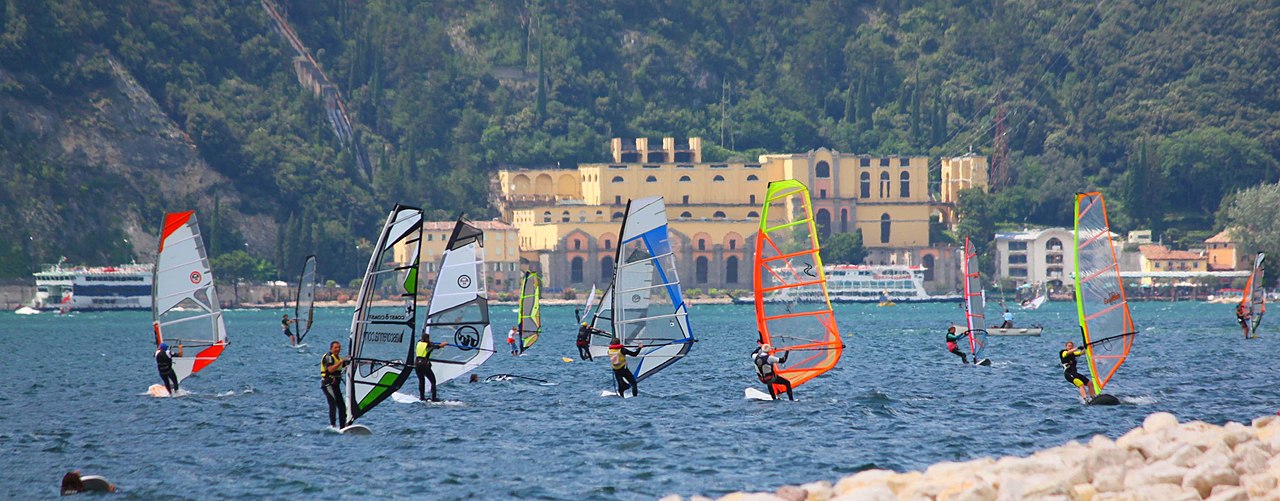
Travel to the northern tip and the gentle lake turns into something with opinions. Squeezed between sheer cliffs, the top of Garda behaves like a giant wind tunnel — and the wind keeps a timetable. Each morning the Pelér blows down from the north; each afternoon the Ora blows back up from the south, warm and steady, almost to the hour.
Sailors and windsurfers worked this out fast. Since the 1970s, Riva del Garda and neighbouring Torbole have been a magnet for competitive sailing — you can practically schedule a regatta around the breeze. World championships are held here regularly, and on a good afternoon the water fills with sails leaning into the dependable Ora. ⛵
A short walk from town, the Cascata del Varone drops nearly 100 metres through a slot canyon you can actually walk into — a cool, roaring cleft carved by all that Alpine meltwater feeding the lake.
The trick is the mountains
So how does one lake hold ski-slope views and lemon groves? The Alps do the heavy lifting. The high wall of rock to the north blocks the worst of the cold air, while the lake’s enormous mass of water soaks up summer heat and releases it slowly all winter — a 370-square-kilometre thermal battery. The result is a pocket Mediterranean microclimate stranded improbably far north.
That’s why the shores grow things the map says they shouldn’t: olive groves (Garda’s are among the most northerly in the world, and prized for delicate oil), cypress standing like exclamation marks, and vineyards behind them. The lake even has its own wines — light red Bardolino from the eastern hills, crisp white Lugana from the warm southern flats. Snow on the peaks, a glass of cold Lugana by the water. Same view.
Why this lives on a good-news blog
Because Lake Garda has spent two thousand years quietly surprising everyone who turns up expecting an ordinary mountain lake. It surprised the Romans, who built a villa at the tip and never wanted to leave. It surprised medieval lords, who fortified a harbour you can sail straight through. It surprised 20th-century botanists with lemons, and cardiologists with hearts, and a generation of sailors with a wind that runs on time.
The world, it turns out, is also doing this: tucking a slice of the Mediterranean up against the Alps, growing citrus in the shadow of the snow, and keeping the surprise fresh for whoever wanders by next. Bring sunscreen and a jacket — you’ll genuinely need both. 🍋🏔️💛


