

Here is a building nobody built. On the shore of a great turquoise lake deep in Patagonia, there is a peninsula of solid marble — and the water has been hollowing it out for so long that it now holds caverns, arched columns, and smooth tunnels you can paddle straight through. The locals gave the biggest chambers the only names that fit: the Chapel, the Cave, and the Cathedral. 🌊
No one carved them. No one designed the fluted columns or polished the walls to a shine. The only tool involved was the lake itself, lapping against the same stone, wave after wave after wave, for more than six thousand years.
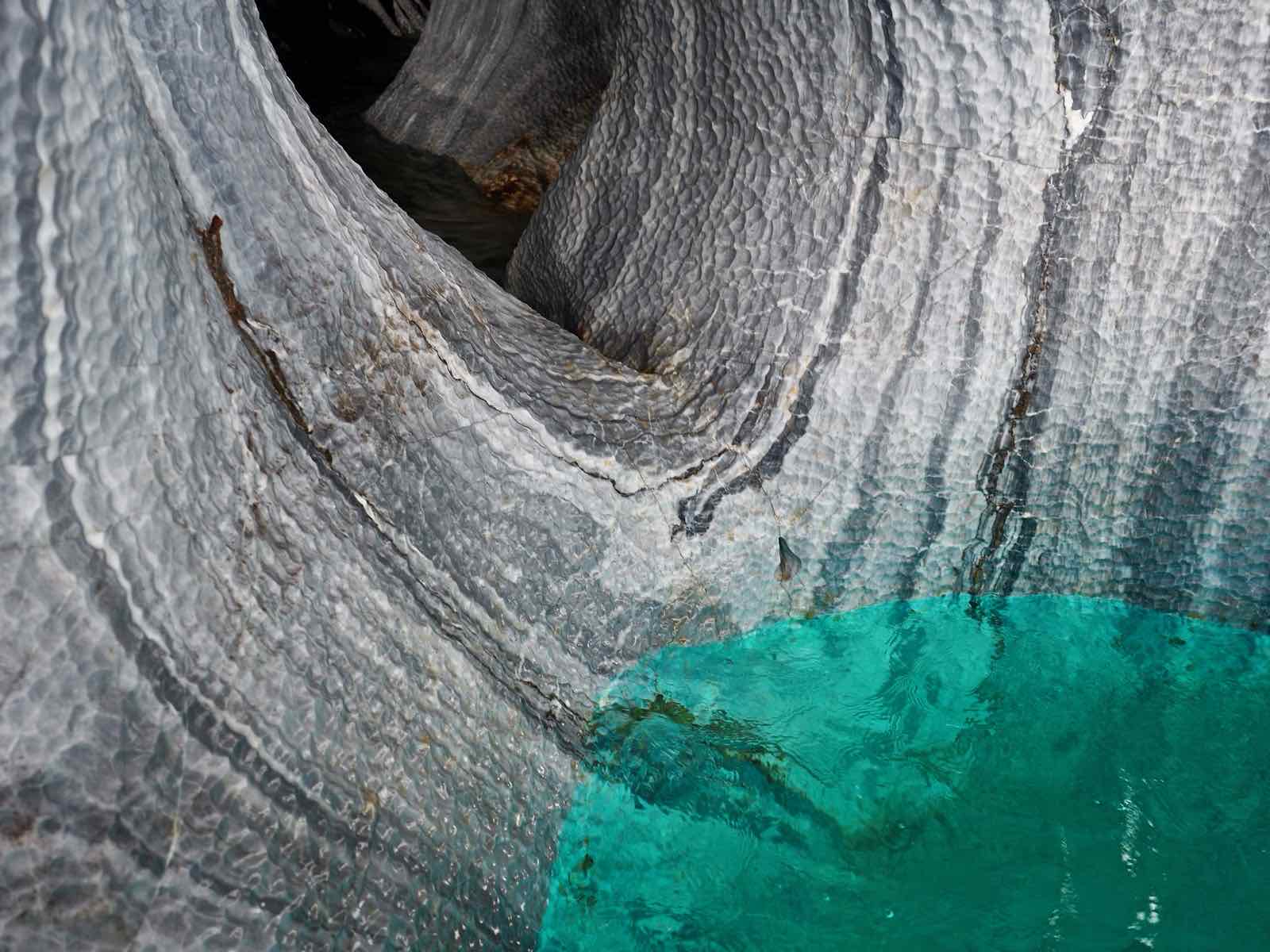
One lake, two countries, an old, old name
The caves sit on a lake with a split personality. On the Chilean side it’s General Carrera Lake; cross to the Argentine shore and the very same water is called Lake Buenos Aires. Both names are accepted the world over — but the oldest name is the loveliest, and the most fitting: Chelenko, from the Aonikenk language, meaning “stormy waters.”
That’s the whole secret in one word. This is a big, moody, glacier-fed lake, ringed by the Andes, and it does not sit still. For thousands of years its waves have swung against a marble headland midway along the shore, and stone that would shrug off a chisel simply cannot say no to water that never, ever stops.
Why the marble looks blue
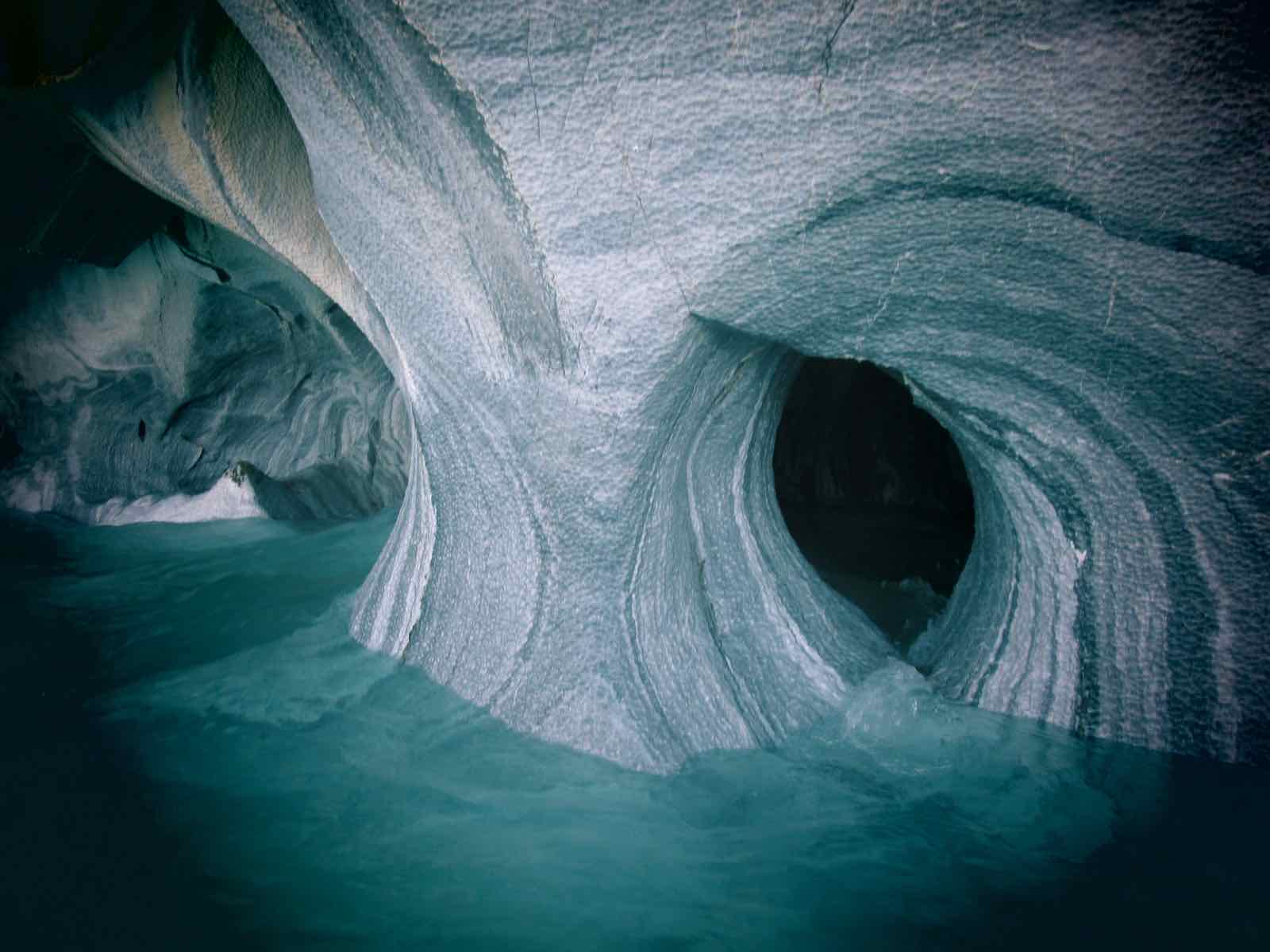
Now for the color, which is the part that makes people gasp. The lake isn’t dyed and the marble isn’t painted — the blue is a two-step trick of light and glacier.
Step one: the water. General Carrera is a glacial lake, and the ice that feeds it grinds mountain rock into an impossibly fine powder — geologists call it rock flour. Suspended in the meltwater, those particles scatter the light and turn the whole lake a deep, luminous turquoise.
Step two: the mirror. Marble is pale and, where the waves have buffed it, almost polished. So the turquoise water throws its color upward, onto the smooth stone overhead — and the caverns seem to glow blue from the inside. Move the boat, ruffle the surface, let a cloud pass, and the walls ripple and shift with it. No two minutes look the same. 💠
Getting there is half the wonder
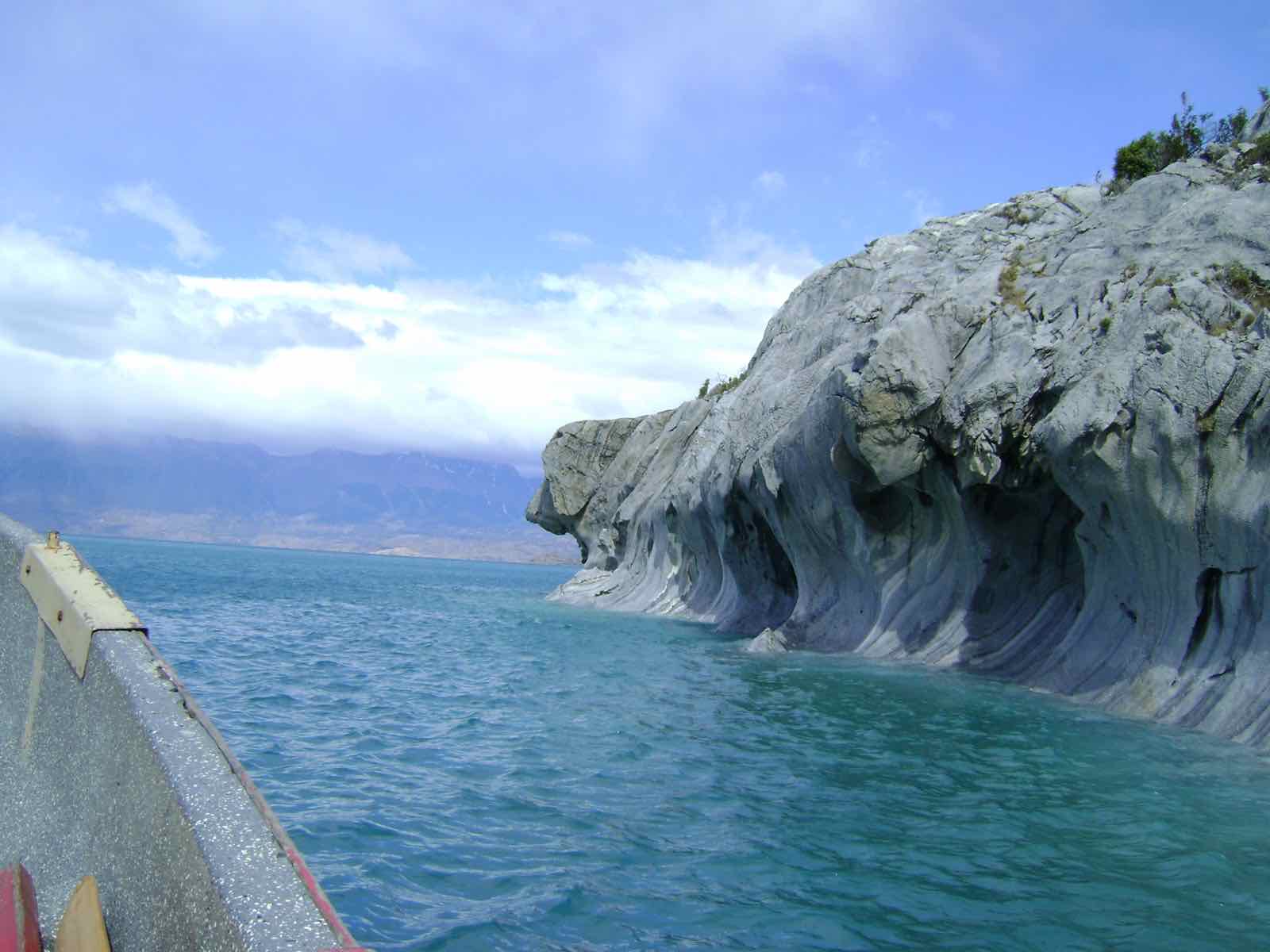
There’s no lobby, no grand staircase, no gift shop carved into the rock. To visit the Cathedral you go the way the water does — by boat. Little launches and kayaks set out from Puerto Río Tranquilo, a small village on the Chilean shore that happens to enjoy a sunny microclimate in an otherwise cold and blustery corner of Patagonia.
On a calm morning the guides nose their boats right in under the arches, cut the motor, and let you drift through tunnels barely wider than the hull, the marble curving close overhead and the blue light wobbling all around. When the lake is feeling like its old name — stormy waters — the trips wait for a better day. The caves keep their own schedule, the same one they’ve kept for six thousand years.
The stone remembers every wave
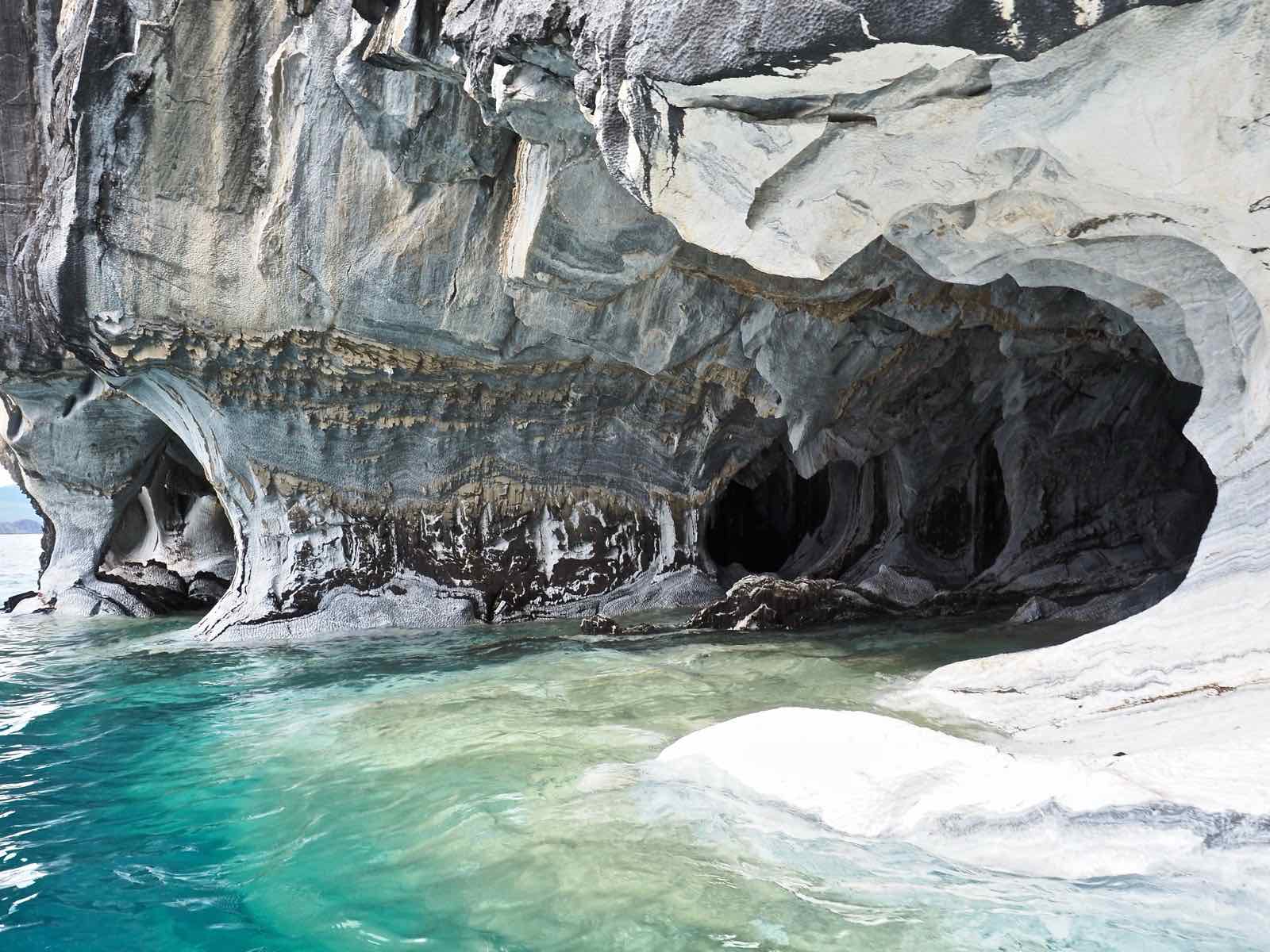
Look closely at the walls and you can read the whole story in the grain. The swirls of grey, white, and honey aren’t decoration — they’re the layers of the marble itself, folded and banded over unimaginable stretches of geologic time, then sliced open and buffed smooth by the lake. Every curve is a record of a water level, every fluted column the memory of a current that ran there long enough to leave its mark.
And the sculpture is never finished. The lake is still rising and falling with the seasons, still lapping at the same stone, still — very, very slowly — carving. The Cathedral you’d paddle through today is a few grains of marble different from the one your grandparents might have seen, and a little different again from the one your grandchildren will.
Why this lives on a good-news blog
Because the Marble Caves are proof that you don’t need a grand plan to make something breathtaking — you just need patience, and a very long time. There’s no genius architect here, no lost civilization, no secret. There’s a lake with an old name that means stormy waters, a headland of pale stone, and the simplest process on Earth: water touching rock, over and over, until the rock gives way into arches and the light turns it blue.
The world, it turns out, is also doing this — quietly sculpting a cathedral out of a cliff at the far end of Patagonia, lighting it from below with glacier-blue water, and asking nothing of us but that we come by boat, on a calm day, and simply look. Six thousand years in the making, and it’s only getting more beautiful. 🌊💙


