

Picture a small bay on the south shore of Vieques, a little island off Puerto Rico. It’s a warm, still, extremely dark night — no moon, barely any lights on the far shore. The water looks like nothing at all. Black glass. Ordinary.
Then you dip a paddle in, and the bay turns on. 💙
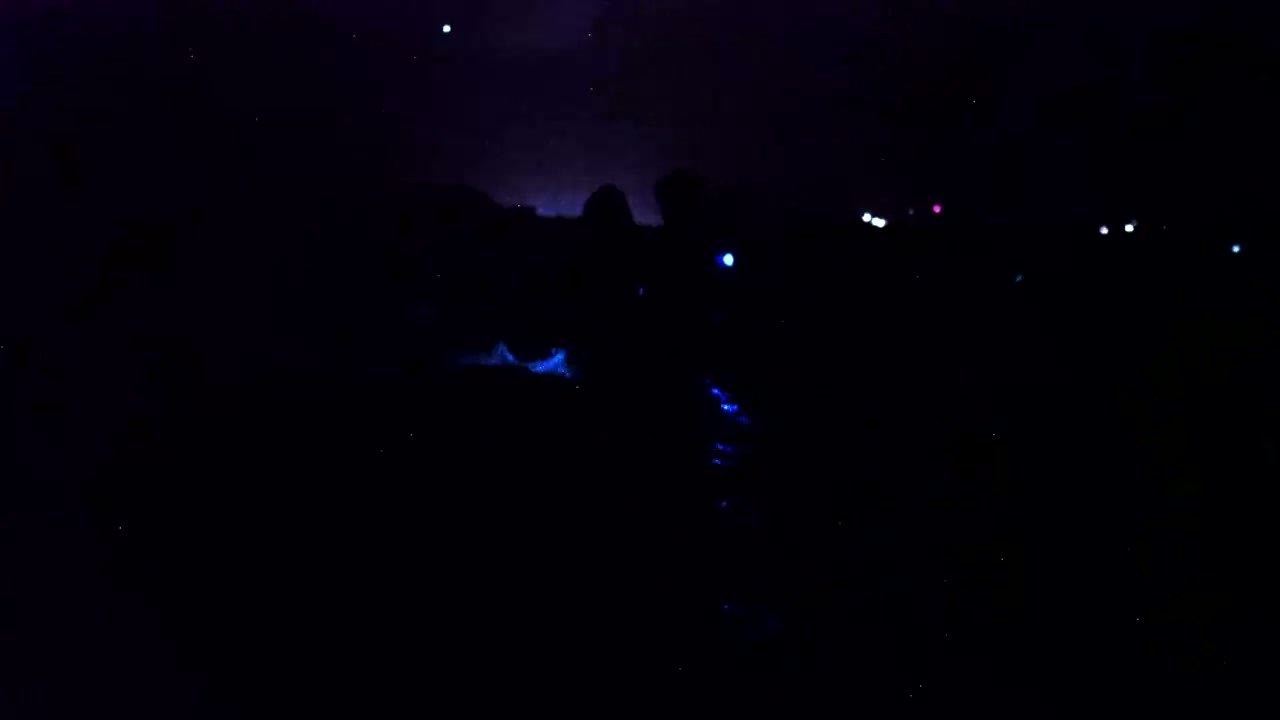
Blue-green light blooms around the blade and streams off it in ribbons. Your paddle leaves a glowing wake. Trail a hand over the side and your fingers come up dripping light. Fish dart past as streaks of blue fire. This is Mosquito Bay — and according to Guinness World Records, it is the brightest bioluminescent bay on Earth.
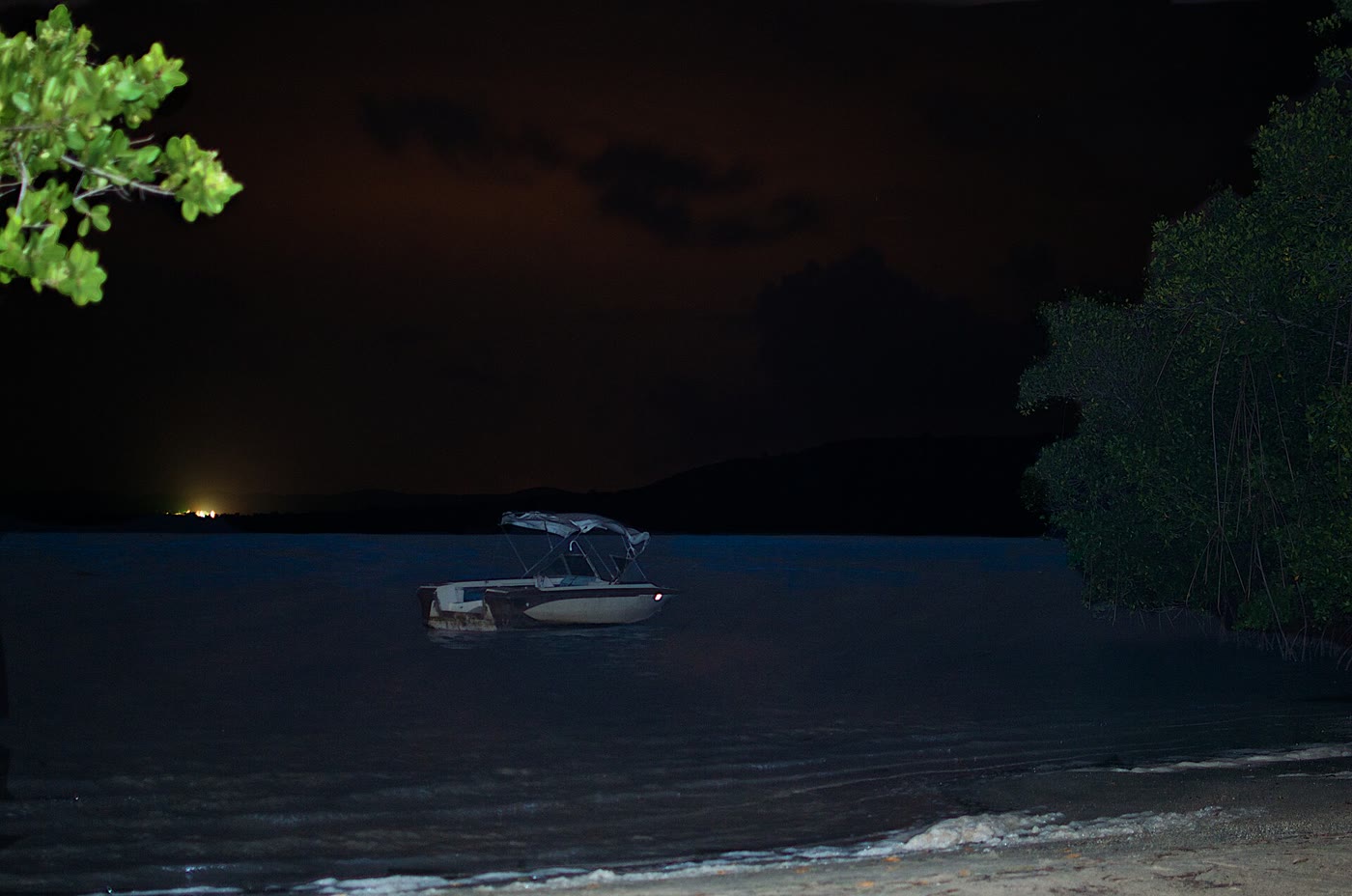
The light is alive
The glow isn’t a mineral, or a trick of the sky, or anything reflected. It’s made by living creatures, on the spot, on demand.
They’re dinoflagellates — single-celled organisms drifting in the water — and the species that lights up Mosquito Bay is Pyrodinium bahamense. That name is the best thing in this whole post: “whirling fire.” Someone got to name a tiny spinning creature that makes light, and they absolutely rose to the occasion. 🔥
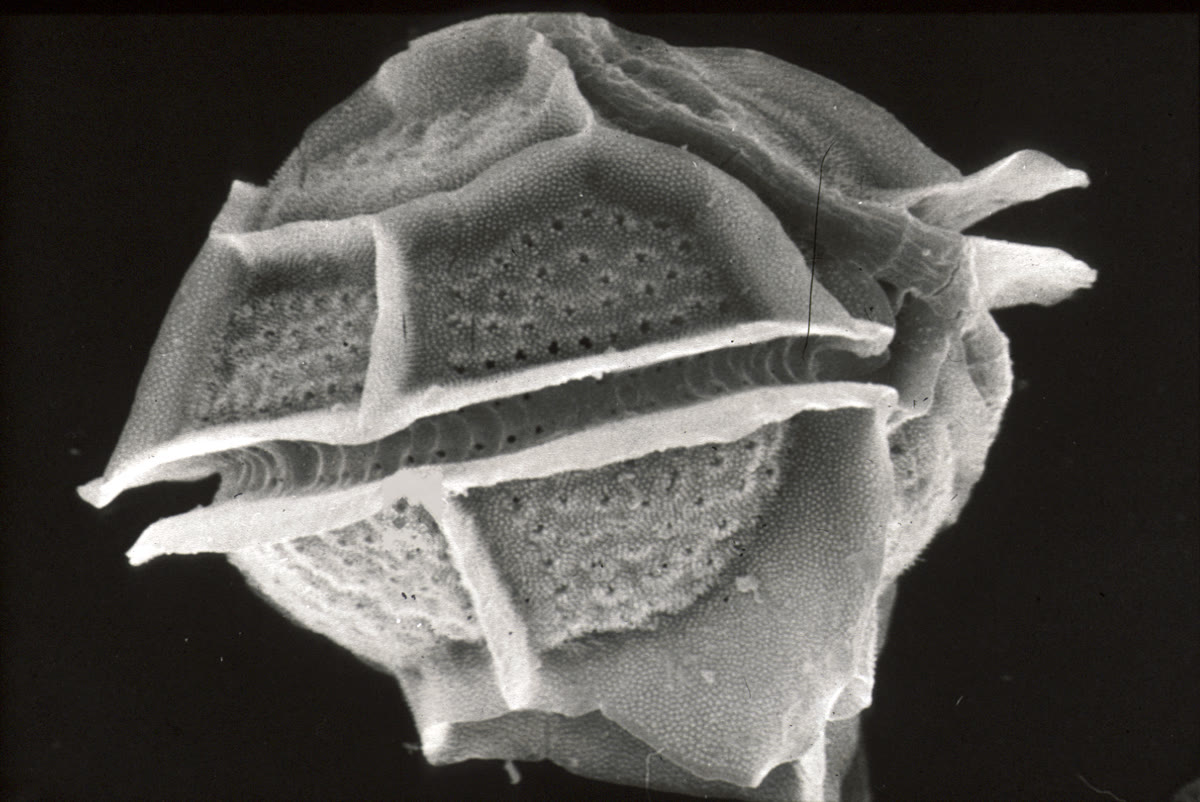
When the water around one of them is jostled — by a paddle, a fish, a hand, a raindrop — the cell answers with a flash of blue-green light. One flash on its own is far too faint for you to notice. But the water here isn’t holding a few of them. It can hold up to around 700,000 in a single gallon. 🔬
So when you disturb the water, you don’t get one flash. You get hundreds of thousands of them at once, and the bay lights up exactly where you touched it, in the shape of the touch. The light is a response. It’s the water answering you back.
Why this bay?
Bioluminescent water isn’t unique to Vieques — dinoflagellates put on this show in warm coasts all over the world, and it’s magical everywhere it happens. But Mosquito Bay is the brightest known place on the planet for it, and that comes down to a lucky bit of geography.
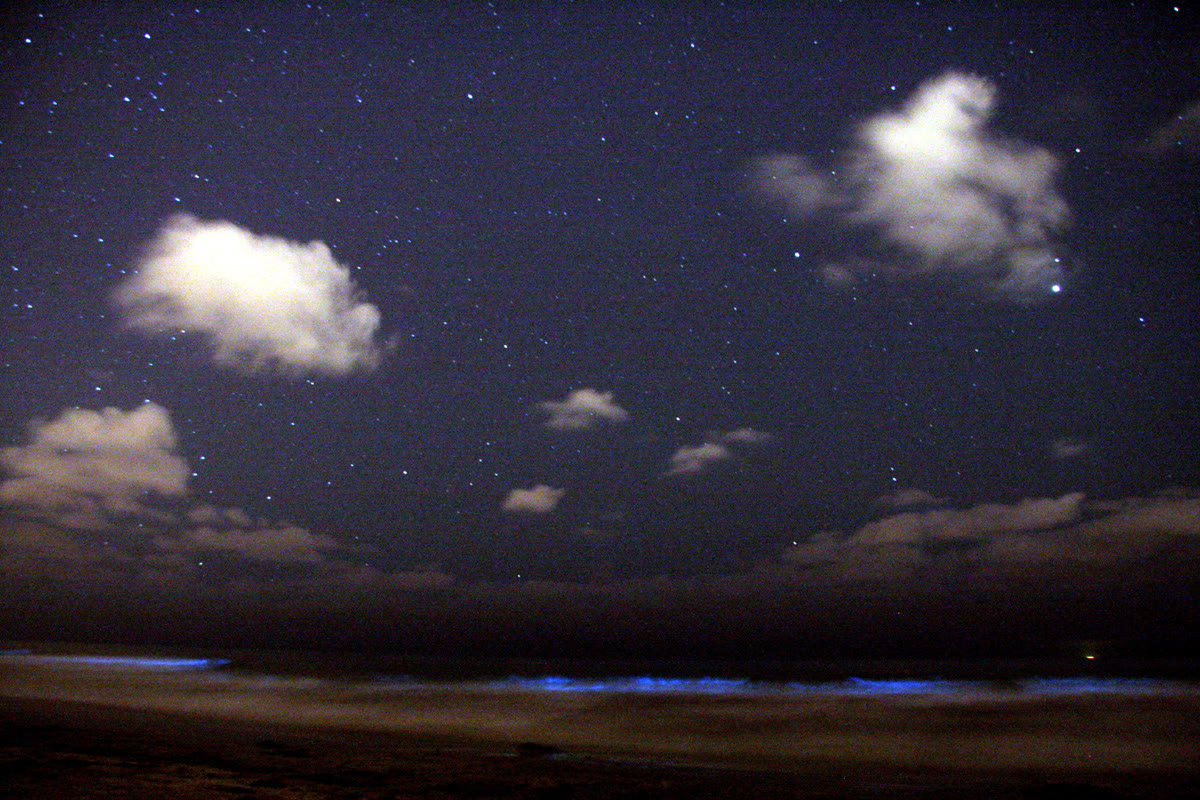
The bay has a very narrow mouth. Water — and everything living in it — flows in easily and struggles to get back out, so the dinoflagellates stay put and pile up instead of dispersing into the open Caribbean. It’s a bottle with a tiny neck, and the whirling fire is what’s in the bottle.
Then there’s the shoreline: Mosquito Bay is ringed with mangroves. Mangroves are endlessly generous trees, and as their leaves drop and break down they release a steady supply of the nutrients these organisms need. Trapped in place by the geography, fed by the trees, the population grows to a density you don’t get anywhere else. 🌿
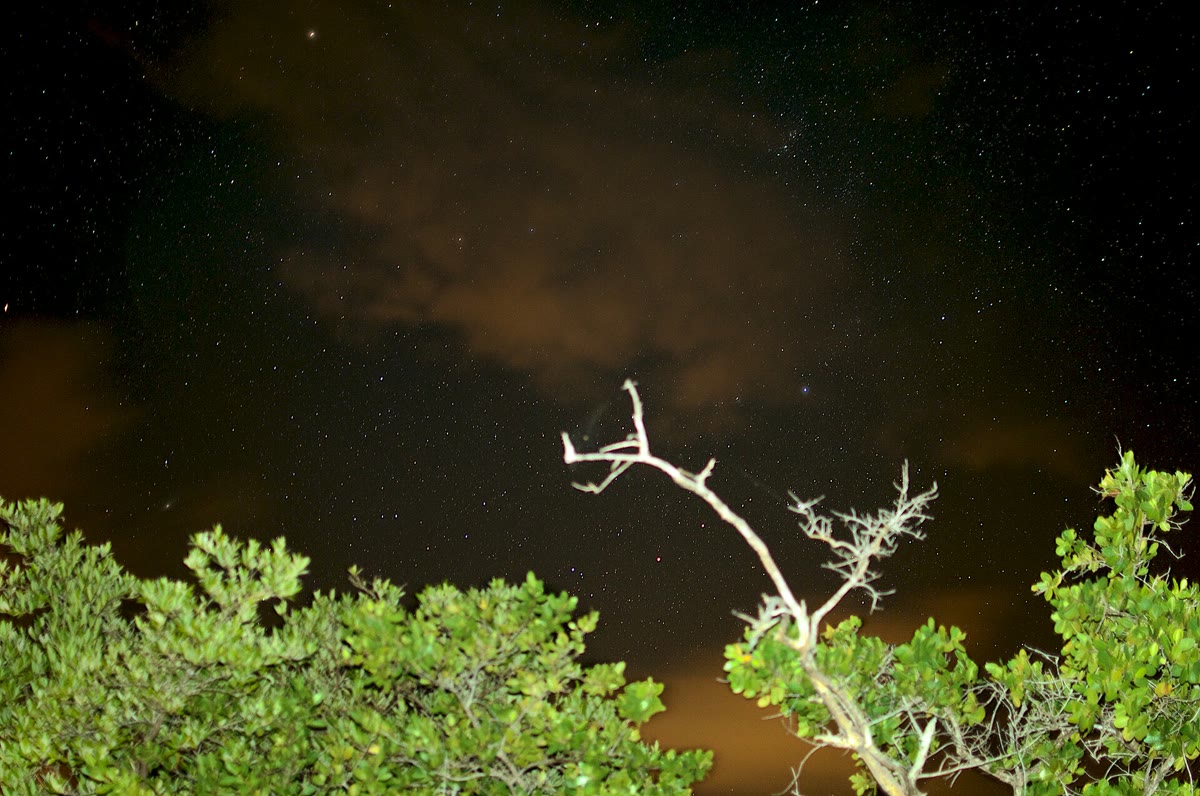
And the last ingredient is simply dark. The bay glows all year, every night — but you can only see it properly when there’s nothing brighter competing. Which is why the trips run on the darkest nights, within a few days of a new moon, when the sky gives you nothing and the water gives you everything. A full moon doesn’t switch the glow off; it just drowns it out. 🌑
Looking after it
Here’s the part that makes this a good-news story rather than just a pretty one.
A place this rare is also this fragile — and people noticed in time. Mosquito Bay has been a National Natural Landmark since 1980. And today, swimming in it is banned: sunscreen, insect repellent, and everything else we carry on our skin is genuinely bad for the microorganisms that make the whole thing work. It would be very easy to love this bay to death.
So instead you go by guided kayak. You keep your body out of the water and your paddle in it, and the bay stays healthy enough to keep glowing for the next boat, and the boat after that. 🛶
It’s a small, sane trade. Don’t swim in the miracle; paddle through it politely. The miracle continues.
Why this lives on a good-news blog
Because somewhere tonight, on a dark island in the Caribbean, a person who has never seen this before is going to dip a paddle into perfectly ordinary-looking black water — and the water is going to light up around them in living blue because seven hundred thousand tiny creatures per gallon decided to answer.
Not a projection. Not a light rig. Not anything anyone installed. Just a bay with a narrow mouth, a fringe of generous trees, an unreasonable number of microscopic organisms named whirling fire, and a rule that says don’t swim, just visit gently — so that it’s still doing this a hundred years from now.
The world is also doing this: glowing electric blue when you touch it, on the darkest nights, in one small bay. 💙🛶


