

On the evening of 16 June 2011, at 19:45, a ship left the harbour at Bergen and turned north.
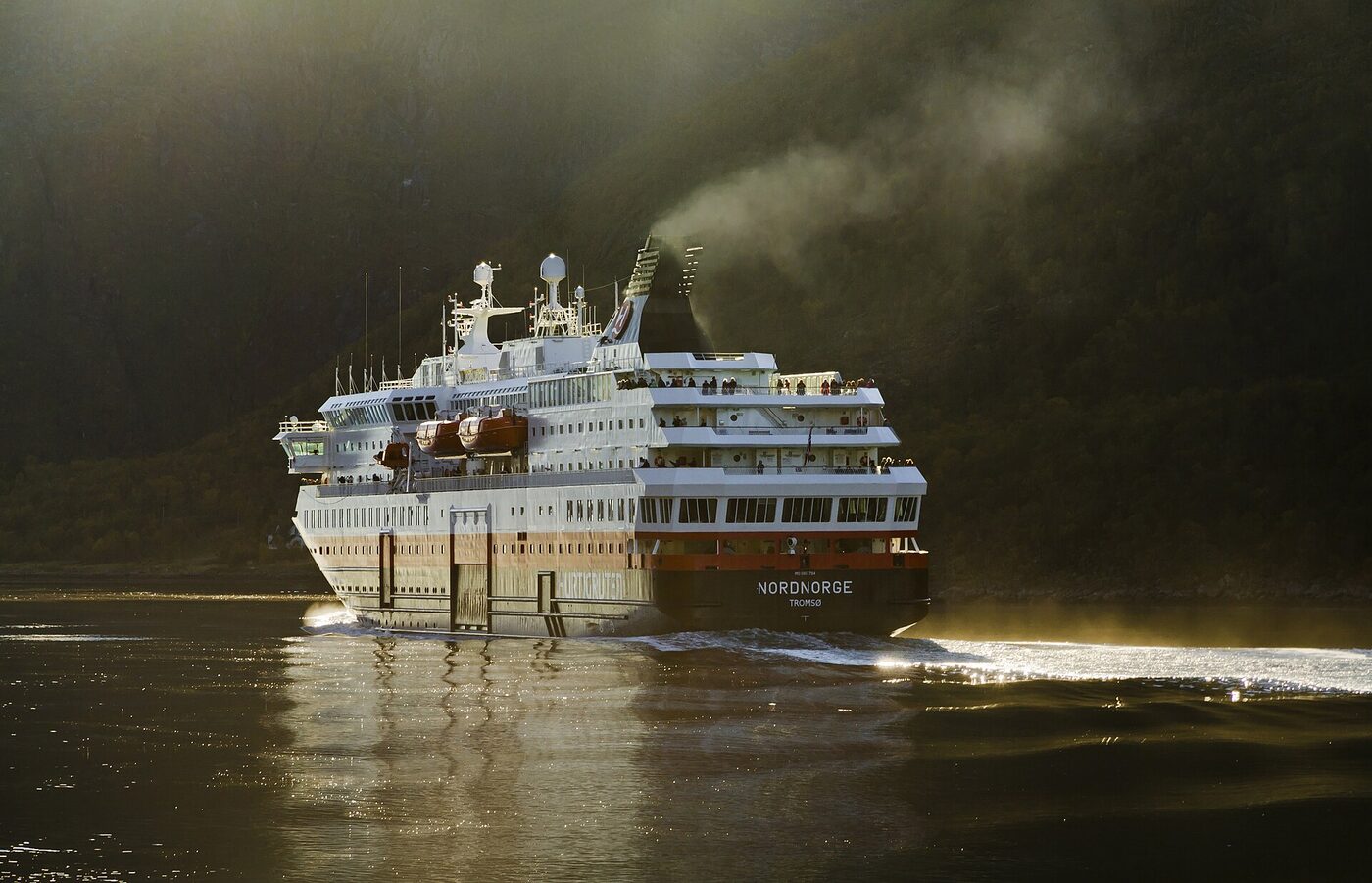
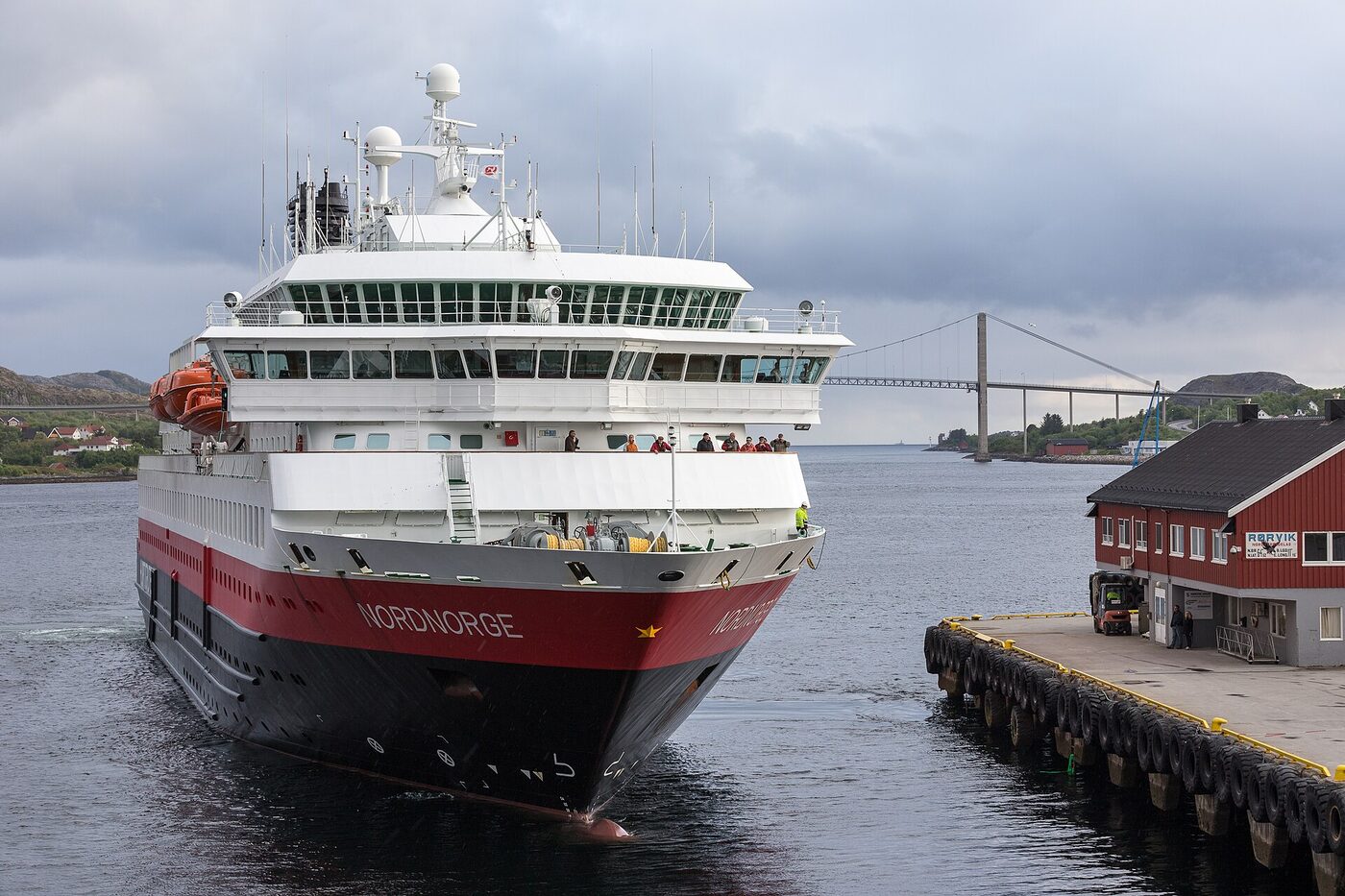
It was the MS Nordnorge, a working coastal vessel of the Hurtigruten line — part passenger ferry, part freight boat, part floating post office for the towns up the Norwegian coast. It had eleven television cameras bolted to it. And the Norwegian Broadcasting Corporation, NRK, transmitted every single second of the next five and a half days, live, on national television.
No narration. No music. No editing. No highlights, no recap, no host explaining what you were looking at. Just the front of a boat, and the coast of Norway, going past. For 134 hours, 42 minutes and 45 seconds. 🛳️
And 3.2 million Norwegians watched it.
Let us be precise about that number, because it is a good one
The population of Norway in 2011 was about 4.9 million people.
The 3.2 million figure is NRK’s own, and it is cumulative reach — the number of individual Norwegians who tuned in at some point across the whole voyage. It does not mean 3.2 million people sat and watched a boat for five and a half days without blinking. It means roughly two thirds of a country dropped in on it.
The concurrent numbers are, honestly, just as remarkable. Across the first weekend alone, 2,542,000 people came by the live broadcast. It ran at an average of 180,000 viewers — on NRK2, a channel that normally drew about 60,000 in prime time. Its market share went from 6% the previous weekend to 35%, which made NRK2 the most-watched television channel in Norway, for the first time ever, on the strength of a boat, going.
And the peak — the single highest moment of the entire five and a half days — was 692,000 people at 23:45 on the Sunday night, as the ship swung into the Trollfjord in Vesterålen on its way to Sortland.
Nearly seven hundred thousand people, awake at a quarter to midnight, to watch a ship go into a fjord.
It started with a train, and a leftover pile of tape
The idea was born over lunch, in 2009, at NRK’s regional office in Hordaland, in western Norway.
That year the Bergen Line — the railway across the mountains between Bergen and Oslo — turned a hundred. NRK had made a couple of ordinary documentaries about it and had a great deal of unused footage lying around. Then, as Rune Møklebust, the head of programming there, tells it, a colleague said this at the lunch table:
“What if we film the whole journey, and then use it all as a frame for telling archive histories from the Bergen Line? If there’s a signal failure, the program will be extended…”
That last part is the bit I love. The plan had a contingency for the train being delayed, and the contingency was: then the show is longer. 🚂
On 29 November 2009, NRK2 broadcast Bergensbanen minutt for minutt — the Bergen Line, minute by minute. Seven hours and sixteen minutes of a train going across Norway. About 1.2 million Norwegians watched it. A 15% market share, for a train.
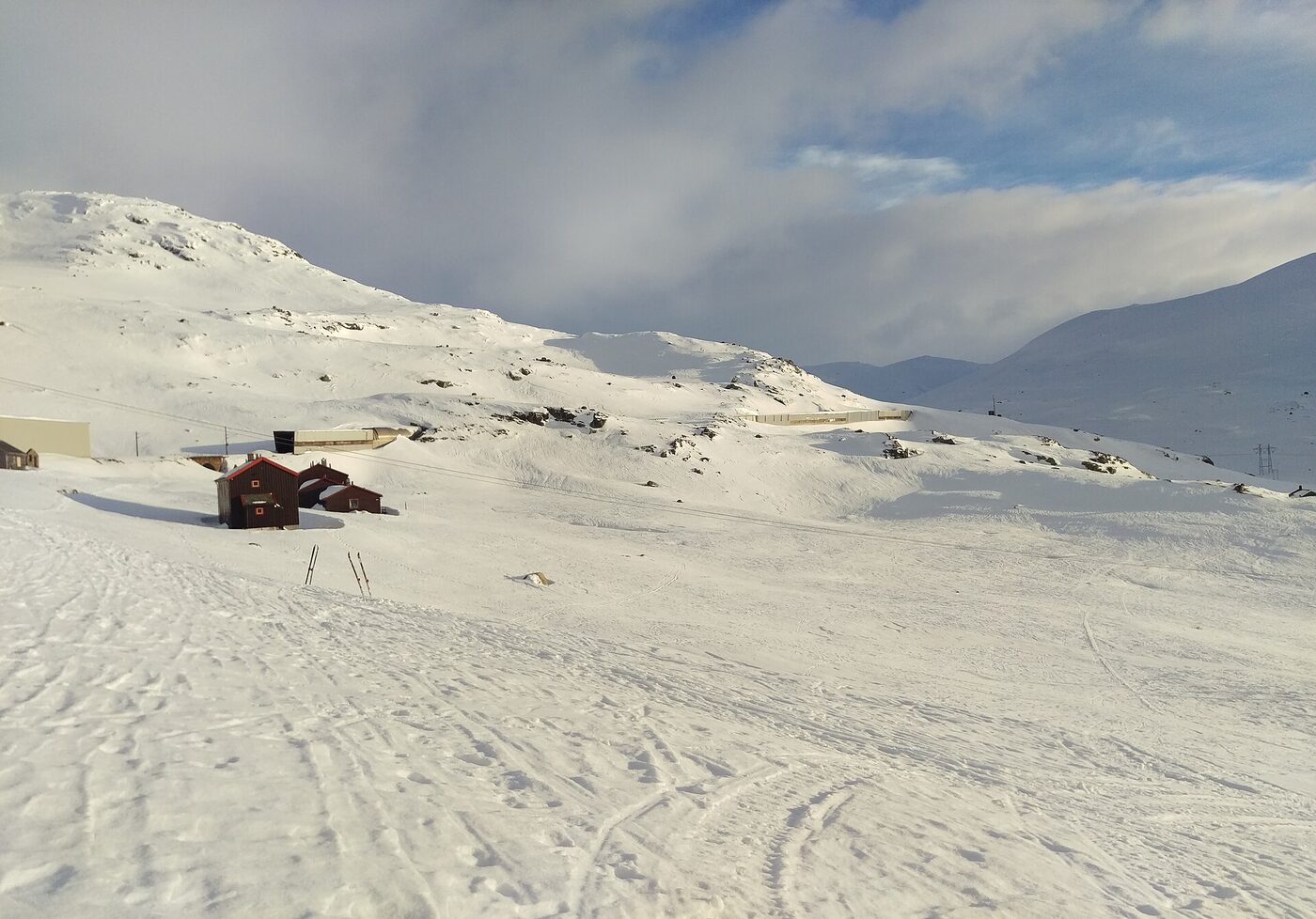
This is the part that ought to be impossible. Everything television has learned in a hundred years says you need a hook in the first fifteen seconds, a cut every four, a story with a shape, and a reason to stay. The Bergen Line broadcast had none of those. It had a train. It went into a tunnel — the original line between Oslo and Bergen had 182 of them, 73 km of tunnel all told — and for a while you looked at black.
People watched anyway. So NRK thought: what if we did a bigger one.
The bigger one was a boat, for five and a half days
Hurtigruten minutt for minutt went out live on NRK2 from Thursday 16 June to Wednesday 22 June 2011, following the Nordnorge the full length of the coast from Bergen to Kirkenes — a distance comparable, NRK cheerfully pointed out at the time, to travelling from Oslo to Tunisia.
Eleven cameras: fixed ones, a bow camera, and a gyro-stabilised camera to hold the horizon steady. No presenters walking you through it. The ship’s actual working schedule, kept: every scheduled port call, at the scheduled hour, whether that hour was four in the afternoon or four in the morning.
It went, in the words of NRK’s own headline three days in, “ALLE vil se Hurtigruten!” — everybody wants to watch the Hurtigruten.
The record-keepers agreed. The broadcast went into the Guinness Book of Records as the longest live television documentary ever transmitted. The record it beat was 13 hours. They did not break it. They stepped over it, ten times, and kept walking. In 2012 the whole thing was entered into Norsk Dokumentarv, Norway’s national documentary heritage register — the same register that keeps the country’s historical papers. 📜
Why it works, which is not actually a joke
Here is the thing people get wrong about Slow TV: they assume the appeal is ironic. It isn’t.
What NRK stumbled into is that a long, quiet, unedited window is not content in the way a drama is content. It is company. You put it on the way you’d open a window — you glance up, the coast has changed, a gull goes past, you go back to what you were doing. Nobody is trying to make you feel anything on a schedule. There is nothing to keep up with. If you fall asleep, you have not missed the plot, because there is no plot; there is only where the ship is now.
And here is the part that turns it from a curiosity into something genuinely lovely.
The country came out to the shore. As the Nordnorge worked north, people along the coast turned out on the quays and the headlands to meet it — because they knew the ship was on television, and they knew the whole country was looking out of it. Towns competed over who could put on the biggest welcome at the harbour. Schoolchildren arranged themselves to spell out words. Hikers climbed to the tops of hills to wave a flag at the right moment. Boats came out to run alongside. Three separate marriage proposals happened on camera during the voyage. 💍
NRK covered this itself as it was happening — one of its own reports from that weekend carries a photograph of the ship arriving at Ørnes with the note that a great many people were contributing to the folkeliv, the public gathering, on land along the route. One viewer, writing in afterwards, put it better than any of the coverage did: if it hadn’t gone out live, there wouldn’t have been much life on the quays.
That’s the whole thing, really. It was not a programme about the coast of Norway. For five and a half days it was a window that the coast of Norway could see back through — and so the coast of Norway put its coat on and went outside and waved.
Meanwhile, 46% of the people watching online were somewhere else entirely: Denmark, the United States, Germany, Britain, France. Nearly a billion seconds of it were streamed — about thirty years of television, watched in under a week.
And then they did a fire
Once you have proved that a nation will watch a boat, the question becomes: what else.
NRK found out. There was Flåmsbana minute by minute (a tourist railway; 40% market share). Salmon river minute by minute, twenty-four hours from the opening day of the salmon fishing season on the Gaula — about 1.6 million viewers. Telemarkskanalen, a canal boat, twelve hours, 1.3 million. Nordlandsbanen, a train north of the Arctic Circle, shot across all four seasons and played back with the seasons in sync. National Knitting Night, twelve hours, an attempt on the world record for sheep-to-sweater. A bird feeder dressed as a tiny coffee shop, broadcast live for fourteen hours, called Piip-Show. All 899 hymns in the Norwegian hymnal, sung end to end by choirs, over sixty hours. A reindeer migration. A nine-day expedition around Svalbard.
And in 2013, somebody at a national public broadcaster said, out loud, in a meeting: what if we just showed a fire burning.
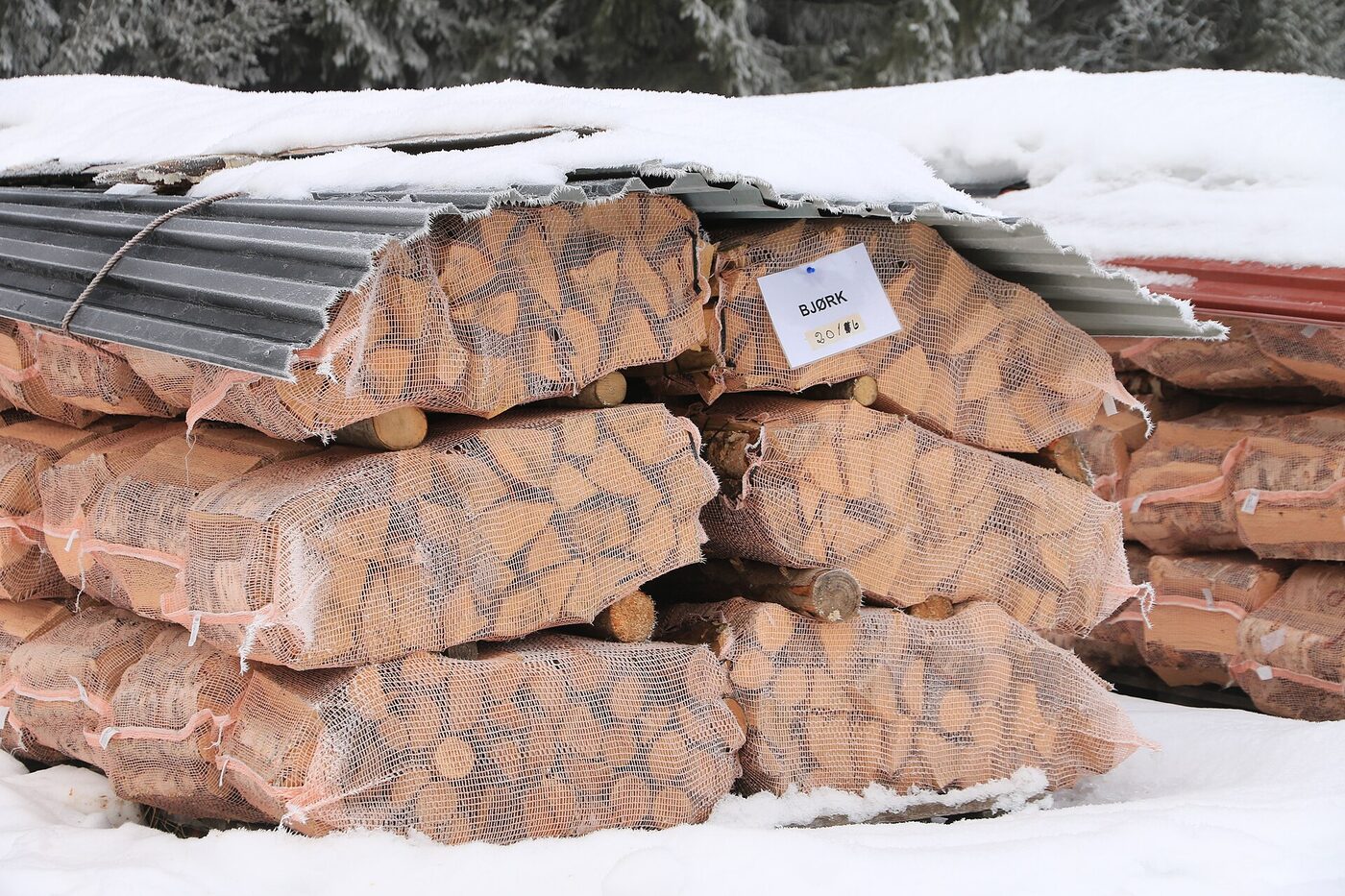
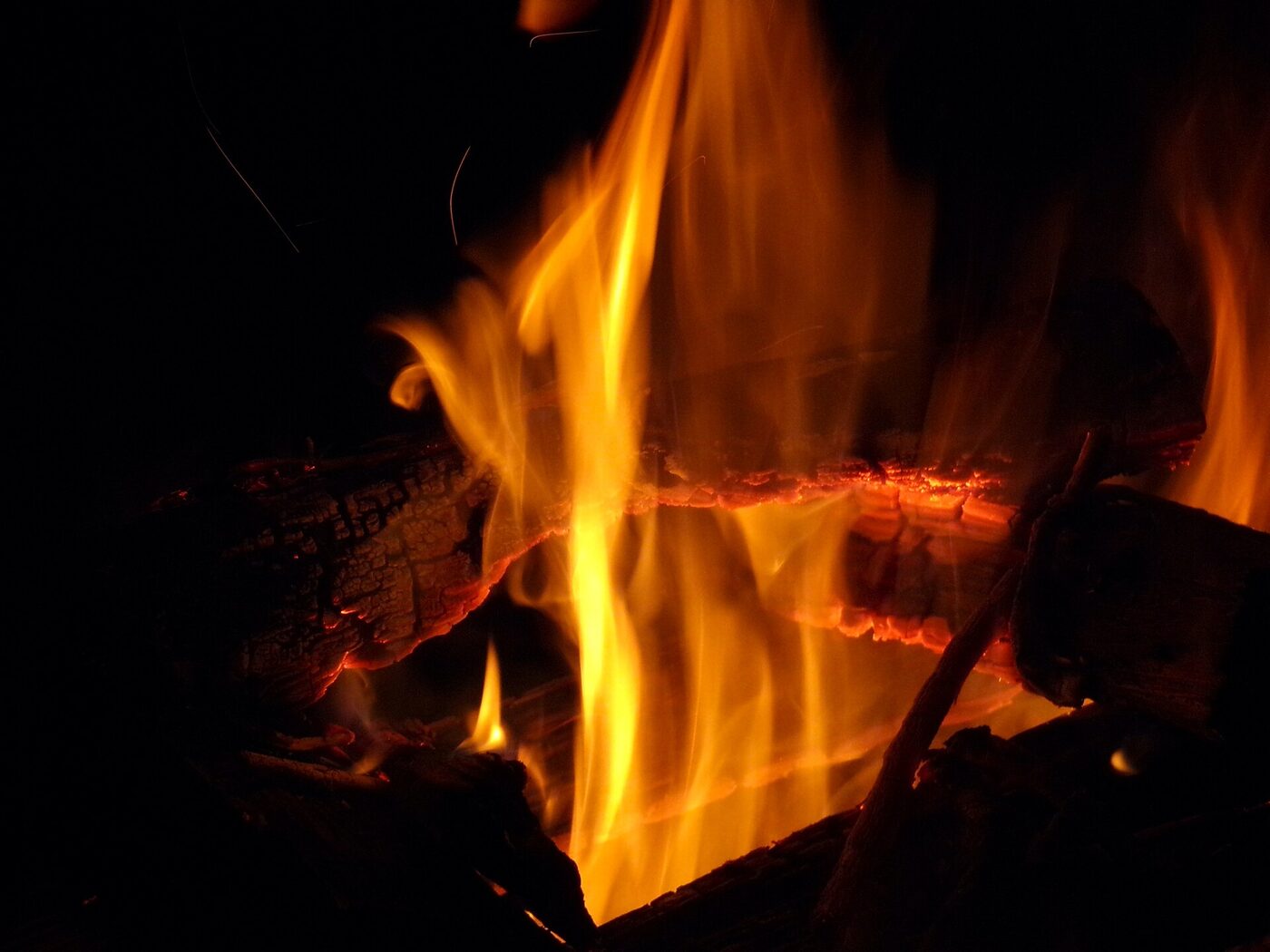
They did. It was called National Wood Night, it ran from 20:05 one evening to 08:00 the next morning on NRK2, and it was twelve hours long. The first stretch was ordinary television — interviews, discussion, advice about wood, all of it inspired by Lars Mytting’s genuinely bestselling book about chopping, drying and stacking it. Then the produced part ended.
Then it was eight hours of a fire, burning.
About a million Norwegians watched. The New York Times sent someone. It ended up on The Colbert Report. 🔥
Why this lives on a good-news blog
Because of what it says about the audience.
Every assumption modern media makes about people is that our attention is short, our patience is gone, and we have to be grabbed. Norway ran the control experiment. It put on the least grabby thing physically possible — no story, no host, no cuts, a boat going north — and two thirds of the country came. Not to laugh at it. To sit with it, at a quarter to midnight, and then to go outside and wave at it.
It also says something nice about NRK, which had every reason not to do this and did it anyway. They released the whole 134 hours under a Creative Commons licence — you can go and download the entire voyage, legally, right now, and quite a lot of it is sitting on Wikimedia Commons this minute. And when the Language Council of Norway named sakte-TV the new word of the year in 2013, the word already had somewhere to live.
Somebody at a lunch table said “what if we filmed the whole thing.” Somebody else, instead of explaining why that was a bad idea, said how long is the whole thing.
The answer was 134 hours, 42 minutes and 45 seconds. 🛳️💛
Go deeper (real links, no pop-ups, promise)
- 📺 NRK’s own Slow TV press page — the show-by-show list, with NRK’s viewing figures for every one
- 📰 NRK, 20 June 2011: “Hurtigruten sprenger alle rekorder!” — the weekend numbers, in Norwegian
- 🎬 NRKbeta: Hurtigruten — 5 day TV marathon in the midnight sun — the production write-up, in English
- 🎁 The entire voyage on Wikimedia Commons — CC BY-SA, courtesy of NRK
- 📚 Wikipedia: Slow television
- 🇳🇴 Life in Norway: Norway’s Slow TV — including the people on the shore


