

There is a hillside in southwestern Turkey that, from a distance, looks like a mistake. A great white shelf spills down the slope in tiers, blinding in the sun, as if a glacier wandered several hundred miles too far south and decided to stay. Locals in the valley have called it the same thing for centuries: Pamukkale — cotton castle. 🤍
It is not snow. It is not ice, or marble, or salt. It is rock that water built — one patient drip at a time — and the water is still there, still warm, still pooling in the terraces. And here is the best part: you can take your shoes off and walk into it.
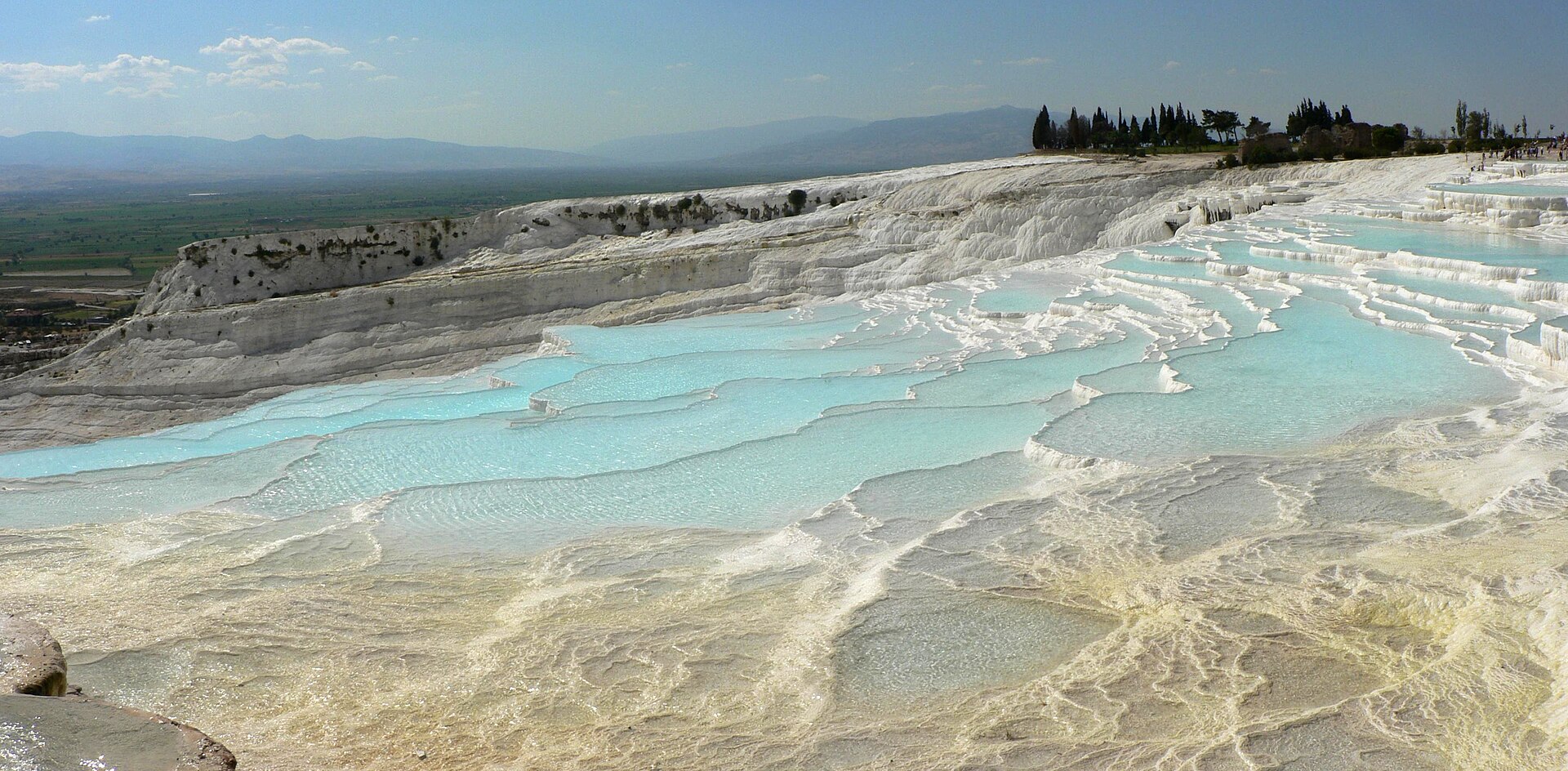
So what is it actually made of?
Underneath this hillside, in the River Menderes valley of Denizli Province, there are 17 hot springs. They run anywhere from a comfortable 35 °C (95 °F) to a distinctly uncomfortable 100 °C (212 °F) — that is, literally boiling. All that water comes up loaded with dissolved calcium carbonate, which it picked up from limestone deep underground.
Then it reaches the open air, and chemistry happens. The carbon dioxide de-gasses out of the water — the same fizz-going-flat you get when you leave a soda open — and the calcium carbonate it was holding can no longer stay dissolved. So it drops out. First as a soft white gel, then, slowly, it hardens into a stone called travertine.
Do that continuously, for millennia, down a whole mountainside, and the water essentially builds its own plumbing out of rock: rim after rim after rim, each little stone lip catching a pool, each pool overflowing into the next one down. 🧪
It is genuinely enormous
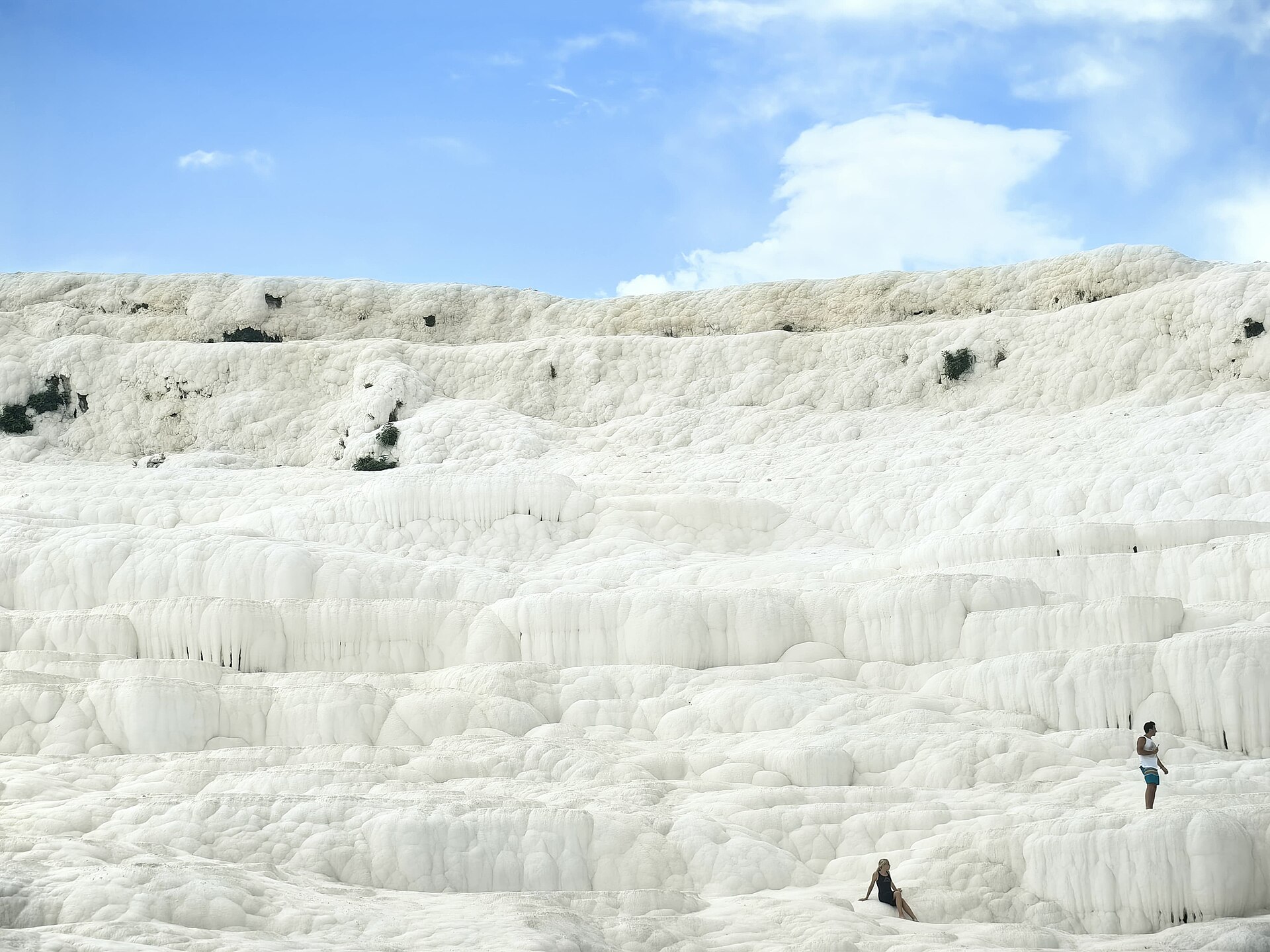
Photos undersell the scale, so here are the numbers. The travertine formation is roughly 2,700 metres long (that’s about 8,860 feet — over a mile and a half), 600 metres wide, and 160 metres high. It is big enough and bright enough that you can stand in the town of Denizli, 20 kilometres away across the valley, and see it glowing on the far hills like someone left a light on.
The barefoot rule
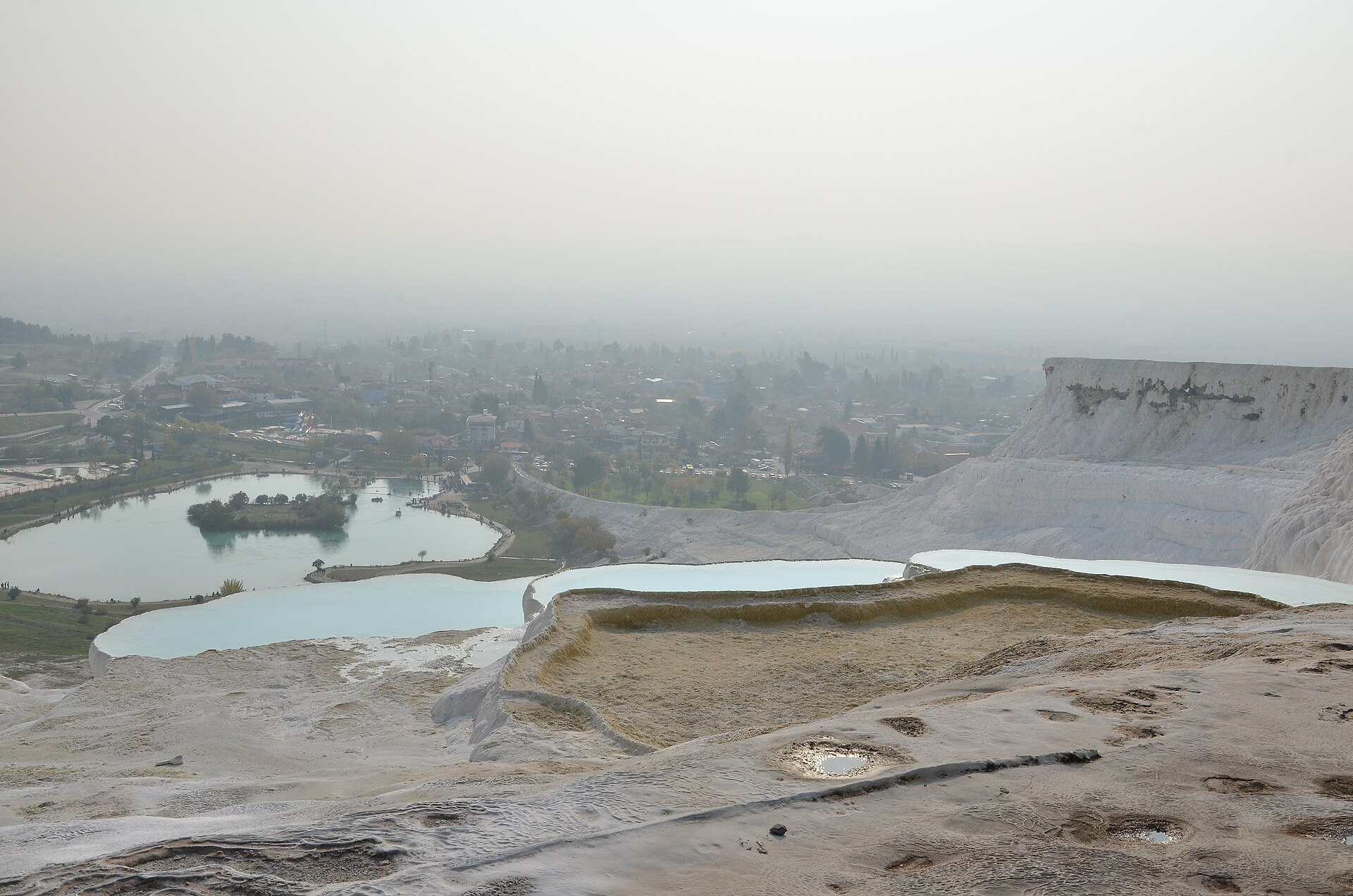
Here’s the detail that makes this place so likeable. Travertine is soft, especially where it’s wet and still forming, and it scuffs and stains under boots. So to visit the terraces you take your shoes off and carry them. Everybody does — two million people a year, padding around a mountain of white stone in bare feet, trousers rolled up, warm mineral water over their ankles. ♨️
It’s a rule that solves a conservation problem and accidentally creates something lovely: there’s no way to be self-important while barefoot and holding your sneakers. The authorities also rotate the water flow between sections and periodically close parts of the hill entirely, so the terraces get quiet stretches to rebuild themselves. The place is being actively maintained by the same process that made it — you just have to give it room.
People figured this out 2,100 years ago
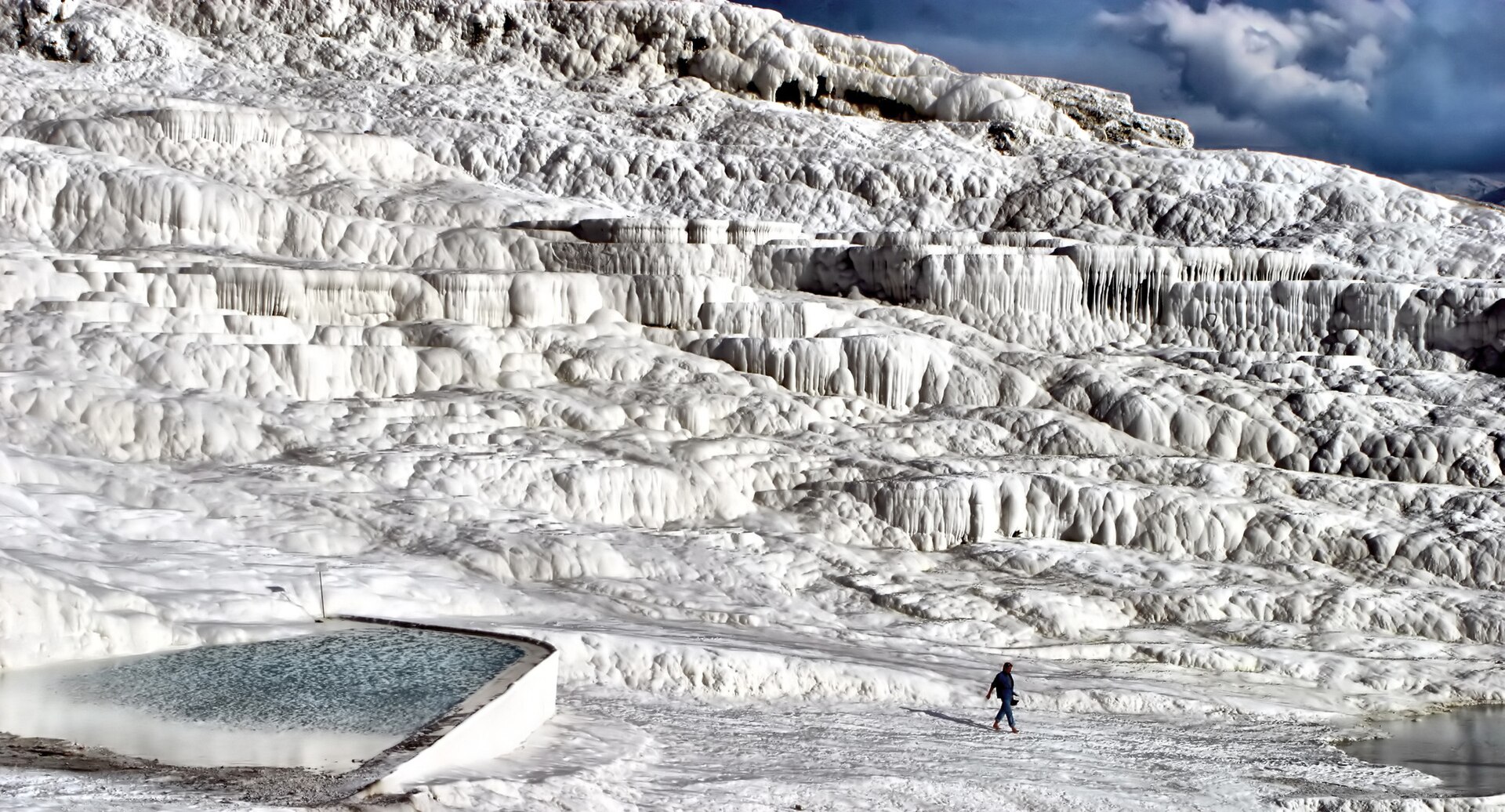
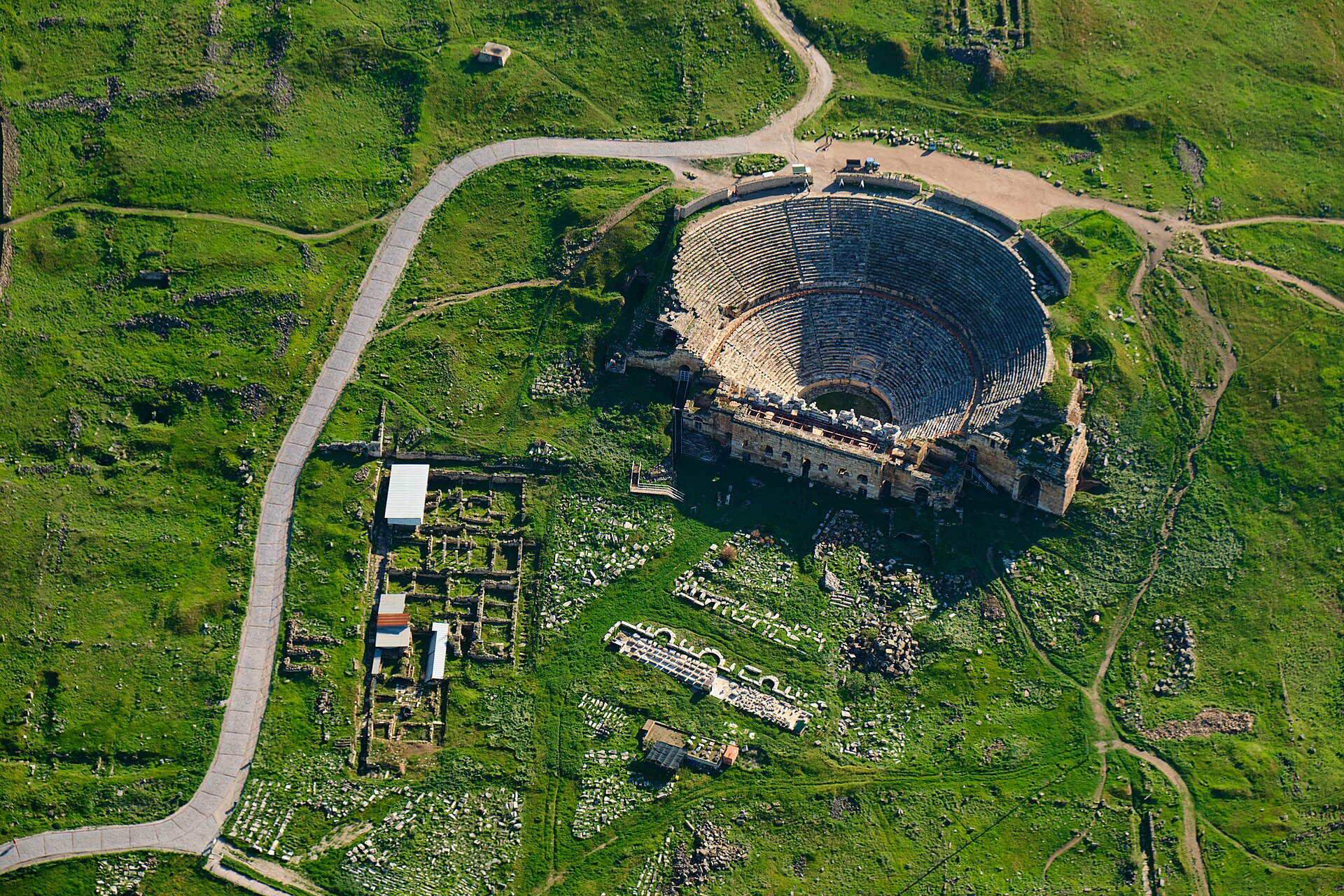
We are not the first to notice. Early in the 2nd century BC, the Greeks looked at this hill of warm mineral water and built an entire city on top of it — Hierapolis — expressly as a thermal spa. Doctors set up shop and treated patients with the spring water. It grew into a proper Roman-era city with a theatre, colonnaded streets, and a sprawling necropolis of people who came for the cure and, in fairness, did not all get one.
You can walk through the ruins today; they sit directly above the white terraces, so a single afternoon gets you a natural wonder and an ancient city. 🏛️
And then there’s Cleopatra’s Pool, which is exactly as good as it sounds. It’s a warm spring-fed pool you’re allowed to swim in — and lying on the bottom, submerged, are fallen marble columns from the ancient city, toppled by earthquakes centuries ago. You get in the water and swim over the ruins. 🏊
In 1988, UNESCO listed the whole thing — terraces and city together — as the Hierapolis-Pamukkale World Heritage Site.
Why this lives on a good-news blog
Because Pamukkale is a very slow, very quiet argument that the world builds beautiful things without being asked to.
No one designed those terraces. There’s no architect, no plan, no intent — just water coming out of the ground with a little too much limestone in it, and a hillside, and an enormous amount of time. The result is a mountain of white stone staircases holding warm blue water, which is not a thing that had to exist and does anyway.
And then people found it, and instead of paving it, they took their shoes off. They built a spa city next to it two millennia ago and a UNESCO protection plan around it in 1988, and today the deal is: come see it, wade in it, don’t wear boots, and let the springs keep working. The world is also doing this — slowly stacking up wonders out of nothing but water and patience, and asking very little in return. 🤍♨️


