

Here is a thing that actually happened, on Christmas Eve, while most of the planet was wrapping presents.
A spacecraft about the size of a small car flew into the atmosphere of the Sun — closer to a star than anything humans have ever built — moving at 430,000 miles per hour. Then it went quiet, because nothing can talk to you from inside the Sun’s atmosphere. And for two days, everyone who built it just had to wait. ☀️
The most cautious way to touch a star
You cannot simply fly at the Sun. It sounds like the easiest target in the solar system — enormous, bright, impossible to miss — but the Earth is moving sideways around it at about 67,000 mph, and everything we launch inherits that sideways motion. To fall toward the Sun, you have to cancel it. That takes an astonishing amount of energy.
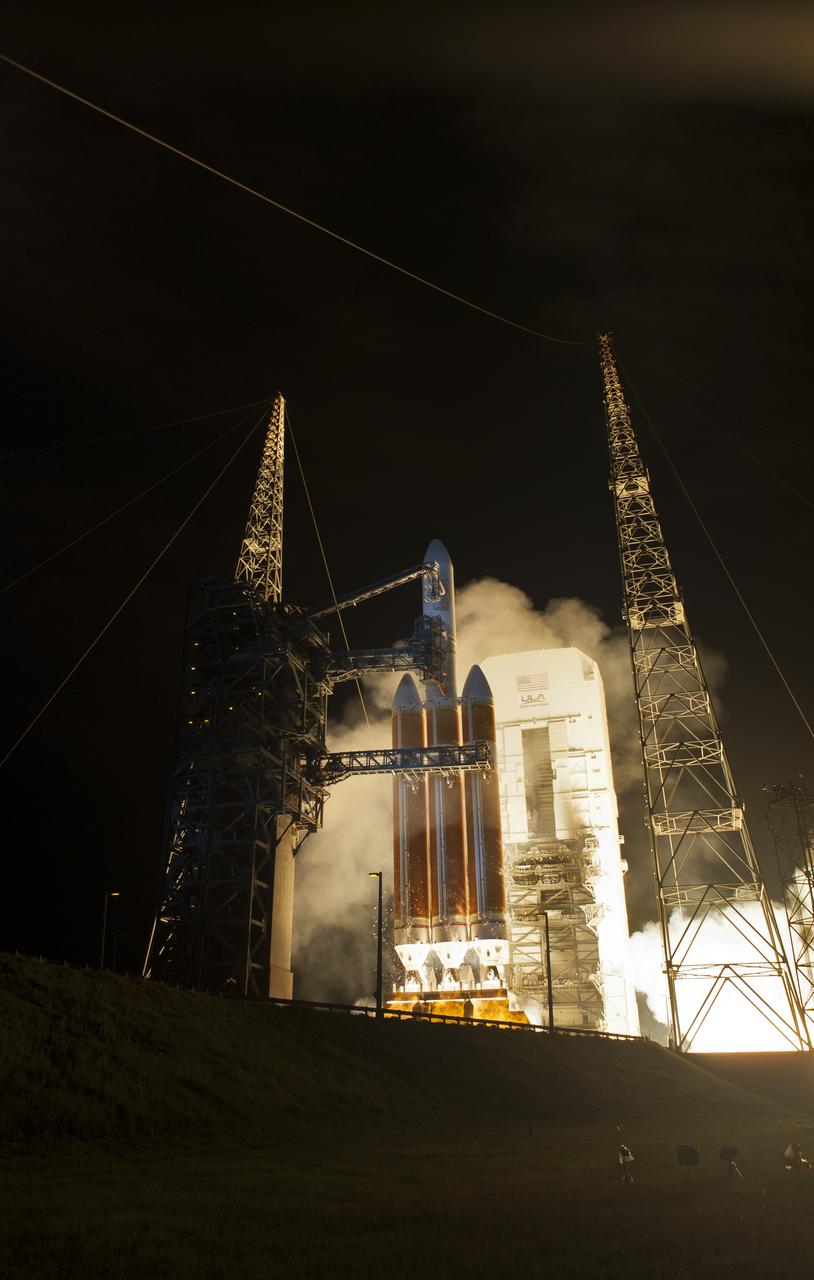
So Parker Solar Probe didn’t go straight there. It launched on 12 August 2018 on a Delta IV Heavy, and then it spent years flying past Venus — seven times — using the planet’s gravity to shave off a little of its sideways speed on each pass, like a skater slowly letting go of a spinning pole. Every Venus flyby dropped the probe into a tighter, faster loop around the Sun.
And it worked. It went lower. Then lower. Then, on 28 April 2021, it did something no machine had ever done: it flew through the Sun’s corona — crossed the boundary and entered the atmosphere of a star. 🌞
Four and a half inches of foam
The part I cannot stop thinking about is the shield.
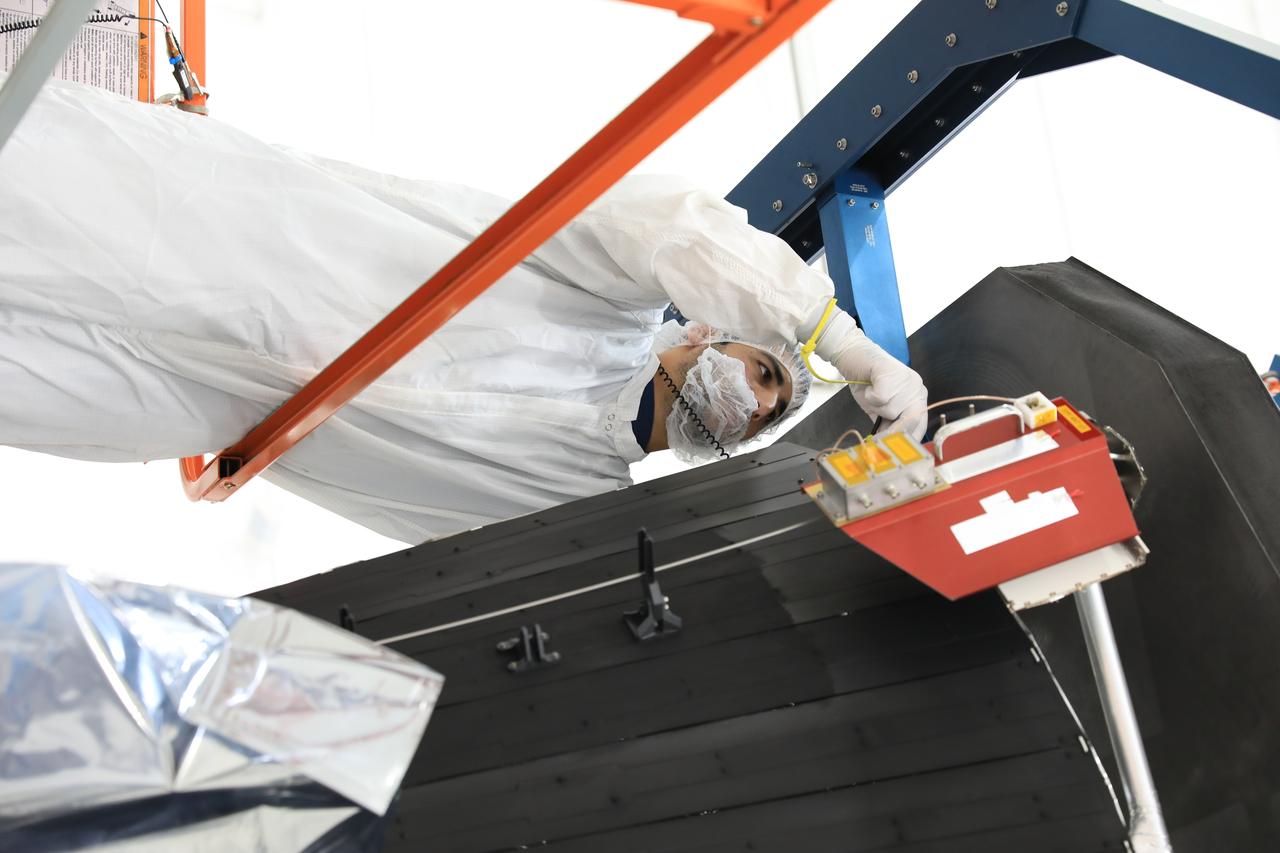
Everything Parker does is possible because of a disc on its sun-facing side: two sheets of carbon composite with a layer of carbon foam between them. Total thickness: about four and a half inches. It weighs less than you’d guess — the foam is mostly empty space — and it is the only thing standing between the spacecraft’s instruments and the full, unfiltered fury of the nearest star.
It was designed to survive 2,600 °F (1,430 °C). That is hot enough to melt steel. (At the December 2024 pass, operators expect the shield actually saw around 1,800 °F / 980 °C — brutal, but comfortably inside what it was built for.)
And behind it? The instruments ride at roughly room temperature. Not “survivable.” Not “barely holding.” Room temperature. Somebody sat down, did the math, built a four-inch disc of foam, and made the inside of a spacecraft in the atmosphere of the Sun about as warm as your kitchen. 🛡️
Two days of not knowing
On 24 December 2024, Parker made its record pass: 3.8 million miles (6.1 million km) above the Sun’s surface, at 430,000 mph (692,000 km/h). Closest any human-made object has ever come to a star. Fastest any human-made object has ever moved. Both records, in one afternoon, on Christmas Eve.
There is no live telemetry from in there. The probe was on its own — flying its own plan, at its own unimaginable speed, through the outer atmosphere of the Sun. The people who spent decades building it could do exactly nothing but wait.
Late on 26 December 2024, in the mission operations center at the Johns Hopkins Applied Physics Laboratory in Laurel, Maryland, a beacon tone came in.
Not a photograph. Not data. Just a tone — the simplest possible message a spacecraft can send, which means, in its entirety: I’m here. I’m okay.
It had made it through, and it was operating normally. 💛
“It’s monumental to be able to get a spacecraft this close to the Sun. This is a challenge the space science community has wanted to tackle since 1958, and it spent decades advancing the technology to make it possible.” — John Wirzburger, Parker Solar Probe mission systems engineer, APL
The man it’s named for was in the stands
1958. That’s the year in the quote, and it isn’t a coincidence.
In 1958, a young physicist named Eugene Parker published a paper arguing that the Sun is constantly blowing a stream of charged particles out into space — a solar wind. Reviewers thought he was wrong. The idea was, by the standards of the day, faintly ridiculous. The paper was nearly rejected; it survived largely because the editor overruled the referees. Within a few years, spacecraft went out and measured the solar wind, and Parker turned out to have been right all along.
Sixty years later, NASA named this mission after him — the first NASA mission ever named for a living person. And on that August night in 2018, Eugene Parker, aged 91, went to Cape Canaveral and sat outside in the dark to watch a rocket carry his own name toward the star he’d spent his life explaining.
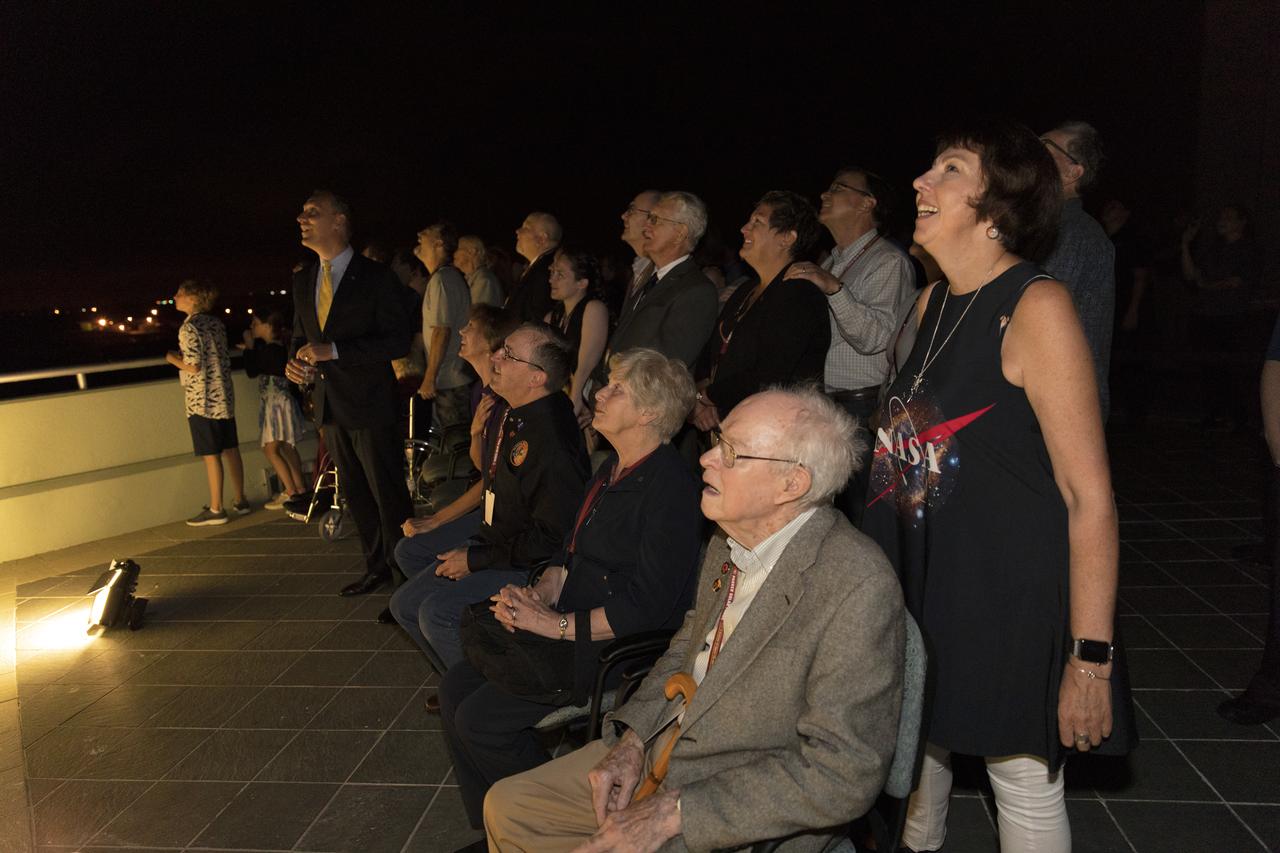
Look at that photo for a second. Everyone is looking up. Everyone is lit by the same light. And the man in the front row is watching a machine with his name on it go to the Sun to check whether he was right.
He was. He died in 2022, at 94, having lived to see it. 💛
Why this is on a good-news blog
Because “fly into the Sun” is the punchline of a joke. It’s the thing you say when something is impossible, or when you’d like someone to go away. It is not supposed to be an agenda item.
And yet: a group of people looked at the hardest, hottest, most obviously-off-limits destination in the solar system — and they didn’t flinch, and they didn’t give up, and they took decades, and they used Venus as a brake, and they built a four-and-a-half-inch disc of foam, and they aimed the whole thing at a star.
Then, on Christmas Eve, it flew into the atmosphere of the Sun at four hundred and thirty thousand miles an hour.
And two days later it called home to say it was fine. ☀️💛


