

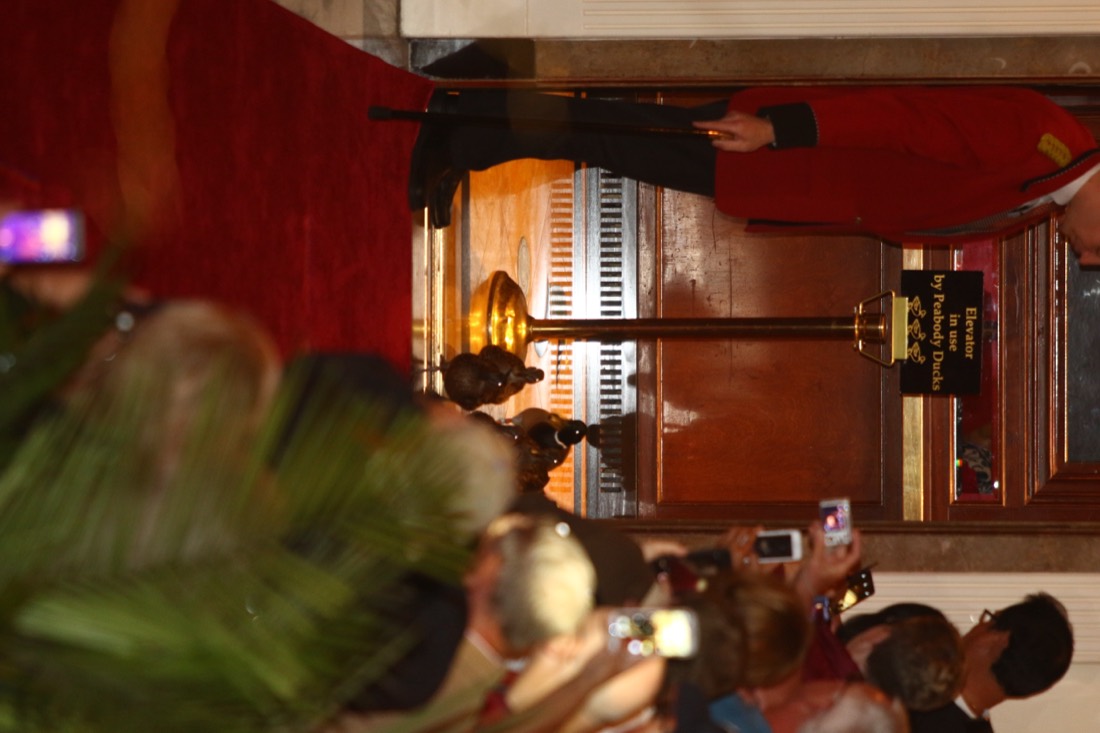
At 11 o’clock every morning, in a grand marble lobby in Memphis, Tennessee, an elevator door opens and five ducks walk out. Not metaphorical ducks. Not a mascot in a costume. Five actual North American mallards, who then waddle down a red carpet to a marble fountain, climb in, and spend the day paddling around while tourists beam at them.
Then at 5 p.m., they get out, walk back up the carpet, ride the elevator home, and go to bed. And they have been doing this, more or less daily, since the 1930s. 🦆
The march is a whole ceremony
This is the part that makes people cross the country to see it. It isn’t ducks being quietly herded through a service corridor. It’s a procession.
At the appointed hour, a red carpet is rolled out across the lobby. A uniformed Duckmaster — brass buttons, gold-tipped cane, the works — steps up to the rooftop elevator. The doors open, and the ducks step out to the sound of John Philip Sousa’s “King Cotton March” playing over the speakers. Every day. Same song. Then they parade — with genuine duck dignity — down the carpet to the fountain, while a crowd of grinning strangers takes approximately ten thousand photographs.
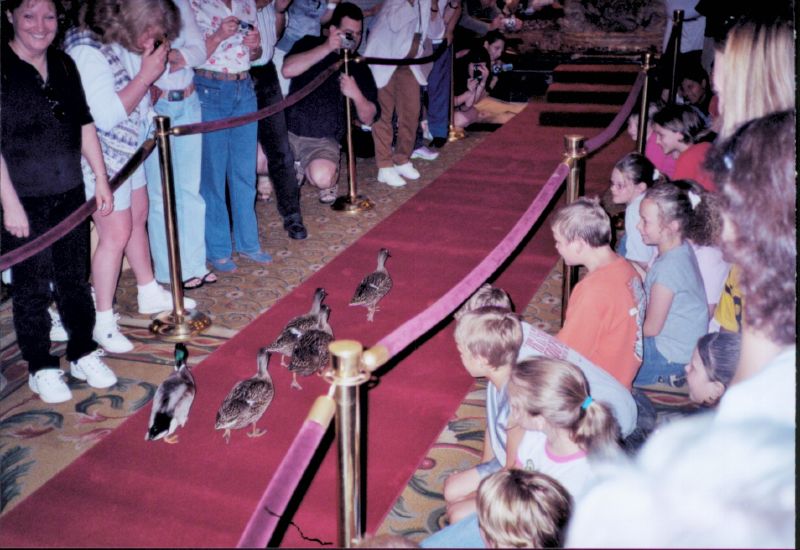
It is pure pageantry in honor of five waterfowl, and everybody plays it completely straight. That’s what makes it perfect.
How on earth did this start?
Like most of the best traditions: as a joke that nobody stopped.
The story goes that around 1933, the Peabody’s general manager came back from a weekend hunting trip in Arkansas, having enjoyed a little too much of the local sipping whiskey. Back then it was legal to use live decoy ducks to lure wild ones, and he and a friend thought it would be hilarious to leave a few of their decoys in the hotel’s ornate lobby fountain.
Guests loved it. So the ducks stayed. A few years later a former circus animal trainer named Edward Pembrook offered to walk them down each day and taught them the march — and became the first Duckmaster. A silly weekend prank quietly turned into the single most famous thing about a grand old hotel.
They live in a palace. An actual palace.
When the workday ends, the ducks retire to the roof — to the Royal Duck Palace, a purpose-built little marble-and-bronze duck house with its own small fountain, complete with a bronze-scale replica of the hotel. It is nicer than a lot of apartments.
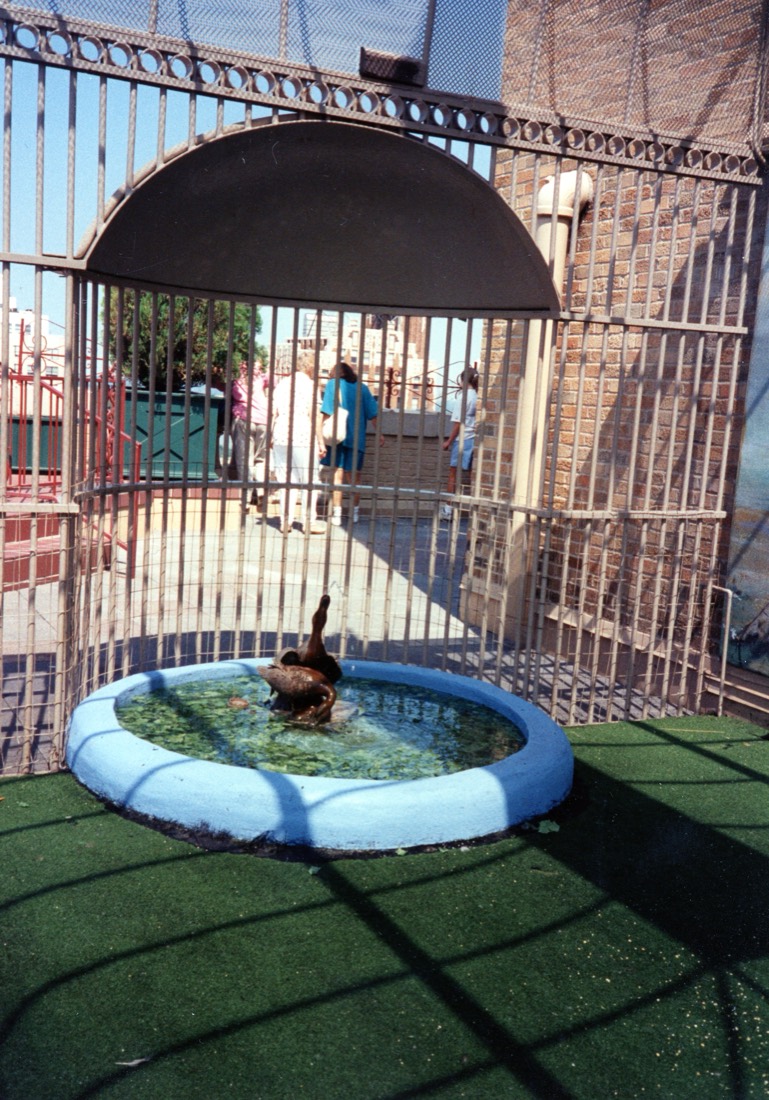
And here’s the genuinely lovely bit: the ducks don’t do this forever. A team of mallards serves a stint — a few months — and then retires back into the wild, swapped out for a fresh five. They’re never the same ducks for long, and they’re never bred as performers. They’re just wild ducks doing a temporary, celebrated tour of duty in the fanciest fountain in Tennessee.
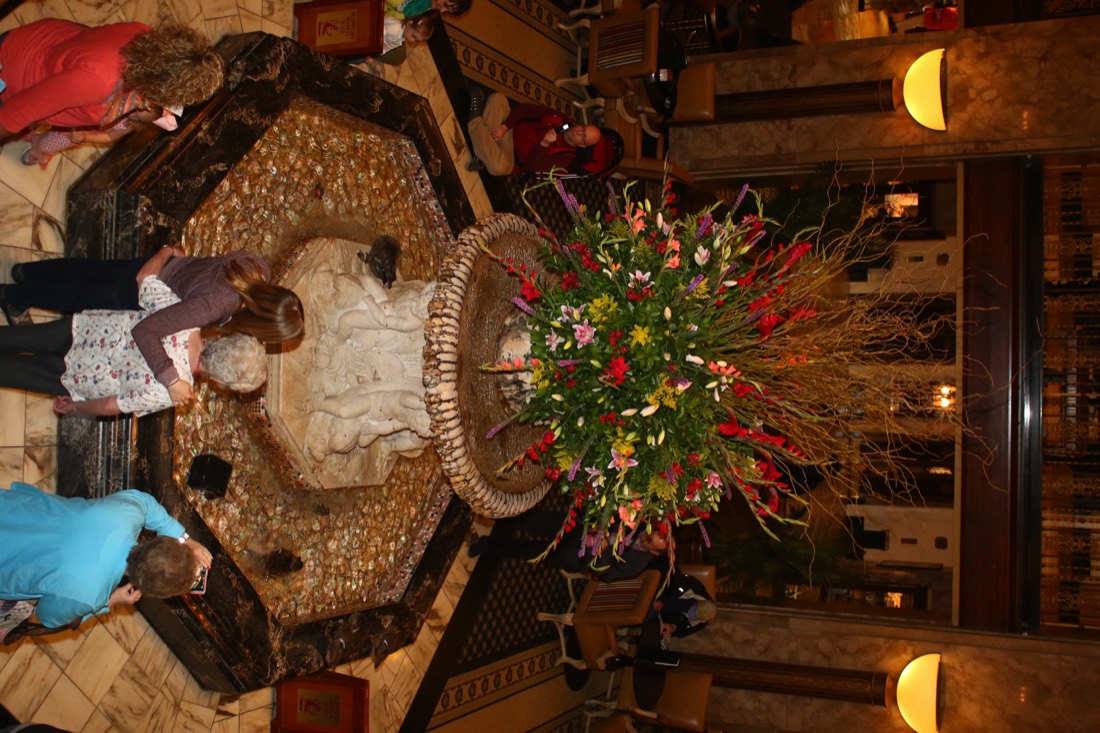
Which leads to the detail that ties the whole thing together with a bow: duck is never served in any Peabody restaurant. It’s not on a single menu. Out of respect. When your hotel’s most beloved residents are ducks, you do not, under any circumstances, serve duck. Obviously.
Why this lives on a good-news blog
Because it costs nobody anything and it makes everybody happy. A hotel could have quietly ended a 1930s prank at any point in ninety years. Instead, someone rolls out a red carpet twice a day, cues up a Sousa march, puts on a brass-buttoned uniform, and escorts five ducks to a fountain — with total sincerity — because it delights people, and delighting people turned out to be reason enough.
The world built a small daily ceremony around waterfowl and simply never found a good reason to stop. Long may they waddle. 🦆💛


