

Here is a very large project with a very small heart.
Pengzhou is a city of the Sichuan plain, about 36 kilometres northwest of Chengdu. In its old centre stands Longxing Temple, which has been on the same patch of ground for something close to seventeen hundred years. Around that temple: narrow streets, low buildings mostly thrown up in the 1970s and 80s, some factories to the north that had stopped making anything years ago — and, threaded through all of it, an unbroken run of restaurants and teahouses.
Between 2019 and 2023, the whole quarter was rebuilt. Not one building — 157,768 square metres of it, which is about twenty-two football pitches of town, all at once.
And the part of the story we like is this: when the architects sat down to write about what they’d done, the very first thing they named — before the materials, before the plan — was the restaurants and the teahouses. That’s what they said made this the most recognisable place in Pengzhou. You can usually tell what a project thinks is precious by what it mentions first. 🍵
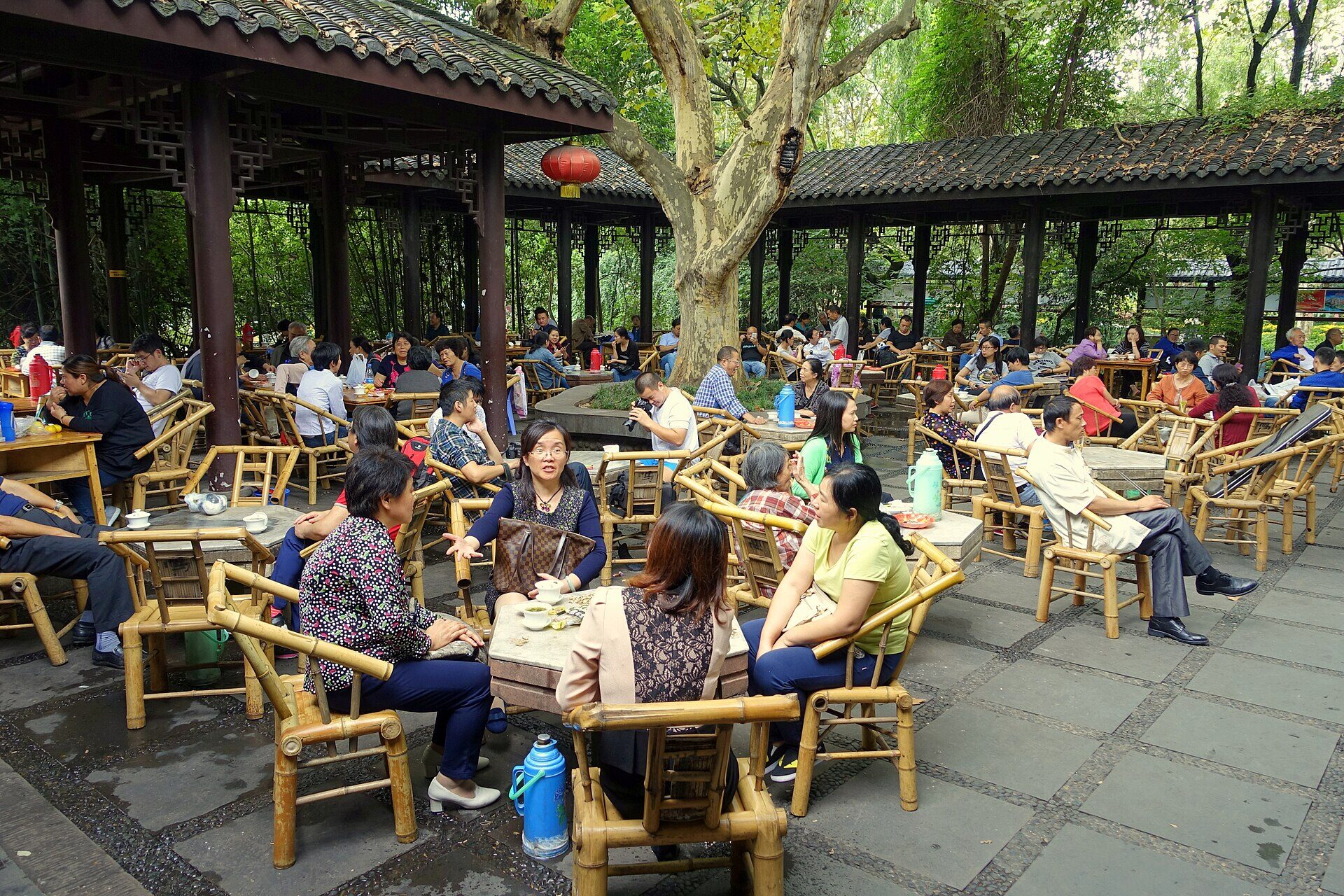
The temple that kept changing its name
Longxing Temple has been renamed more times than most of us change address.
We know this because of a wonderful document: a stele text carved to mark the temple’s rebuilding, written by a man named Chen Hui, which was copied into a great imperial anthology of literature compiled in the 980s and has been sitting there quietly ever since. It opens by running through the temple’s names, and it is refreshingly matter-of-fact about it:
- It was first called Dakong — “Great Emptiness,” which is a properly Buddhist name for a building.
- In the second year of the Tianshou era (691), under Empress Wu Zetian, it became Dayun.
- In the Kaiyuan years, under Emperor Xuanzong, an imperial decree gave it the name it still has: Longxing.
Then comes the bad bit. In 845, Emperor Wuzong shut down Buddhist temples across the empire, and the stele describes what happened to this one in a few flat, devastating words: the ground was left empty, the monks scattered, the bell stopped, and the towers were taken away for firewood.
And the good bit, which arrived almost immediately
Wuzong died. The next emperor reversed the policy and ordered temples restored across the country — a fixed number per prefecture. Pengzhou was allotted two. Longxing was one of them, and thirty monks were ordained to fill it.
The stele then does something very human: it gets excited about the building work. Brambles cleared. Timber selected. A boundary wall run more than seven hundred feet around the site. A main hall going up “like something rising out of the ground.” Somebody wrote all that down eleven hundred years ago because they were pleased, and we can still read it.
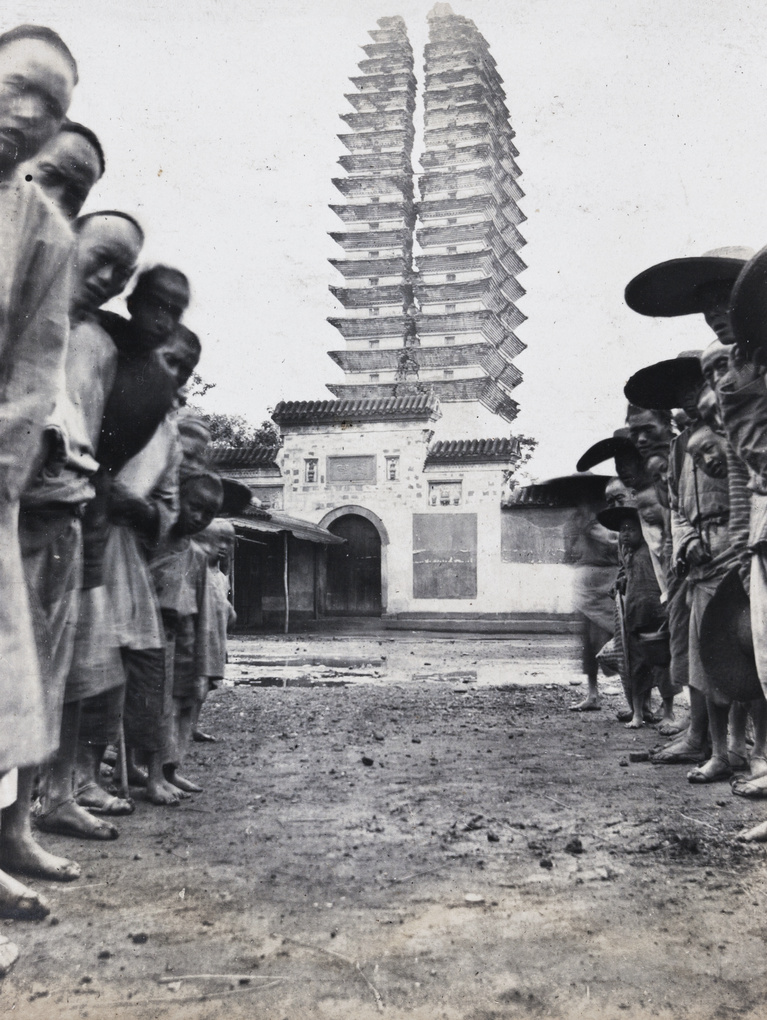
The pagoda that broke in half and refused to fall over
Now look at the photograph on the right, because it is remarkable.
That is Longxing Temple’s old pagoda — a square brick tower of, by Pengzhou’s own records, seventeen close-set tiers of eaves. It was a relic pagoda, the kind built to house śarīra: the small hard fragments recovered from a cremation and kept as relics.
On 1 June 1786 a huge earthquake struck near Kangding, well to the west, and the shaking reached Pengzhou. A corner of the pagoda came down and a crack opened straight down the middle of the tower, leaving it standing as two leaning halves.
It stayed like that. For over a hundred and thirty years. People simply got used to it and gave it a nickname — the Broken Pagoda — and a saying grew up around the way it looked reflected in a pond near the market, alongside the frogs. Which means that for a century and a half, the local pastime in Pengzhou was: sit by the water with a cup of tea, listen to the frogs, and look at the reflection of a pagoda that had been broken in half by an earthquake and hadn’t noticed.
In February 1923 the southern half finally came down, leaving one lonely corner. That fragment stood until the 1990s, when the remains were removed and a new relic pagoda was built in its place — finished at the end of 1997, and 81 metres tall.
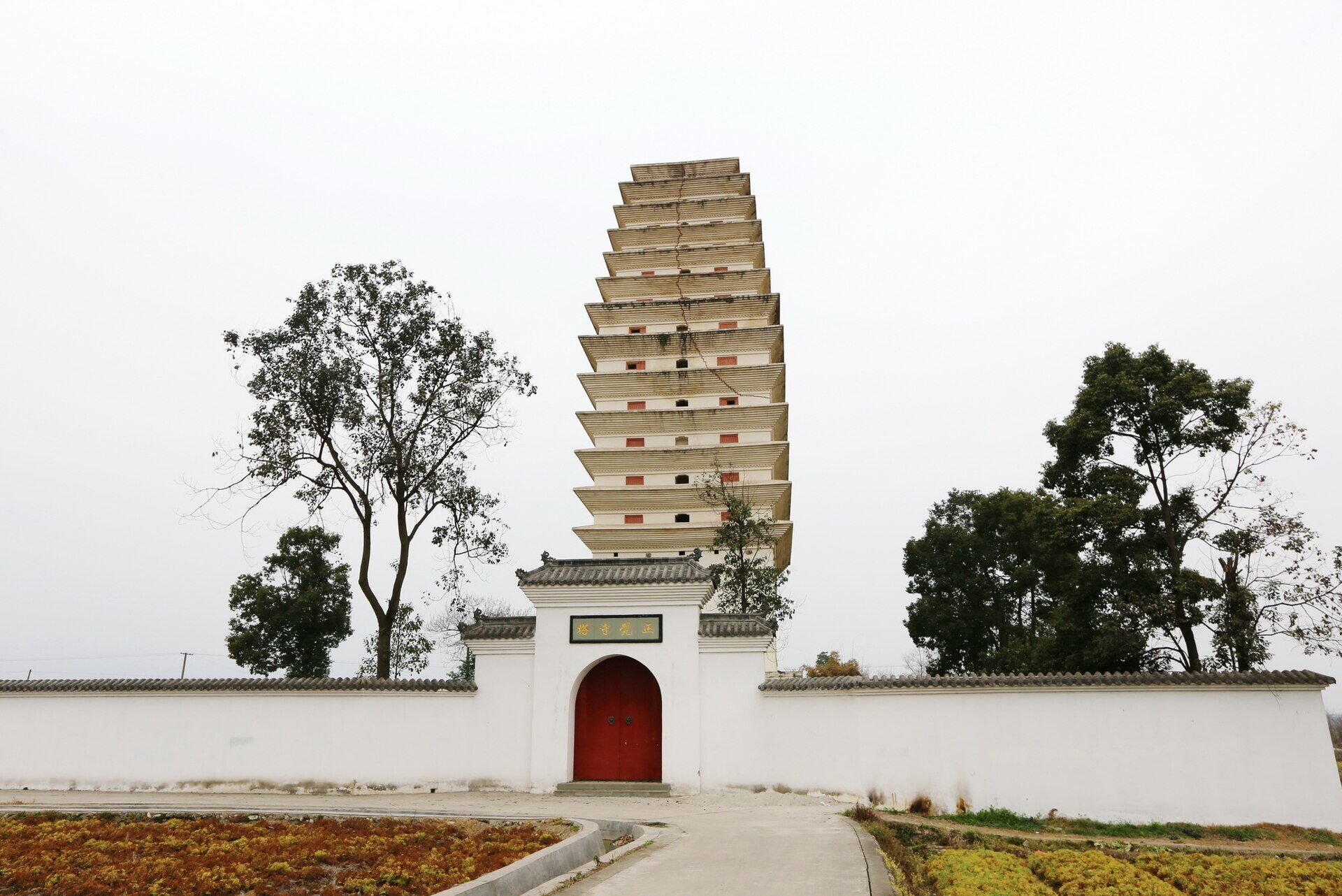
So: what do you do with a place like that?
By the 2010s the old centre of Pengzhou was tired. Low-rise blocks from the 1970s and 80s. Shut factories north of the temple. The kind of quarter that gets flattened.
Since 2019 the local government backed a rebuild instead, and the result — completed in 2023 — is one of the more thoughtful things a town can do to itself. BIAD-ASA Studio, led by Luoyi Yin, worked across five blocks at once: architecture, landscape and interiors designed together, in glass, steel and brick, mixing shops, culture, hotels and homes. A heritage consultancy worked alongside the planning the whole way. The client was the Chengdu Mengjiang Investment Group.
But the framing is the bit that matters. The architects file this, in their own words, as a renovation — the historic old streets kept in the plan, a heritage consultancy walking alongside the planners the whole way, and the eating-and-tea-drinking life of the quarter named in the opening line as the thing that makes the place recognisable at all. That is a very different starting instruction from “clear the site.”
Why a teahouse is worth all this fuss
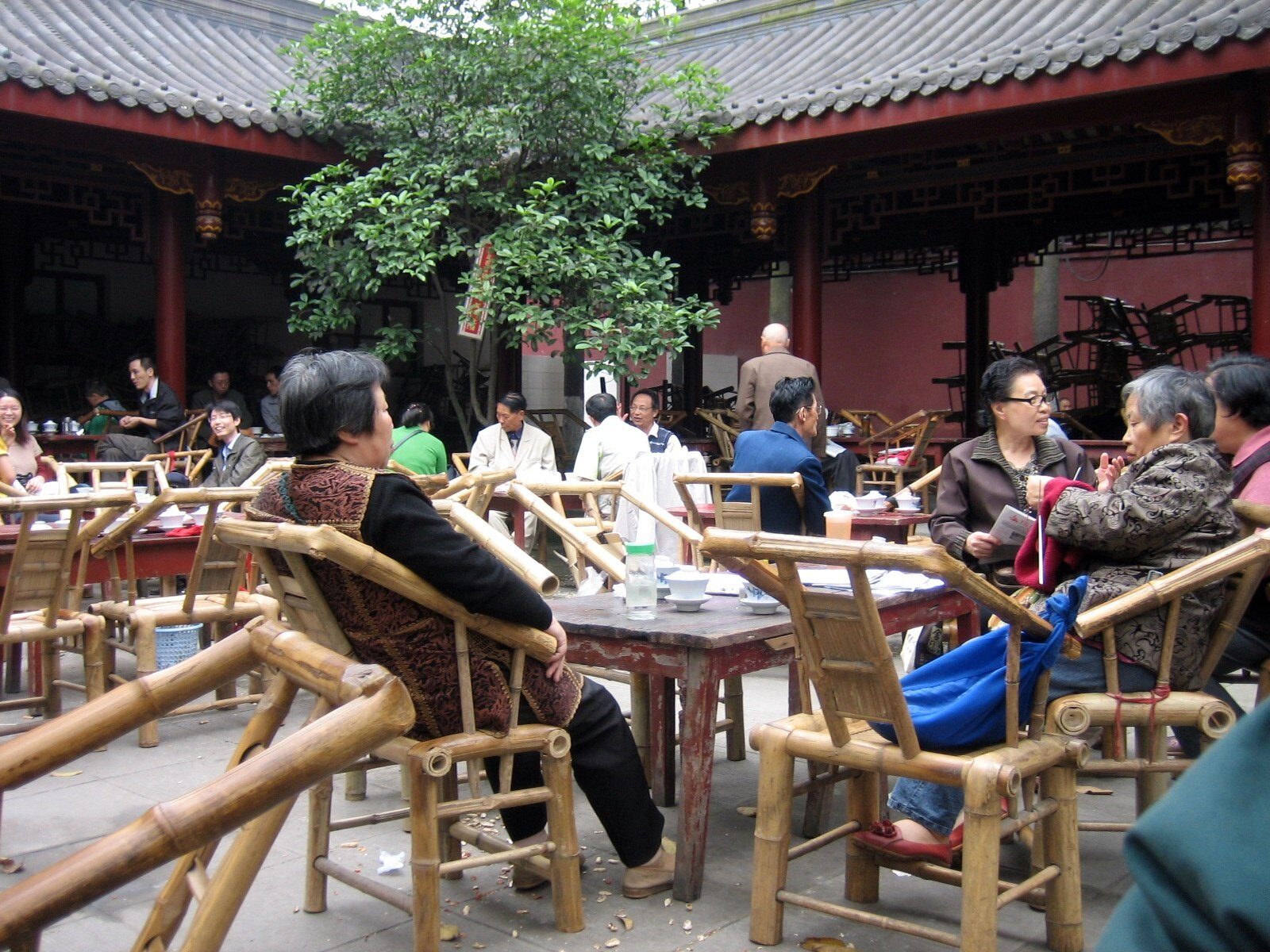
If you’ve never sat in a Sichuan teahouse, the fuss needs explaining, because from the outside it looks like nothing at all: a courtyard, some bamboo armchairs, a lot of low wooden tables, and people.
Here is what’s actually going on. You get a gaiwan — a lid, a cup and a saucer — with tea leaves in the bottom. Someone comes past with a long-spouted copper kettle and tops you up. Then they come past again. And again. One cup of tea buys you the chair, the shade and the entire afternoon, and nobody once suggests that you might like to move along.
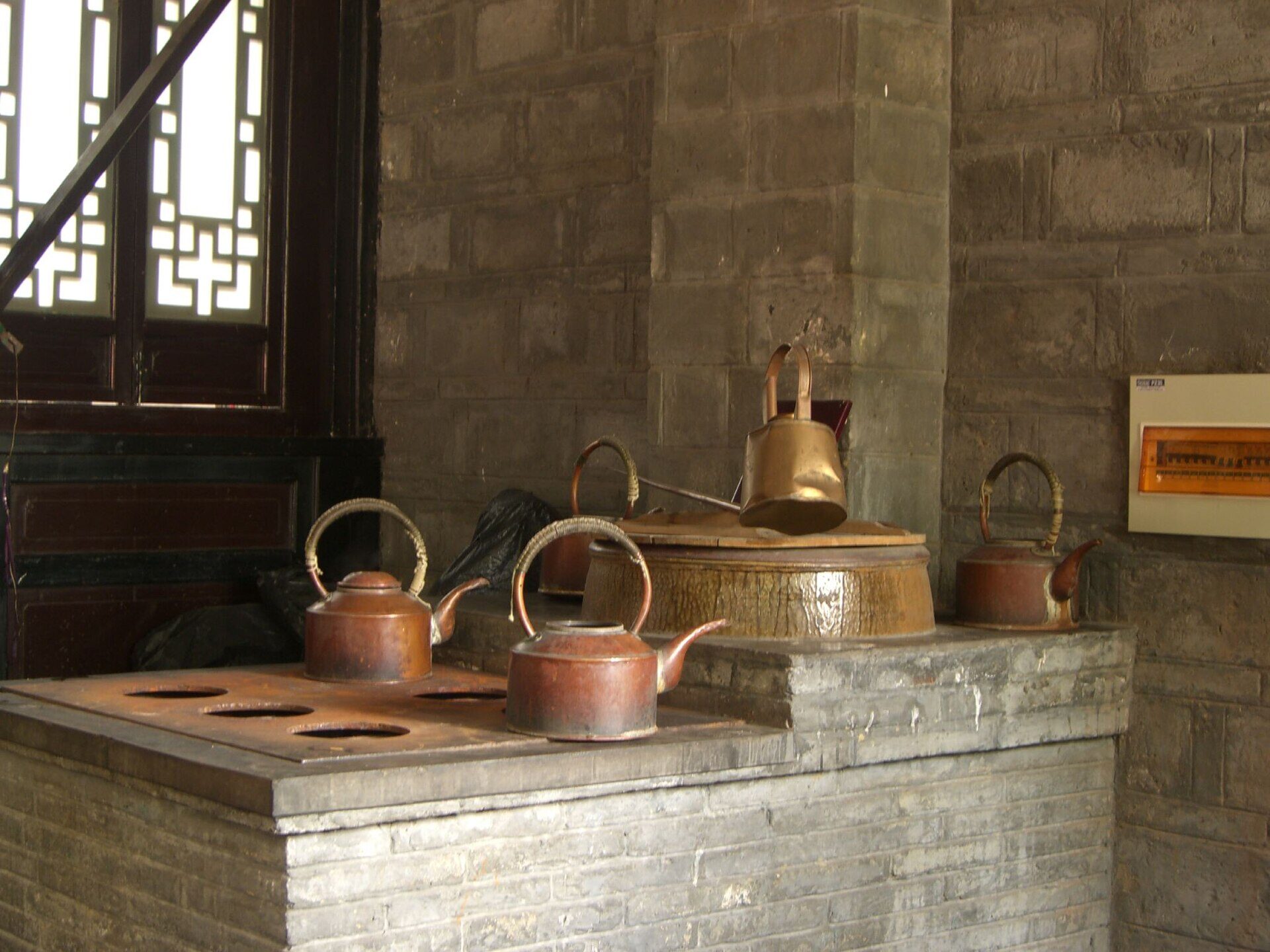
Around all that, an entire small economy grew up: card games, chess, gossip, business done sideways, and the roving specialists — the tea-pourers, the snack sellers, and the ear-cleaners, who arrive with a little kit of tools and a head torch and will, for a modest fee, clean your ears while you sit there. It is one of the most sociable public spaces anybody has invented, and it costs almost nothing to be in.
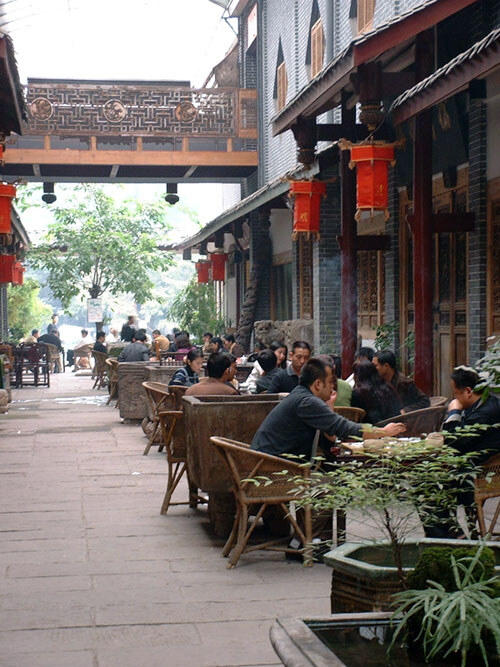
And it has always lived next door to temples. Chengdu’s big temples have teahouses in their courtyards to this day — you walk in past the incense, and there in the yard are the bamboo chairs and the flasks and someone’s grandmother winning at cards.
Why this lives on a good-news blog
Because the easy version of this story is a masterplan, and the true version is a chair.
A town of this size, with a run-down centre and closed factories in it, is normally offered exactly one option: clear it and start again. Pengzhou did something harder. It kept its temple, rebuilt around it, hired people whose actual job was to protect the historic fabric — and put the tea shops at the top of its own description of what was worth having here.
Nearly seventeen centuries of continuity, and what turns out to be genuinely continuous isn’t the building. The temple has been renamed twice by imperial decree, closed by a third, rebuilt from brambles, and its pagoda has been through an earthquake, a collapse and a total replacement. The continuous thing is softer and much more stubborn than that: people sitting outdoors, near the temple, with a cup of tea, for as long as they like. 🍵🏛️💛
Go deeper (real links, no pop-ups, promise)
- 🏗️ ArchDaily: Regional Urban Renewal of the Chengdu Pengzhou Longxing Temple Area / BIAD-ASA Studio
- 📷 Historical Photographs of China: the split pagoda at Longxing Temple, c.1905–1915
- 📜 The Tang stele on rebuilding Longxing Temple, in the Wenyuan Yinghua (juan 868)
- 🌋 Wikipedia: the 1786 Kangding–Luding earthquake
- 🍵 Wikipedia: the gaiwan, the lidded cup Sichuan tea is served in


