

Here is the thing that gets me about this story: it went wrong, and it worked anyway.
Not “went wrong and was heroically rescued.” Not “went wrong but actually it was fine.” It went wrong in a way that could not be undone, from 500 million kilometres away, by people who could only sit and watch — and the little robot at the far end of it did its job regardless, on a hard deadline, in the dark. ☄️
Ten years to get to the launch pad of the story
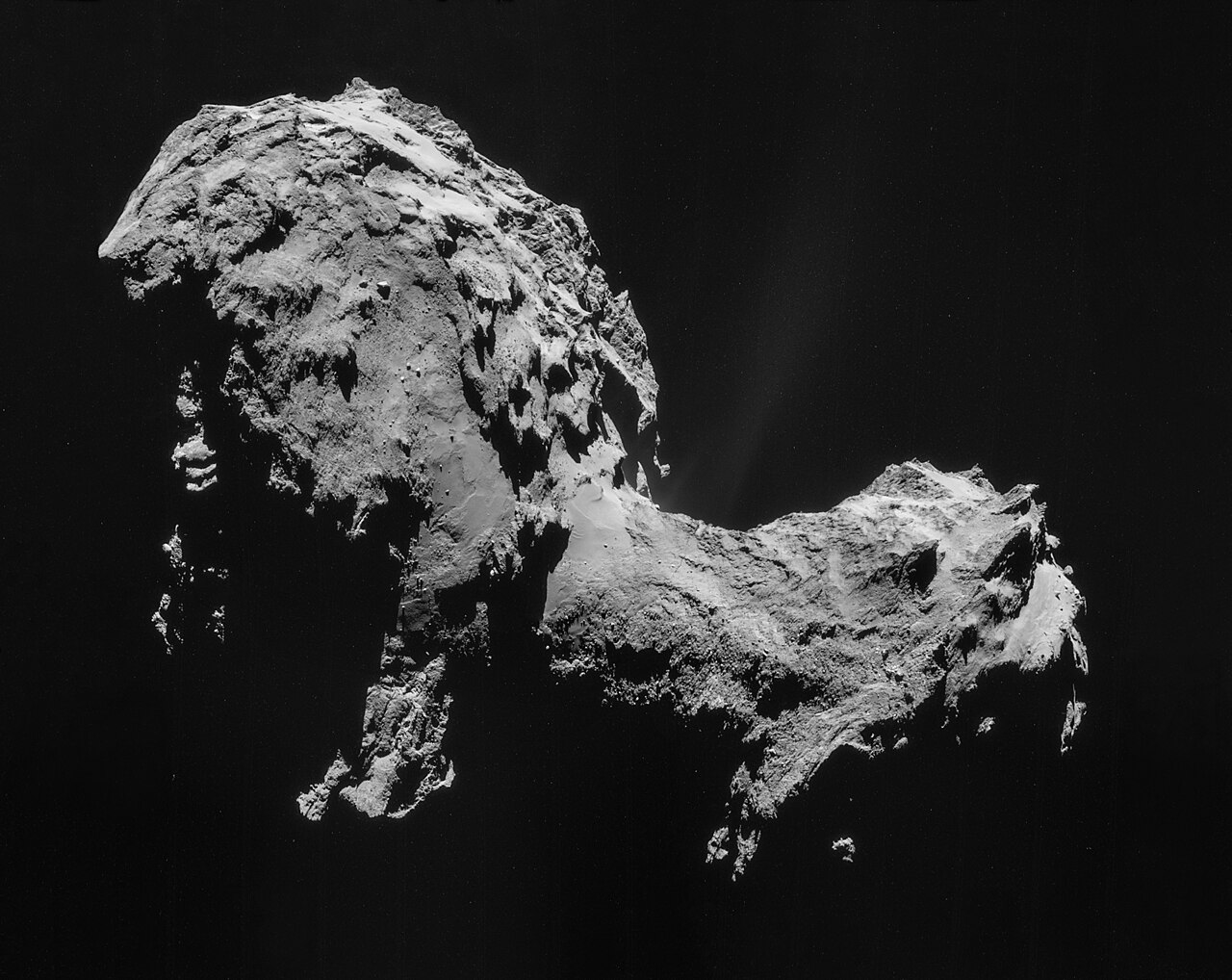
The spacecraft was called Rosetta. It left Earth on 2 March 2004 — and then it kept going for ten years.
Think about what a ten-year cruise actually asks of people. The engineers who built Philae’s landing gear had to be right about it for a decade before anyone found out. Careers turned over. Kids were born and started school. Somewhere in a control room in Darmstadt, a mission stayed on the books through 6.4 billion kilometres of nothing, looping past Earth and Mars for gravity assists, sleeping for 31 months in hibernation to save power, all to arrive at a target four kilometres wide that had been minding its own business since the formation of the solar system.
On 6 August 2014, Rosetta arrived at comet 67P/Churyumov–Gerasimenko and did something no spacecraft had ever done: it went into orbit around a comet. Not a flyby. It moved in. 🛰️
And it had a passenger.
The seven-hour fall
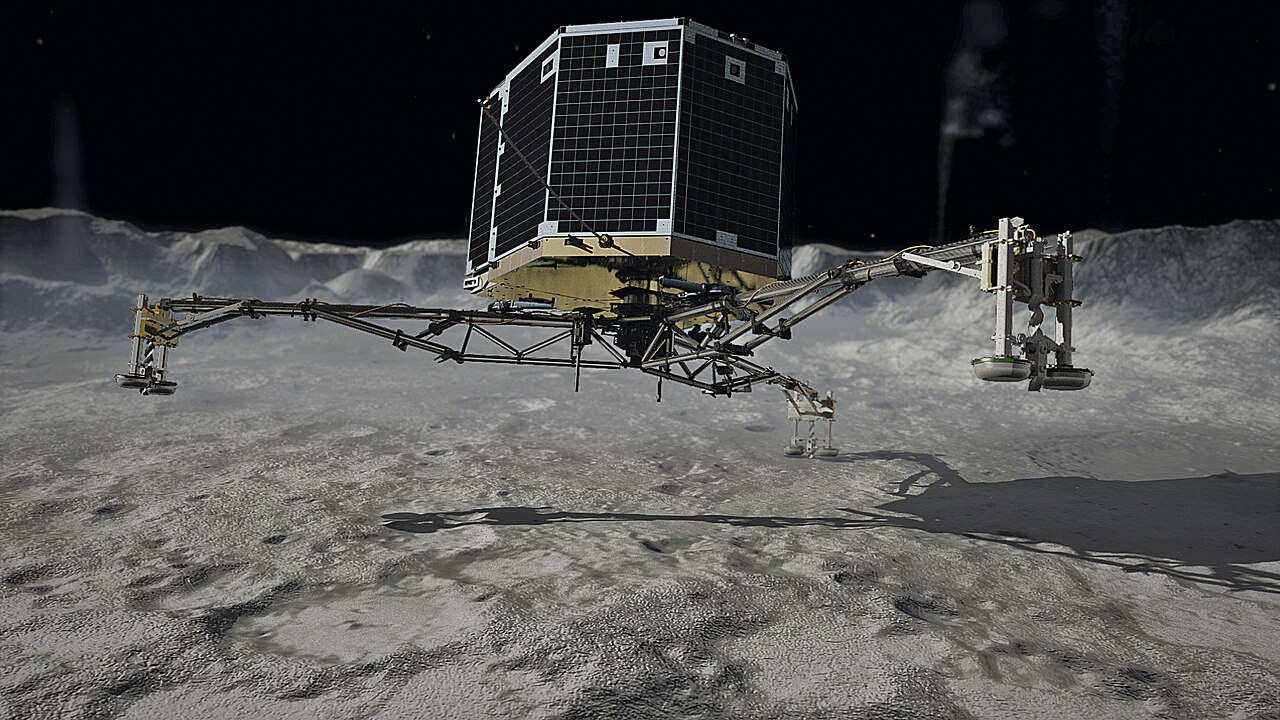
Philae was about the size of a domestic fridge — roughly 100 kg of lander, packed with ten instruments, a drill, and a set of harpoons meant to nail it to the surface on contact.
The harpoons mattered enormously, because 67P has essentially no gravity. A comet 4 km across doesn’t pull on you in any meaningful way. Its escape velocity is somewhere around walking pace — which means that on that surface, Philae’s 100 kg would weigh about as much as a sheet of paper does here. Landing on it isn’t like landing. It’s like trying to set a fridge down gently on a hillside, in the dark, while the hillside is doing 55,000 km/h and neither of you weighs anything.
So: harpoons. Plus a downward thruster to press it in. Plus ice screws in the feet.
On 12 November 2014, Rosetta let go, and Philae began a seven-hour descent — falling, unpowered, toward a comet, with no way to steer and nobody able to help it. Seven hours. The signal takes nearly half an hour each way; by the time anyone on Earth heard anything, it would already be ancient history.
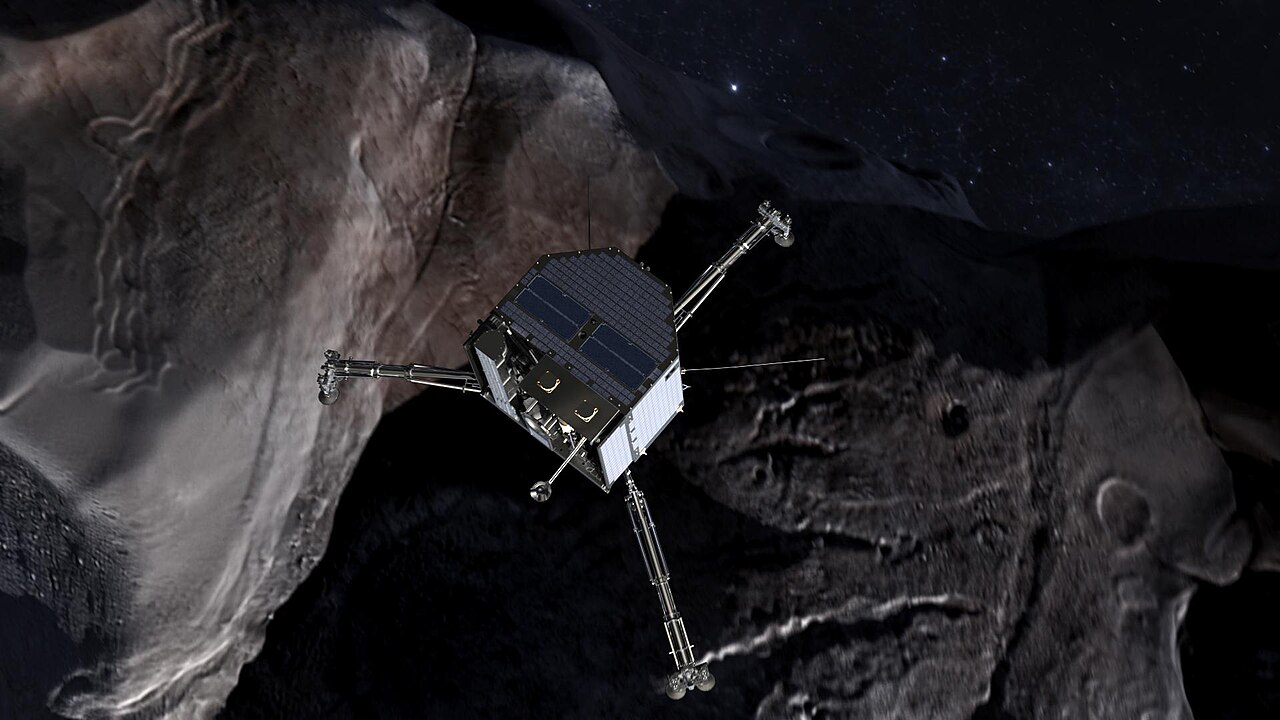
At about 16:03 GMT, the confirmation reached Earth. Touchdown. The control room came apart — hugging, crying, that particular kind of shouting people do when a decade of their life lands safely on a comet.
Humans had soft-landed a machine on a comet. First time. Ever. 🛬
Except it didn’t stay landed
The thruster didn’t fire. The harpoons didn’t fire.
And on a body with essentially no gravity, a fridge that touches down at walking speed and isn’t held down does the only thing physics allows.
It bounced.
Not a little hop. Philae lifted back off the comet and sailed — slowly, gently, ridiculously — for nearly two hours, drifting about a kilometre across the surface while an entire mission control watched the telemetry and understood, in real time, that their lander was airborne again and there was absolutely nothing anyone could do about it. It came down, bounced a second time, drifted another seven minutes or so, and finally stopped.
It was, by a genuinely uncomfortable margin, close to bouncing away from the comet altogether — off into the solar system forever. It didn’t. It stayed. 🦘
But where it stopped was the problem.
Philae came to rest in shadow — tipped over, wedged against something, up against a cliff or in a crack, with its solar panels pointed at almost nothing. And Philae’s whole plan for staying alive was sunlight. It carried a primary battery good for around 60 hours, and after that it was supposed to run on solar power for months.
There would be no months. In the dark, there would be about two and a half days, and then it would go to sleep and not wake up.
What it did with sixty-four hours
This is the part I want to put on a poster.
Philae’s team, having lost the harpoons, lost the landing site, lost the sunlight, and lost the entire long mission they’d spent a decade planning — sat down and re-planned the whole thing in a couple of hours, live, to fit the battery they had left.
Then they sent it to a robot on a comet. And the robot did it.
In roughly 64 hours, Philae ran its instruments, imaged its surroundings, sampled the environment, analysed the composition of the surface, and drilled into a comet — a thing no machine had ever done. It got through about 80% of the science it had been built to do, in a fraction of the time, in a hole, in the dark, on battery, on a comet, 500 million kilometres from the nearest person who loved it. 🔬
Then, on 15 November 2014, with its battery flat, it sent its last data home and went quiet.
The data it returned is still doing work: Philae and Rosetta together told us about the organic molecules on 67P and the kind of water it carries — the actual, physical evidence in the long argument about what comets delivered to the early Earth.
They found it 💛
Here’s the ending.
For nearly two years, nobody knew exactly where Philae was. It was somewhere on a 4-km comet, in shadow, silent. Rosetta kept orbiting overhead, kept working, kept looking.
Then, on 2 September 2016 — with less than a month left before the mission ended forever — Rosetta’s OSIRIS camera passed low over the surface and took a picture of a dark crack.
And there it was. Sideways, one leg sticking up into the void, exactly where it had been the whole time.
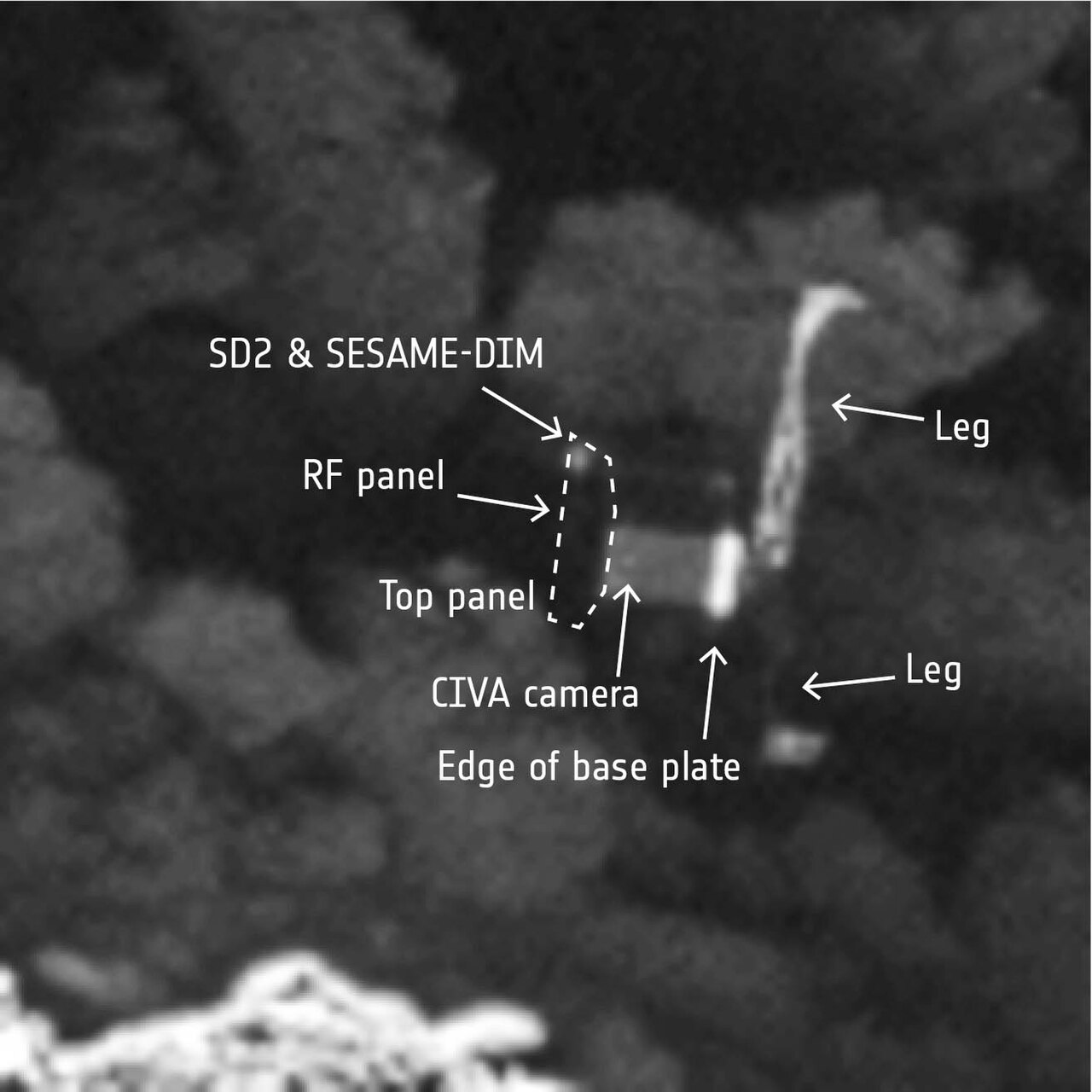
You can see it. You can see the legs. After two years of not knowing, a mission that was weeks from over found its lost lander, took its portrait, and got to say goodbye properly.
And then Rosetta — out of fuel, out of sunlight, out of mission — flew itself down and landed on the comet too, on 30 September 2016, taking pictures all the way to the surface. It went to join Philae. They’re both still there, drifting around the Sun together, and they will be for a very long time.
Why this is on a good-news blog
Because the harpoons failed.
Because “it bounced” is, on paper, a catastrophe — and the people at the other end of it did not spend those 64 hours despairing. They spent them re-writing the mission so their robot could still do as much good as possible with the time it had left. And it did. Eighty percent of it. In the dark.
Because ten thousand things had to go right for a decade, and a couple of them went wrong at the very last second, and the answer was not “well, that’s ruined.” The answer was: okay — what can we still do?
Because a species that mostly worries about the weather also, at one point, threw a fridge at a comet, missed slightly, and got the science anyway.
And because two years later, they went and found it. ☄️💛


