

Somewhere in Britain, a postcard drops through a letterbox. It’s a bit battered. It has been travelling for weeks, maybe months. And the postmark on it says Port Lockroy, British Antarctic Territory — because it started its journey in a wooden hut at the bottom of the world, was carried out by ship, and has been slowly working its way north ever since, through a chain of hands, to a doormat in Manchester. 💌
The person who franked it was standing about ten feet from a penguin at the time.
A hut on a rock, on purpose
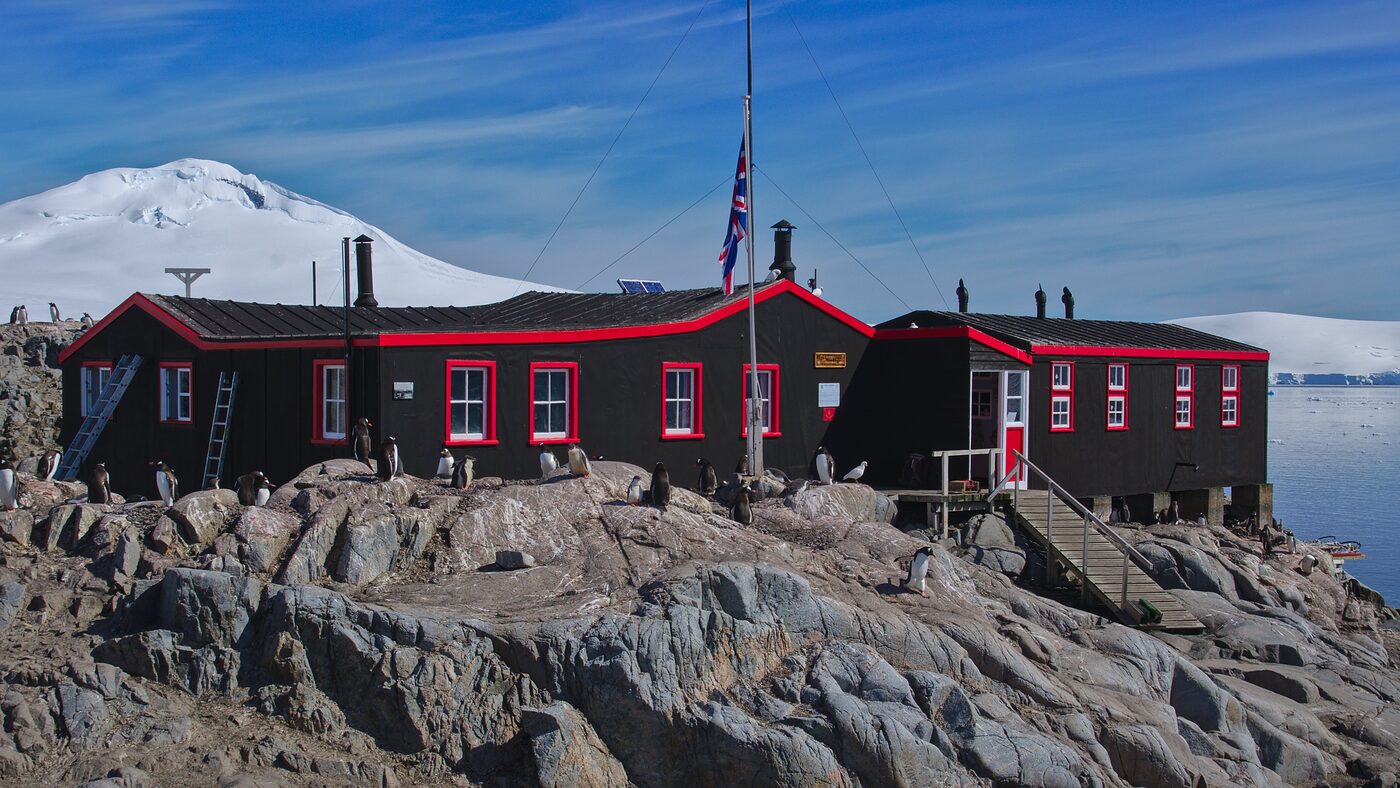
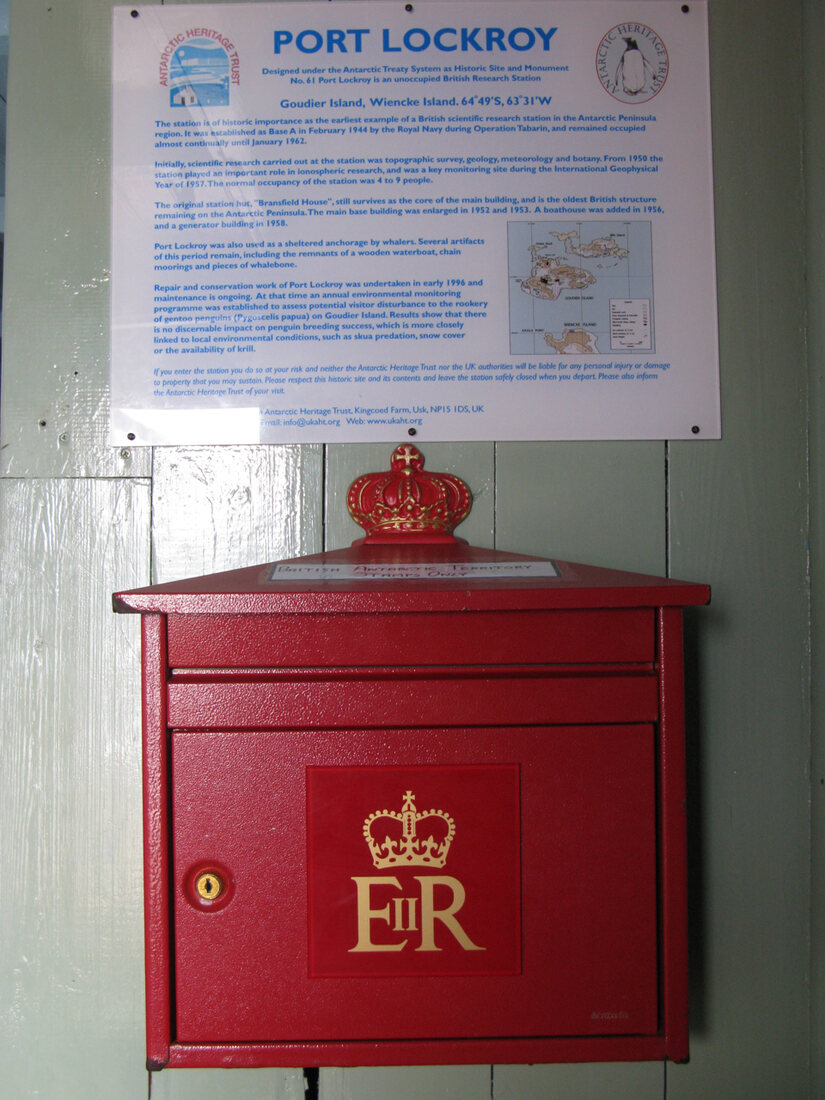
Port Lockroy is a sheltered harbour off the west side of the Antarctic Peninsula, and Base A — the hut in question — went up on tiny Goudier Island on 11 February 1944. It was a wartime project with the wonderfully theatrical codename Operation Tabarin: establish a permanent British presence in Antarctica, keep an eye on the anchorages, take weather readings. The base stayed in use as a research station until January 1962, doing genuinely important atmospheric science along the way, and it’s now protected as Historic Site and Monument No. 61 under the Antarctic Treaty.
Since 2006 the whole thing has been looked after by the UK Antarctic Heritage Trust (UKAHT), a charity, which runs it as a living museum. The main building, Bransfield House, holds the museum, a small gift shop, and — the reason most people have heard of the place — a post office.
The island it sits on is, in UKAHT’s own description, about the size of a football pitch.
The southernmost post office in the world
There is a red British post box screwed to the wall, crown and all. You can buy stamps. You can send a postcard to literally anyone, and it will go — out on a passing ship, north across the Drake Passage, into the ordinary global mail, and eventually onto somebody’s doormat, having taken the scenic route past several thousand icebergs.
The volumes are genuinely silly for a building with no plumbing. The British Antarctic Territory government puts it at around 70,000 cards a year, to over 100 countries; press coverage of the Trust’s 2024 recruitment round quoted up to 80,000 letters and postcards per season. Those are season-by-season numbers rather than fixed facts — some summers bring more ships than others — but either way, that’s an awful lot of “wish you were here” leaving a hut that gets its fresh food handed over from passing cruise ships.
And the people posting them are, mostly, those same visitors: UKAHT welcomes up to 18,000 of them in a season, which makes Port Lockroy the busiest visitor site on the continent. They come ashore, look at the museum, look at the mountains, buy a postcard, write it, post it — and then sail away, having handed the day’s mail to a team of four or five people who live on the rock full-time until March.
Four people. Five months. One bucket.
Here is the part that makes the job advert legendary.
The team arrives in early November and leaves in March. There is no running water. There is no flushing toilet — the Trust’s own materials are cheerfully blunt that a bucket is involved. Showers happen when a cruise ship invites you aboard for one, and you come back with a resupply of fresh food and, presumably, an enormous amount of goodwill. The bunk room is shared. The island is small enough that, as one recruitment listing put it, “it is not possible to go for a run or take a long walk if you need time on your own.”
For the 2022/23 season — the first after two years closed for the pandemic — UKAHT advertised four roles: Base Leader, Postmaster, Shop Manager, and Wildlife Monitor. They received a record 6,000 expressions of interest and 4,000 applications. Four women got the jobs, plus a returning team member to help them settle in. Training took place in Cambridge and included, among the remote first-aid and the site briefings, a session from a penguinologist.
Which brings us to the neighbours.
The penguins were there first
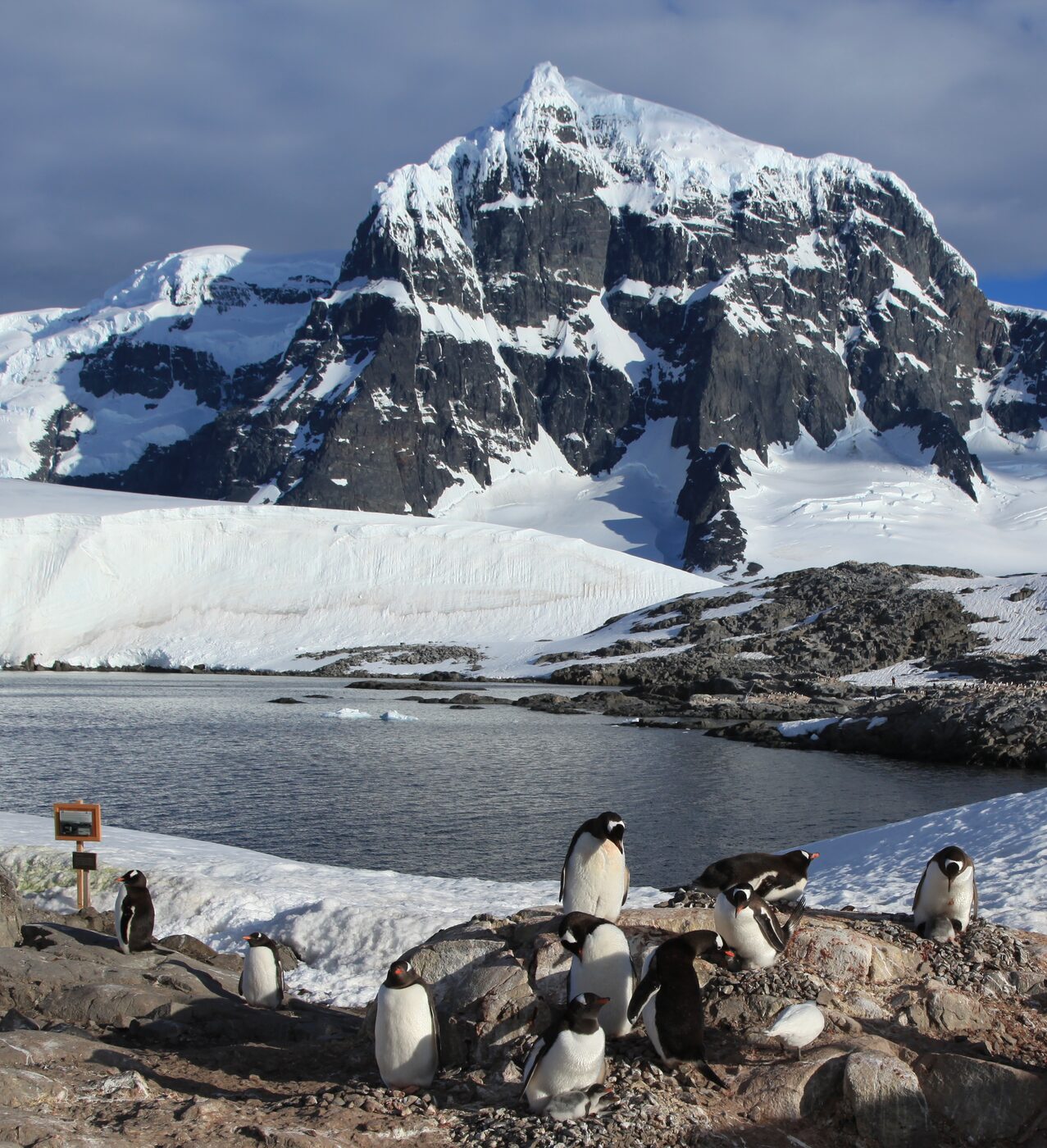
Every November, a colony of gentoo penguins comes ashore on Goudier Island and gets to work. UKAHT reckons around 1,000 gentoos call the island home in a typical year, spread across roughly ten sub-colonies on the rocks — although you’ll see bigger figures quoted elsewhere (the 2015 PBS documentary about the place described a colony of 3,000), which is a decent hint at why anyone bothers counting in the first place. Nobody’s guessing here; somebody goes and checks.
They build nests out of pebbles, mud and moulted feathers — loose piles that drain meltwater and lift the eggs off the wet ground. The most conscientious birds haul their stones all the way up from the beach. The rest, in the immortal phrasing of one of the Trust’s wildlife monitors, commit “penguin highway robberies”, nicking pebbles from a neighbour’s nest while its owner is out. The annual pebble wars are, by all accounts, extremely good television.
Both parents take turns incubating, swapping over roughly daily, each changeover announced with a burst of trumpeting that is basically the site’s ambient soundtrack. Eggs hatch at around 35 days. Then the fluff arrives.
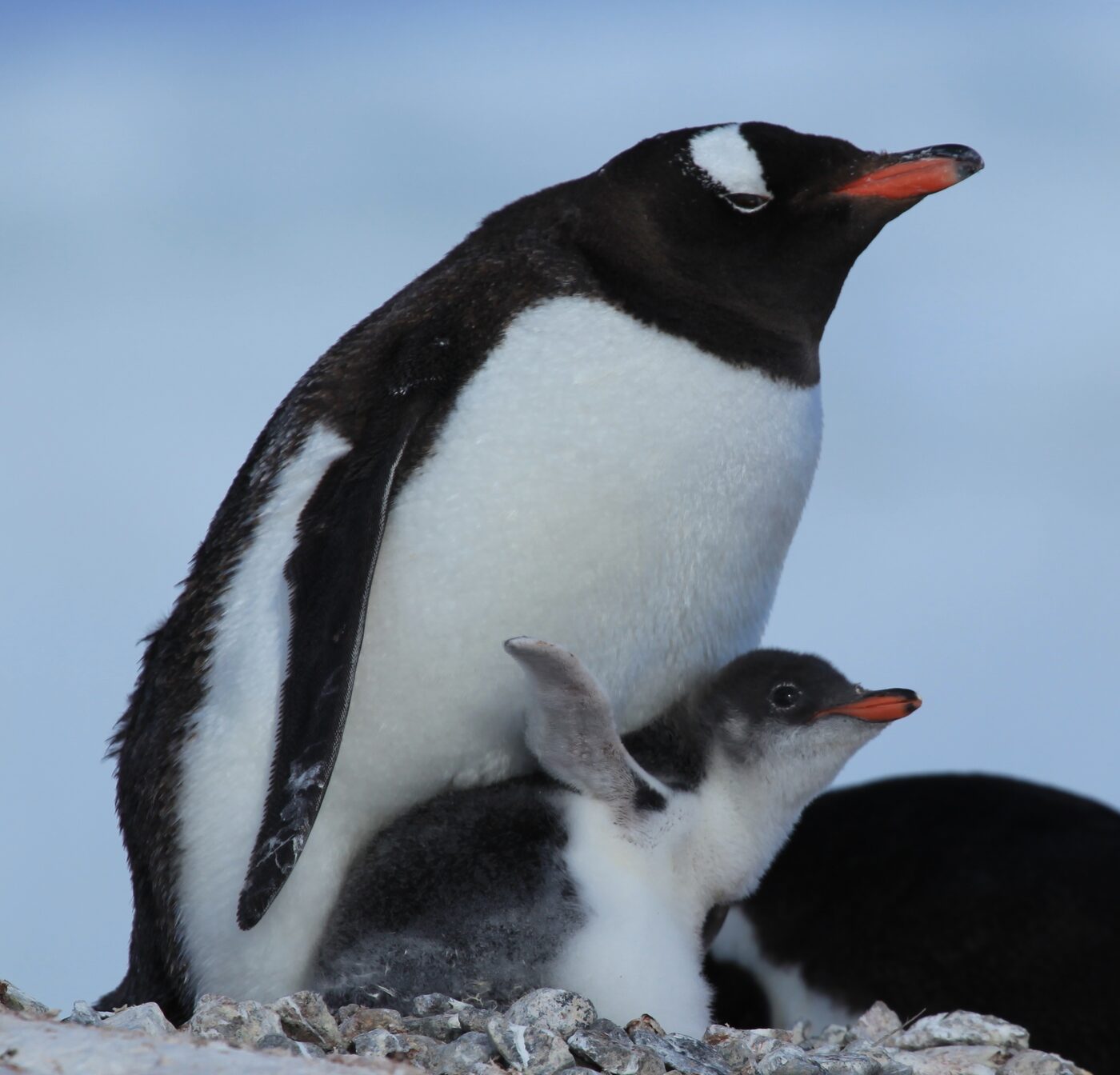
“How many people can say their job description includes counting penguins?”
That’s a real quote, from Maggie Coll, who took the wildlife monitor post at Port Lockroy — and it is the whole reason this post exists. The penguins aren’t decoration for the gift shop. They’re a scientific dataset, and keeping it is part of the work.
The survey has run every single season since 1995/96, missing only 2020/21 to the pandemic. That makes it the longest-running study of its kind, and the data goes to the British Antarctic Survey. Port Lockroy is, as UKAHT points out, the one place in Antarctica where a full breeding season can be watched from start to finish, year after year, by someone standing right there.
The method is charmingly analogue and rather carefully thought out:
- The island is split in two. One zone has marked paths for visitors. The other — the study area — is closed to people all season, except during whole-island counts or when researchers service the remote cameras. Whenever anyone does go in, they log the time, the date, how long they stayed and how many people went. The team measures its own footprint, not just the penguins’.
- One sub-colony, nicknamed the chronology colony, gets checked every few days. It’s the alarm clock: when nearly all its nests hold eggs, that triggers a whole-island count of every nest and every egg.
- Later in the season the chicks leave their nests and gather into wandering crèches, at which point the tidy colony boundaries stop meaning anything. So the team redraws the island into counting zones based on rock edges, gullies and lines of sight, scouts each one from higher ground, waits for a lull, and counts fast — with hand clickers — before the group reshuffles. Confusing clusters get counted twice on the spot.
And it works. In the 2025/26 season, the first whole-island chick survey came back at 557 occupied nests and at least 876 chicks. Every one of those numbers was obtained by a person, on a rock, in Antarctica, clicking.
Why this is on a good-news blog
Because it would have been so easy to do this badly.
You have the most photogenic post office on Earth, on an island crowded with penguins, and 18,000 people a season who would very much like to stand next to one. The obvious version of this story is a gift shop with a wildlife problem. The version that actually exists is a charity that closes a whole zone of the island to people, keeps a log of its own visits so its disturbance can be measured, and has quietly maintained a record of gentoo breeding success going back to 1995/96 — funded, in part, by selling postcards to the very visitors whose impact it’s measuring. 🐧
Somebody sat down and decided that if people are going to come and see the penguins, the penguins should get something out of the arrangement too. Then they wrote counting them into the job description, and every November someone flies halfway round the planet, moves into a hut with no taps, and does it.
The world does that sort of thing more often than you’d think. And sometimes it sends you a postcard about it. 💌🐧
Been somewhere wonderful, or found something like this in your own corner of the world? Sign the guestbook and tell us about it.
Go deeper (real links, no pop-ups, promise)
- 🏴 UK Antarctic Heritage Trust — Base A, Port Lockroy
- 📋 UKAHT: “A day in the life counting penguins at Port Lockroy”
- 🐧 UKAHT: the season’s first whole-island chick count
- 🇬🇧 British Antarctic Territory — Port Lockroy and the Penguin Post Office
- 📺 PBS Nature — Penguin Post Office
- ✉️ Smithsonian — “You Could Run a ‘Penguin Post Office’ in Antarctica”


