

Picture a stadium. Somebody stands up, throws their arms in the air, and sits back down. The person beside them does it. Then the next. Then a whole section, and suddenly there is a wave travelling around fifty thousand people who have never met, powered by nothing but the willingness to join in.
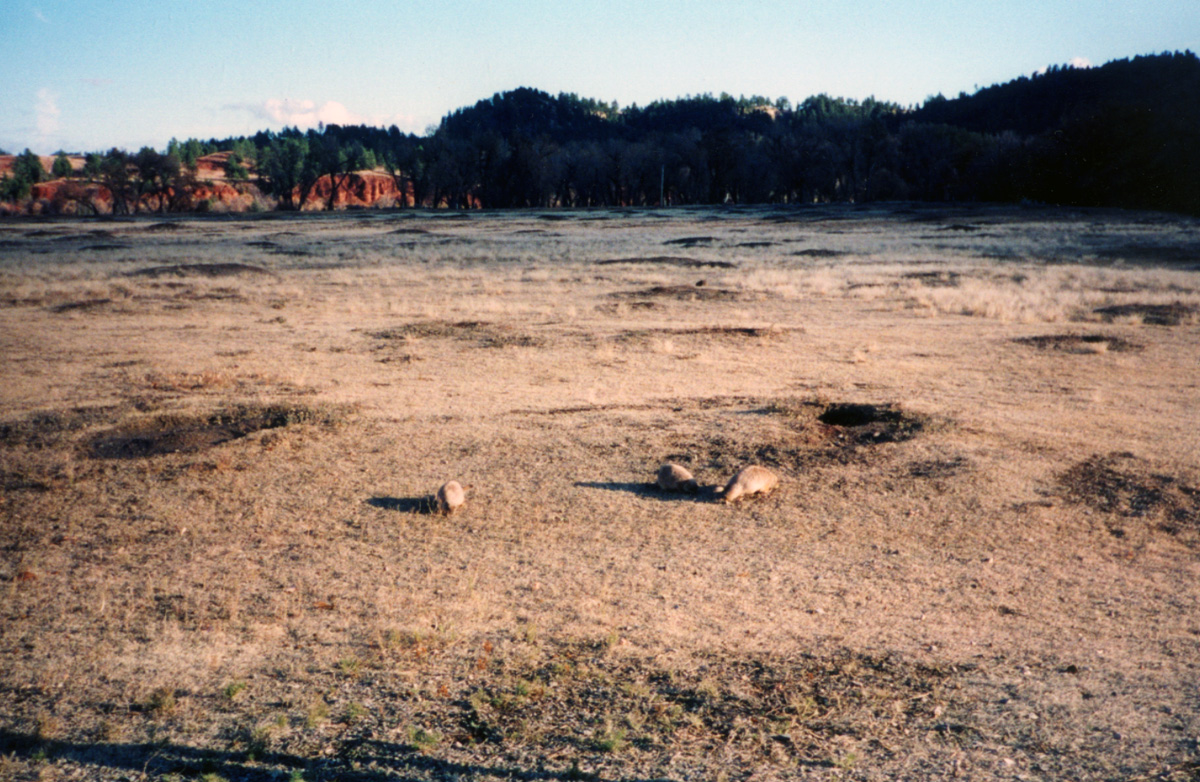
Now shrink that to a grassy patch of the North American plains, and replace the crowd with small, round, extremely earnest rodents. 🐿️
The move
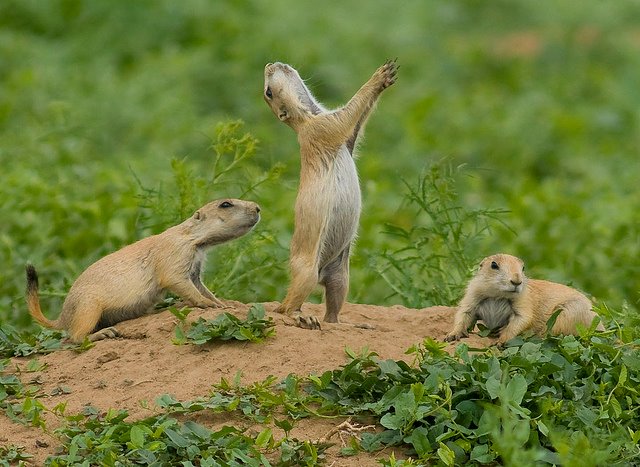
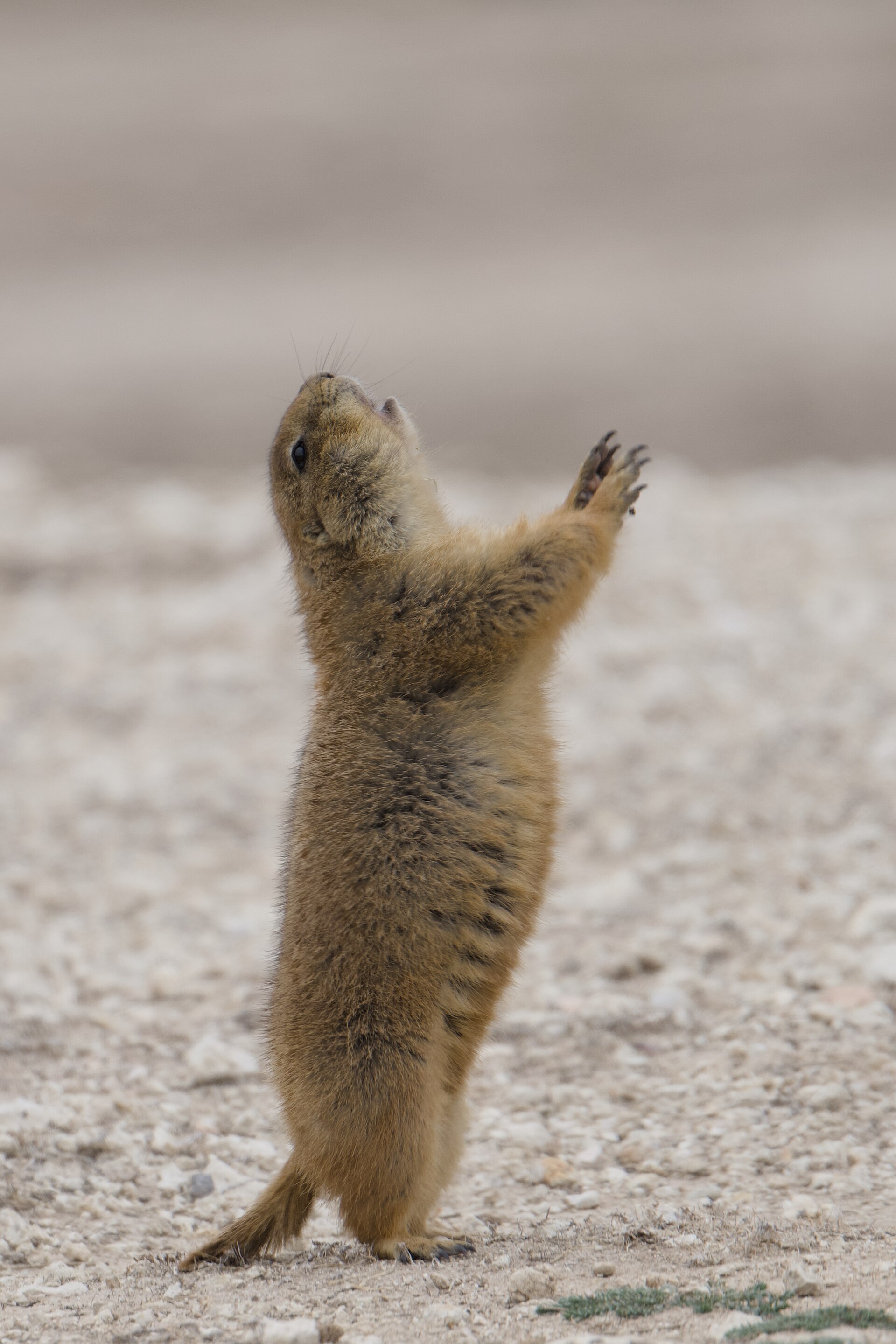
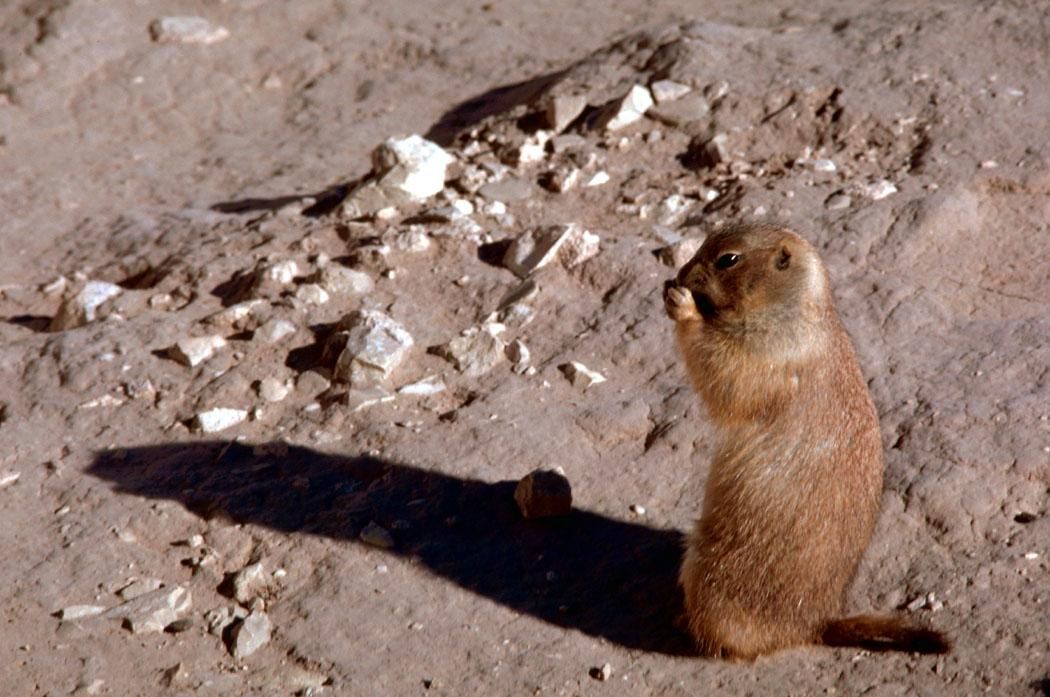
A black-tailed prairie dog doing a jump–yip rears up onto its hind legs, flings its front paws straight up over its head, tips its chest to the sky, and lets out a two-note call that everyone who has ever described it lands on the same way: “wee-oo!”
It is, and I want to be precise here, the exact body language of a person whose team just scored.
And then the magic bit. A neighbour sees it — and does it too. And their neighbour does it. The display is contagious, and it goes rolling out across the colony in a ripple of little upflung paws. The scientists who studied it did not reach for a fancy metaphor, because they didn’t need one. They wrote that it spreads through a prairie dog town “as ‘the wave’ through a stadium.”
But why?
Here’s where it stops being merely adorable and becomes quietly wonderful.
James F. Hare, Kevin L. Campbell and Robert W. Senkiw at the University of Manitoba watched a great many of these bouts and published what they found in Proceedings of the Royal Society B in 2014, under the frankly perfect title “Catch the wave: prairie dogs assess neighbours’ awareness using contagious displays.”
Their idea was this. A prairie dog lives on an open plain, and open plains are full of things that would like to eat a prairie dog. Safety comes from everyone watching at once — the more eyes on the horizon, the less any individual has to spend its own day nervously scanning instead of eating. That’s the classic trade-off: vigilance versus lunch.
But that only works if the others are actually paying attention. A neighbour who has dozed off is not a lookout. So how do you check?
You throw your paws in the air and yip, and you see who yips back. 🙌
The result is the lovely part
That’s exactly what the data showed. When the response was bigger and livelier — when lots of neighbours caught the wave and sent it on — the prairie dog who started it went back to spending significantly more of its time actively foraging.
Read that again, because it’s a very sweet sentence in disguise. It relaxed. It asked the crowd a question, got a good answer, and then felt safe enough to put its head down and get on with breakfast.
The researchers described this as prairie dogs actively probing the awareness of the animals around them — soliciting social information to gauge, in real time, how big and how switched-on their group actually is. They went as far as to say the behaviour is consistent with theory of mind: the ability to model what’s going on inside somebody else’s head.
Which means the wave isn’t a cheer. It’s a roll call. And it’s answered.
Also, they kiss
It would be irresponsible to write about prairie dog social life and leave this out. When two prairie dogs from the same family group meet, they greet each other nose to nose, mouths touching — a genuine identification-and-greeting behaviour that looks, to every human who has ever seen it, exactly like a kiss.
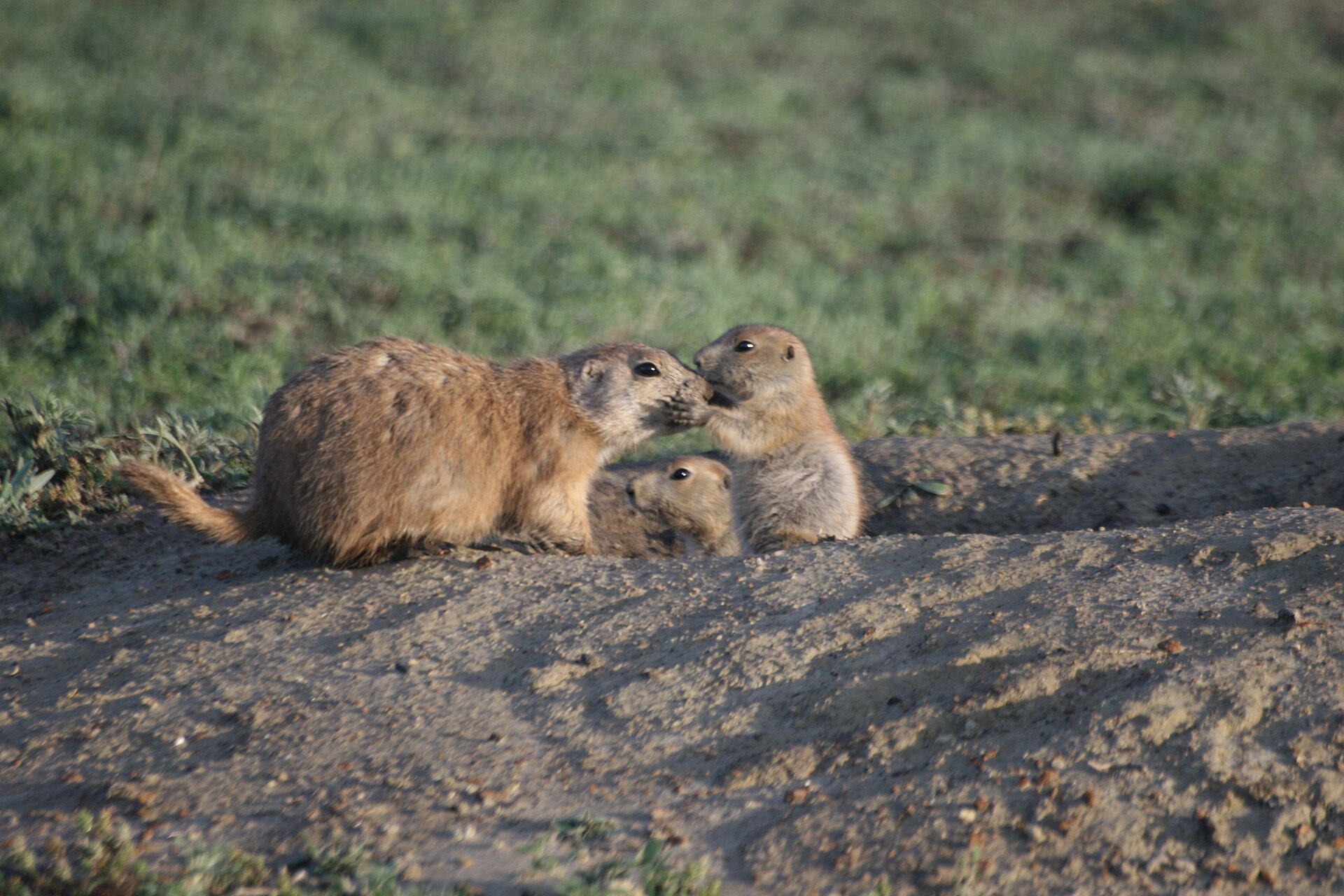
So the full picture of a prairie dog town is: everyone greets everyone with a kiss, and periodically the entire neighbourhood does a coordinated celebration wave to make sure nobody’s stopped paying attention.
Why this lives on a good-news blog
Because somewhere out on the plains right now, as you read this, a small rodent is standing on its back legs with its arms in the air, asking everyone it knows whether they’re still there.
And they are. And they tell it so — by putting their arms in the air, and passing it on. And the little one at the start of the wave, reassured, goes back to eating grass under a very large sky.
There’s a whole ecosystem of caretaking hidden inside a gesture we’d recognise from a sports ground. Nobody taught them the wave. They just worked out, somewhere back down the long road of evolution, that the most efficient way to ask “is everybody okay out there?” is to be the first one to stand up. 💛


