

Here is a problem so ordinary that most people have never once thought about it, and so stubborn that it has been quietly costing the world electricity for about fifty years.
A leaf falls on a solar panel.
That’s it. That’s the problem. Not a storm, not a meteor, not some exotic engineering failure. A leaf. Or a chimney’s shadow creeping across a roof at four in the afternoon. Or a tree that had the nerve to keep growing. Or a bird, sitting there, being a bird. 🍃
And for decades, the honest answer from a solar panel has been: please don’t. Because when part of a panel goes into shadow, it doesn’t just make a little less power. In thin-film solar cells, it can be permanently hurt.
Now a team at The Hong Kong Polytechnic University has built a solar cell that simply refuses to be hurt by it. And the way they did it is genuinely lovely.
First: what actually goes wrong when a panel is shaded
Let’s do this the no-jargon way, because it’s a genuinely satisfying thing to understand.
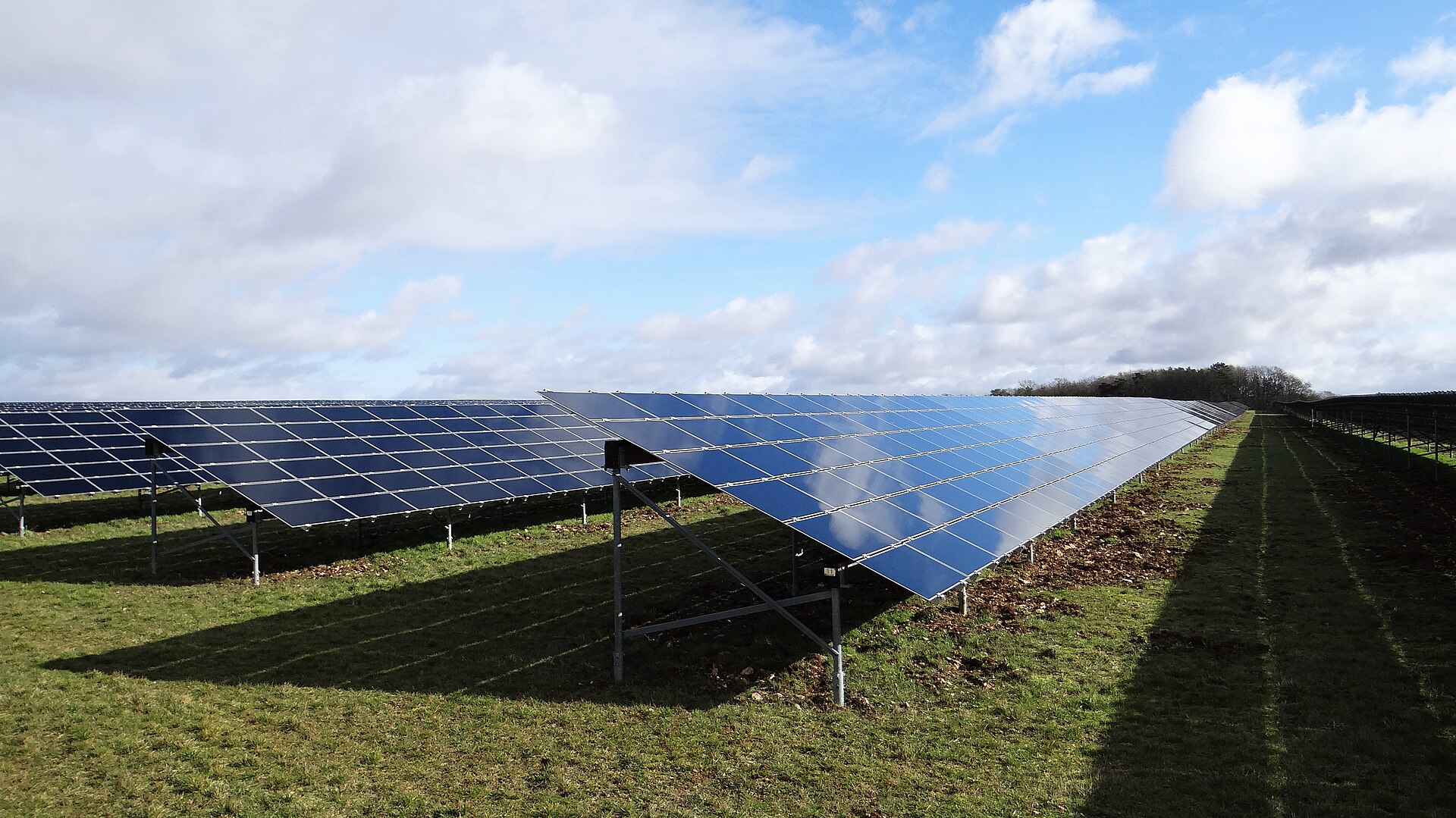
A solar panel isn’t one big sheet. It’s a row of little cells wired together in a chain, like a line of people passing buckets along. Each cell in sunlight gives the chain a shove — and because they’re all in one chain, the electricity has to travel through every cell to get out.
Now put one cell in shadow.
That cell has no sunlight, so it has nothing to give. It’d love to just sit this one out. But it can’t — it’s still in the chain. All its sunlit neighbours are still shoving hard, and their combined push comes barrelling into the dark cell and forces current backwards through it.
That’s it. That’s reverse bias. The shaded cell has gone from being a tiny battery to being a tiny roadblock with the whole rest of the panel leaning on it. Instead of making electricity, it’s now absorbing everyone else’s — and turning it into heat and trouble. ⚡
For old-fashioned silicon panels this is annoying but survivable. For the newer thin-film cells — the light, flexible, cheap-to-print kind everyone is excited about, including perovskites and organic cells — it can be genuinely damaging. Push them backwards for long enough and they don’t fully recover. The panel comes out the other side a little worse, forever.
Which means: every tree that grew, every autumn that dropped leaves, every cloud that wandered past — a tiny permanent tax. Solar panels have spent decades being quietly punished for the most ordinary thing in the world.
The detective work: where the damage was hiding
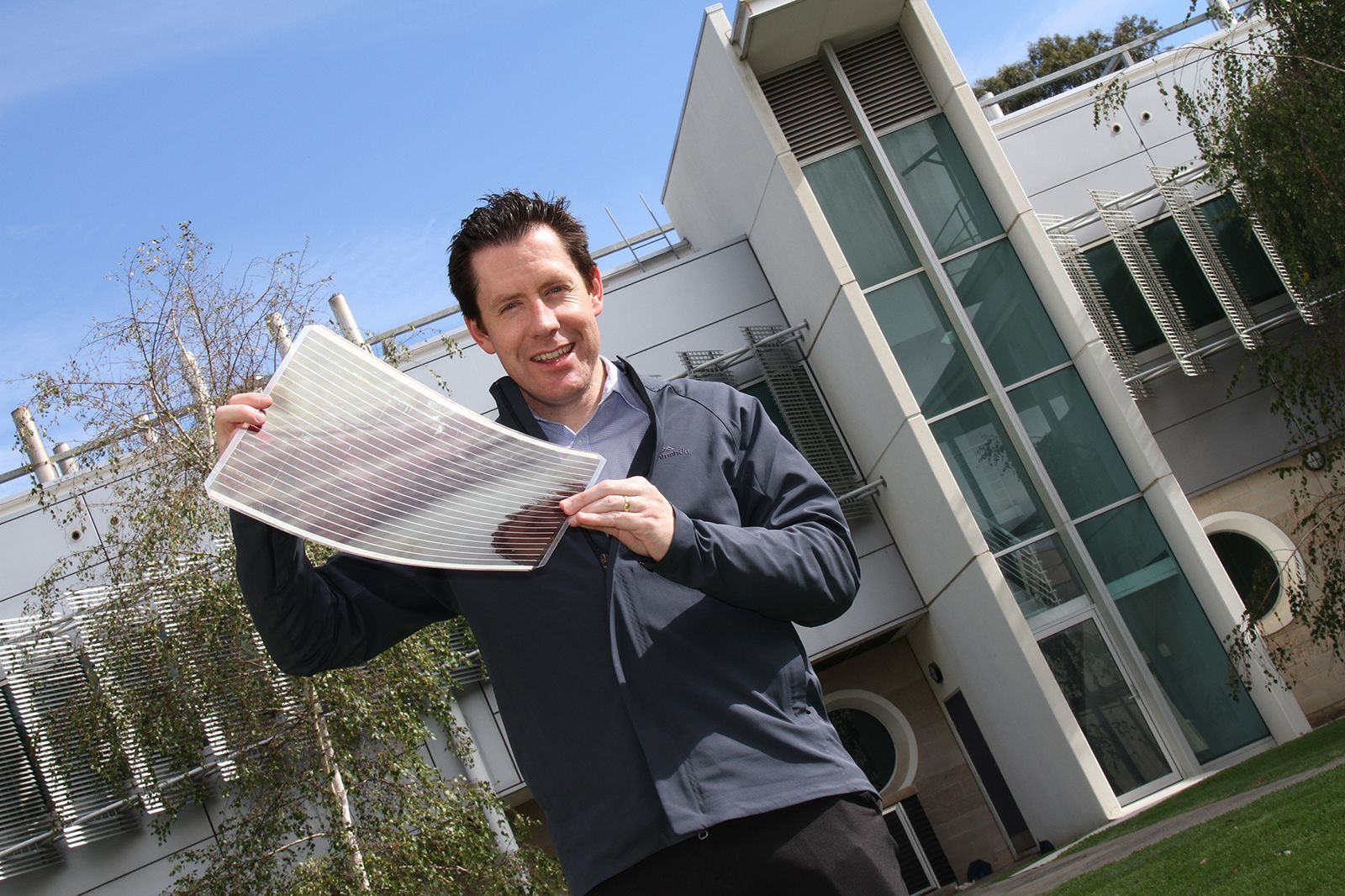
Professor Li Gang’s group at PolyU went looking for the actual culprit — not “shade is bad,” but what specific thing inside the cell breaks.
Their answer, published in Nature Materials, is beautifully small: the damage starts at deep trap states in the bulk heterojunction.
Unpacking that:
- The bulk heterojunction is the layer where the magic happens in an organic solar cell. It’s a blend of two ingredients — a donor and an acceptor — mixed together like two batters folded into one bowl. Light comes in, the donor hands off a charge, the acceptor catches it, and you get electricity.
- A deep trap state is a tiny flaw in that blend that acts like a pothole. A charge rolls in and can’t get back out.
And here’s the mechanism they pinned down: those traps are what let a destructive backwards current — reverse tunnelling — get going when the cell is pushed into reverse bias. The potholes are the doorway. First the cell bends, then it breaks, and past a certain point it doesn’t bend back.
The fix: mix the batter better
Once you know the potholes are the problem, you fix the road.
The team found the traps were coming from isolated acceptor clusters — little islands where the acceptor ingredient had clumped together instead of blending evenly into the donor. Suppress the clumps, and you suppress the traps. Mix the batter properly and there are no lumps for charges to fall into. 🥣
The result was organic solar cells with an irreversible breakdown voltage beyond −35 V — meaning you can shove them backwards astonishingly hard before anything permanent happens.
Then comes the part that made us grin. They took that toughened organic cell and used it as a shield.
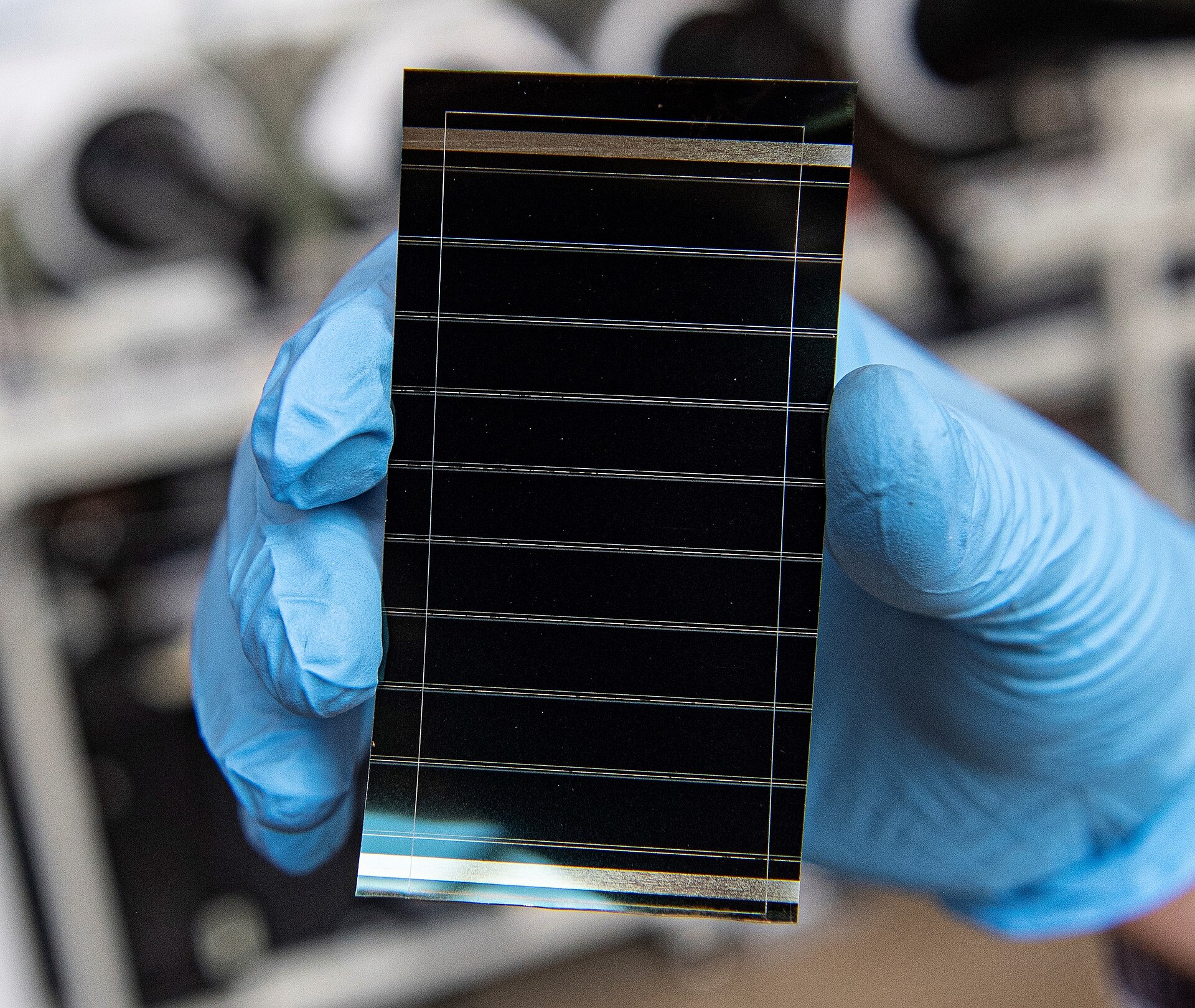
The star of the show is a tandem cell: a perovskite layer and an organic layer stacked together, each catching a different slice of sunlight so the pair harvests more than either could alone. Perovskites are famously brilliant at making electricity and famously fragile under reverse bias. But stack a trap-suppressed organic cell on top, and the reverse tunnelling never gets started — so the delicate perovskite underneath never takes the hit.
The tough one stands in front of the sensitive one. The whole tandem inherits the toughness.
The numbers, and they are excellent
Straight from the paper — these are results from the actual tandem devices under reverse-bias stress:
- 97% of their initial efficiency retained after 2,000 hours at −4.5 V. Two thousand hours is about 83 days. Nearly three months of continuous shading stress, and it came out at ninety-seven percent. 🕰️
- 90% retained after 12 hours at −20 V.
- More than 90% retained even at −40 V — a stress test far past anything a real-world leaf or chimney would ever inflict.
The paper notes this outperforms all existing thin-film solar technologies on reverse-bias stability. Not “competitive with.” Outperforms.
And the cells are no slouch in daylight either: the trade coverage of the study puts the tandem’s power conversion efficiency at over 26%. Worth keeping separate from an earlier, different number from the same group — their previous tandem work reached 25.9% in the lab with an independently certified 25.1%. Two different results from two different papers; the certified 25.1% belongs to the earlier one. We’re mentioning both because they’re both real, and because merging them into one tidy figure would be exactly the kind of thing that ends up in a hundred articles and never gets corrected. 📏
The part that means it might actually reach your roof
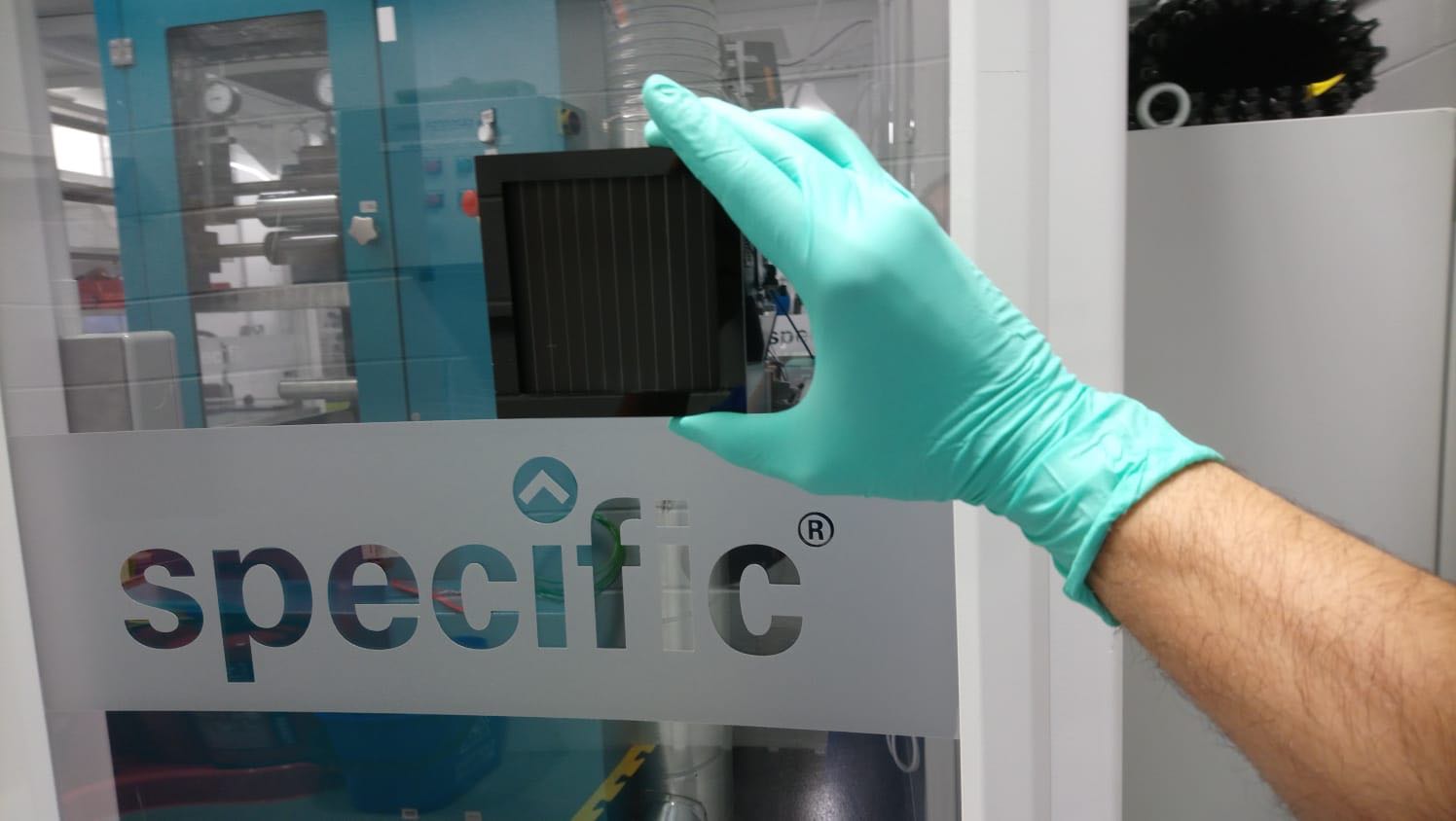
Here’s the detail that lifts this out of “nice lab result” territory: they didn’t only do it in single postage-stamp cells. They demonstrated the shade-resistance in minimodules — small but scalable modules, the awkward middle step where lots of promising solar chemistry quietly falls apart.
Making one perfect cell in a glovebox is hard. Making a module of them, at a size that means something, is a completely different kind of hard. Getting the good behaviour to survive that jump is how a paper turns into a product. 🔲
Why this is on a good-news blog
Because it’s a story about building something that can be treated badly and stay kind about it.
Most of the impressive solar news is about squeezing out more power: a fraction of a percent more efficiency, a new record on a chart. Wonderful. But this is a different and, we’d argue, warmer kind of progress — it’s about durability under ordinary indignity. Not a panel that performs beautifully in perfect conditions, but one that shrugs when conditions are the normal, cluttered, leafy, tree-having conditions that real roofs actually have.
Somebody looked at a problem the whole industry had agreed to just live with — well, don’t put panels where there are shadows — and said: no, let’s make the shadows stop mattering.
Shade is the most ordinary thing in the world. It’s what trees make. It’s what clouds do. It’s the reason you sit on that side of the park. And now there’s a solar cell that can take a leaf landing on it and just carry on. 🍃☀️
Go deeper (real links, no pop-ups, promise)
- 📄 Nature Materials: Perovskite–organic tandem solar cells with superior reverse-bias stability
- ⚡ Interesting Engineering: New solar cells retain 97% efficiency after 2,000-hour shading stress test
- 🔆 OilPrice: New solar cell design solves a problem that’s plagued panels for decades
- 🧪 Perovskite solar cell — Wikipedia


