

Sometime around 1835, in the seaside town of Margate, Kent, a man was digging. The most-repeated version of the story says a labourer named James Newlove was sinking a duck pond (or a well — the tellings vary) in a field behind a schoolhouse, when his tools suddenly punched through into empty space. A hole opened up in the ground where no hole should be.
Newlove lowered his young son Joshua into the dark on a rope with a candle. The boy came back up and said the walls were covered in shells. 🐚
He wasn’t exaggerating. Below that ordinary Kentish field ran a winding passage carved from solid chalk, opening into a domed chamber — and nearly every surface, from ankle height to the curve of the ceiling, was encrusted with seashells laid into swirling, deliberate mosaics. Not a handful. Not a decorative border. An estimated 4.6 million of them, covering something like 2,000 square feet of wall. And here is the part that has kept people turning it over for two centuries: nobody has ever been able to say who made it, or when, or why.
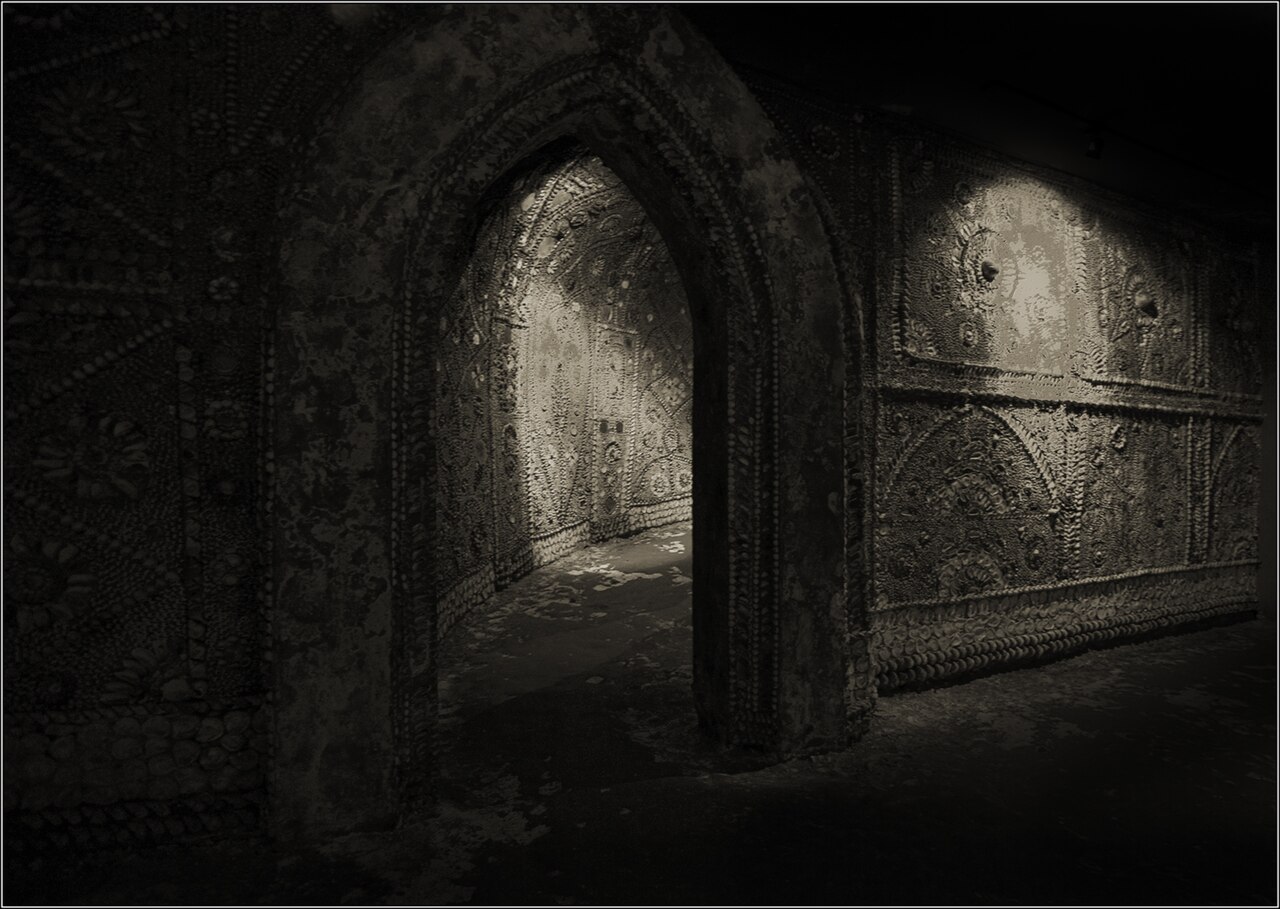
Four and a half million shells, one at a time
Walk in today and the scale sneaks up on you. From a distance the walls read as texture — dark, intricate, a little like tooled leather. Get close and the texture resolves into shells: winkles and whelks stood on end in tight spirals, mussels fanned out like feathers, cockles and limpets and the odd flash of mother-of-pearl from an oyster. They’re arranged into shapes that clearly mean something to whoever placed them — hearts, stars, rosettes, trees, sun-like discs, and long looping arabesques that flow around the corners of the passage.
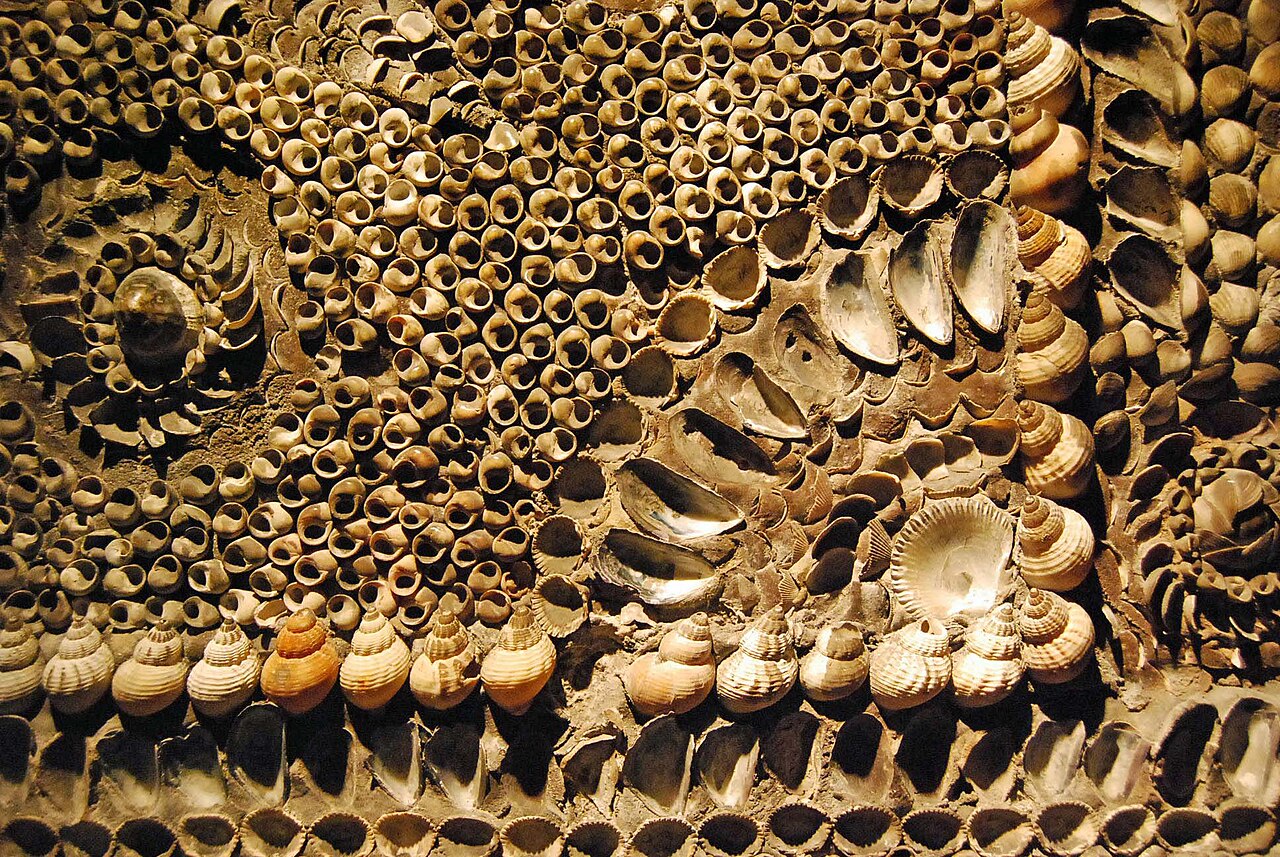
The shells are almost all species you could gather on the English coast — with a few flat winkles that come from a bit further afield. Whoever did this didn’t ship in exotic materials from across the world; they used what the sea nearby was already giving away for free, and then spent an unimaginable amount of patient time pressing each one into place. Estimates of the surface area hover around 190 square metres. Even at a brisk, unrealistic pace, you’re looking at a labour measured in months or years, not afternoons.
The mystery nobody can crack
Here’s what makes the Shell Grotto special, and why it still draws people down that little Margate side street: the honest answer to “so who built it?” is we don’t know. Not “there’s a plaque out front with the story.” Genuinely, verifiably, nobody knows.
The theories are wonderful, and they contradict each other beautifully:
- A Regency rich person’s folly. The late 1700s and early 1800s were the golden age of the ornamental grotto — wealthy landowners built shell-lined garden rooms as fashionable curiosities. Maybe this is just an unusually ambitious one whose owner died and whose paperwork vanished.
- A smugglers’ store or meeting place. Margate was smuggling country. A hidden underground room is exactly the sort of thing a good story wants to be a smugglers’ den.
- An ancient temple. The boldest fans point to the sun-and-star motifs and argue for something far older — a pre-Christian ritual space, perhaps thousands of years old, that someone much later simply found and decorated.
- A medieval chalk mine, redecorated. A more sober 2006 analysis by the Kent Archaeological Society suggested the passage itself may have begun as a working chalk mine and been mosaicked over afterward.
The maddening thing is that the shells themselves won’t easily give up a date. For a long time the walls were lit by gas lamps, and the soot coated everything, muddying any attempt to read the original colours or run clean tests. Radiocarbon dating shells is fiddly, and the mortar has its own complications. So the Grotto sits there, gorgeous and stubbornly silent, refusing to settle the argument. 🕯️
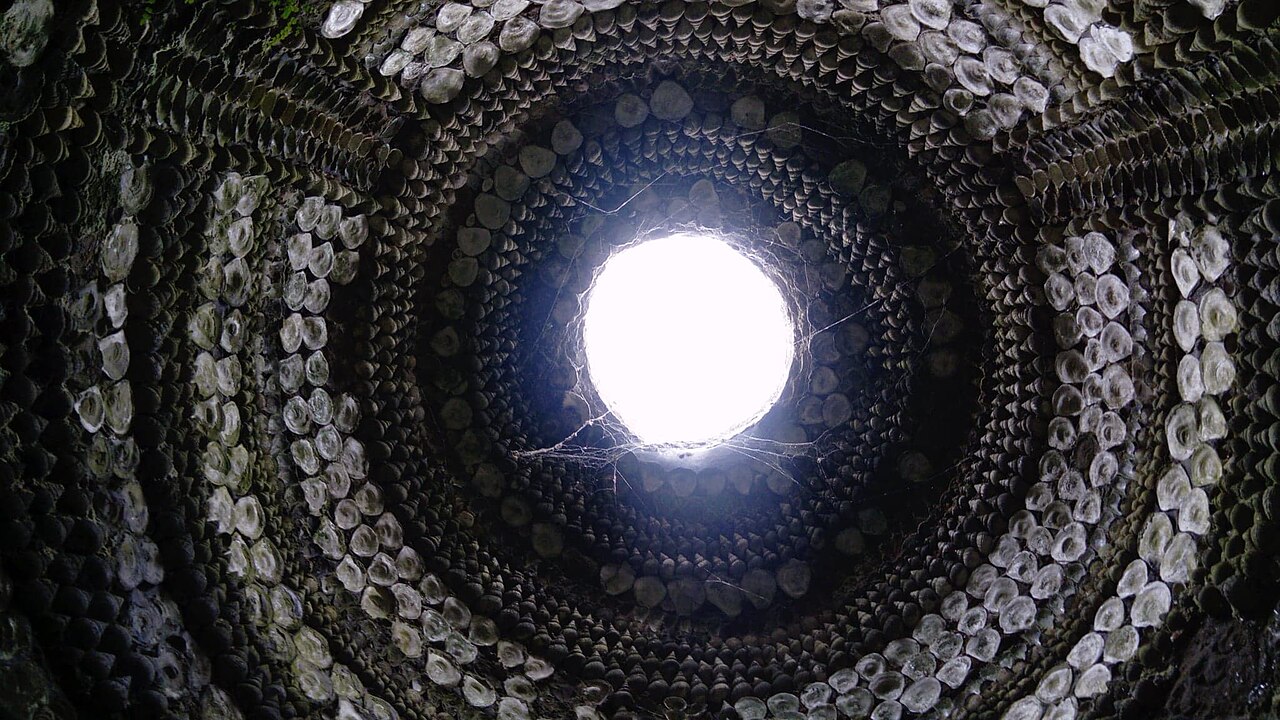
The passage, the rotunda, and the altar chamber
The layout is small but theatrical. You come down from the street into a low, curving Serpentine Passage, walls close on either side, mosaics running past your shoulders as you walk. It opens into a circular rotunda and then a rectangular chamber that early visitors nicknamed the “altar.” Overhead, a shaft in the dome lets a circle of daylight fall straight down — which, depending on which theory you like, is either a clever bit of grotto stagecraft or evidence of something older and stranger.
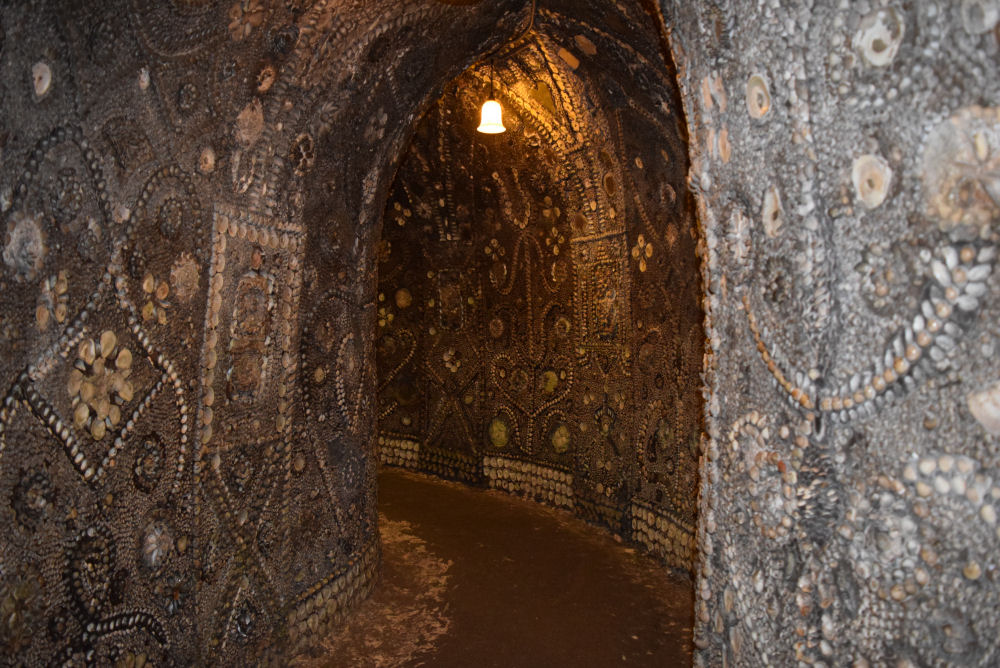
Whatever it was for, someone treated it as a canvas. The motifs aren’t random infill; they’re composed — panels framed by borders, symmetrical rosettes, a recurring vocabulary of shapes that suggests a plan and a maker with a strong idea of what they wanted. That’s a big part of the pull of the place. It’s not a natural wonder that happened by accident. It’s unmistakably the work of human hands, and those hands left no name.
A tiny museum, still keeping its secret
The Grotto has been open to visitors, on and off, since 1837, which makes it one of the older tourist attractions in the country to still be doing more or less the same thing. Today it’s a small independent museum: you pay a modest entry, step off an ordinary residential street through a modest shopfront, and descend into 4.6 million shells’ worth of unsolved mystery. There’s a little café and a gift shop up top. Down below, the argument about who and when and why is still running.
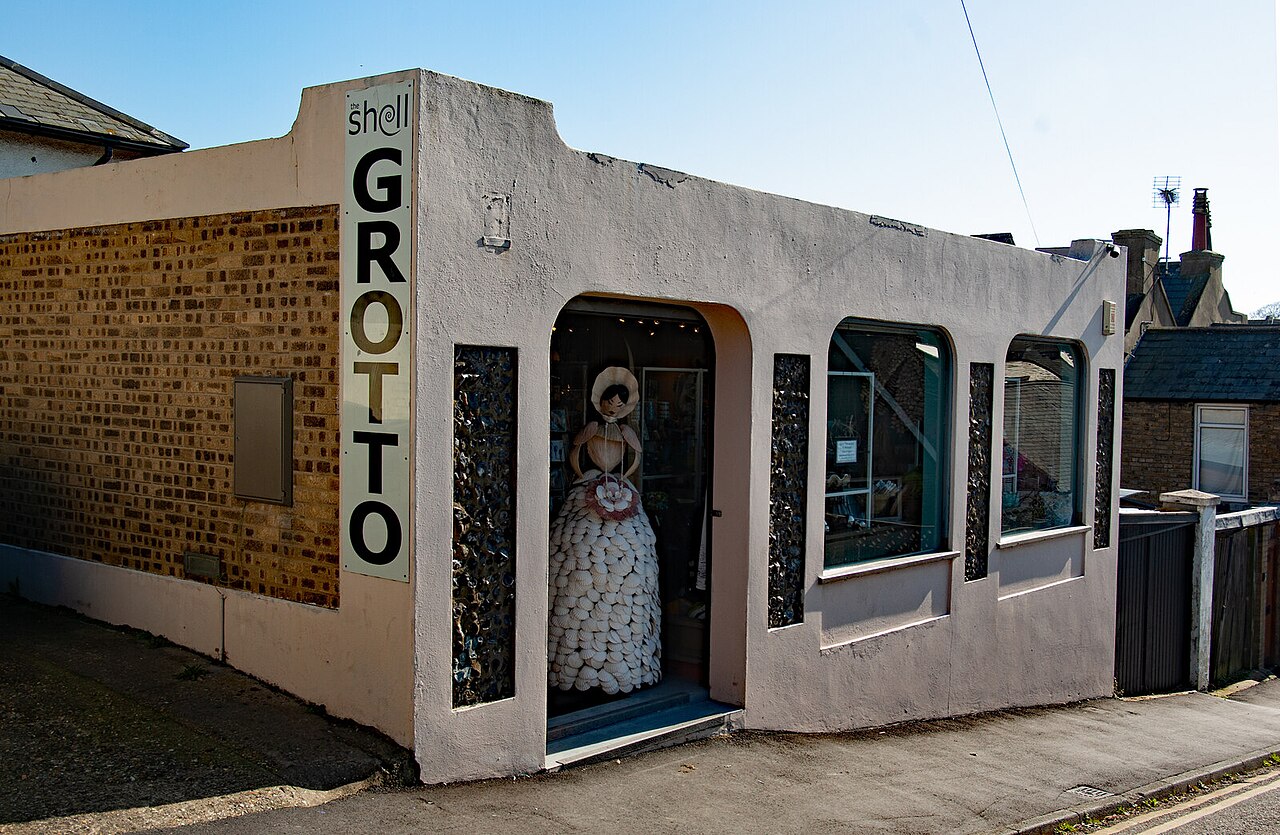
In 1973 it was given Grade I listed status — the top tier of British heritage protection, the same category as cathedrals and Windsor Castle — which is a lovely bit of officialdom: the nation formally deciding that even though we can’t explain this thing, it is unquestionably worth keeping forever.
Why this lives on a good-news blog
Because it’s a standing reminder that wonder doesn’t require an explanation — and that some of the best things people have ever made were made purely, painstakingly, for reasons we’ll never fully recover.
Somebody, at some point, decided that a hole in the Kentish chalk should be turned into a swirling universe of shells. They gathered the shells from the beaches nearby. They pressed in 4.6 million of them, one at a time, into hearts and stars and trees, deep underground where the sun barely reaches. And then they either didn’t write it down, or the record was lost, and they slipped out of history entirely — leaving behind a room so strange and beautiful that a schoolboy on a rope in 1835 could describe it in three words and change the rest of his family’s life.
We live in a world that likes its questions answered. The Shell Grotto quietly insists that a good mystery, well-made and beautifully kept, is its own kind of gift. Nearly two centuries on, the honest little sign at the door still amounts to: we don’t know who did this — come and see it anyway. 🐚💛


