

Picture a hillside where two people, standing on opposite sides of a valley so deep and wide you could lose a small town in it, are having an actual conversation. Not shouting. Not waving. Whistling — long, looping, bird-bright whistles that bounce across the gorge — and somehow each one knows exactly what the other just said. Where to meet. Whose goat got loose. That dinner’s ready.
This is not a party trick. It’s a language, and it has a name: Silbo Gomero, the whistled speech of La Gomera, a small, steep, green island in the Canaries. 🎶
Why an island would invent whistling
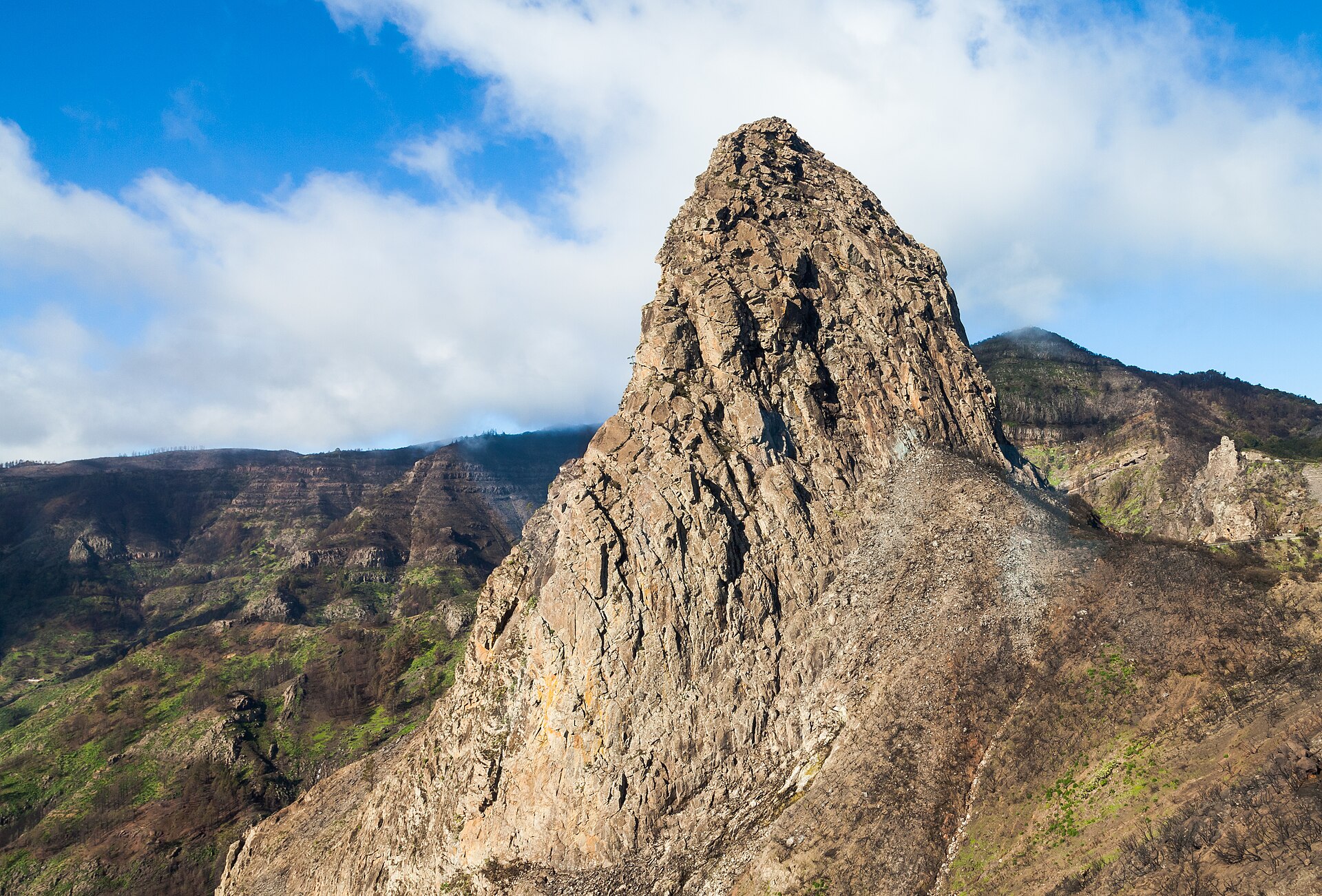
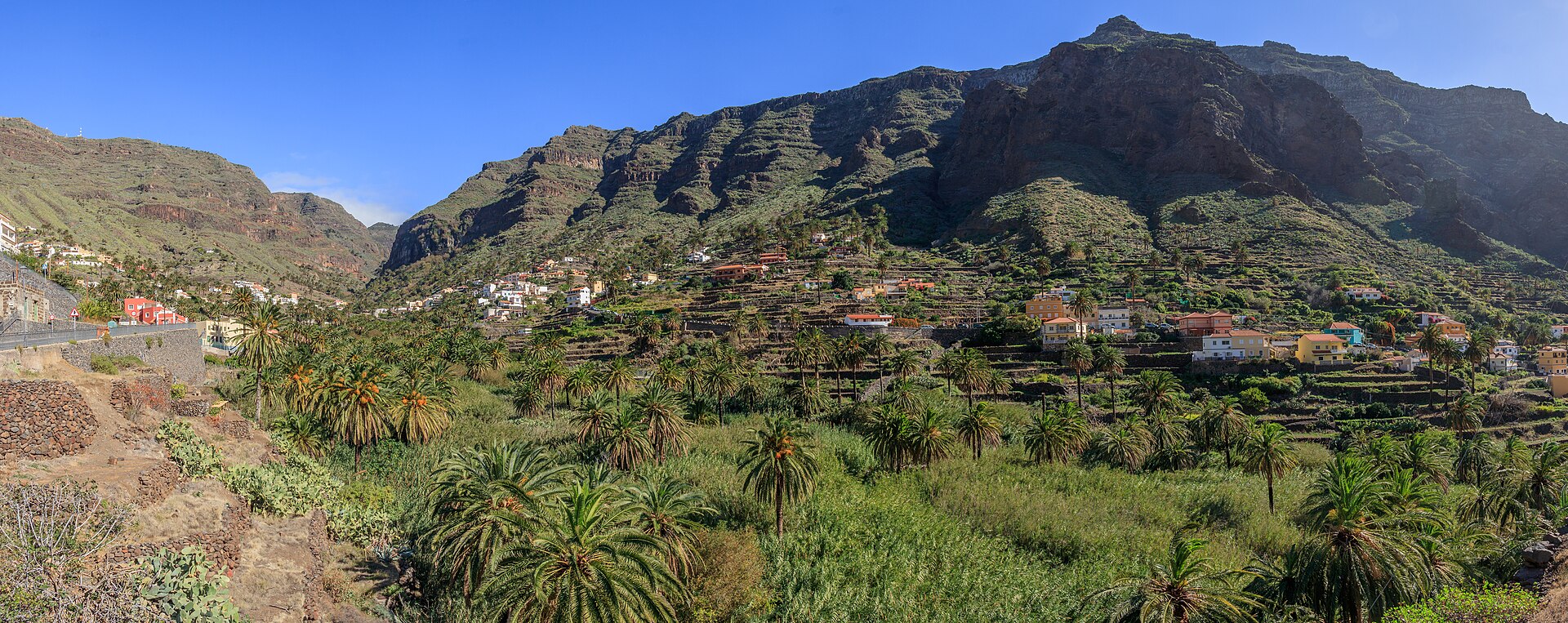
La Gomera is shaped like a crumpled paper ball. From the forested peak in the middle, dozens of barrancos — enormous V-shaped ravines — plunge down to the sea like the spokes of a wheel. Two farms can sit a few hundred metres apart as the crow flies and still be a two-hour hike apart, because getting there means walking all the way down one side of a gorge and all the way up the other.
So the islanders did the sensible thing. Instead of walking, they whistled. A whistle, unlike a shout, is a pure clean tone — it doesn’t tire your throat, it doesn’t blur into mush over distance, and it sails clear across a canyon that would swallow any yelled word. On a good day a whistled sentence can be understood up to about five kilometres away. That’s a message crossing a distance it would take you the better part of a morning to walk, arriving in the time it takes to say it.
It’s a real language — that’s the wild part
Here’s what tips this from “clever signal” into “genuinely astonishing”: Silbo isn’t a fixed set of coded messages like a bugle call, where one tune means charge and another means dinner. It’s Spanish — the whole thing, freely — just carried on a whistle instead of a voice.
The trick is that whistling can only do so much at once, so Silbo boils all the vowels and consonants of Spanish down to a small handful of whistled tones — a couple of pitch “heights” for the vowels, and a few kinds of leap, dip, and interruption for the consonants. It sounds like far too little information. And it would be — except human brains are extraordinary pattern-fillers. A skilled listener, a silbador, reconstructs the missing detail from context and rhythm exactly the way you effortlessly understand a friend talking with a mouthful of sandwich. Whole new sentences, never heard before, come through fine. You can whistle someone a joke they’ve never heard and they’ll laugh at the right moment.
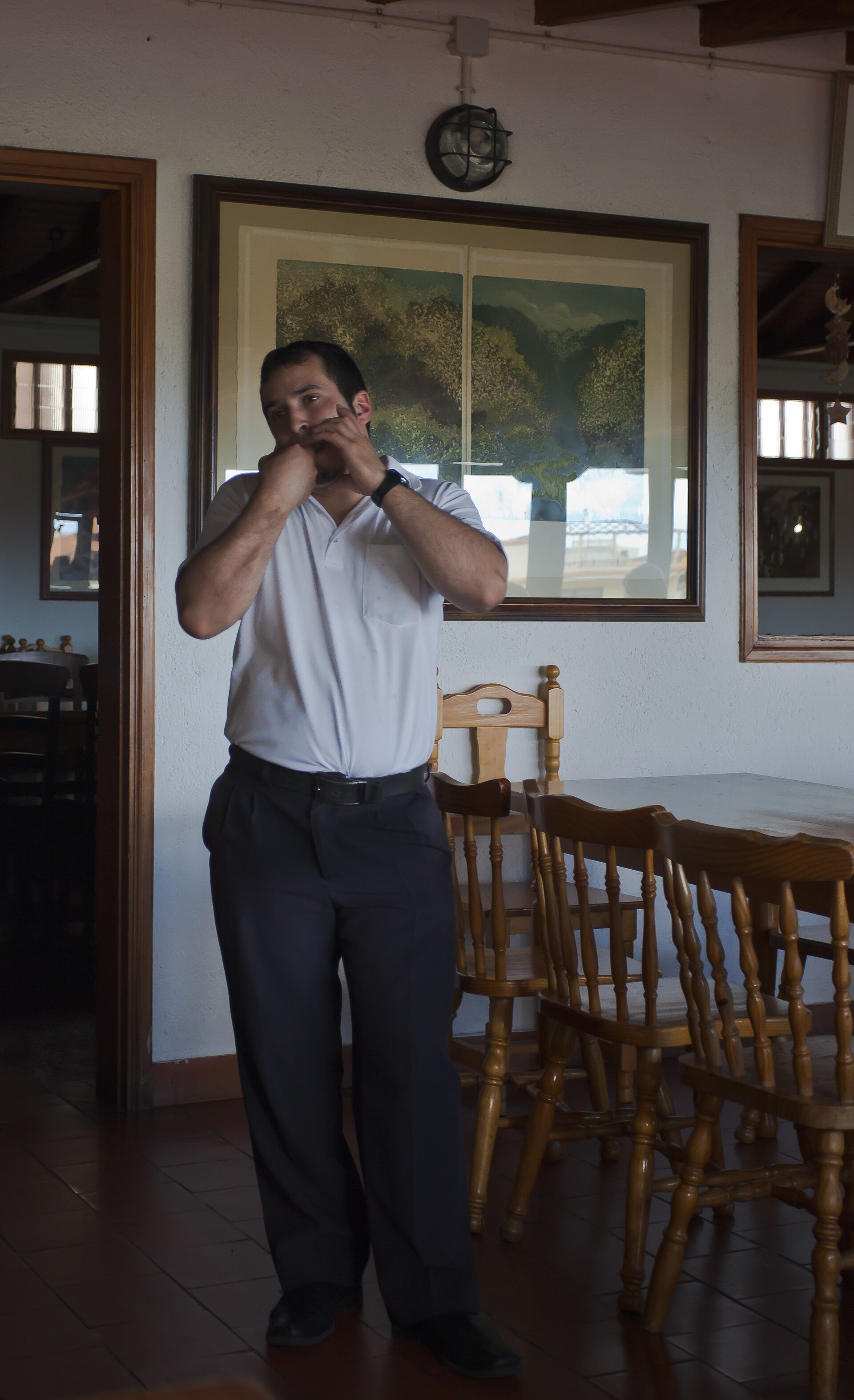
The people who make it look easy shape the sound with a hooked finger against the teeth or tongue, cup a hand to aim it, and let the mountain air do the rest.
The best part: they saved it on purpose
Languages like this usually die quietly. The road arrives, then the telephone, then the mobile, and suddenly nobody needs to whistle across a canyon — so within a generation or two, nobody can. By the late 20th century Silbo was drifting exactly that way, kept alive mostly by older shepherds.
And then La Gomera simply decided not to let it go. In 1999 the island made Silbo Gomero a mandatory subject in its primary schools — so now every kid on La Gomera grows up learning to whistle their own language, taught by the old masters, alongside reading and sums. In 2009, UNESCO added Silbo to its list of the Intangible Cultural Heritage of Humanity. It is, today, the only whistled language on Earth still used by a whole living community — and it’s not hanging on by a thread. It’s being handed, deliberately, to children.
Whistling across the world
There’s a lovely footnote here: La Gomera isn’t entirely alone. Whistled speech has popped up independently in mountain and forest villages all over the planet — a whistled Turkish in the village of Kuşköy, whistled tongues in parts of Mexico, Greece, and West Africa — everywhere people needed to reach each other across ground that’s easy to see over but hard to walk across. Human beings, handed a landscape full of canyons, keep arriving at the same beautiful idea: don’t fight the distance, sing across it.
But nowhere is it as alive, as organised, or as loved as on La Gomera, where it’s stitched into the school day and floats across the barrancos every single afternoon.
😊 Smile Fact: Because Silbo can carry ordinary conversation for kilometres, a shepherd on one ridge could once ask a shepherd on the far ridge to pass a message on to a third ridge — a whistled relay, hopping human to human across the whole island, faster than any of them could have walked it.
Why this lives on a good-news blog
Because it’s a little proof that people don’t only lose the lovely, strange things they inherit — sometimes they catch them on the way down and hand them forward. Silbo Gomero could easily have become a museum recording, a “they used to do this” plaque at a lookout point. Instead a whole island looked at its own weird, wonderful, mountain-born language and said: no, the kids should have this too.
The world, it turns out, is also doing this: teaching seven-year-olds to whistle full sentences to each other across a ravine, on purpose, forever. Somewhere on La Gomera right now, a child is learning to say “I’ll meet you down by the road” without saying a word at all — just a bright loop of sound sailing out over the green, and, from the far side of the valley, another whistle coming back. 🎶🏔️💛


