

In 1991, a Vietnamese farmer named Hồ Khanh was sheltering from a storm in the jungle of Quảng Bình province when he felt it: a cold wind roaring up out of a hole in the limestone, and the sound of a river running somewhere far below. He didn’t go in. The opening was steep and black and frankly terrifying, and he had no rope, no light, and no good reason to climb down into the breathing dark. So he made a note of the place in his head and walked home.
Then he lost it. For eighteen years he could not find that hole again — the jungle is dense, the cliffs all look alike, and one cave mouth among a thousand sinkholes is a needle in a very wet haystack. He kept looking. In 2009, he finally led a team of British cavers back to the spot, and they rappelled down into what turned out to be the largest cave passage on Earth. 🕳️
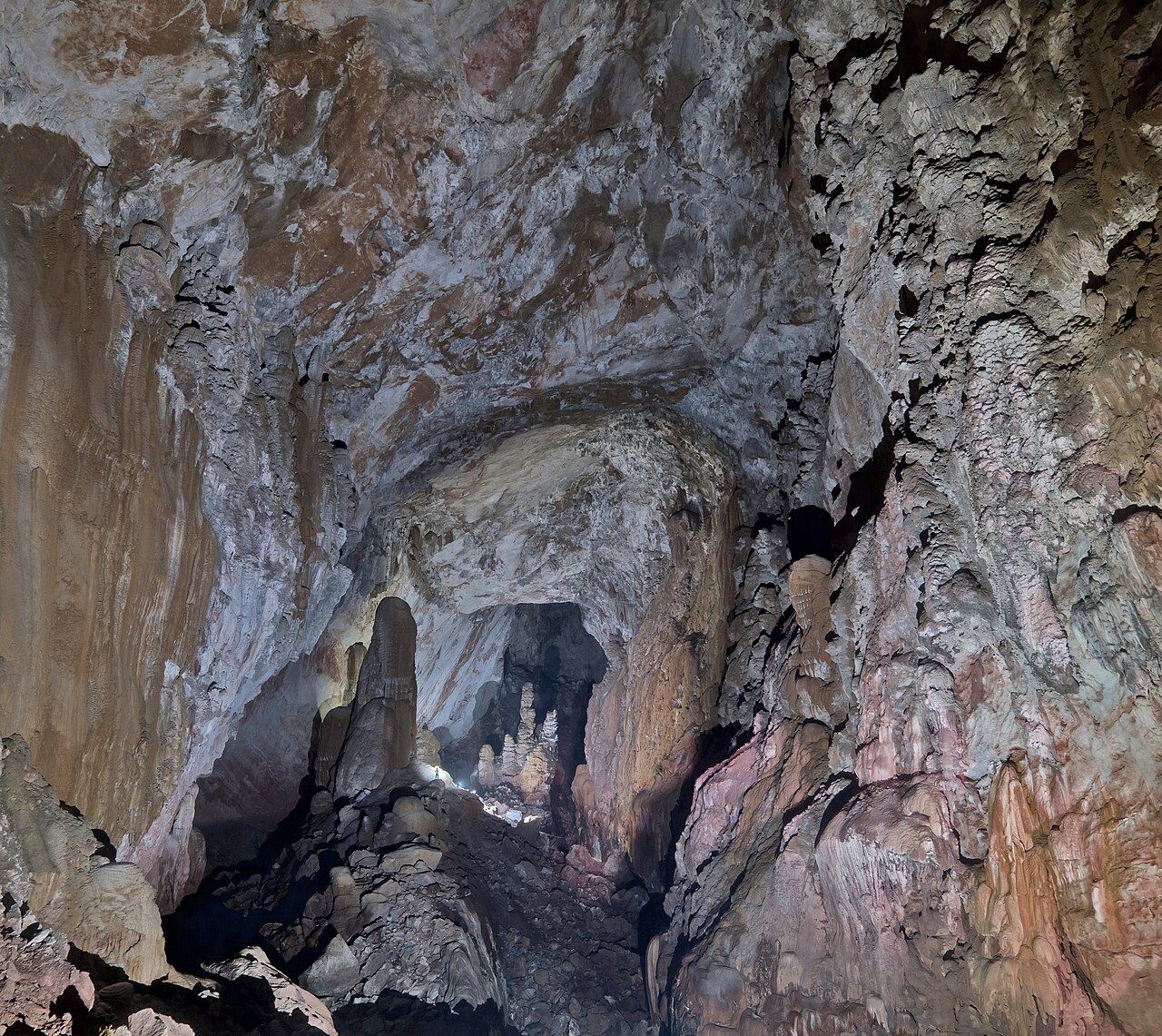
How do you even make a cave this big?
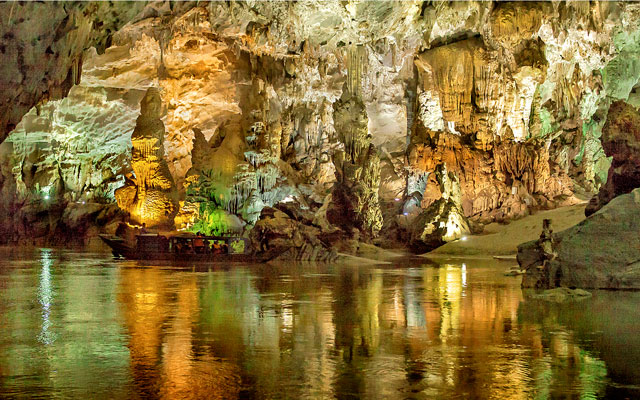
Slowly, and with a lot of water. Son Doong sits inside Phong Nha-Kẻ Bàng National Park, a UNESCO World Heritage Site sitting on a slab of limestone that’s been around for hundreds of millions of years. Over the last two to five million years, an underground river found a fault line in that rock and simply… kept dissolving it, grain by grain, carving a corridor through the mountain. The river still flows through the cave today — which is exactly what the name Sơn Đoòng, “Mountain River Cave,” is telling you.
The numbers are genuinely hard to hold in your head. The main passage runs more than five kilometres long, soars up to 150 metres high, and stretches as much as 200 metres wide — enough, the surveyors love to point out, to fly a Boeing 747 down the middle, or to stack a row of 40-story skyscrapers under the ceiling with room to spare. 🏙️
The jungle inside the cave
Here’s the part that sounds made up. In two places along the passage, the ceiling has collapsed — geologists call these openings dolines — and through those gaps, daylight pours straight down onto the cave floor. Give a patch of cave floor sunlight, rain, and a couple of thousand years, and what grows? A forest.
There are two of them, and the cavers gave them wonderful names: “Watch Out for Dinosaurs” and the “Garden of Edam.” Step out of the pitch-dark river passage into one of these and you find yourself standing in genuine jungle — real trees reaching for the light, ferns, birds calling overhead, monkeys that wander down through the skylight, and mist drifting in the shafts of sun. It is a forest with a roof of stone, hidden inside a mountain. 🌿
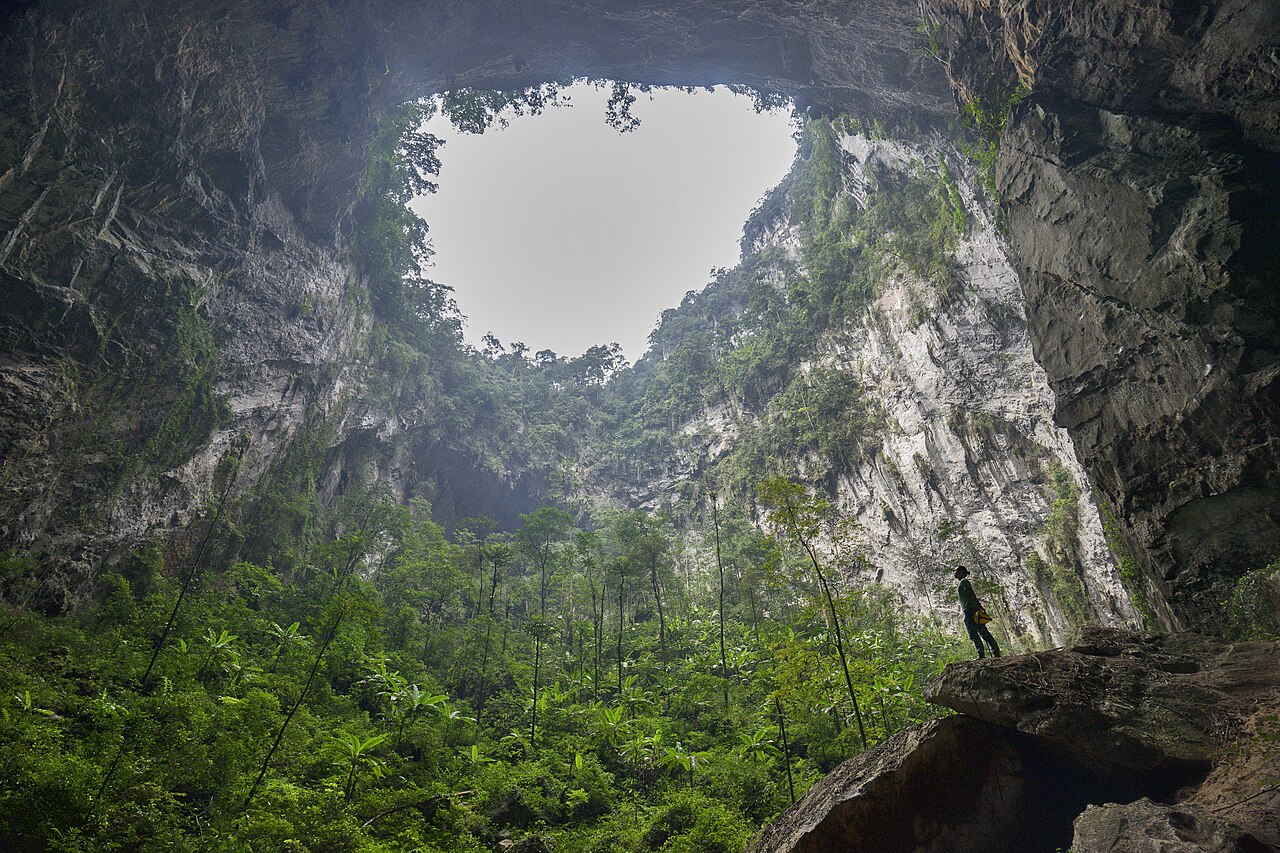
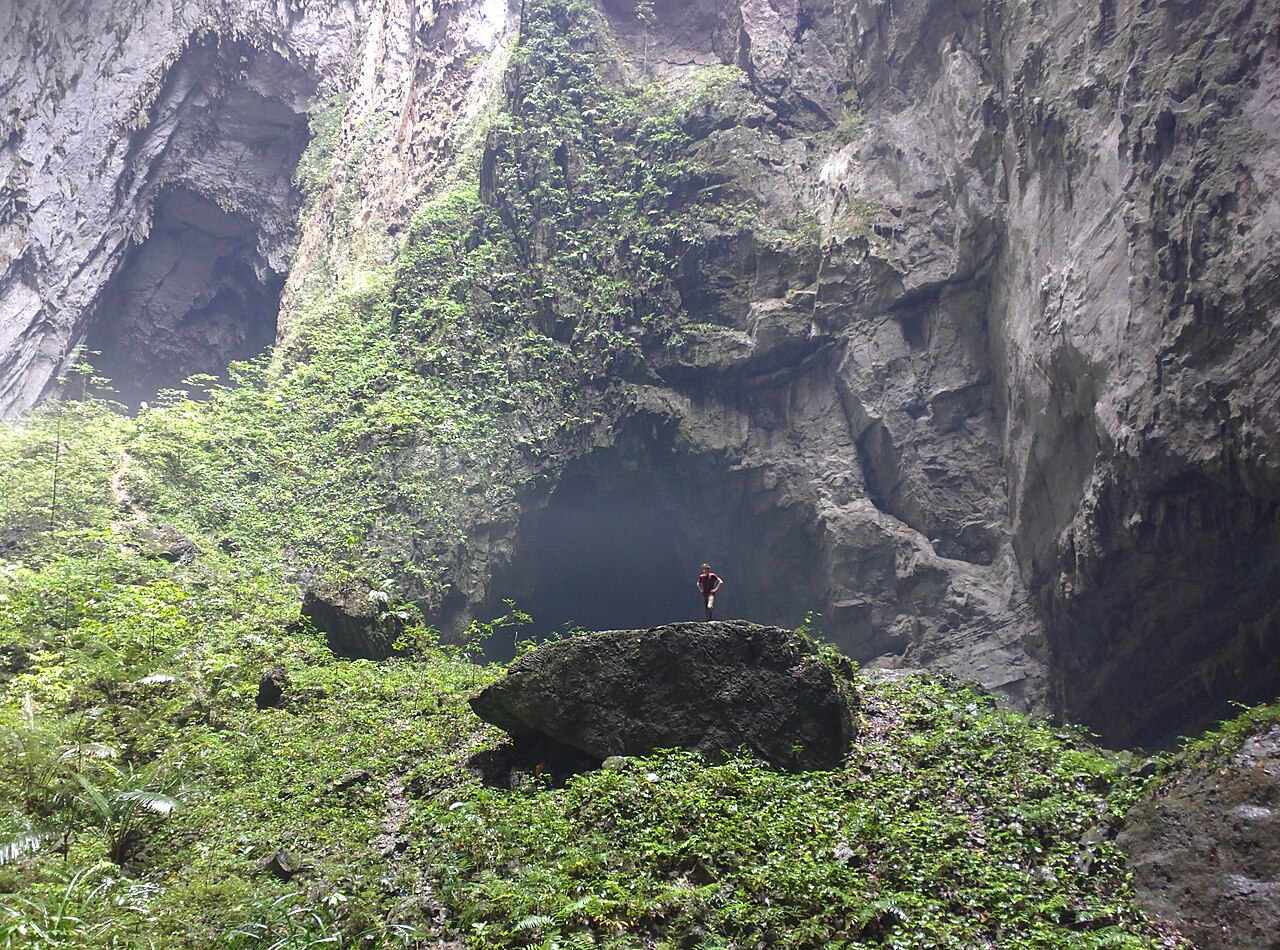
The dolines do something else, too: with that much warm, wet air meeting cool cave air, the cave makes its own weather. Clouds form inside. There is a place on Earth where it can, in a quiet sense, be foggy indoors. ☁️
The Great Wall that stopped the explorers
When Hồ Khanh and the British Cave Research Association team pushed into Son Doong in 2009, they didn’t reach the end. About halfway along, the passage was sealed off by a 90-metre wall of muddy calcite — a sheer, slick rampart of flowstone rising the height of a 30-story building. They couldn’t climb it. They turned around, named it the “Great Wall of Vietnam,” and went home to plan.
They came back in 2010 with proper climbing gear, scaled the wall — and found yet more cave on the other side, opening out to a second entrance. The cave had been hiding its own ending behind a barrier most people would mistake for the back of the world.
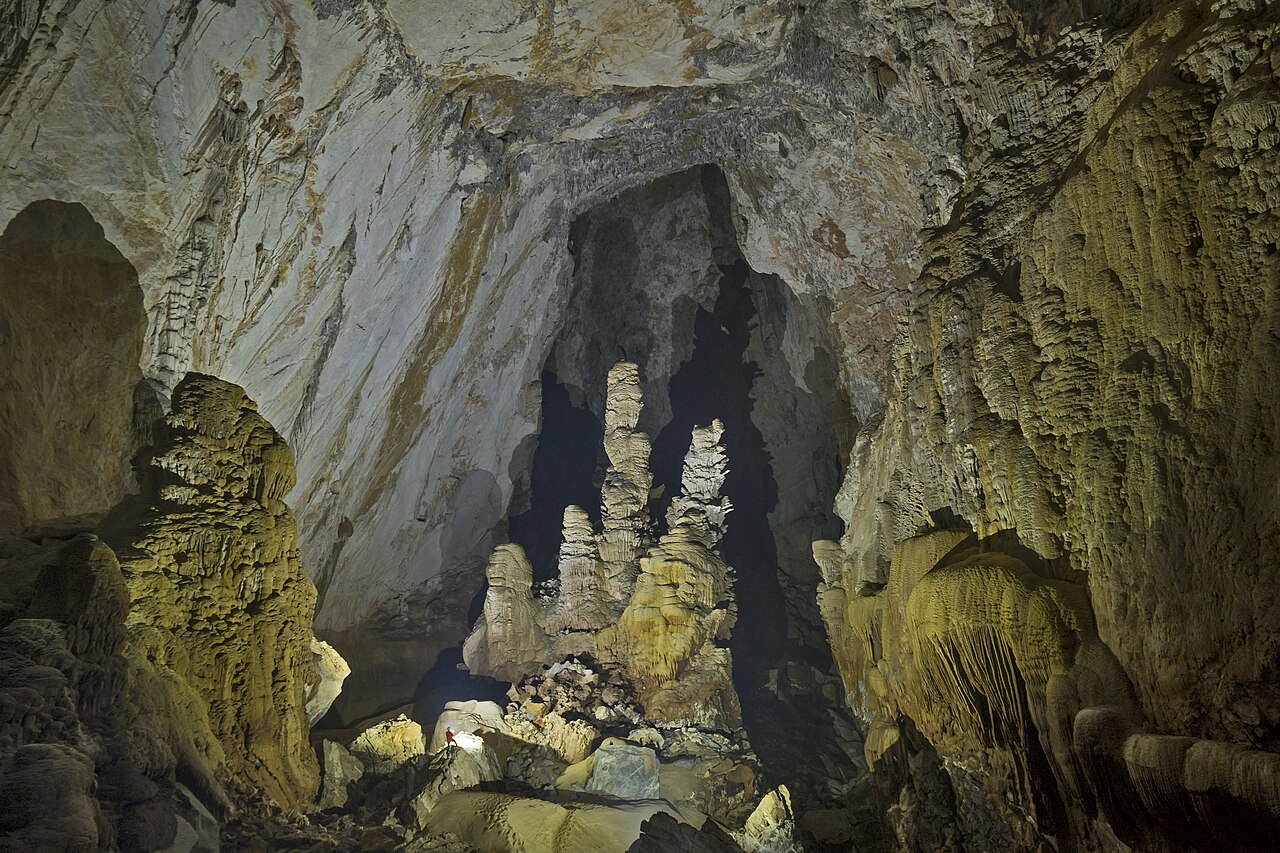
Everywhere the team looked, the scale kept breaking their instruments and their brains. Stalagmites up to 70 metres tall — the tallest ever measured anywhere — rose off the floor like stone skyscrapers. Cave pearls the size of baseballs sat in dried pools, where mineral-laden drips had spent centuries rolling grit into perfect little spheres. The river kept running through all of it, the way it has for millions of years, indifferent to being the most astonishing plumbing on the planet.
Only about a thousand people a year get in
You can visit Son Doong — but not many people do, and that’s on purpose. A single licensed operator, Oxalis Adventure, runs the expeditions, in cooperation with the park and the original British cavers, and the permits are deliberately tiny: roughly a thousand visitors a year, full stop. The trip is a four-to-six-day trek: jungle hiking, river crossings, rope descents, and nights spent camping on the cave floor under that impossible ceiling.
It would be easy to read “only a thousand people a year” as a complaint. It isn’t. The hard limit is exactly why the cave is still this extraordinary — no paved walkways, no gift shop in the Garden of Edam, no neon sign over the underground river. Son Doong stays a genuine expedition because the people who look after it decided some wonders are better kept a little bit difficult. 🏔️
Why this lives on a good-news blog
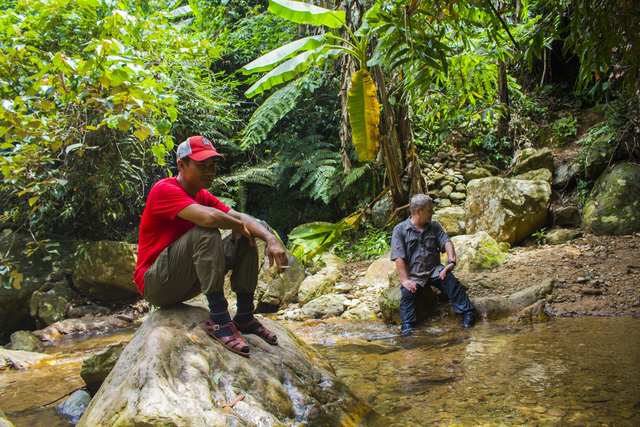
Because the whole story is a quiet argument that the world is still bigger and stranger than we think. The largest cave on Earth was found not by satellite or by some lavish expedition, but by a farmer sheltering from a storm — and then it was lost, and stayed lost, for eighteen years, while one stubborn person kept walking back into the jungle to look for the wind he’d felt that day.
Think about that: as recently as 2009, the single biggest cave passage on the planet was simply unknown — sitting under a mountain in plain daylight, with a forest and a river and its own clouds inside, waiting. If something that enormous can stay hidden until practically yesterday, then the planet is clearly still keeping secrets, and some of them are spectacular. Hồ Khanh’s patience handed us one. There are surely more out there, breathing cold wind out of holes in the ground, waiting for someone curious enough to climb down. 🕳️💛


