

Here is a true story that begins in the least magical way a story can begin: with a small railway losing money.
The Kishigawa Line runs about 14 kilometres through the quiet hills of Wakayama Prefecture in southern Japan. By the mid-2000s it was in trouble — the kind of slow, sad trouble that ends with a line getting shut down, a station getting boarded up, and a town getting a little bit smaller. When the Wakayama Electric Railway took the line over in 2006, one of the small economies they made was to remove the paid staff from the little wooden terminus at the end of the line, Kishi Station.
But Kishi Station already had a resident. 🐱
Enter the cat
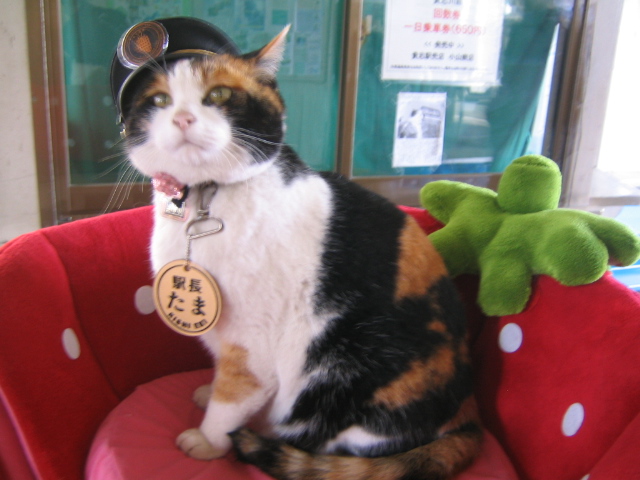
Near the station lived a calico cat named Tama, looked after by a local shop owner along with a couple of other cats. Tama liked the station. She hung around the ticket gate. She was, by all accounts, extremely good at sitting there being a cat.
So in January 2007, the railway did something that no struggling transit authority had any business doing, and that is exactly why we love them for it: they gave the cat a job. Tama was formally appointed Stationmaster of Kishi Station. Her official responsibility, written down in actual company records, was “attracting passengers.” She was issued a tiny custom stationmaster’s cap. Her salary was paid in cat food. 🐟
And then the strangest, most wonderful thing happened. It worked.
The billion-yen cat
Word got out that a small station on a small line in the Japanese countryside had a calico cat in a little hat sitting at the gate, and the world did what the world does when it hears something that good: it got on a train and went to see for itself.
Tourists arrived from across Japan and then from across the world. Ridership climbed. An economist at Kansai University sat down and did the sums and estimated that Tama, a cat, had brought roughly ¥1.1 billion — on the order of ten million dollars — into the local economy in a single year. That is not a typo. A stray calico in a hat out-earned entire marketing departments.
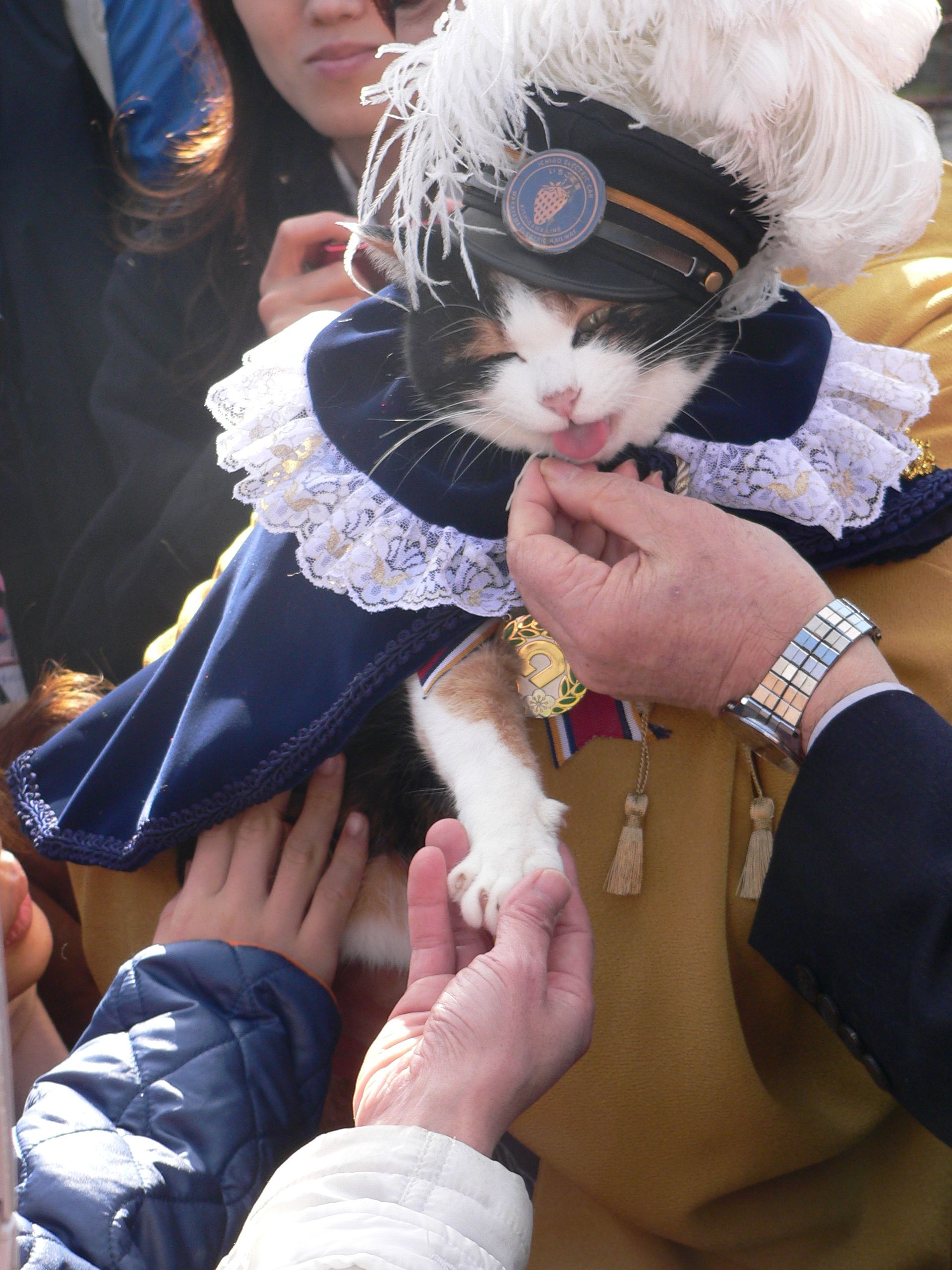
The railway leaned in with the straightest of faces. Tama was promoted to “super stationmaster.” Then to “operating officer,” which made her, on the company’s own org chart, an executive. A designer named Eiji Mitooka built her a special sightseeing train — the Tama Densha — decorated inside and out with more than a hundred cartoon Tamas. In 2010 the station itself was rebuilt so that its roof formed the shape of a cat’s face, with two peaked ears and round windows for eyes. Passengers now arrive to be greeted by a building that is quietly, permanently, delighted to see them.
Long may she nap
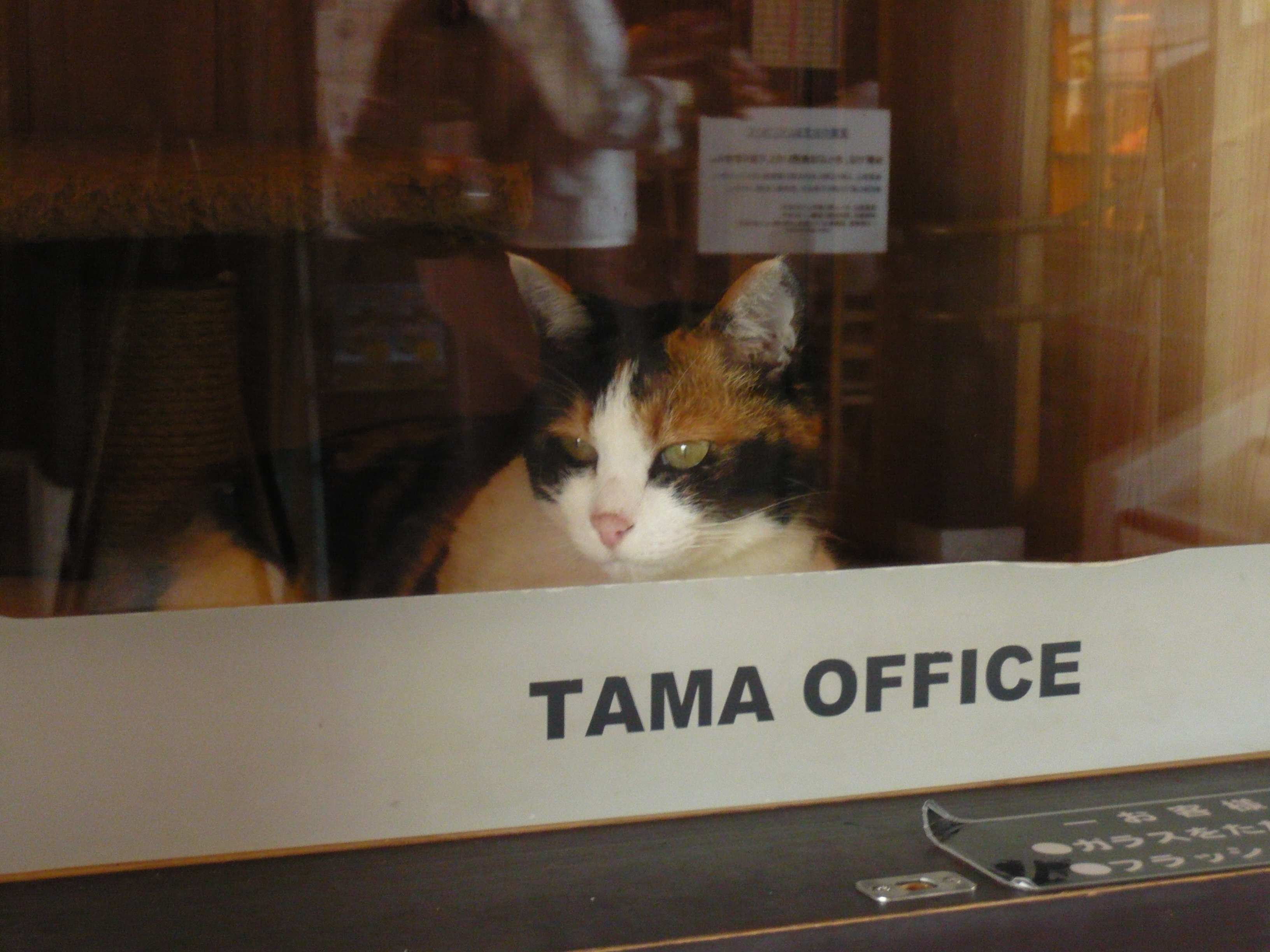
Tama worked her gate for years, keeping her own hours, receiving her admirers, and personally holding a small rural rail line up out of the dark. When she died in 2015, at the grand old age of sixteen, some 3,000 people came to say goodbye. The railway named her honorary “eternal stationmaster,” and her deputy — another calico, sensibly named Nitama, or “Tama Two” — took up the cap and carried on the work that is still being done at Kishi Station today.
Here is what stays with us. Nobody planned this. There was no clever campaign, no boardroom strategy, no billion-yen budget. There was a struggling little railway, a friendly cat who liked to sit by the gate, and a decision — made mostly for fun — to hand her a hat and a title and see what happened.
What happened was that the line got saved. Because somewhere along the way, a great many people decided that a small kindness, a small silliness, and a cat in a tiny cap were worth getting on a train for. And they were right. 🐱💛


