

Here is a fact that ought to be impossible. The Kalahari takes its name from the Tswana word Kgala — “the great thirst.” It is a place named, quite literally, after not having any water. And scattered across that red sand, in the driest part of the year, you will find melons. Round, pale, fist-sized, sitting on the ground like someone left a picnic out. 🍈
They’re called tsamma melons, and they are one of the loveliest pieces of engineering the plant kingdom has ever come up with: a desert that grows its own canteens. 💧
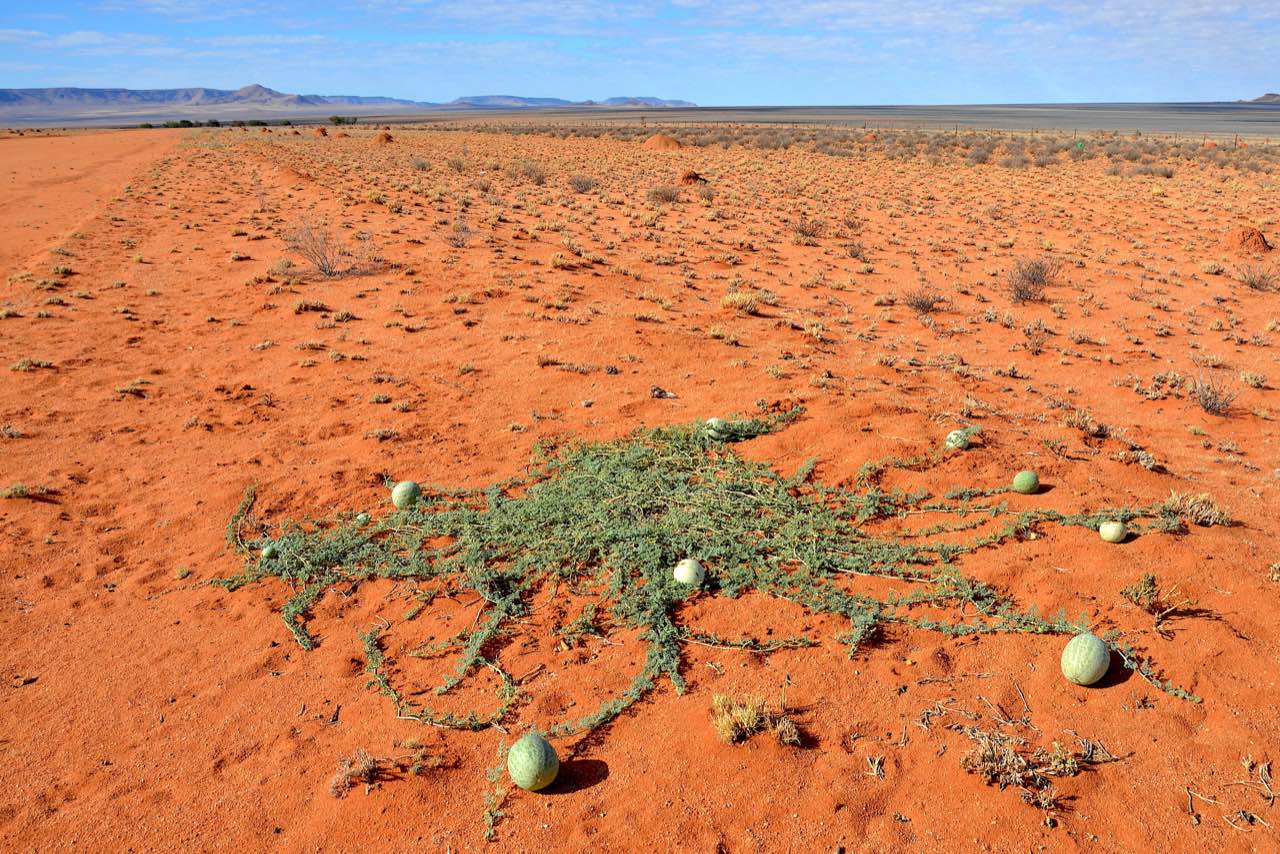
The trick is the timing
Lots of plants store water. What makes the tsamma remarkable is when it hands it over.
The vine sprawls out and fruits during the rains — and then the melons just… stay. They sit on the sand, rind sealed tight, holding their water through the long dry months while every pan and puddle in the region quietly disappears. By the time the desert is at its thirstiest, the tsamma is at its most useful. The plant has effectively taken a deposit in the wet season and paid it out in the dry one. 🌵
That is why this scruffy, unglamorous vine has been such a big deal for such a long time. The San people of the Kalahari have used tsamma melons for thousands of years, and the melons are eaten by an enormous cast of desert animals besides — the big ones especially, gemsbok and eland and antelope who need serious volume, treating a tsamma patch as a supplementary water supply that walks itself to them. It’s said that a person who knows the desert can get by on tsamma melons for weeks where there’s no drinking water at all.
So what does it actually taste like?
Let’s manage expectations. 😄
Cut a tsamma open and you will not find pink. The flesh is pale, white-green, and firm — much denser than a supermarket watermelon, closer in texture to the white part right at the rind. And the flavour ranges from mild and vaguely cucumber-ish to genuinely, memorably bitter, depending on the individual plant. This is a fruit you drink, not a fruit you look forward to.
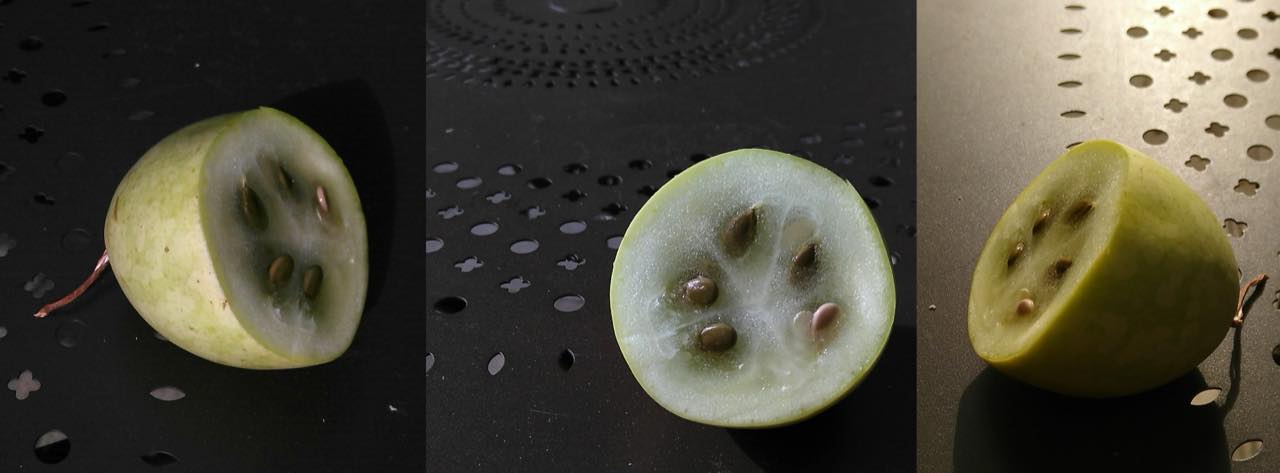
People across southern Africa have spent centuries making it delicious anyway, which is the part I find genuinely charming. Because the flesh is firm and unusually high in pectin — the stuff that makes jam set — it turns out to be brilliant for preserves. Cook it with sugar and it becomes a translucent, chewy, jewel-like konfyt. The Xhosa eat it as intyabontyi, raw or cooked. Afrikaans-speaking farmers call it karkoer; in Setswana it’s makatane; the Damara and Nama name, tsamma, is the one that travelled. It even emigrated: in the southern plains of the United States the same plant is grown as the “pie melon” or citron melon, destined for pie filling and preserves.
A fruit that half the region calls bitter has a name in every language spoken near it. That happens when something matters.
Don’t throw out the seeds — they’re the best part
Here’s the twist nobody expects. The tsamma’s flesh is the canteen, but its seeds are the pantry. They’re roughly 50% oil and 35% protein — a genuinely dense, nutritious food sitting inside a fruit most people would describe as watery and bitter.
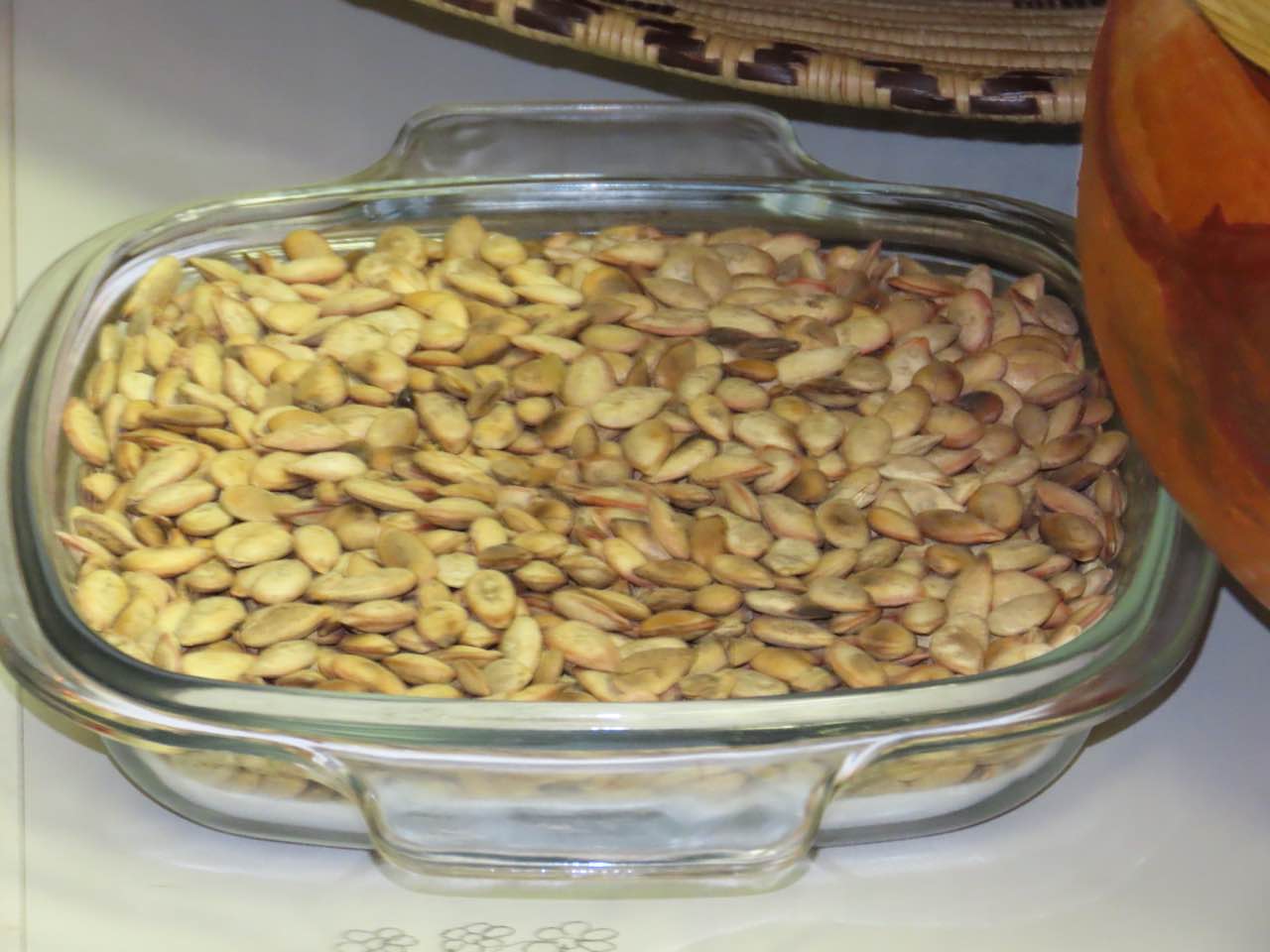
Roasted, they’re a proper delicacy. Pressed, they yield Kalahari melon seed oil, light and fast-absorbing, which has quietly become a sought-after ingredient in cosmetics — and a real source of income for rural producers in Namibia, Botswana and South Africa. The San also ground the seed into a paste and used it on skin as protection against sun and wind, long before anyone printed an SPF number on anything. ☀️
The watermelon question
Now for the family reunion, which is a better story than the usual version.
The tsamma is a Citrullus — the same small genus that contains the watermelon in your fridge. It’s often introduced as “the ancestor of the watermelon,” and you’ll see that line a lot. The truth is a bit more interesting: the tsamma (botanically Citrullus amarus, the citron melon) is a close wild cousin, not the direct parent. When researchers sequenced the genus, the honour of nearest living relative and likely progenitor of the sweet domestic watermelon went to a different African melon — the Kordofan melon of Sudan, a plant with pale, non-bitter flesh that was already halfway to being dinner.
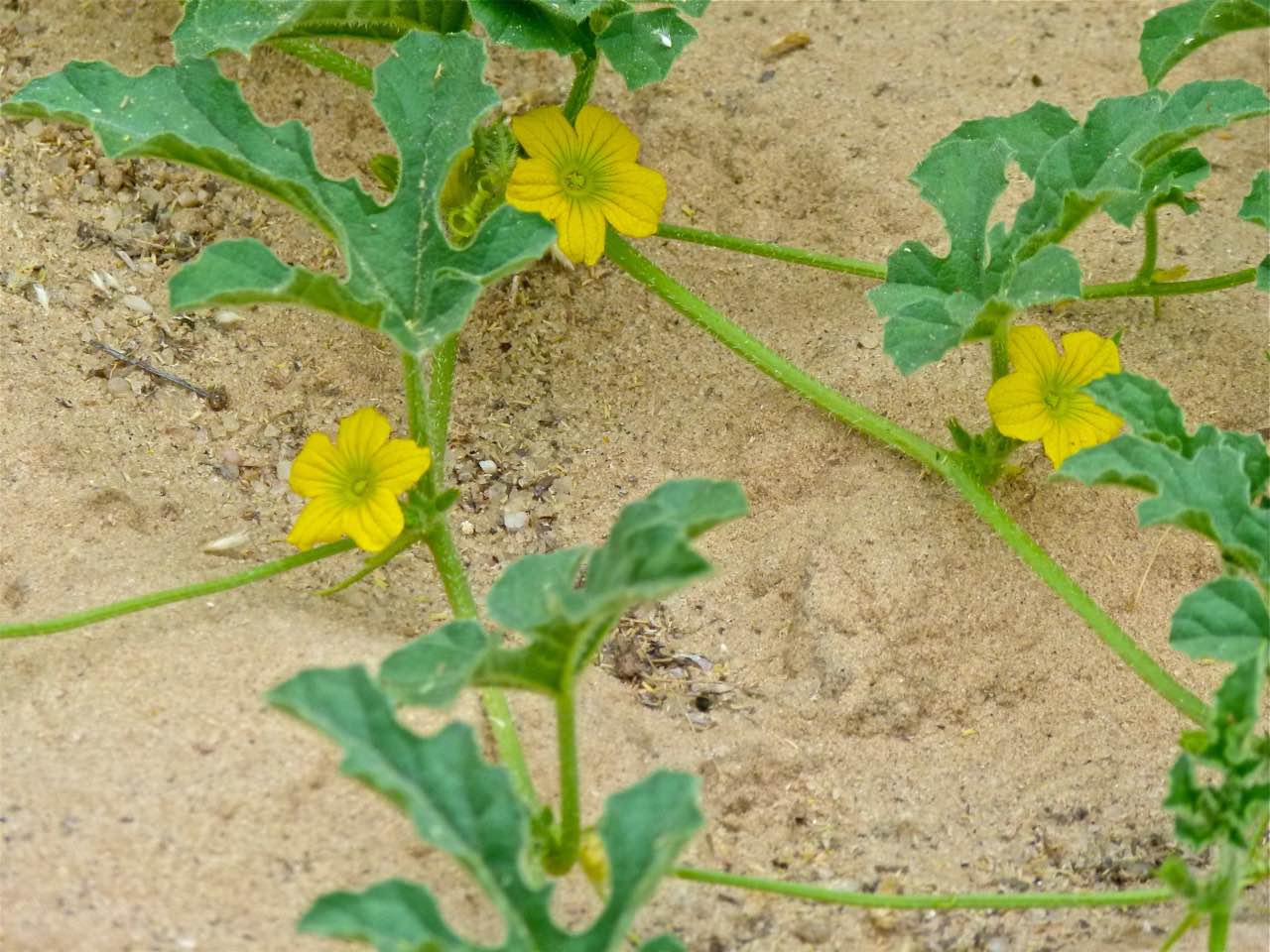
But don’t feel bad for the tsamma, because being the tough cousin turns out to be a career. Every plant breeder working on watermelons knows C. amarus as a treasure chest of hardiness. Thousands of years of surviving the Kalahari left it carrying resistances the pampered sweet watermelon simply doesn’t have — to drought, to soil-borne diseases, to root nematodes. Breeders and researchers go to wild citron melon collections precisely to borrow those genes and to graft sweet watermelons onto tougher roots.
So the relationship isn’t ancestor-and-descendant. It’s more like: the domesticated watermelon got the looks and the sugar, and its wild cousin kept all the survival skills — and now, every time a watermelon crop faces a drought or a disease, we go back and politely ask the desert relative for help. 🍉
Why this is on a good-news blog
Because it’s a story about something plain being quietly, enormously valuable — and about people noticing.
The tsamma has none of the things we normally reward a fruit for. It isn’t sweet. It isn’t pretty. It’s often bitter, its flesh is hard, and it grows flat on the sand in a place almost nobody visits. By every standard a supermarket applies, it’s a failure of a melon.
And yet: it kept people alive in the great thirst for thousands of years. It feeds gemsbok. It becomes jam and roasted snacks and a cosmetic oil that now pays rural households. It holds, in its genes, the toughness that may keep sweet watermelons growing on a warming planet. It got a name in half a dozen languages because half a dozen peoples independently worked out that this unpromising green ball was worth knowing about.
Somewhere in the Kalahari right now, in the driest month of the year, a vine nobody planted is holding out a canteen to anyone who walks by. The world is full of things like this — plain, overlooked, and quietly indispensable. Most of them are waiting to be noticed. 🍈💛
Know a humble plant that’s secretly holding up an entire ecosystem? Sign the guestbook and tell us about it. 🌍


