

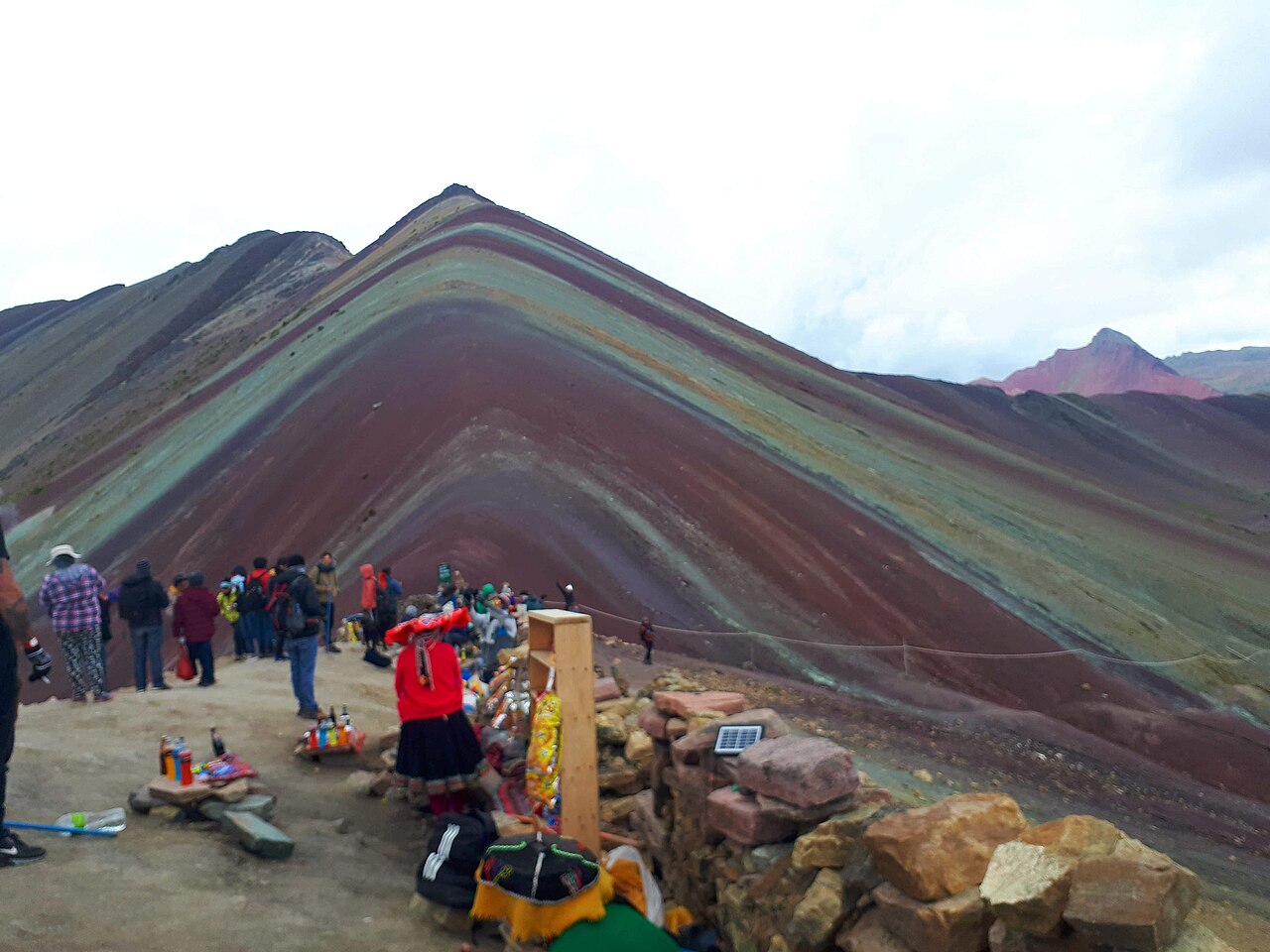
Somewhere above the city of Cusco, Peru, past the last village and well past the point where the air gets thin enough to make you dizzy, there is a mountain that looks like it was colored in with crayons. Bands of rust-red, mustard-gold, mint-green, and soft lavender run across the slopes in tidy diagonal stripes, as if the whole ridge were a layer cake someone forgot to frost. It’s called Vinicunca — and the locals’ name for it is even better: Montaña de Siete Colores, the Mountain of Seven Colors. 🌈
Okay, but why is it striped?
Here’s the wonderful part: those colors aren’t painted on, and they aren’t a trick of the light. They’re the actual rock, and each band is a different mineral that’s been sitting there, layer on layer, for millions of years.
The reds and pinks are iron oxide — basically the same rust you’d find on an old bike, just on a geological scale. The greenish bands come from copper- and chlorite-rich minerals. The yellows and golds are iron sulphides. Whites are sandstone and clay. Stack all of that up over deep time, tilt the whole pile sideways as the Andes heaved upward, and then slice through it with weather and wind, and you get stripes — a cross-section of the planet’s own diary, stood up on end for you to read. ⛏️
It was hiding under the snow this whole time
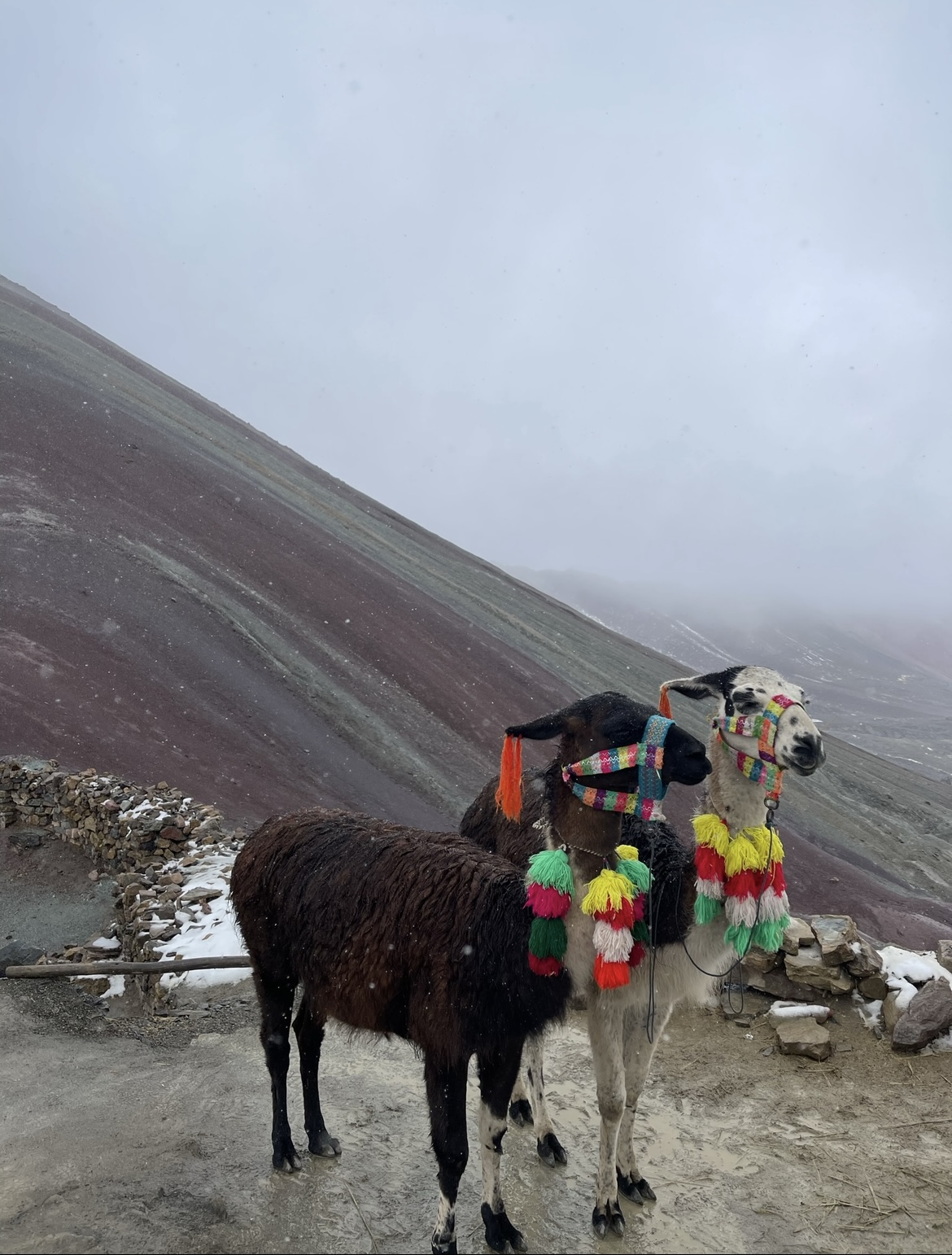
Now for the genuinely lovely twist. Vinicunca is not some long-celebrated landmark with centuries of postcards. For most of living memory it was just… white. The whole ridge sat under a cap of snow and ice, and nobody outside the nearby herding communities had any reason to climb up and look.
Then the snowcap retreated, the ice pulled back, and the colored rock underneath emerged into the daylight — a hidden rainbow that had been waiting under the snow the entire time. Word got out only in the last decade or so, and now thousands of people make the trek up to see it.
The climb will absolutely humble you
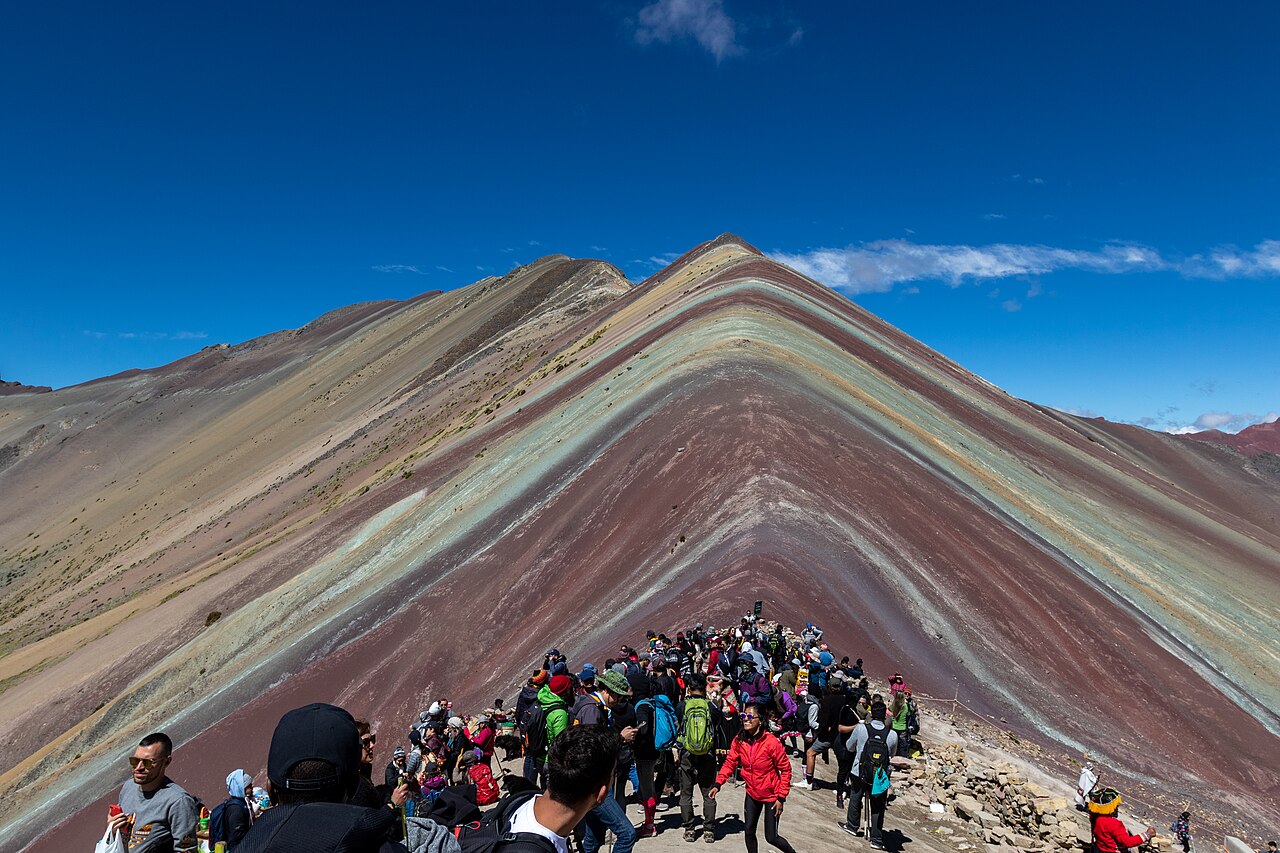
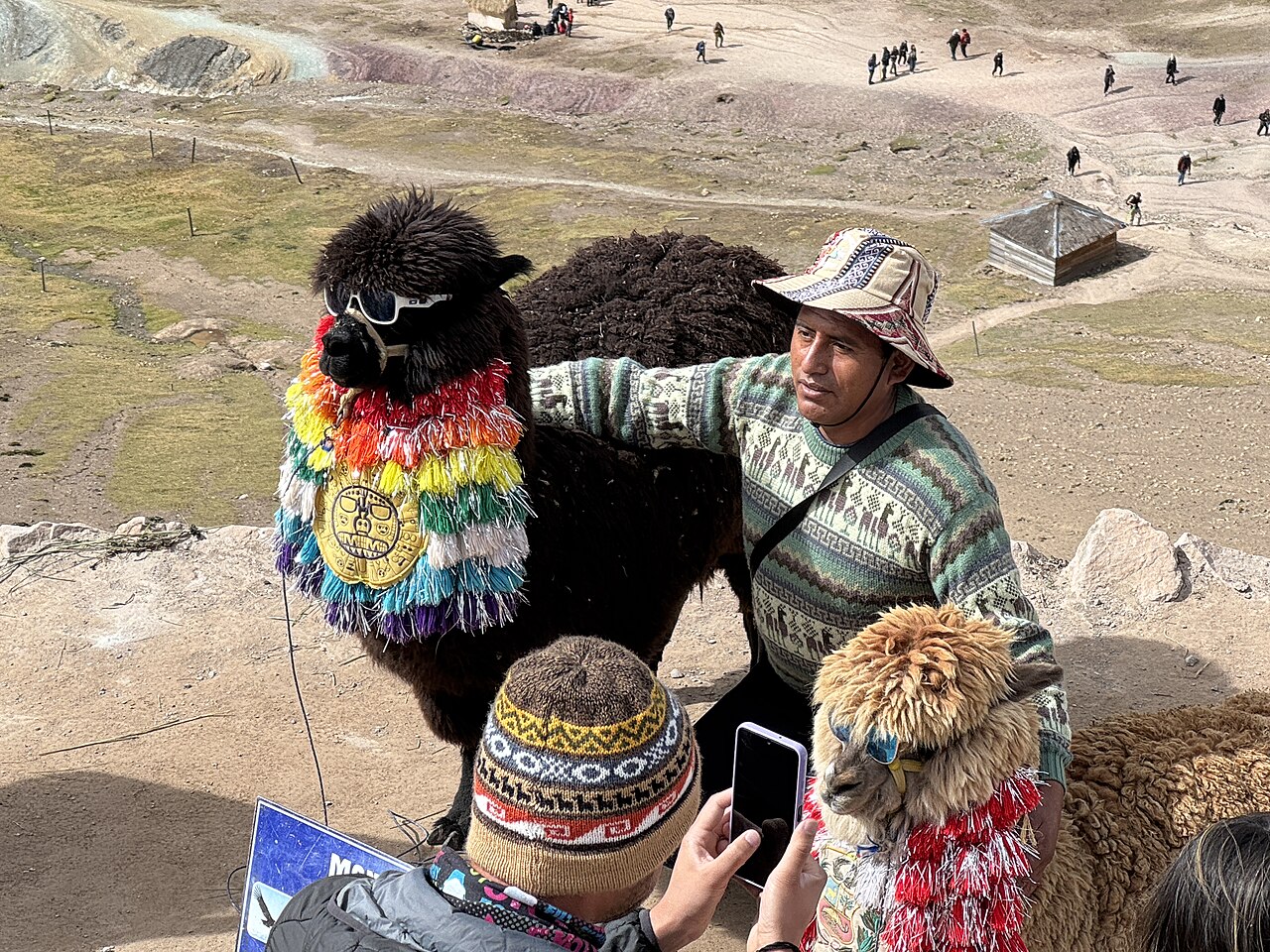
Let’s be honest about the altitude. Vinicunca’s viewpoint sits higher than almost any mountain in the lower 48 United States. The hike itself isn’t long, but at over five kilometres up, the air holds about half the oxygen you’re used to, and even gentle uphill steps leave you puffing like you sprinted. Most visitors spend a few days acclimatizing in Cusco first, sip coca tea, and walk slowly. 🫁
The reward for all that wheezing isn’t only the striped mountain. Just over the ridge lies the Red Valley — an entire basin glowing deep crimson, like the mountain spilled its reddest stripe across the whole landscape.
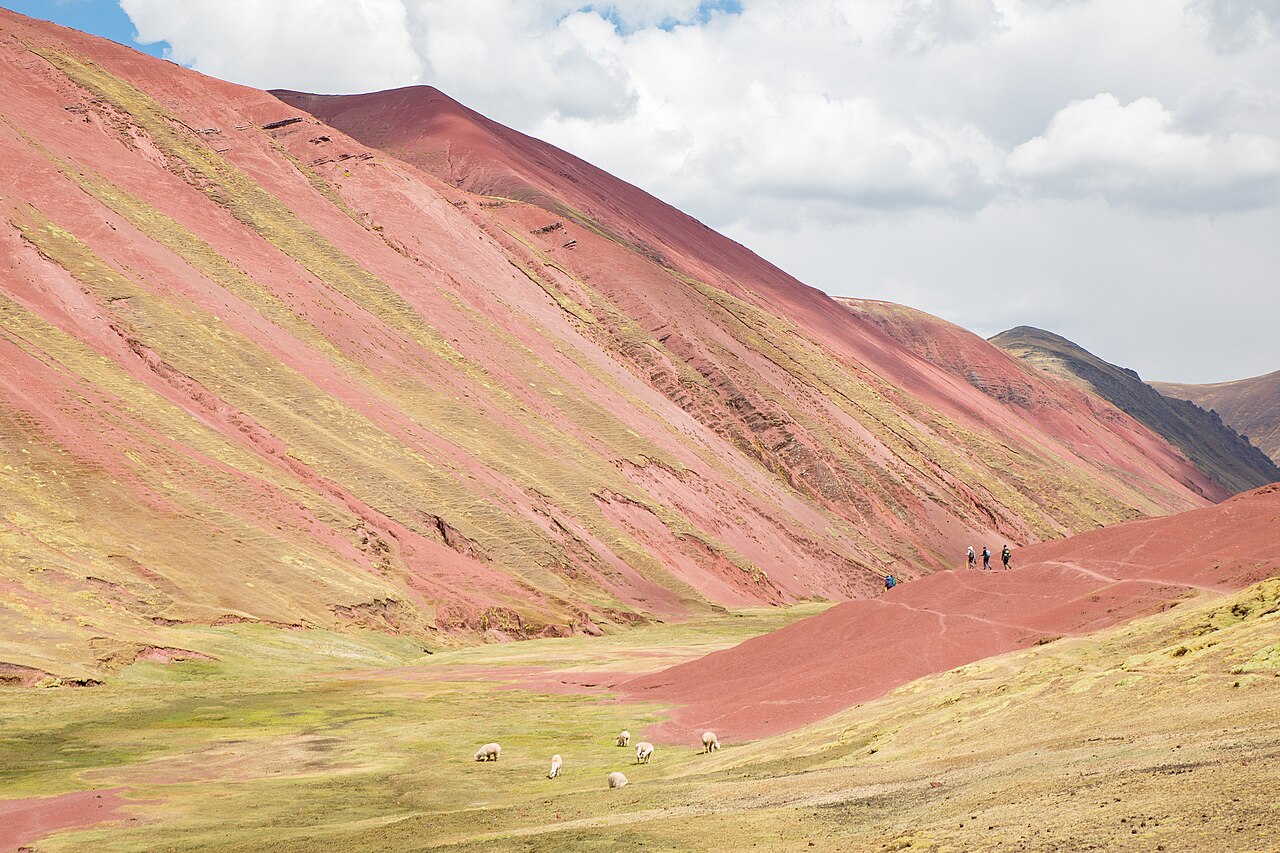
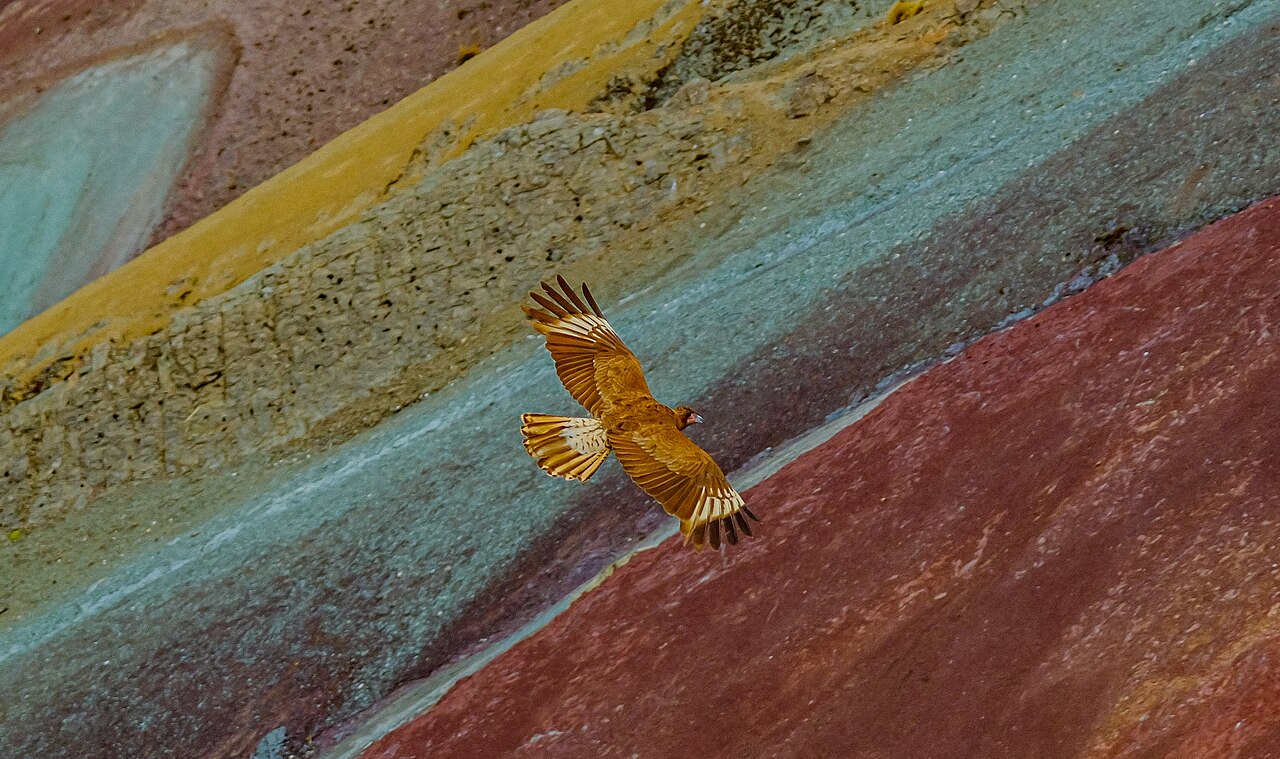
And if you’re lucky and you look up, you might catch an Andean condor — one of the largest flying birds on Earth — riding the thermals high above the color.
Why this lives on a good-news blog
Because Vinicunca is a reminder that the planet is still keeping secrets — beautiful ones — and once in a while it hands one over. Nobody designed this mountain. No artist painted it, no committee approved the colors. Iron and copper and sulphur and a few million patient years did all the work, and then a sheet of snow stepped aside and let us see it.
To the Quechua communities who’ve lived in its shadow for generations, the surrounding peaks are Apus — sacred mountain spirits — and you can feel why. You climb until you can barely breathe, you turn a corner, and the Earth is wearing every color it owns. The world, it turns out, is also doing this: quietly storing up wonders under the ice, waiting to surprise us. Walk slow, breathe deep, and look up. 🌈💛


