

Somewhere under the green hills of New Zealand’s North Island, you can step into a small wooden boat, let your guide pull you along a rope through the pitch dark, look up — and see a sky full of stars. Except they’re not stars. They’re thousands of tiny living lights, and the whole glittering galaxy overhead is made of glowworms. Welcome to Waitomo. ✨
So… what is a glowworm?
Here’s the delightfully humble truth: the “stars” of Waitomo are the larvae of a small fly. The species — Arachnocampa luminosa — lives only in New Zealand, and in its glowing larval stage it produces a genuine, chemical, cool blue-green light through bioluminescence: the same kind of reaction that lights up fireflies and deep-sea fish.
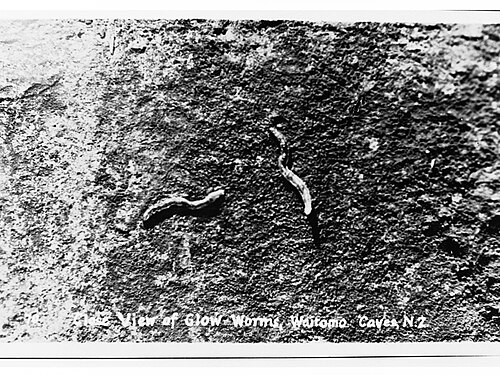
And the glow isn’t just for show — it’s a trap. Each glowworm hangs dozens of sticky silk threads, like tiny beaded fishing lines, and its light lures insects straight up into them. The hungrier a glowworm is, the brighter it glows, because it’s trying harder to catch dinner. So when you look up at that shimmering ceiling, you are technically looking at a few thousand very patient little predators, all advertising. Nature is metal and beautiful. 🎣
The boat ride you’ll never forget
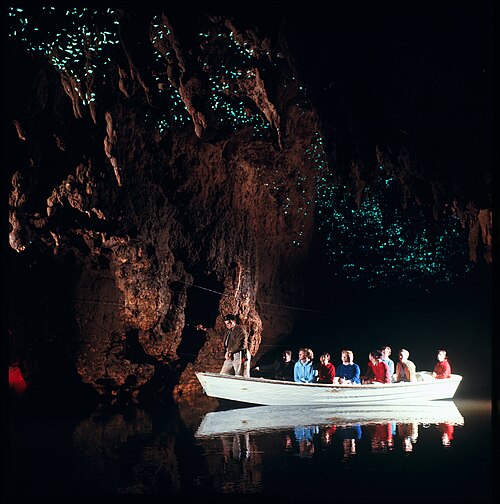
The famous part is the Glowworm Grotto. You board a small boat at an underground jetty, and your guide pulls it silently along by a fixed rope — no motor, because noise and bright light make the glowworms dim. Phones away. Voices off. And then you drift out under the open cavern and the ceiling erupts in cold blue light, mirrored in the black water below until you genuinely can’t tell which way is up.
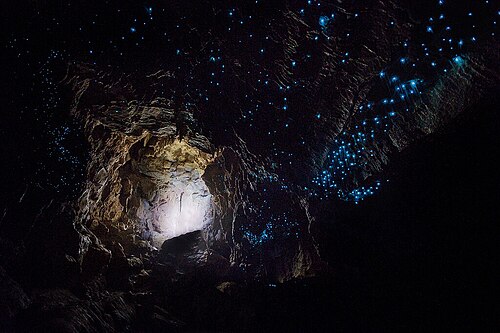
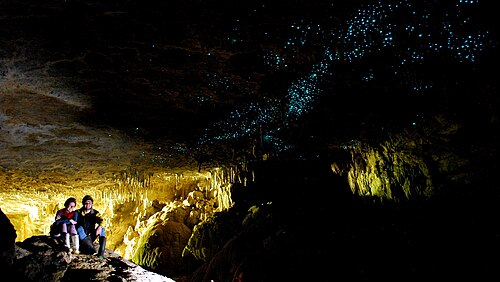
People describe it in whispers afterward, if at all. It’s the rare tourist attraction where the whole room goes reverently, instinctively quiet.
A 30-million-year-old cathedral
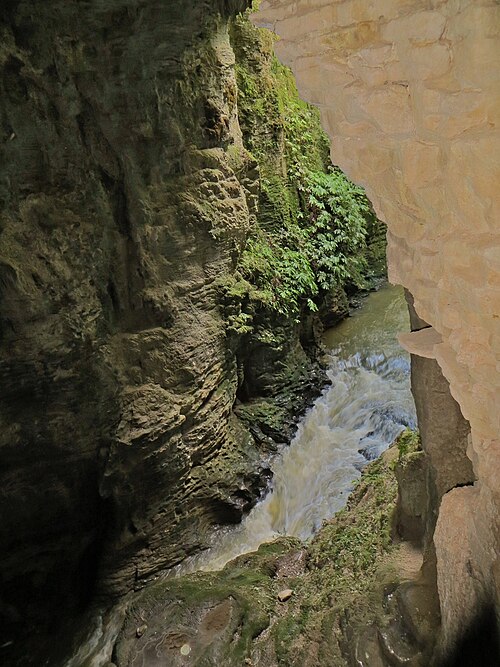
The glowworms get top billing, but the cave they live in is a marvel on its own. Waitomo is limestone — laid down on an ancient seabed and slowly carved by water over roughly 30 million years into chambers, ribs, and columns. One vast room is even known as the “Cathedral” for its soaring acoustics; choirs and the odd opera singer have performed in it.
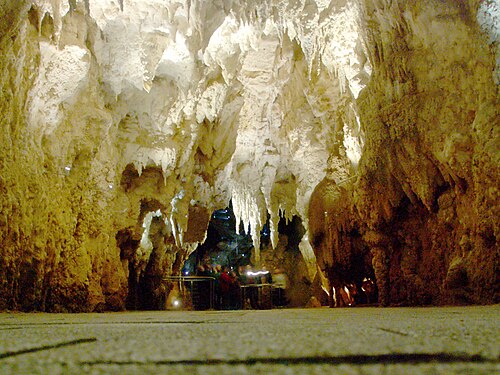
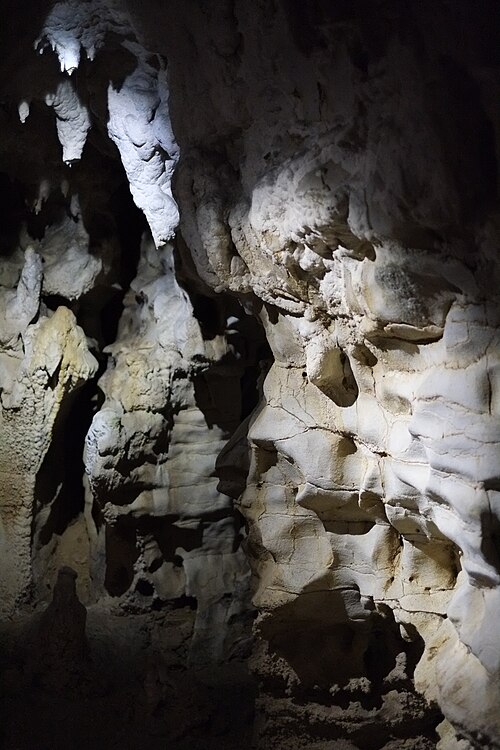
The people part (the best part)
Waitomo isn’t just a natural wonder — it’s a really good human story. The caves were first properly explored in 1887 by local Māori chief Tāne Tinorau and English surveyor Fred Mace, who floated in on a raft of flax stems with candles, following the underground stream into the dark. By 1889 Tāne Tinorau had opened the caves to visitors and was guiding tours himself.
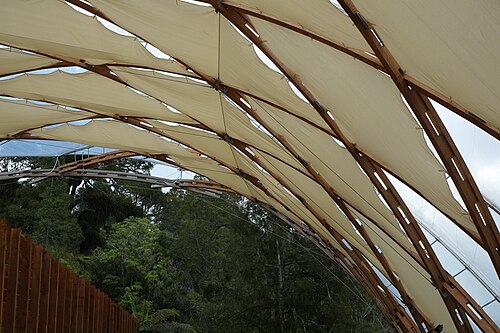
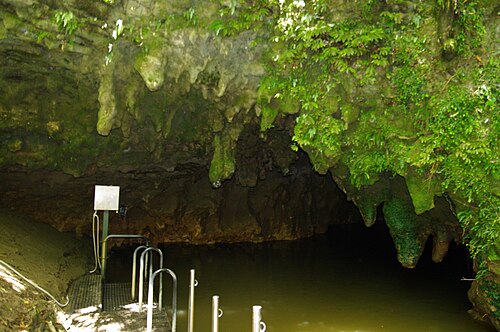
And here’s the lovely turn: in 1989, the caves and the land were officially returned to the descendants of Tāne Tinorau and his wife Huti, who help run and guide them to this day. The wonder stayed in the family.
You go in expecting a tourist trap and come out having sat in total silence under a ceiling of living stars. Not many places can do that to a person.
Why this lives on a good-news blog
Because Waitomo is a stack of quiet wonders, one on top of another: a creature that turns hunger into starlight, a cave that water spent 30 million years sculpting, and a family that explored it by candle, shared it with the world, and got it back. It asks almost nothing of you — just that you be still and look up — and in return it hands you a memory you’ll be describing in a hushed voice for the rest of your life.
The world is full of glowing little miracles, some of them literally on the ceiling of a cave in New Zealand. Go quiet. Look up. ✨💛


