

In December 2021 we did something genuinely insane, in the best possible way. We folded up the most complex telescope ever built — origami-style, because it was too big to fit in a rocket any other way — launched it, and then made it unfold itself in deep space across 344 separate steps, any one of which could have killed the whole mission. There was no repairman a million miles out. It just had to work.
It worked. All of it. 🔭
The numbers are absurd
Its mirror is plated in real gold (gold reflects infrared beautifully), it’s shaded by a tennis-court-sized sunshield so it can run colder than almost anything in the universe, and it sits at a gravitational sweet spot called L2, quietly staring into the dark.
The picture that broke everyone’s brain
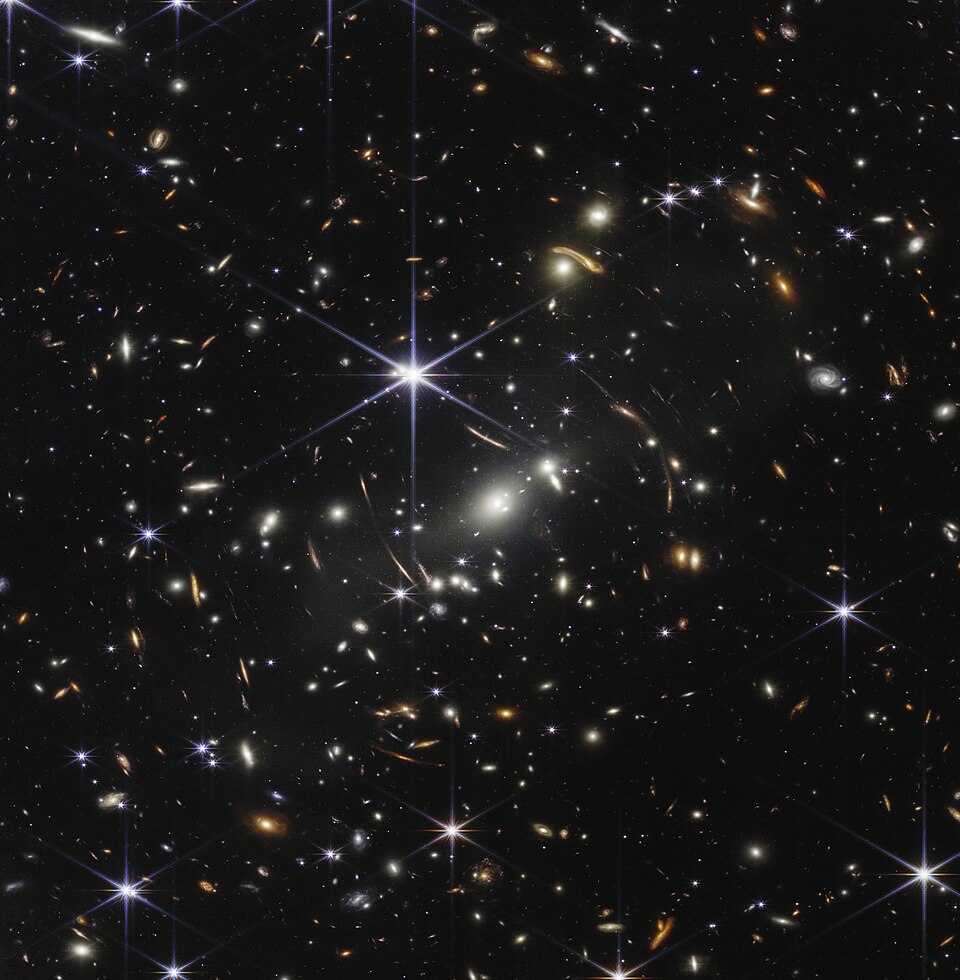
Early on, the team pointed Webb at a patch of sky so small you could cover it with a grain of sand held at arm’s length — a spot chosen because it looked, to us, basically empty.
It was not empty. It was packed with thousands of galaxies, some of them shining from over 13 billion years ago — light that left home before the Earth, the Sun, or you existed, finally landing on a gold mirror we built and flung into the cold.
Every tiny smudge in that image is not a star. It’s an entire galaxy. Hundreds of billions of suns each. In a piece of sky we thought had nothing in it.
Why this is on a good-news blog
Because it’s proof of the best version of us. Thousands of people across dozens of countries spent decades and never gave up on a machine most of them would never touch again once it launched — all to answer a question with no practical payoff except wonder. “What’s out there? How did it begin?”
And the universe answered: more than you imagined, and it’s beautiful. We are very small, on a tiny blue world, and we built a golden eye to look at the dawn of everything — and it’s sending the pictures home. 🔭💛


