

Some snacks in this series are dares — a shark buried until it stops being poison, a can that bulges before you open it. Today’s is the gentle opposite. Today’s is a plain-looking green grape that, the moment it hits your tongue, does something genuinely startling: it tastes like cotton candy. 🍬
Not “sort of.” Not “if you squint.” People bite one expecting grape and get a mouthful of fairground spun sugar, with a soft vanilla note underneath — and then immediately reach for a second to check they didn’t imagine it. And here’s the wonderful part, the part that makes this a good-news story instead of a chemistry warning: there is nothing added. No flavouring sprayed on, no genetic engineering, no dye. The cotton-candy taste is simply grown into the fruit. 🍇
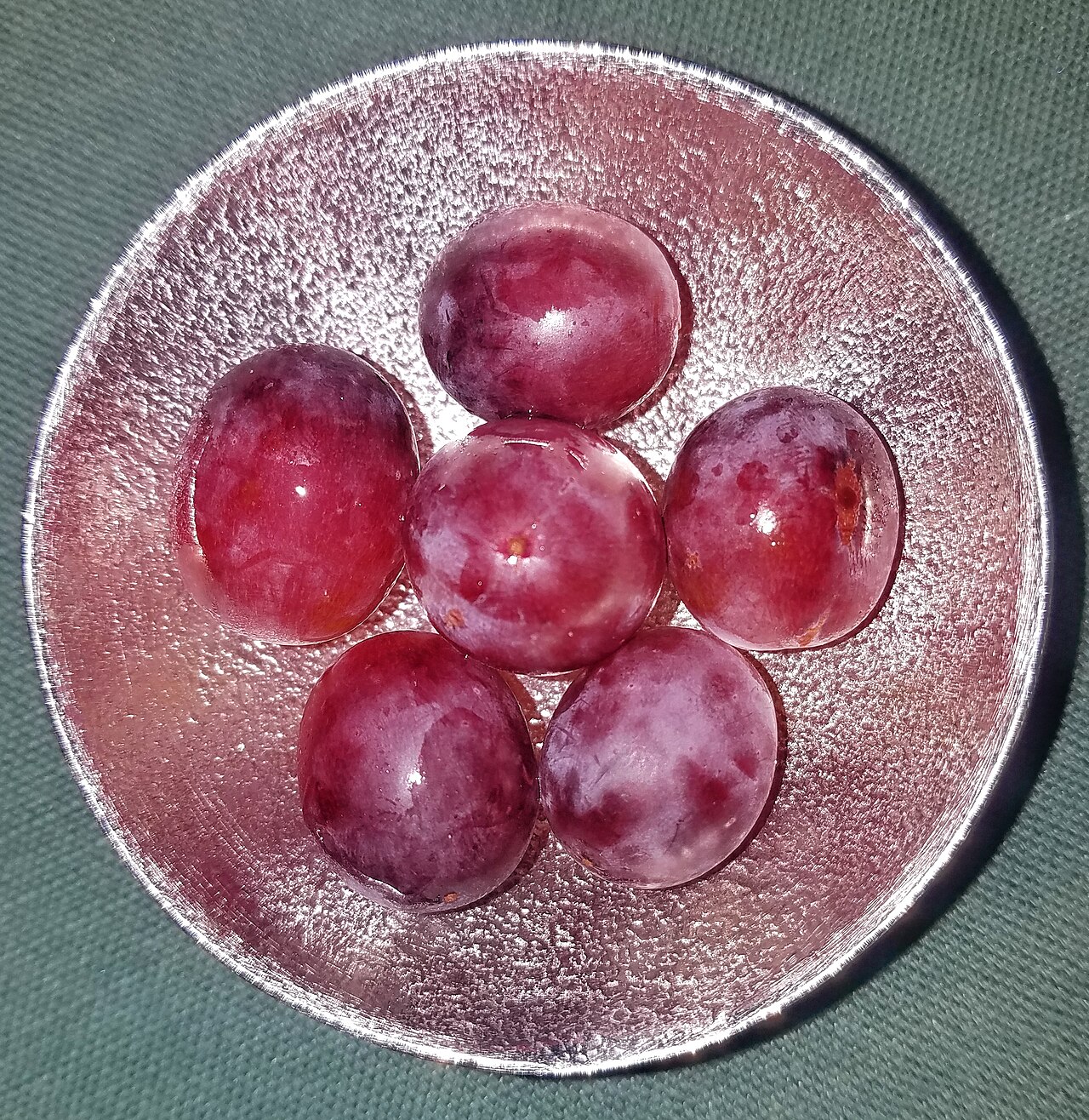
Wait — how is that even a grape?
It really is just a grape. The cotton-candy variety is real fruit made by conventional cross-breeding — the same patient, centuries-old method that gave us seedless watermelons and sweeter strawberries. Pollen from one grape’s flowers gets brushed, by hand, onto another grape’s flowers. Seeds grow. You plant them, taste what comes up, and keep the best ones. No lab-made genes, no artificial flavouring bottle anywhere in sight.
The reason it tastes the way it does is that one of its ancestors already tasted like that. Some grape varieties — the Concord family, the kind behind old-fashioned grape jelly and juice — carry a naturally sweet, almost candy-like flavour. The problem is they tend to be fragile, thin-skinned and full of little seeds, which is not what you want rattling around a lunchbox. So the whole trick was to take that lovely flavour and move it into a sturdy, crisp, seedless grape you’d actually want to eat by the handful.
The man who chased the flavour for twelve years
The person who pulled it off is a horticulturist named David Cain, a former USDA researcher who co-founded a small fruit-breeding company, International Fruit Genetics, in Bakersfield, California. The story goes that a few months after starting the company, he was at a trade show where University of Arkansas researchers were showing off grapes — and one of them, a purple Concord-type, tasted sweet like cotton candy. Fragile, seedy, impractical… but delicious. He licensed it and got to work.
“Work,” in grape-breeding terms, means something almost heroic in its patience. Cain and his team hand-pollinated grape after grape, crossing that sweet-but-flimsy grape with firmer California varieties, then growing the seedlings — roughly a hundred thousand of them, in test tubes, over about twelve years — just to find the handful that were both sturdy and still tasted like a carnival. Twelve years. A hundred thousand plants. For a grape. 🔬
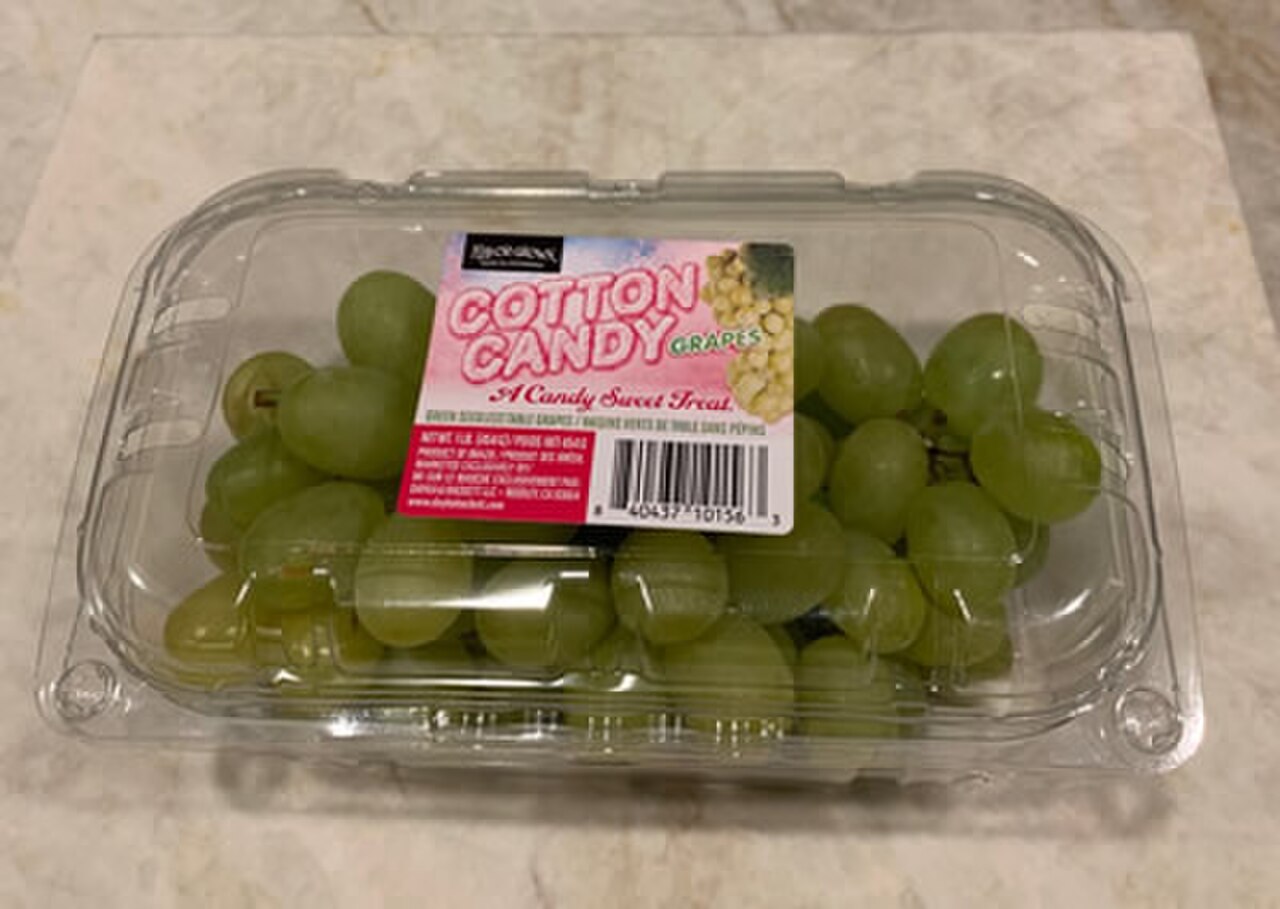
Just how sweet are we talking?
Sweetness in fruit is measured on a scale called Brix. A normal table grape lands around 17 to 18 Brix. The cotton-candy grape comes in at 19 to 20 — noticeably sweeter, though the growers are quick to point out it’s still within the natural range of grape sweetness, not some sugar bomb. It carries a little under two extra grams of sugar per 100 grams compared to a regular grape.
That modest extra sweetness, plus that faint vanilla character, is enough to flip a switch in your brain. Our sense of taste is suggestible like that: get the sugar and the vanilla note in the right proportion and the mind happily fills in cotton candy, even though you’re eating something that grew on a vine in the sun.
From one California vineyard to the whole world
The grower Grapery, in California, first put them on shelves in 2011, and word spread the way delicious surprises do. Today the same variety is grown across an almost improbable spread of the planet — Peru, Spain, Italy, Chile, Brazil, South Africa, Australia, Egypt and Mexico — so that somewhere, in some hemisphere’s summer, the vines are always in season. Which is why a fruit that took twelve years to invent now turns up, quietly, in an ordinary supermarket, next to the ordinary grapes.
(A small note for the curious: “Cotton Candy®” is a registered trademark for this particular cultivar — so on this blog we’ll just call them the generic thing they are, cotton-candy grapes. Same fruit, no lawyers.)
Why this is on a good-news blog
Because it’s a tiny monument to patience and delight for their own sake. Nobody needed a grape that tastes like a fairground. It cures no disease and feeds no famine. It exists because one person tasted something wonderful at a trade show, thought the whole world should get to taste this, and then spent twelve years and a hundred thousand plants making it come true — using nothing fancier than a paintbrush of pollen and an enormous amount of not-giving-up.
The result is that a child somewhere is going to bite into a plain green grape this week, get a mouthful of cotton candy, and look up in complete astonishment. That astonishment was grown on purpose, one careful cross at a time. The world does that kind of thing more often than you’d think. 🍇💛
Got a gloriously improbable snack from your corner of the world? Sign the guestbook and tell us. Catch up on the series any time: Vol. 1, Vol. 2, Vol. 3, and Vol. 4. 🍬


