

Here is a dessert that hands you a small, beautiful work of architecture — and then, by its very name, orders you to demolish it.
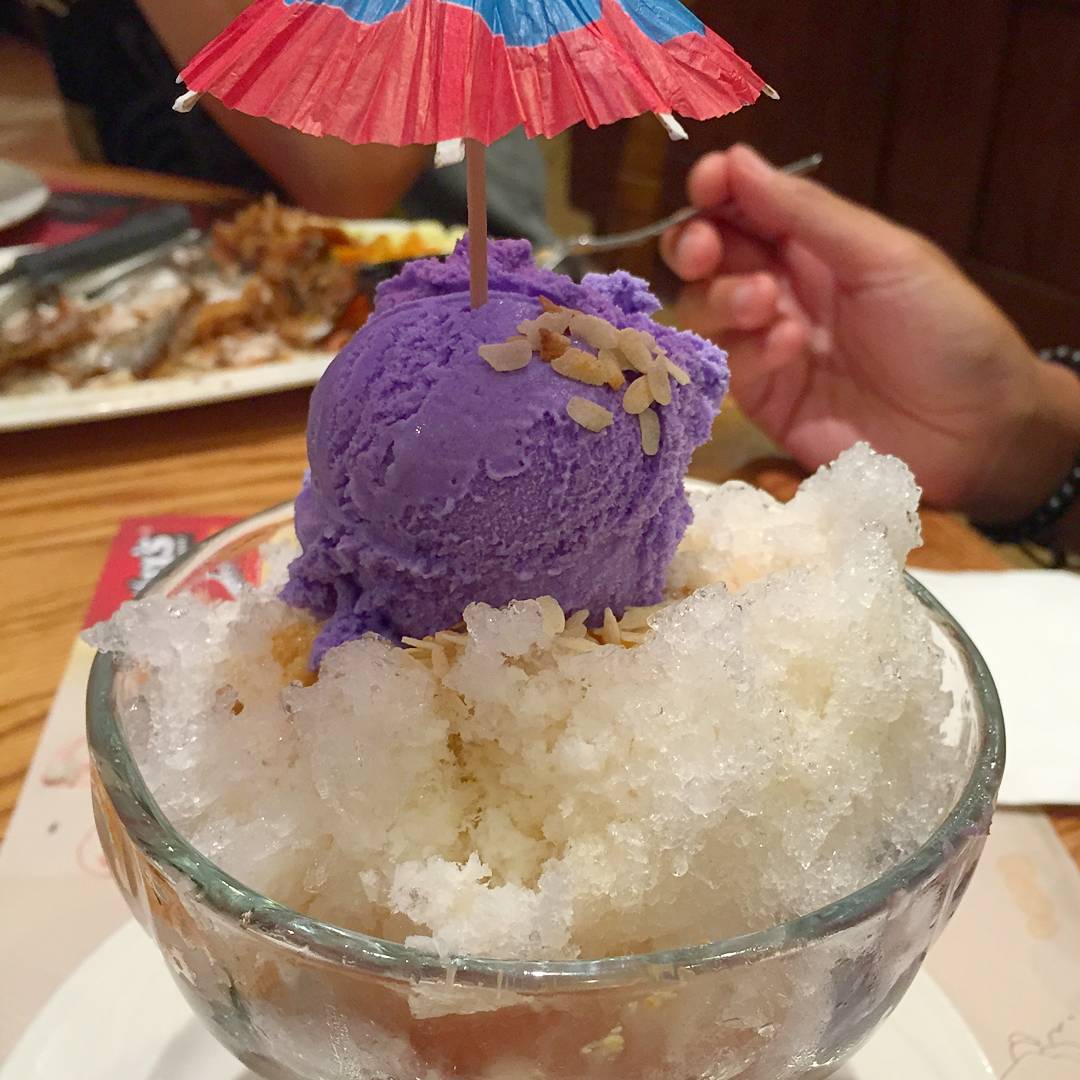
It arrives in a tall glass or a wide bowl, built in careful strata: sweet beans and jellies and fruit at the bottom, a snowdrift of shaved ice in the middle, and then, on top, the showstoppers — a quivering slab of leche flan, a spoonful of ube halaya (purple-yam jam), and a scoop of ice cream so purple it looks photoshopped. Somebody pours a stream of cold evaporated milk over the whole thing at the table. For about four seconds, it is the most photogenic object you have ever been served. 🍧
Then you read the name. Halo-halo. In Filipino it means, more or less, mix-mix — and it is not describing the dessert so much as telling you what to do with it. So you take your long spoon, and you stir the masterpiece into a lilac-coloured landslide of ice and beans and flan and fruit, and that — the rubble, not the parfait — is the thing you actually eat. 🥄
The name is the recipe
Most desserts have a name that describes what they are. Halo-halo is named for what you do. The word is a doubling of the Filipino verb halò, “to mix” — Filipino loves this trick of repeating a word to intensify it, and here the repetition turns a plain instruction (“mix”) into a whole dessert (“mix-mix,” the well-and-truly-mixed thing). The official dictionary even prefers the spelling haluhalò.
Which means the joy is baked into the concept. You are not being messy or impatient when you smash your lovely layered glass into slush — you are following directions. The dessert was designed to be undone. There is something wonderfully freeing about that: a food that looks precious and formal and then, in its own name, gives you permission to make a happy mess of it.
Everything, all at once, on purpose
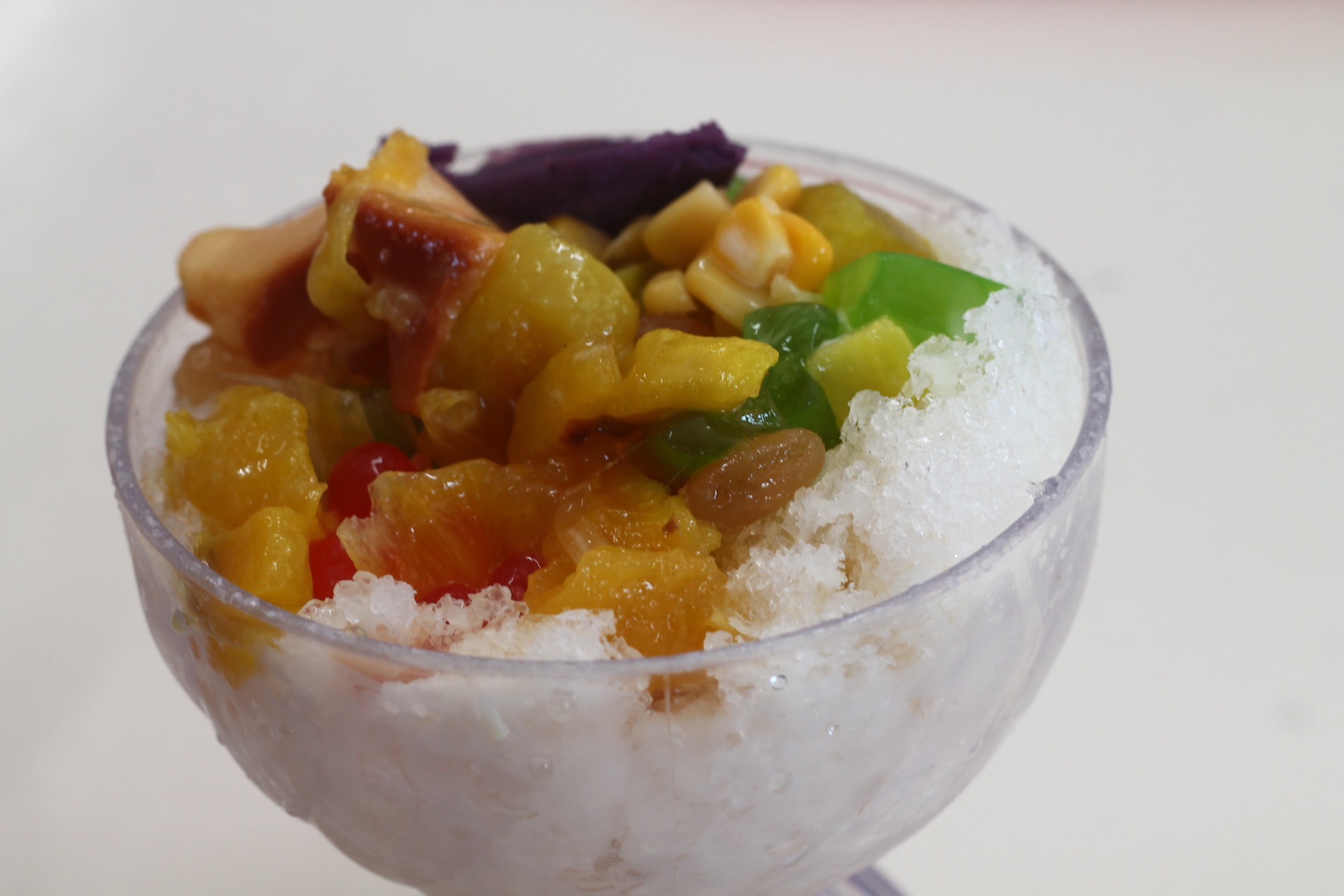
Pull a halo-halo apart (before you mix it) and the ingredient list reads like someone raided an entire sweet shop and refused to choose. There is no standard recipe — that’s the whole point — but a well-loaded cup might contain any joyful subset of:
- Sweet beans — red kidney beans or garbanzos, simmered in syrup 🫘
- Kaong — the translucent fruit of the sugar palm
- Nata de coco — chewy little cubes of fermented coconut gel
- Macapuno — soft “coconut sport,” a naturally jelly-fleshed coconut
- Gulaman — bouncy agar jellies in traffic-light colours 🟢🔴
- Sago and tapioca pearls
- Langka — ribbons of sweet jackfruit
- Minatamis na saging — saba bananas cooked in syrup
- Kamote — sweet potato in syrup
- Sweet corn — yes, corn, and it is delightful 🌽
- Pinipig — young rice, pounded flat and toasted, for crunch
…and then, crowning it, the leche flan, the ube jam, and the ice cream. It should be chaos. Instead it’s a marvel of texture: creamy and icy and chewy and crunchy and syrupy all in one cold spoonful, no two bites quite the same. It’s a dessert that behaves like a whole buffet that happens to fit in a glass.
There’s an order to the chaos
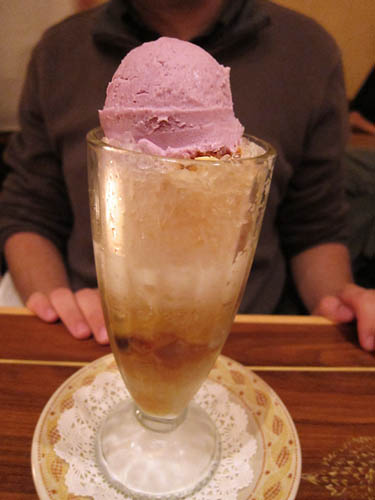
Here’s the lovely secret: as freewheeling as halo-halo is, it’s assembled with real care. The sweet things go in a specific order. Fruit, beans and preserves settle at the bottom of the glass. Shaved ice piles on top of them. Then the finery — flan, ube halaya, ice cream, or all three — crowns the summit, and the evaporated milk gets poured over everything the moment it’s served, so it’s still cold and crisp when it reaches you.
That layering is actually the dessert’s biggest departure from its ancestor. In the older Japanese-style version, the good bits sat on top of the ice; halo-halo tucks them underneath, waiting. So when you plunge your spoon down and stir, you’re not just mixing — you’re excavating, dragging all that hidden treasure up through the ice and milk into one uniform, purple-tinged, impossible-to-photograph, absolutely delicious mush. The beautiful version is for your eyes. The mixed version is for you. 💜
A dessert that started with a bowl of beans
The origin story is as gentle as the dessert. Halo-halo traces back to pre-war Japanese migrants in the Philippines and to kakigōri, the Japanese shaved-ice treat. One of its earliest ancestors was a humble thing called mongo-ya, or monggo con hielo: simply sweetened mung beans spooned over crushed ice with milk and sugar. That’s it. Beans, ice, milk. Some authors place it specifically among the Japanese vendors around the Quinta Market in Quiapo, Manila, in the 1920s and 1930s — handily close to the Insular Ice Plant, the city’s big ice supply, built back in 1902.
From that modest bowl of beans-and-ice, generation after generation kept adding: a native fruit here, a coloured jelly there, a coconut sweet, a scoop of ice cream, a slab of flan — until the plain little snack bloomed into the maximalist, technicolour, mix-it-yourself glass that Filipinos now call, unofficially but almost universally, the national dessert. It got there not by anyone’s grand plan, but by a hundred years of small, delicious additions.
Merienda, the whole point of the afternoon
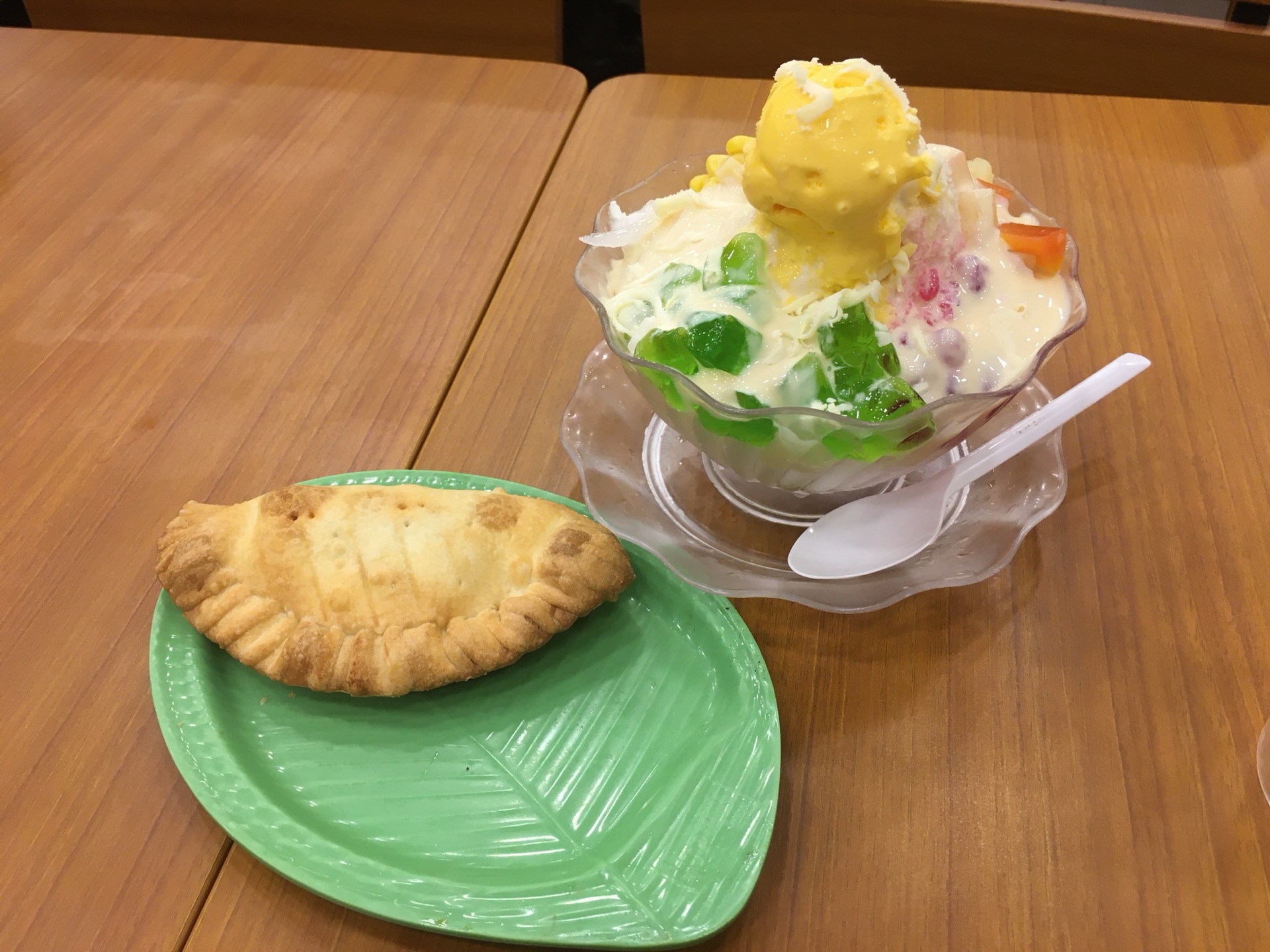
In the Philippines halo-halo is high summer in a glass, and it’s the star of merienda — that civilised institution of the mid-afternoon snack. It turns up at carinderias, mall stalls, fast-food chains and home kitchens, often alongside something savoury: a warm empanada, say, so you get the crisp-and-salty and the cold-and-sweet in the same happy sitting. Nobody agrees on the “best” version, because the best version is simply the one your particular corner of the country makes — heavier on the ube, or the beans, or the corn, tuned over years to the people who keep coming back for it.
Why this is on a good-news blog
Because halo-halo is a small, cold monument to the idea that you don’t have to choose.
Most desserts make you pick a lane — chocolate or fruit, creamy or icy, one flavour done well. Halo-halo looked at that whole premise and said: why not all of it, in one glass, and stirred together besides? It’s a dessert built entirely out of generosity — a century of people adding one more good thing, a vendor loading in one more scoop, a name that hands you a spoon and cheerfully tells you to make a beautiful mess.
Somewhere in the Philippines right now it’s hot, and someone is plunging a long spoon into a tall glass, watching the purple bleed down through the ice, mixing their gorgeous parfait into rubble on purpose — and grinning about it. The world does that kind of thing more often than you’d think. 🍧💜
Got a gloriously improbable snack from your corner of the world? Sign the guestbook and tell us. Catch up on the series any time: Vol. 1, Vol. 2, Vol. 3, and Vol. 4. 🥄


