

Somewhere on an old post road in Yamanashi, a person is sitting at a table with a raindrop in front of them.
Not a picture of one. An actual, fist-sized bead of water, sitting on a plate, holding its own shape. Light goes right through it. You can see the grain of the bamboo leaf underneath. If there were newsprint under there, you could read it.
And there is a clock running. 💧
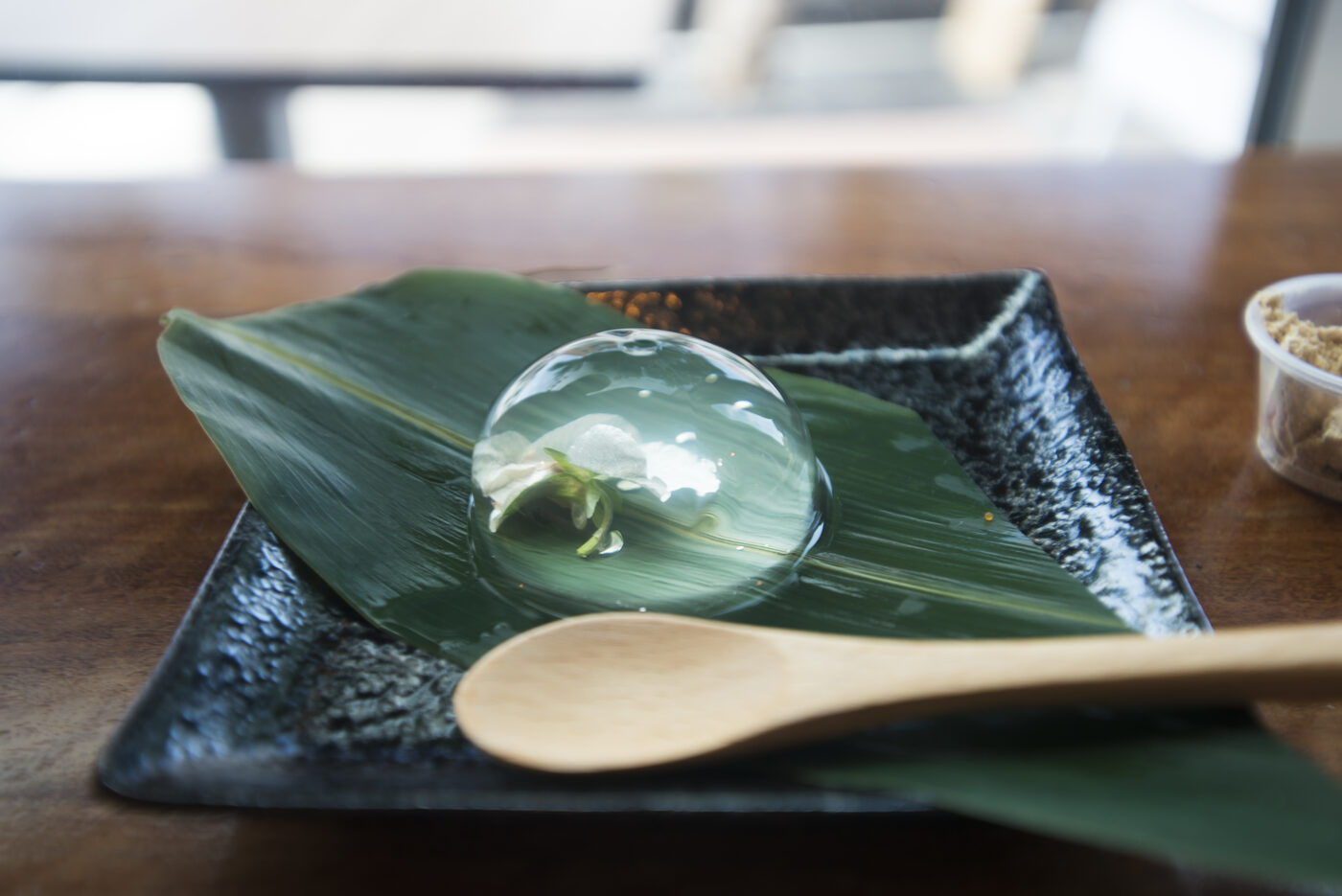
Thirty minutes, and then it’s gone
The sweet is called mizu shingen mochi (水信玄餅) — mizu meaning water — and it’s made of exactly two things: spring water and agar, the setting jelly that comes from red seaweed. Some recipes allow a whisper of sugar. That’s the entire ingredient list.
The trick is the ratio. The makers use the least agar that will hold together at all — a fraction more and you’d have an ordinary wobbly jelly; a fraction less and you’d have a puddle. Balanced right on that line, the thing is beautiful and doomed. At room temperature the water starts seeping straight back out of it. Within roughly thirty minutes it sags, weeps and gives up, and it can no longer be sold.
That is not a marketing line. It is a physical description of what is happening on the plate while you look at it. 🕰️
Which produces the genuinely lovely consequence at the heart of this whole post: you cannot have one delivered. Not next-day, not same-day, not by courier, not in a cold box with a gel pack. It cannot be posted to a friend. It cannot be brought home for someone who couldn’t come. It cannot be saved for after dinner.
If you want a raindrop cake, you go to the raindrop cake.
Where you have to go
The place is Kinseiken, a wagashi shop in Daigahara, an old staging town on the Kōshū Kaidō highway in the city of Hokuto, Yamanashi Prefecture — a bit over 130 km (80 miles) west of Tokyo, up where the ground starts seriously tilting toward the mountains.
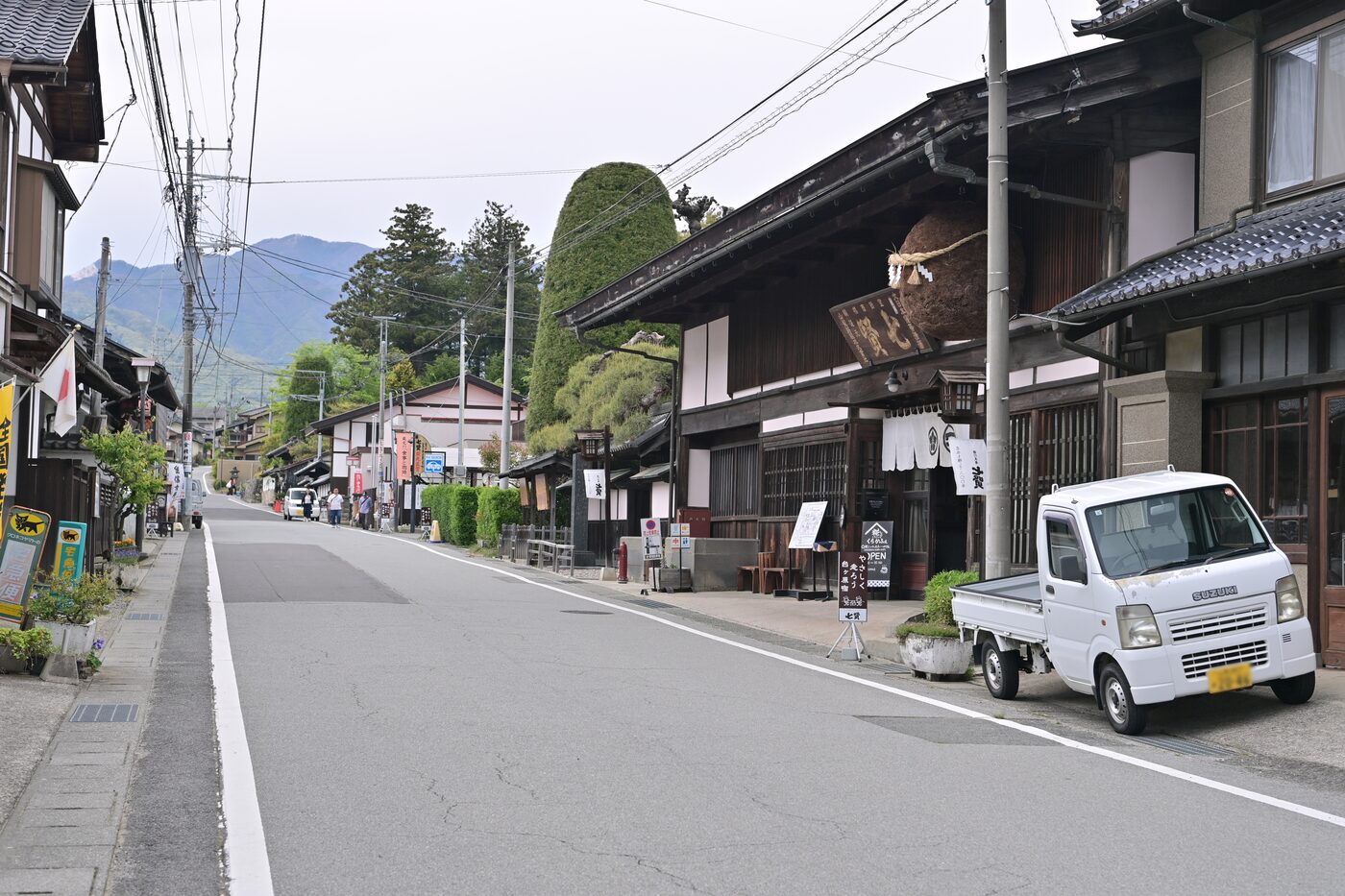
Kinseiken has been on that street since 1902, making rice-cake sweets. In 2012 one of the shop’s confectioners went looking for a way to let people taste the local water as simply as it is physically possible to taste water — because that water is the thing this district is quietly famous for. Springs at Hakushu, fed by snowmelt off Mount Kaikoma in the Southern Japanese Alps, run so clean and so faintly sweet that the area is one of Japan’s largest mineral-water producers and the reason there’s a whisky distillery down the road.
Her answer was to add the smallest possible pinch of seaweed to it and put it on a plate.
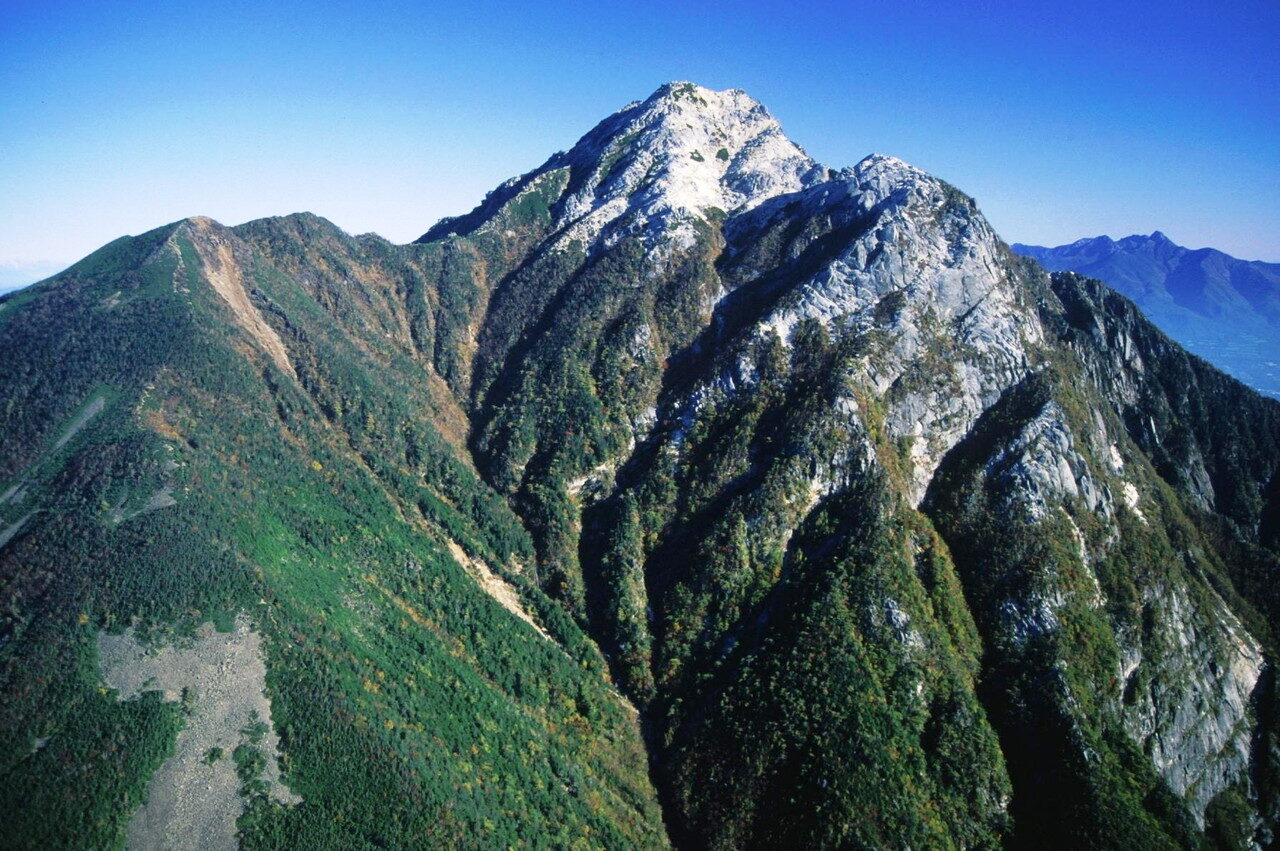
It went on sale in 2013, the internet found it in 2014, and Yamanashi has had a queue ever since.
Even now the shop keeps it deliberately, almost stubbornly small: mizu shingen mochi is made only at two Kinseiken branches, only in summer (June to September), and only on weekends. Everything about it is a scheduling problem. That is sort of the joke, and sort of the point.
Now the honest part: it tastes of water
Here is the bit that a less generous write-up would treat as the gotcha. Ready?
It barely tastes of anything.
It’s water. Very good water, faintly sweet, from a mountain — but water. Put a spoonful on your tongue and it collapses instantly into exactly what it is. There is no flavour reveal, no centre, no surprise.
And that is not the dessert failing. That is the dessert working. 🌿
The flavour is deliberately outsourced to the two things sitting next to it on the dish: kinako, roasted soybean flour, which is nutty and toasty and tastes a bit like the ghost of peanut butter; and kuromitsu, a dark unrefined-sugar syrup with a molasses depth to it. You spoon through the drop, drag it through the powder and the syrup, and eat all three at once. The kinako and the kuromitsu bring the taste. The raindrop brings the texture and the disappearing.
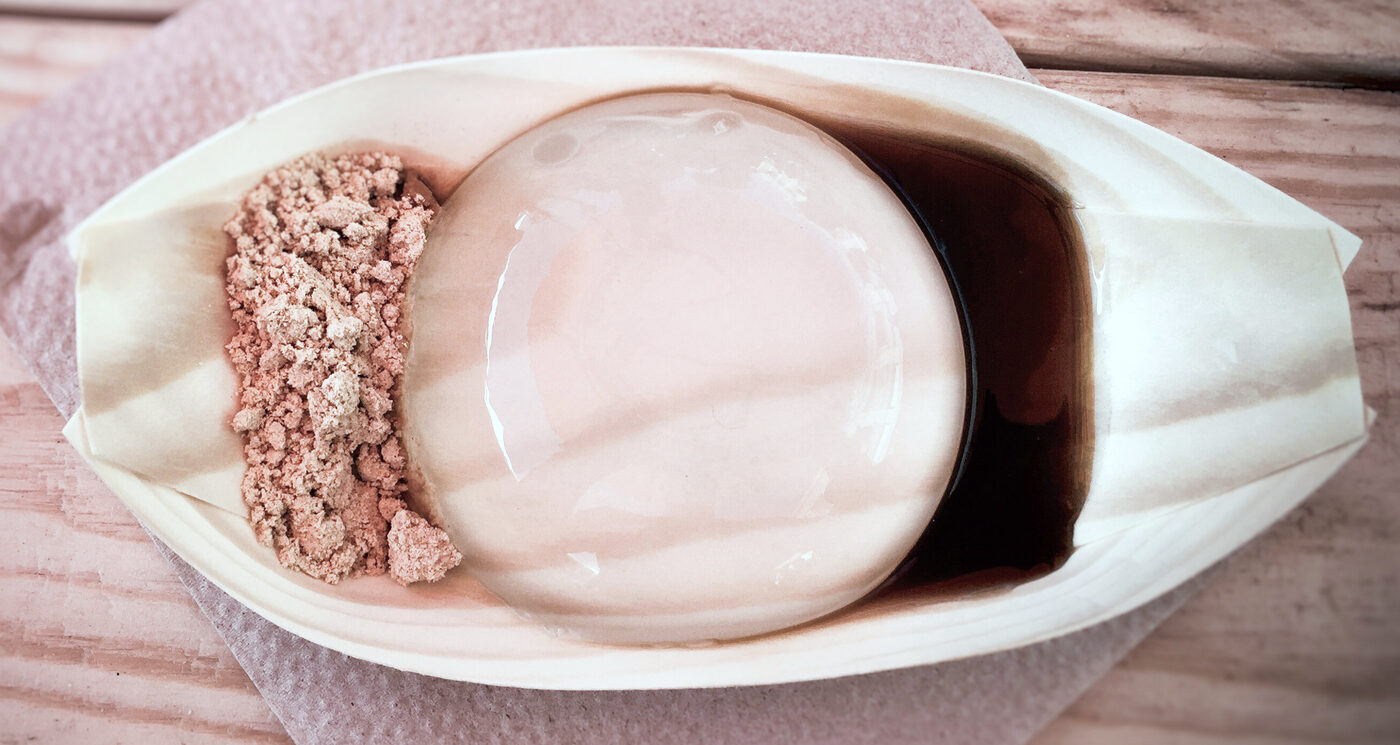
Think of it less as a pudding and more as a texture you’re allowed to eat — a thing whose entire proposition is look at this for a moment before it stops existing. Most sweets are trying to be as much as possible. This one is trying to be as little as possible and still be there.
The sibling that can come to you
The name gives away the family. Shingen mochi is the classic Yamanashi souvenir sweet: soft rice cake buried in kinako, with a little bottle of kuromitsu to pour over it yourself. It’s named for Takeda Shingen, the 16th-century warlord who ruled this province and who is said to have carried sugared rice cakes as field rations — which is a very good pedigree for a snack.
Shingen mochi travels beautifully. It comes in a wooden box with tiny syrup bottles and toothpicks, it survives a train journey, and it is the thing people bring home from Yamanashi.
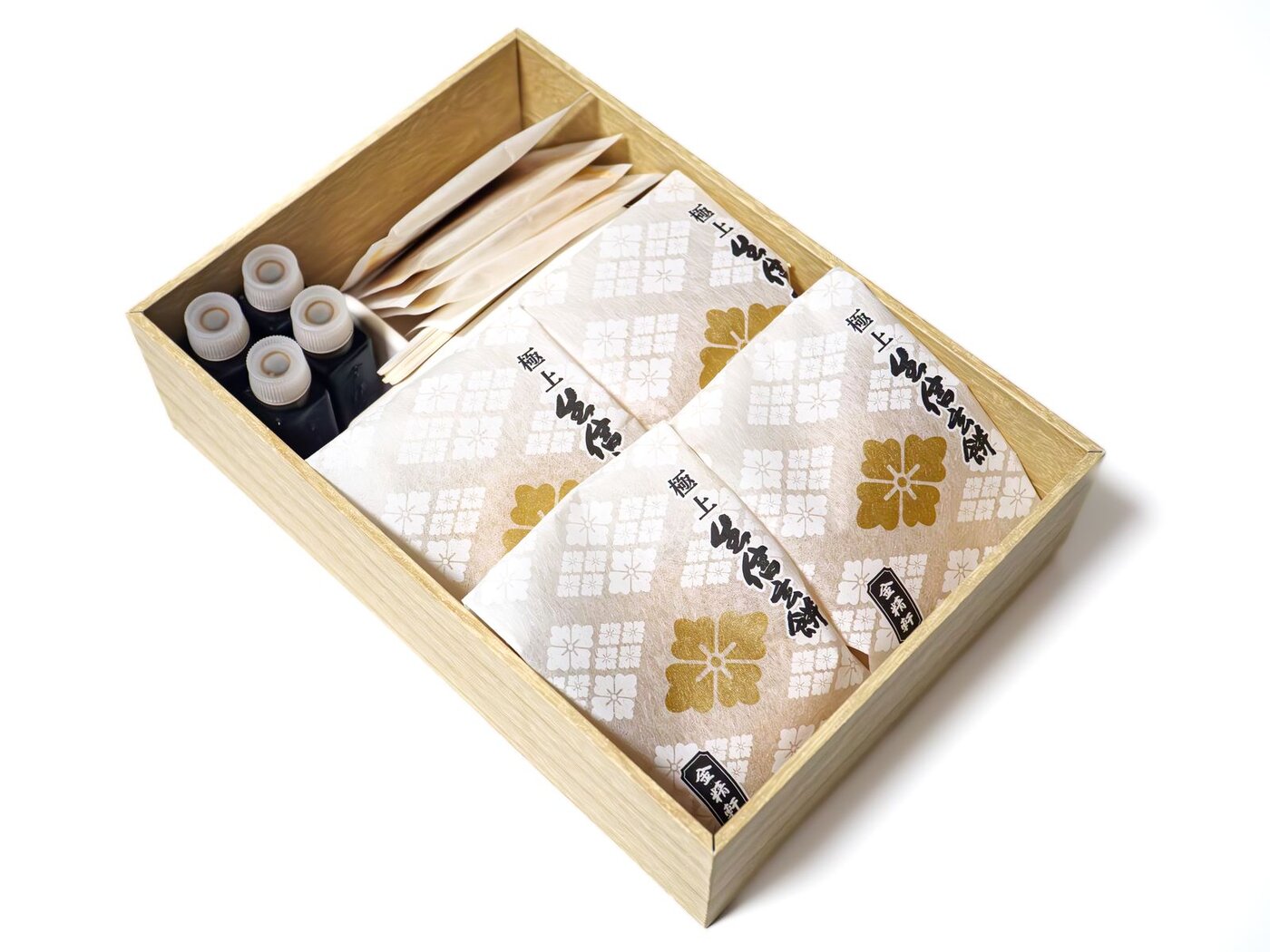
So the shop makes both. One version you can carry to the other end of the country. The other version cannot make it to the car park.
The world tried to copy it, and the world did quite well
Naturally, a transparent dessert that looks like a special effect did not stay in one valley.
In April 2016, a New Yorker named Darren Wong — who had read about mizu shingen mochi, wanted one, and could not get one — reverse-engineered his own and debuted it at the Smorgasburg food market in Brooklyn under the English name that stuck: Raindrop Cake. It sold out and went properly viral. A London restaurant spent four months developing its own version. Home kits appeared.
And in Kyoto, a shop called Marumochiya solved the delivery problem outright with an idea so pleasing it deserves its own paragraph: they seal the jelly inside a water balloon. It posts anywhere, keeps indefinitely in the fridge, and when it arrives you pop the rubber with a toothpick and the drop plops out onto your plate, perfect. It’s available all year round.
When the food-news crew at SoraNews24 taste-tested the Kyoto version against the Yamanashi original, they reported — honestly — that they could find no discernible difference in taste or texture. If pushed, they said, the original’s water had a slightly more rounded sweetness. That’s it. That’s the whole margin.
Which we love, actually. The copies are good. The copies are genuinely good. And people still drive into the mountains on a Saturday in July anyway. 🚙
Why this is on a good-news blog
We live in the age of the arriving box. Anything, anywhere, by morning. That’s mostly a marvel — but it does quietly teach you that every good thing in the world is a thing that can be brought to you.
Then there’s a little shop on an old highway making a sweet out of nothing but the water that comes off the mountain behind it, so lightly held together that it can’t survive the trip to the next town, sold two days a week for four months a year, tasting almost entirely of nothing at all.
You can’t order it. You can’t stockpile it. You can’t even really describe it to someone, because the honest description is “it’s water, and then it isn’t.” All you can do is show up while it’s summer, sit down, look at it for a second, and eat it before it goes.
Somewhere in Yamanashi it is a Saturday, and somebody is doing exactly that. 💧💛
Got a gloriously improbable snack from your corner of the world? Sign the guestbook and tell us. Catch up on the series any time: Vol. 1, Vol. 2, Vol. 3, and Vol. 4. 🥄


