

Picture a Beijing street in January. It is properly, seriously cold — the kind of cold that turns your breath into a small weather system. And parked on the corner is a cart with a rack of what look like strings of red glass beads, glittering under a bare bulb.
They are berries. Sour ones. Each has been threaded onto a bamboo skewer and swirled through a pot of molten sugar, and then — this is the trick, this is the whole beautiful trick — carried outside, where the winter does the rest. The syrup hardens in the freezing air into a shell so clear and so thin you can see the fruit through it.
Then you bite down and it goes CRACK. 🍡
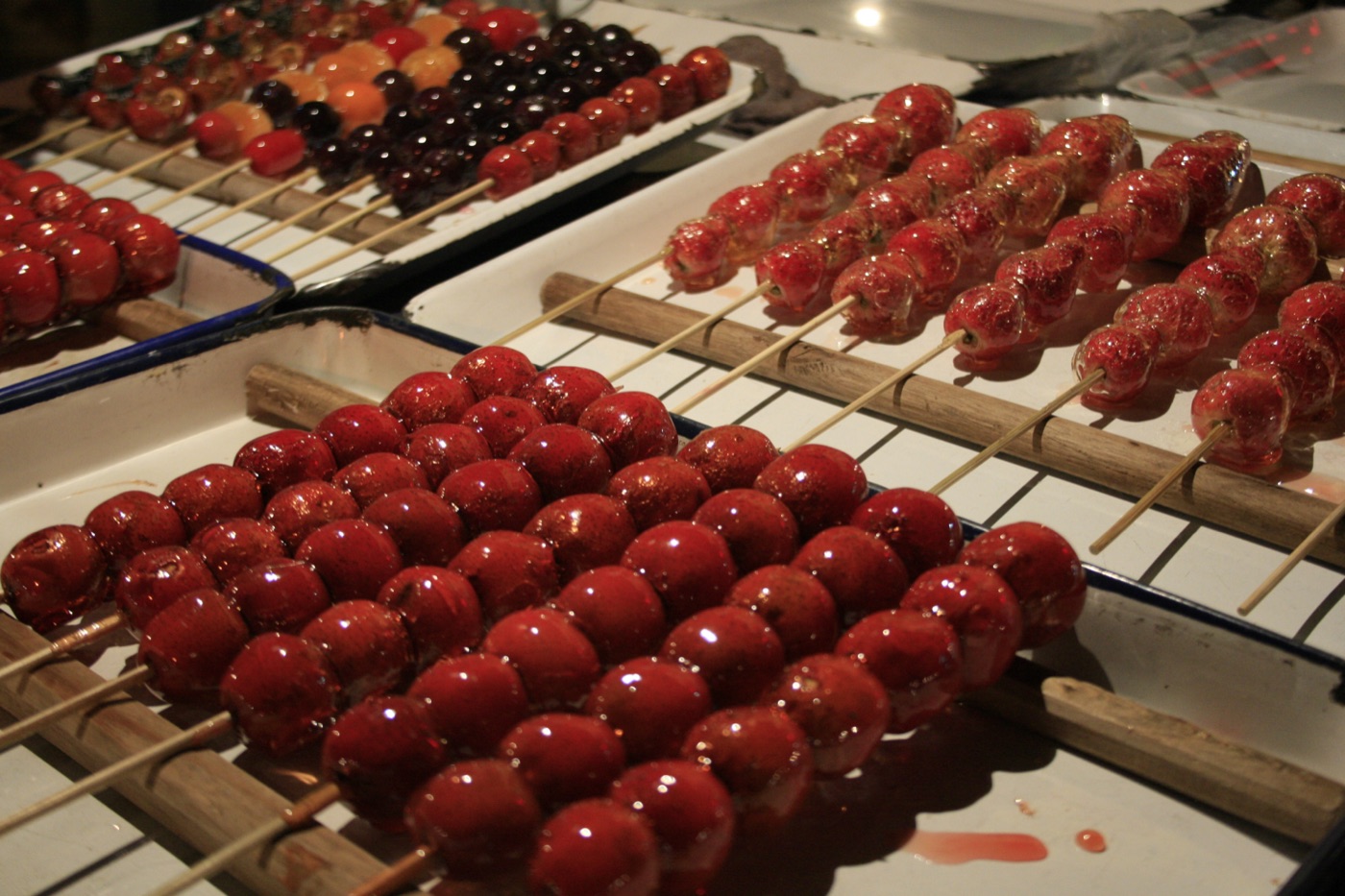
Sour on the inside, on purpose
The snack is tanghulu (糖葫芦), also called bingtang hulu (冰糖葫芦) — literally something like rock-sugar gourd, because a skewer of round fruits stacked in a row looks like a little calabash gourd. It’s one of the great northern-Chinese street foods, famous in Beijing and eaten across the north all winter long.
And here’s what makes it more interesting than “fruit dipped in candy”: the classic fruit is Chinese hawthorn — Crataegus pinnatifida, known as shanzha (山楂) — and hawthorn is sour. Mouth-puckering, eyebrow-raising sour. Nobody snacks on a raw one for fun.
That’s the design. The sugar shell is glassy and sweet and shatters on contact; a half-second later the tart little berry underneath arrives and cuts straight through it. Sweet, then sour, then sweet again on the next bite. It’s the same reason lemonade works, engineered onto a stick in the 12th century. 🍬
Hawthorn has a long second life in Chinese kitchens and Chinese medicine as a digestive — the berry you eat after a big meal — which is a lovely thing to know about a candy: its main ingredient has spent centuries being the thing that settles your stomach.
The emperor’s concubine (or: the best origin story a snack can have)
Tanghulu has been made since the Song dynasty (960–1279), and the folk tale about how it started is so good it deserves repeating even with a “so the story goes” attached.
As the tale is told, the emperor Song Guangzong (who reigned 1189–1194) had a beloved consort, Huang Guifei, who fell ill and stopped eating entirely. The palace physicians were baffled; enormous sums were spent on famous doctors; nothing worked. Finally one physician came and prescribed something almost insultingly simple: hawthorn simmered with rock sugar, five to ten of them before every meal. Within days she was well again.
The prescription got out of the palace and into the streets, where somebody had the genuinely excellent idea to put it on a stick — and eight centuries later, there it is, glittering on a cart in the cold.
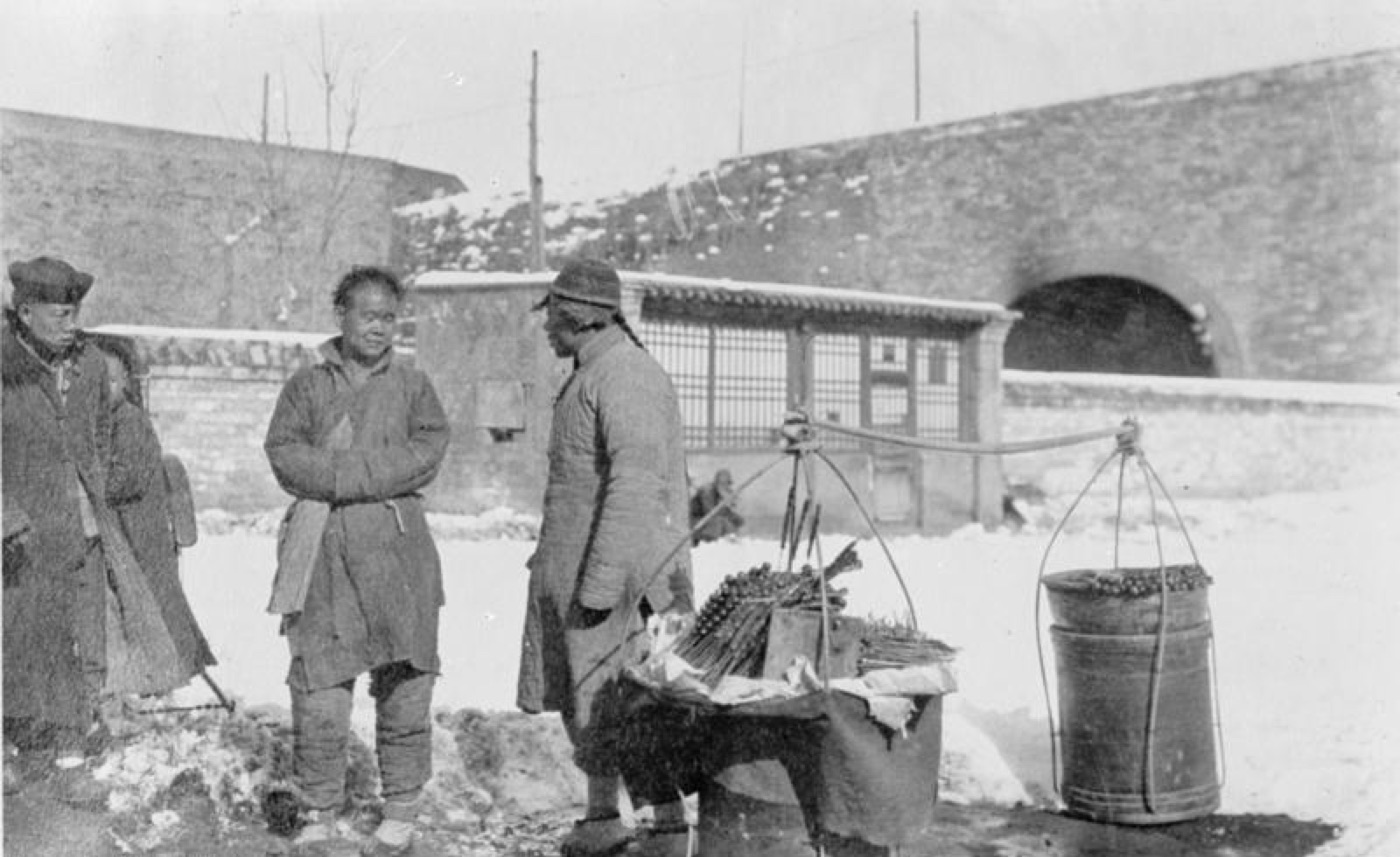
Winter is an ingredient
Most recipes list flour, sugar, eggs. This one lists weather.
To get that glass shell, the sugar syrup has to be cooked to what confectioners call the hard-crack stage — roughly 300°F (149°C), the point where almost all the water has boiled off and the sugar, once cooled, sets brittle and transparent instead of chewy and sticky. Dip the skewer, lift it, and the coating needs to firm up fast, before it can slump and pool.
A freezing street does that beautifully. Which is why tanghulu is a winter food in the north of China and why summer is its natural enemy: in warm, humid air the shell goes soft and tacky and the whole magic trick dissolves into a sticky handful.
There’s a photograph above of a vendor doing exactly this in Peking around 1900 — carrying pole over his shoulder, snow on the ground, bundles of skewers hanging off each end. Same fruit. Same cold. Same job.
The stall has gotten out of hand (delightfully)
Traditionalists will tell you it’s hawthorn or nothing. The modern stall respectfully disagrees.
Walk up to a tanghulu cart today and you may be choosing between strawberries, grapes, mandarin-orange segments, cherry tomatoes, blueberries, kiwifruit, pineapple and banana — each one lacquered in the same clear shell. Even the classic gets upgrades: vendors scoop the pits out of the hawthorn and pipe sweet red bean paste into the hollow before dipping, so the sour berry now has a soft, sweet middle and a crunchy outside. Records from the Qing dynasty mention grapes and walnuts on the skewer, so honestly, the improvising started early.
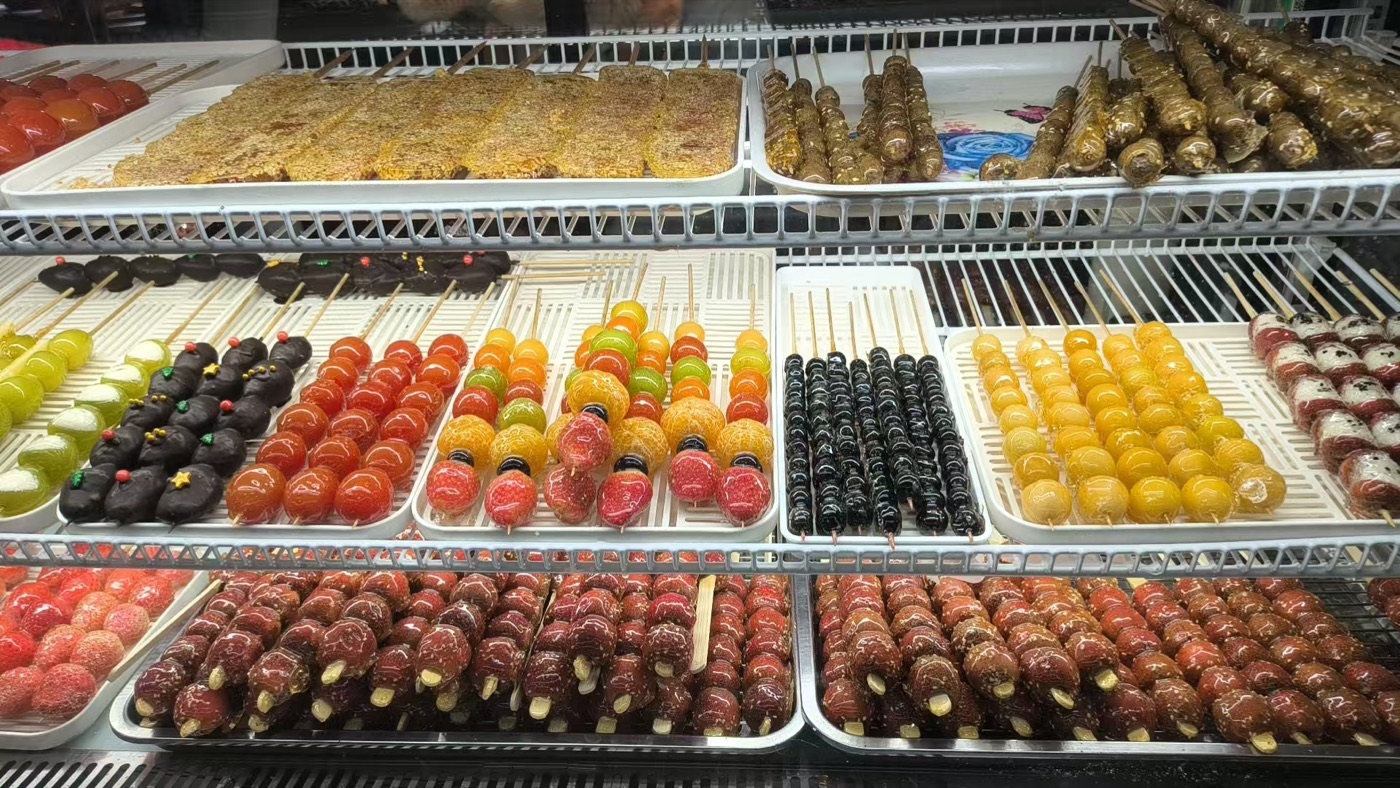
How a Beijing winter snack went worldwide
In the 2020s tanghulu did the thing that delicious, photogenic, loud foods do now: it went viral. The crack is audible. It looks like jewellery. It was practically built for a phone camera.
The craze landed hardest in South Korea, where two members of Blackpink made a batch in a documentary and the whole country seemed to pick up a skewer at once. Shops opened by the hundreds. It got so enthusiastically messy — sticky wrappers, bamboo sticks poking holes in bin bags — that some cafés and karaoke rooms put up polite little “No Tanghulu Zone” signs, which may be the most affectionate complaint a snack has ever received. By 2024 the fever had cooled and Korea moved on to frozen yoghurt, as trends do. The skewers stayed.
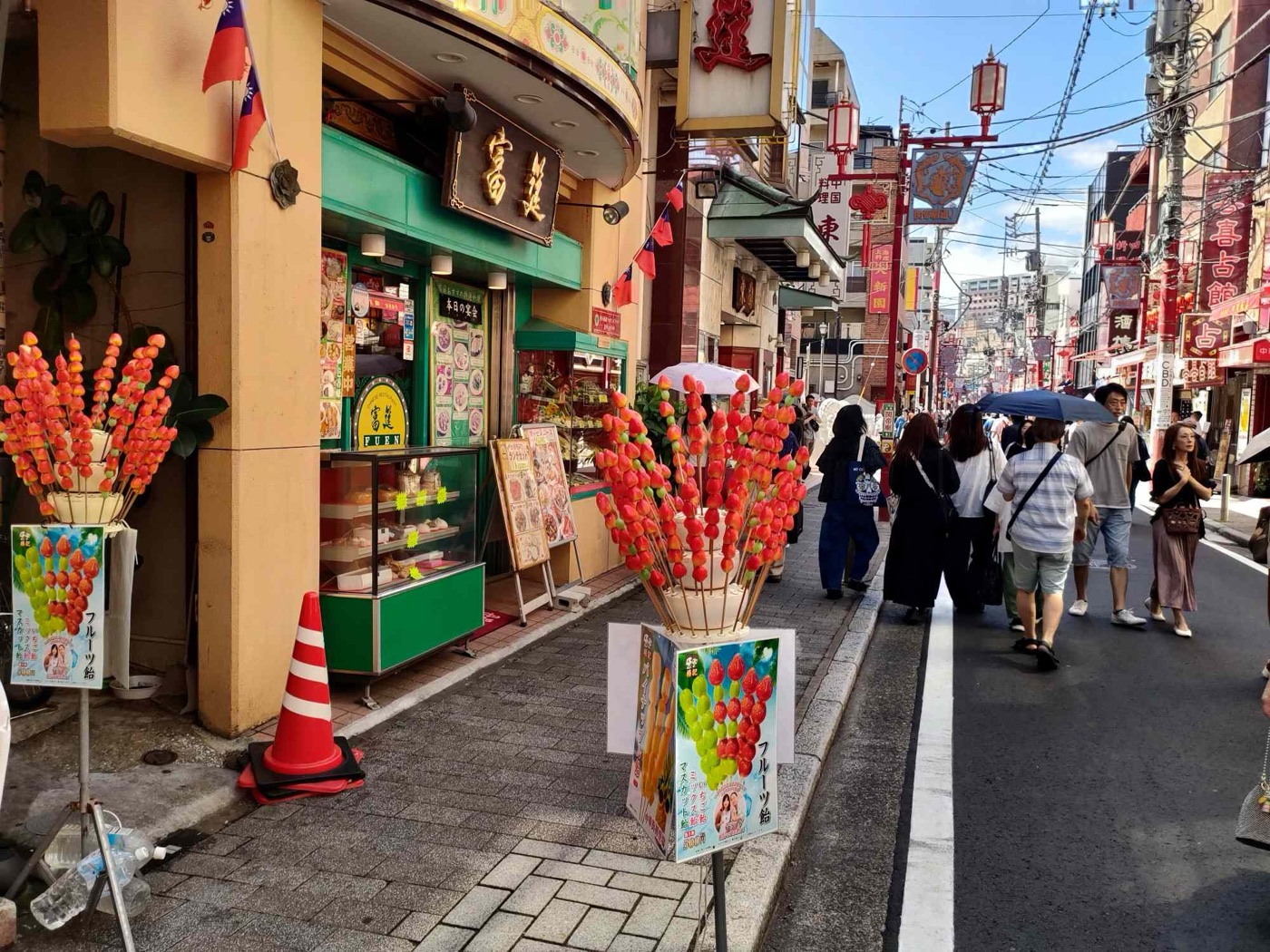
They’ve also quietly settled in everywhere else. You’ll find them at night markets in Taiwan, in Malaysia, in Macau — and in Japan, where Yokohama’s Chinatown sells them as furūtsu ame (fruit candy), stood up in big bouquets like a florist’s window.
One friendly note from the kitchen
Because everyone wanted to make it at home, a lot of people tried — and sugar at 300°F is genuinely serious stuff. It’s viscous, so it sticks to skin rather than running off, and in 2024 a children’s hospital in Boston went so far as to publish a warning about scald burns from home tanghulu attempts. The food scientist Ann Reardon flagged a particularly risky shortcut going around online: heating sugar to hard-crack in a microwave, in containers that were never designed to hold something that hot.
So: a grown-up job, on a stove, with attention. Or — much better — go find a cart and let a professional who has done it ten thousand times hand you one. ❄️
Why this is on a good-news blog
Because somewhere back in the fog of the Song dynasty, somebody looked at the sourest little berry on the hill and thought what if I made this delightful — and the answer they landed on was to dip it in liquid sugar and let the winter turn it into glass.
Nothing about that was necessary. It just made a cold street better. And it made it better so effectively that eight hundred years later a kid in Yokohama, a night-market crowd in Taipei and a teenager in Seoul are all biting into the exact same crack — a sound invented in a Chinese winter and never improved upon since.
The world holds onto its good ideas. Especially the crunchy ones. 🍡💛
Got a gloriously improbable snack from your corner of the world? Sign the guestbook and tell us. Catch up on the series any time: Vol. 1, Vol. 2, Vol. 3, and Vol. 4. 🍬


